What are the main challenges robotics startups face when moving from prototype to real-world deployment?
The answers highlight challenges in scalability, supply chain, customization, cost, reliability, integration, and adapting to real-world variability, with some emphasizing technical hurdles and others market or operational barriers.
15 answers
Answers


Peter H. Diamandis
Founder & Curator · Abundance360
Big Firm Competition
Peter H. Diamandis says robotics entrepreneurs will be crushed by Figure and Optimus, advising them to focus on other form factors not on those companies' roadmaps.
The answer starts at 1:49:31.
Moonshots with Peter Diamandis · Listen on Apple Podcasts

Marc Lore
Founder & CEO · Wonder
Scalability
Marc Lore says the biggest challenge is scalability: a prototype is not always scalable into a production unit, and you sometimes have to start from scratch because production units must stay up, be easy to clean and be maintainable by kitchen staff.
Inc. · Watch on YouTube

Harry Stebbings
Founder · 20vc
Supply Constraints
Harry Stebbings says he would build his own manufacturing to get closer to raw materials because he sees so many supply constraints in the hardware ecosystem.
20VC with Harry Stebbings · Watch on YouTube

Fred (Federico) Parietti
Co-Founder and CEO · Multiply Labs
Credibility with Pharma
Fred (Federico) Parietti says the hardest part in life sciences is getting the first customer, since that customer takes on a lot of risk, and that building credibility with pharma is super hard and breaking in is a multi-year process.
Venture with Grace · Venture with Grace · Listen at 17:52

Jason Ma
Co-Founder · Dyna Robotics
Identifying True Bottlenecks
Jason Ma says deploying as much as possible lets his company identify problems early and find the true bottleneck, while those working on only one part of the problem face a "fog of war" and may build something people don't need.
Latent Space · Watch on YouTube
Bilal Zuberi
Founder and Managing Partner · Red Glass Ventures
Supply Chain Constraints
Bilal Zuberi says supply chains in China have been cut off, so companies that once made products there now have to do everything themselves, including reinventing motors and actuators previously bought in bulk.
The answer starts at 12:04.
The Peel with Turner Novak · Listen on Apple Podcasts

Aaron Edsinger
CEO & Cofounder · Hello Robot Inc
Underestimating Readiness
Aaron Edsinger says robotics founders often underestimate how far along and how ready they are to have a product, and that even experienced people convince themselves they are closer to launch than they are.
Robot Talk · Robot Talk · Listen at 20:16

Xavier (Tianhao) Chi
Co-Founder · Mbodi Ai
Customization
Xavier Chi says robotics companies that deploy themselves face a problem because each deployment requires a lot of customization, which he says is not scalable and doesn't fit the VC-backed startup model.
TechCrunch · Watch on YouTube

Ilia Baranov
Co-Founder & CTO · Polymath Robotics
Reliability and Scaling
Ilia Baranov described assessing early stage startups by how many miracles they're betting on, saying even one is too many.
Robots & Startups · Robots & Startups · Read

Rene Haas
Chief Executive Officer · Arm
High Cost
Rene Haas says the cost of robots is so high that it is a tough model for people to get their heads around, and that costs need to come down for the business model to be vetted.
No Priors: AI, Machine Learning, Tech, & Startups · Watch on YouTube

Reid Hoffman
Co-Founder, Executive Board Chair · Manas Ai
Scalability
Reid Hoffman says the biggest risk is that robotics as a whole fails because it is so hard, with many pieces needed for anything to work, and he stresses checking whether a robot demo was developed in a way that will be scalable and stand the test of time.
Reid Hoffman · Watch on YouTube

Chelsea Finn
Co-Founder · Physical Intelligence
Generalization to Real‑World Variability
Chelsea Finn says the challenge is generalization: robots must adapt to slippery objects, changing layouts and other real-world variability, and recover from failure without being hand-programmed for every detail.
AI Podcast Summaries from Transcripted.ai (VIDEO) · AI Podcast Summaries from Transcripted.ai (VIDEO) · Listen at 0:41

Shahin Farshchi
Partner · Lux Capital
Integration Complexity
Farshchi says integrating robots for each task is extremely expensive and few companies can afford it.
Bankless · Bankless · Listen at 21:12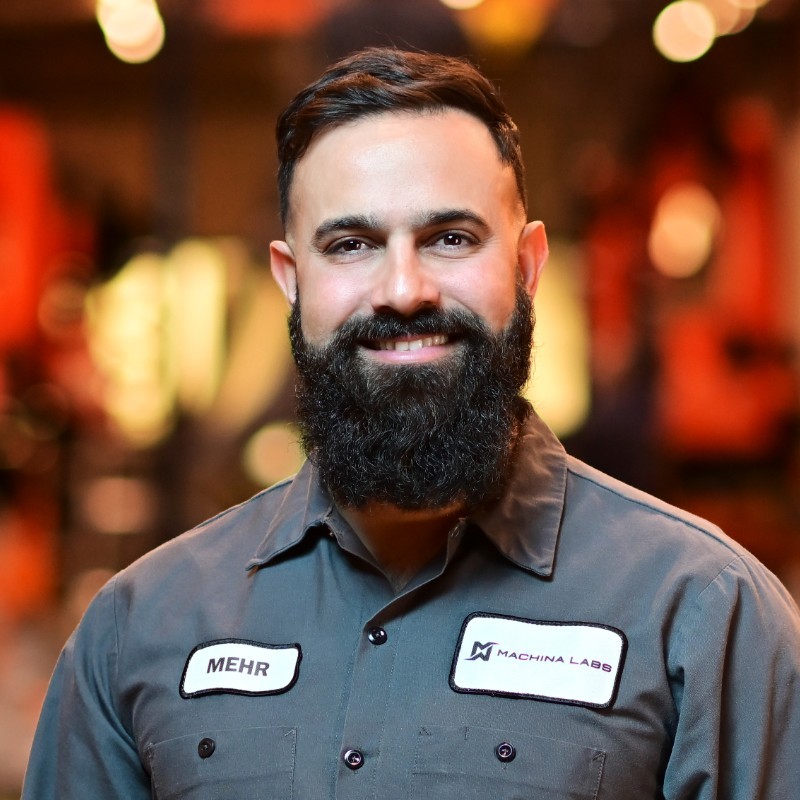

Edward Mehr
Chief Executive Officer & Cofounder · Machina Labs
Intelligence
Edward Mehr says the missing piece that kept this from being done until now was intelligence—the software for getting a robot to think like a human and adjust process parameters—since the hardware and tools already existed.
Legends N Leaders · Legends N Leaders · Listen at 8:38

Nikolaus West
Co-Founder & CEO · Rerun
Unpredictable Failure Modes
Nikolaus West says the physical world is brutal and startups will not have thought of all the different failure modes up front, so they should sell and deploy fast to learn real requirements.
Y Combinator · Watch on YouTube