Abel era earns buffett’s blessing as berkshire bets on caution over charisma
The gist
Greg Abel’s debut as Berkshire Hathaway CEO swaps Buffett’s charisma for operational rigor, delivering big profits but playing it cool with Berkshire’s historic cash pile.
What to know
- Abel’s first annual meeting as CEO drew strong praise from Warren Buffett and investors, cementing a smooth leadership transition with palpable confidence.
- Berkshire’s Q1 2026 operating earnings shot up 17.7% to $11.3 billion under Abel’s hands-on management style, with deep dives into its 80-plus businesses.
- Despite a $380.2 billion cash mountain and slow buybacks, Berkshire has underperformed the S&P 500 by about 40 points since 2025—a cautious, deliberate move, not a misstep.
Abel’s Calm, Hands-On Debut
Greg Abel’s operational expertise and steady leadership style reassured Berkshire investors, signaling a shift from Buffett’s charisma to substance and tighter management.
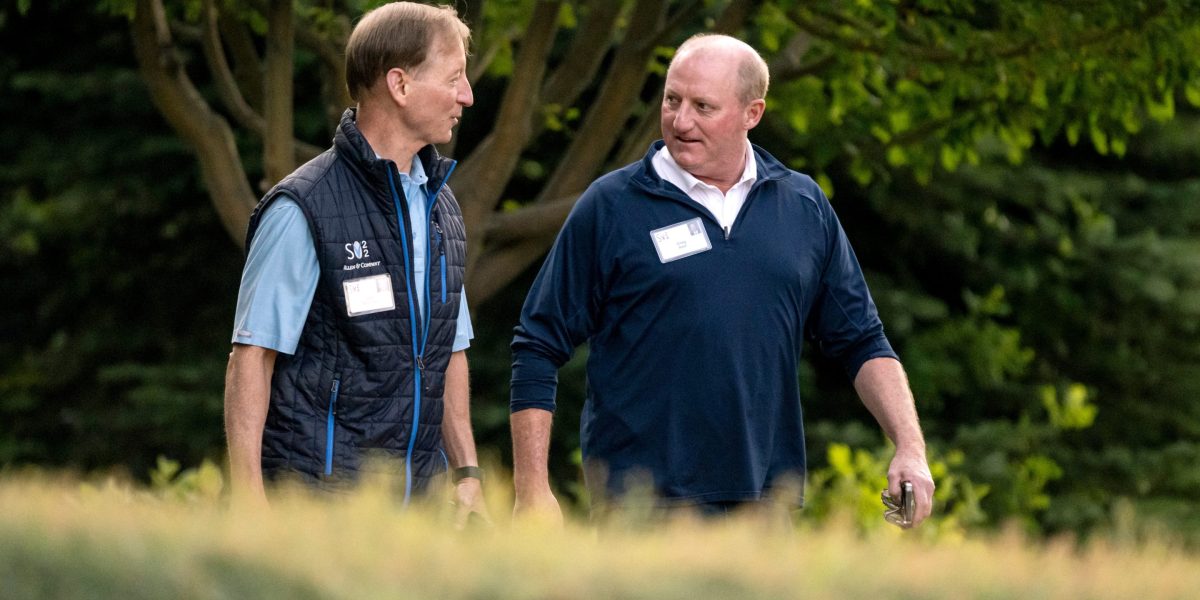
Greg Abel's inaugural appearance as Berkshire Hathaway CEO at the 2026 shareholder meeting was marked by a palpable sense of calm and confidence among investors, signaling a smooth leadership transition endorsed even by Warren Buffett, who called it '100% successful' and praised Abel as 'very, very, very smart about businesses.' Despite lacking Buffett’s charismatic flair, Abel passed his initial test with investors by presenting a clear vision and operational fluency that reassured shareholders and industry leaders alike, such as former Activision Blizzard CEO Bobby Kotick and director Chris Davis, who lauded Abel’s pivot from the Buffett-Munger dynamic to a new era of hands-on management.
Abel’s leadership style represents a distinct departure from Buffett’s famously hands-off approach, as he actively manages Berkshire’s sprawling portfolio of over 80 businesses through a structured team of about 30 managers based in Des Moines. This more involved and detail-oriented management approach balances operational depth with decisive oversight—Abel is not overbearing but acts swiftly when managers underperform—reflecting a strategic shift toward tighter operational control and cautious capital deployment that investors scrutinized closely during a Q&A dominated by questions on share buybacks and AI investments.
The atmosphere at the 2026 shareholder meeting also underscored the enduring community spirit among Berkshire investors, described by attendees as a gathering of friends and like-minded individuals, which helped foster a collegial environment receptive to Abel’s leadership debut. While Abel may not match Buffett’s legendary charisma, the positive reception and strong investor confidence reflect a collective optimism about the company’s future under his stewardship, emphasizing substance and operational expertise over personality.




Operational Rigor Drives Results
Berkshire’s robust earnings surge and record cash pile reflect Abel’s granular management and disciplined, contrarian capital allocation in overheated markets.
Greg Abel’s leadership marks a decisive shift toward operational fluency and granular business insight, moving away from Buffett’s more philosophical style to a hands-on approach that emphasizes deep immersion in Berkshire’s diverse operations. This strategic focus on operational detail underpins the company’s robust financial performance, as evidenced by a 17.7% year-over-year increase in operating earnings to $11.3 billion in Q1 2026, reflecting strong subsidiary-level results that cut through market noise and currency fluctuations. Director Chris Davis lauds Abel as “a fabulous operator,” highlighting how this operational rigor is integral to Berkshire’s sustained success.
Berkshire Hathaway’s capital deployment strategy under Abel remains rooted in Buffett’s core principles of patience and prudence, maintaining a record cash reserve of $380.2 billion to capitalize on market dislocations without haste. Despite restarting share repurchases in Q1 2026, the company exercised extreme caution, buying back only $235 million of stock—mostly on the program’s first day—signaling disciplined capital allocation amid overvalued markets. This conservative stance has led to underperformance relative to the S&P 500 by roughly 40 percentage points since the 2025 annual meeting, a deliberate contrarian posture rather than a lapse in investment acumen.
A critical pillar of Berkshire’s financial strength continues to be its substantial insurance float, which provides a unique source of investable capital that fuels market-beating returns over time. Abel’s stewardship preserves this advantage by balancing the deployment of float-derived funds with a cautious approach to new investments, ensuring that Berkshire only commits capital when valuations align with intrinsic business fundamentals. This strategy echoes Berkshire’s historic success during periods like the dot-com bubble, where restraint yielded a 40-fold return on a 1999 investment, underscoring the enduring value of patient capital allocation.

Active Oversight, Aligned Incentives
Abel’s direct management and shareholder-aligned pay mark a new era of engaged leadership, prioritizing long-term value over chasing short-term market gains.
Greg Abel’s leadership style marks a clear departure from Warren Buffett’s famously delegated approach, embracing a more hands-on and operationally detailed management of Berkshire Hathaway’s sprawling portfolio. As Mohnish Pabrai observes, Abel strikes a balance between not being overbearing and actively intervening when managers underperform, a shift that is expected to improve the operational outcomes of Berkshire’s acquisitions, many of which Buffett’s era struggled to optimize. This more engaged CEO role is underscored by Abel’s command over 80-plus businesses through a dedicated team, reflecting the complexity and scale that necessitate tighter oversight.
Investor confidence in Abel’s stewardship is bolstered by his modest and shareholder-aligned compensation, which Mohnish Pabrai characterizes as a bargain at $25 million annually, especially given Buffett’s own endorsement that Abel is 'seriously underpaid.' Abel’s personal commitment is further evidenced by his choice to reinvest his CEO salary into Berkshire stock despite a net worth estimated between $700 million and $1 billion, signaling alignment with shareholder interests beyond mere financial incentives.
The transition to Abel’s leadership coincides with Berkshire’s continued adherence to a contrarian investment philosophy, focusing on a small fraction of high-impact opportunities amid a challenging market environment. As Pabrai and others note, this strategy—mirroring Buffett’s historical 3-4% hit rate on investments—has led to significant short-term underperformance relative to the S&P 500, with Berkshire lagging by roughly 40 percentage points post-2025. However, this cautious capital deployment, including holding over $300 billion in cash and Treasuries, reflects a deliberate, long-term value approach rather than a loss of strategic acumen.
Industry leaders and investors alike praise Abel’s operational fluency and deep business knowledge, with figures such as Occidental Petroleum CEO Vicki Hollub and former Activision Blizzard CEO Bobby Kotick highlighting his granular engagement with Berkshire’s diverse holdings. While Abel may lack Buffett’s charisma, his effective management of investor expectations and the annual meeting demonstrates his capability to foster shareholder engagement in a more intimate, hands-on manner, reinforcing Buffett’s own declaration of the leadership transition as '100% successful.'