AfD’s saxony-anhalt surge sparks fears for German democracy
The gist
The AfD’s record-shattering 44% win in Saxony-Anhalt has rocked Germany’s political order, raising alarms of a far-right state government for the first time since World War II.
What to know
- Ulrich Siegmund’s AfD crushed traditional parties in the 2026 state election, with the CDU collapsing to just 18% and the hard-left BSW emerging as a kingmaker.
- Fueled by East German discontent and a potent TikTok campaign, the AfD’s rise is powered by both middle-aged voters nostalgic for stability and a new wave of young supporters.
- Experts warn the AfD’s euroscepticism and anti-immigrant platform could undermine Germany’s role in the EU and NATO, with business leaders calling for urgent reforms to blunt the populist surge.
Far-Right Breaks Barriers
Ulrich Siegmund’s AfD upended postwar political taboos, forcing Germany to confront coalition chaos and allegations of electoral manipulation after a historic regional win.
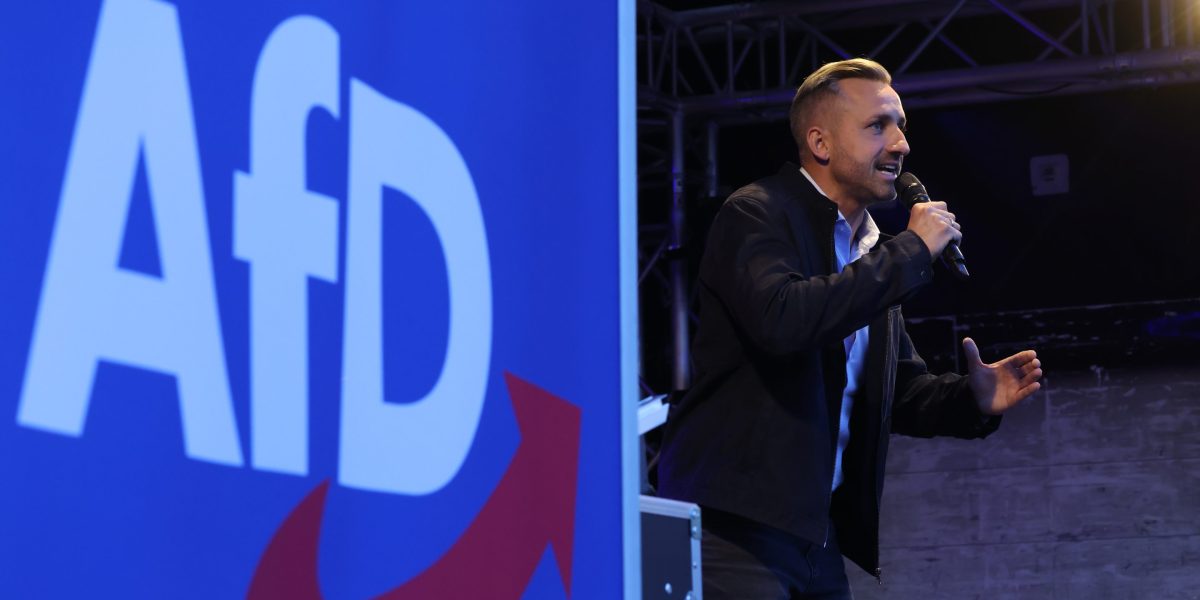
The AfD's unprecedented 44% victory in the September 2026 Saxony-Anhalt regional election, led by Ulrich Siegmund, marks a seismic shift in Germany's political landscape, positioning the party to potentially form the country's first far-right state government since World War II. This breakthrough not only shattered traditional party dominance—most notably the CDU's collapse to around 18%—but also disrupted established coalition dynamics with the emergence of the hard-left BSW as a potential kingmaker, complicating the path forward in state governance.
The electoral upheaval has ignited intense national debate, with Chancellor Friedrich Merz and other mainstream leaders vehemently rejecting any cooperation with the AfD, underscoring fears about breaking Germany’s postwar political firewall against extremism. Merz’s stance reflects broader concerns about the AfD’s extremist positions and the party’s potential to enact sweeping policy changes in immigration and education, signaling a profound departure from Germany’s established political norms and raising urgent questions about the future direction of democratic governance.
Compounding the political fallout, the AfD’s initial appearance of securing over 50% of the vote in Saxony was tempered by the controversial counting of 'melon' ballots, which reduced their share to approximately 44%, fueling allegations of electoral manipulation and calls for banning such ballots. This controversy, amplified by AfD co-leader Alice Whittle and legal experts like Dirk Schmidz, has intensified tensions around electoral integrity and the legitimacy of the AfD’s surge, further complicating the already volatile post-election landscape.
The AfD’s rise is also attributed to its savvy use of social media platforms like TikTok, where young influencers such as Ulrich Siegmund have mobilized both youth and middle-aged male voters, amplifying the party’s anti-refugee and anti-EU messaging. However, analysts warn that the AfD’s Eurosceptic stance threatens Germany’s economic stability, highlighting the precarious balance between capitalizing on populist momentum and safeguarding the nation’s economic foundations amid this historic political realignment.




Roots of Discontent
Deep-seated economic upheaval and cultural anxiety since reunification have fueled the AfD’s rise, with nostalgia and disenfranchisement driving support across generations in eastern Germany.
The AfD’s rise is rooted in a durable wave of economic and social discontent that predates the 2015 migrant crisis, tracing back to the aftermath of the 2008 global financial crisis and gaining momentum with early far-right successes like Viktor Orban’s 2010 election in Hungary. This trend reflects a broader European pattern where economic instability and cultural identity anxieties converge, making Germany’s political realignment particularly striking given its historical commitment to 'never again' embracing far-right extremism.
East German discontent plays a pivotal role in the AfD’s support base, fueled by the upheaval following reunification, loss of secure state jobs, and persistent cultural anxieties about multiculturalism and ethnic minorities. This discontent is especially pronounced among middle-aged voters, who feel economically and socially disenfranchised despite subsidies and retraining efforts, creating a fertile ground for the AfD’s nostalgic narrative of decline and a mythical past of prosperity and low crime.
The AfD’s ability to mobilize voters hinges on a dual strategy that combines physical outreach—visiting streets, town halls, schools, and factories—with savvy social media engagement, particularly on TikTok under the leadership of the charismatic 35-year-old Ulrich Sigmund. This approach resonates strongly with younger voters aged 18 to 24, a demographic traditionally neglected by established parties like the CDU and SPD, thereby expanding the AfD’s appeal beyond its core middle-aged male constituency.
Economic grievances among AfD supporters are complex and often contradictory, marked by opposition to government spending on refugees and integration despite demographic challenges requiring foreign labor and elder care. The party’s vague economic platform calls for increased spending without clear funding sources, frequently blaming civil society and liberal organizations, while its significant electoral gains stem from previously disengaged rural populations in economically stagnant regions like Saxony-Anhalt and Mecklenburg-Vorpommern, underscoring deep regional alienation.



Migration Backlash Ignites
Merkel’s open-door policy and mainstream parties’ hardline rhetoric inadvertently legitimized anti-immigrant sentiment, giving the AfD a powerful narrative amid persistent social unease.
The 2015 refugee crisis marked a pivotal moment in Germany's immigration policy, as Chancellor Angela Merkel's open-door approach welcomed over a million migrants, primarily Syrians, while much of Europe tightened borders. This influx, coupled with integration difficulties—only about a quarter of these arrivals have gained citizenship—and security incidents involving migrants, provided fertile ground for the AfD's populist narrative to take hold. Merkel's optimistic mantra 'Wir schaffen das' ultimately dismissed growing public unease, contributing to electoral setbacks for her Christian Democratic Union, particularly in Saxony-Anhalt.
Mainstream centrist parties, including the Social Democrats under Olaf Scholz, inadvertently amplified anti-immigration discourse by adopting hardline rhetoric, such as Scholz's pledge to 'remove en masse people who aren’t allowed to stay.' This normalization of exclusionary language failed to bolster the parties themselves, instead empowering the AfD by elevating migration as a dominant political issue beyond its actual salience among voters. As Dr. Jan Eichhorn observes, this rhetorical shift handed the AfD a potent platform without addressing the underlying economic and social grievances that truly concern most citizens.
The AfD's electoral success hinges on its strategic redirection of voters' material anxieties—rooted in economic and social changes—toward scapegoating migrants, despite most Germans not perceiving migration as their primary problem. By evoking nostalgia for a mythical era of prosperity and safety, the party taps into a pervasive sense of societal decline that resonates even among economically stable individuals. Eichhorn highlights this paradox, noting that the AfD thrives on a widespread feeling of deterioration that transcends personal financial well-being, deepening societal fractures and reshaping Germany's political landscape.

TikTok and Town Halls
The AfD’s digital dominance and grassroots outreach captured young and disaffected voters, exposing mainstream parties’ failure to adapt to new political battlegrounds.
By 2026, the AfD had masterfully harnessed TikTok and charismatic young leaders like Ulrich Sigmund, who at 35 commanded a huge following and toured extensively across Saxony Anhalt, to build a robust digital presence that resonated with younger voters and middle-aged men alike. This savvy use of social media, particularly platforms often overlooked by mainstream parties, allowed the AfD to engage demographics that traditional outreach methods failed to capture, effectively bridging a generational communication gap.
Beyond digital innovation, the AfD complemented its online strategy with vigorous grassroots campaigning, deploying mobile outreach units to engage voters directly in town halls, schools, and factories. This hands-on approach contrasted sharply with the Social Democrats and Christian Democrats, who struggled to match such physical engagement, underscoring the AfD’s comprehensive voter outreach that combined new media savvy with traditional canvassing.
Strategically, the AfD tailored its messaging to broaden appeal by fusing anti-refugee and anti-EU rhetoric, despite the inherent risks such policies pose to Germany’s economic stability. This calculated balancing act allowed the party to attract a wider base while navigating the constraints of its extremist classification, exploiting mainstream parties’ failure to adapt their communication strategies, especially in reaching younger voters who increasingly consume political content through social media channels.
Populism Targets the Economy
The AfD’s vague economic promises and anti-establishment messaging resonate in rural areas, while business leaders warn that populist gains threaten both reform and financial stability.
The AfD’s economic platform remains notably ambiguous, blending promises of increased funding for kindergartens and schools with a stark opposition to spending on refugees and integration programs. This contradictory stance reflects a broader narrative of victimhood and alienation from established parties, resonating strongly in rural areas and small towns where the party gained an estimated 170,000 former non-voters—about 30% of its total support. By advocating to reallocate funds away from civil society, liberal organizations, and the media, the AfD’s approach raises serious concerns about the potential weakening of democratic institutions and the stability of Germany’s economic framework.
In response to the AfD’s surge, German SME leaders, led by Chairman Christoph Ahlhaus, have voiced urgent calls for accelerated reforms to revive economic growth and restore confidence, viewing these measures as essential to countering the populist threat and safeguarding economic stability. Concurrently, the AfD’s electoral success in Saxony-Anhalt has intensified the political battle over Germany’s cryptocurrency tax policy, with the party pushing to preserve the favorable 12-month holding period for Bitcoin and other digital assets. This maneuver not only influences investor behavior and tax planning strategies but also heightens partisan tensions surrounding the future of crypto taxation in Germany.


Germany’s Global Standing at Risk
A sustained AfD surge could upend Germany’s EU and NATO roles, as experts and central bankers warn that radical euroscepticism endangers both economic certainty and democratic values.
While the AfD's current influence poses limited immediate disruption to NATO and EU relations, experts like John Batchelor caution that a sustained surge could dramatically reshape Germany's political landscape within two years, especially if Chancellor Friedrich Merz remains in power. Despite the party's radical euroscepticism and isolation within the European Parliament due to ideological divergences with other populist groups, its growing domestic strength threatens to recalibrate Germany's role in transnational organizations and challenge established alliances.
The AfD's foundational euroscepticism, rooted in its 2013 inception by West German economists critical of the EU and the euro, continues to fuel its anti-EU stance, which poses a direct threat to Germany's economic stability and the broader European project. Judy Dempsey warns that if such policies gain national traction, they could unravel both Germany's economic foundation and the cohesion of the European Union, potentially destabilizing NATO partnerships reliant on German leadership.
Bundesbank President Joachim Nagel has voiced serious concerns about the far-right's rise, emphasizing that extremist rhetoric jeopardizes Germany's political stability and the integrity of its democratic institutions. Nagel's call for vigilance and a robust response from mainstream parties underscores the urgent need to safeguard economic policy certainty and democratic values against the disruptive potential of the AfD's growing influence.