Africa’s CFOs put ESG at heart of business strategy
The gist
Africa’s CFOs are ditching ESG box-ticking and putting sustainability at the heart of financial strategy—turning compliance into competitive advantage.
What to know
- Nigeria leads the charge with mandatory ESG reporting aligned to ISSB IFRS standards and the launch of the NGX Impact Board to boost investor confidence.
- CFOs are embedding scenario-based risk analysis into financial decisions, quantifying climate and governance risks to attract global institutional investors.
- New local ESG standards reflect African realities, while tech-driven sustainable finance is unlocking indigenous capital for renewables and infrastructure.
ESG Becomes a Profit Driver
African CFOs are transforming ESG into a core commercial strategy, using governance and climate metrics to directly influence company valuations, investment flows, and long-term resilience.
By mid-2026, African businesses have decisively moved beyond perceiving ESG and sustainability as mere compliance checkboxes, instead quantifying their direct business value and embedding these principles into core governance and financial decision-making. This evolution is marked by practical integration, such as tracking sustainability criteria in contract values and Requests for Proposals, and aligning ESG risk assessments with traditional enterprise risk management frameworks, thereby positioning sustainability as a commercial imperative rather than a regulatory burden.
This strategic ESG integration is increasingly characterized by close collaboration between sustainability teams, finance, and risk functions, with CFOs playing a pivotal role in steering companies toward profitability through ESG-informed decisions. African firms now assess physical climate risks and governance factors—like board accountability and anti-corruption controls—not only to mitigate risks but also to attract investment, maintain market access, and enhance long-term resilience amid rising global regulatory pressures and volatile operating environments.
The shift from compliance to strategic ESG integration is further underscored by investors and asset managers who treat ESG factors as material risks directly influencing company valuations and investment returns. Governance remains the cornerstone of stewardship efforts, with detailed scrutiny on executive remuneration, succession planning, and board composition shaping investment decisions. Environmental issues such as water security have transcended traditional compliance concerns, now recognized as systemic operational and financial risks impacting sectors far beyond heavy industry—affecting property values, retail activity, and sovereign borrowing costs across the African continent.
Early adopters of evolving ESG obligations in Africa are gaining a competitive advantage by managing compliance costs more effectively and safeguarding export revenues, signaling a broader leadership shift where sustainability performance is a material factor in capital allocation and corporate strategy. Executives increasingly evaluate sustainability investments through a pragmatic business lens, focusing on reducing disruptions, enhancing productivity, and strengthening supply chains, thus embedding ESG considerations into core functions like infrastructure investment, energy procurement, and product development.

Global Rules, Local Stakes
Mounting EU-driven ESG regulations are forcing African exporters to overhaul value chain oversight and reporting, making proactive compliance essential for safeguarding market access and revenue.
By mid-2026, African companies, especially exporters in carbon-intensive sectors like steel and cement, are under mounting pressure to comply with evolving global ESG regulations, notably those from the European Union’s European Green Deal. These regulations, including the Carbon Border Adjustment Mechanism and corporate sustainability due diligence requirements, are reshaping access to international markets by demanding rigorous oversight of environmental impacts and labor standards across value chains. Early preparation for these obligations is critical, as companies that proactively align with these standards can better manage compliance costs and safeguard export revenues amid a fragmented and rapidly evolving regulatory environment.
Nigeria is pioneering mandatory ESG reporting in Africa with a phased framework starting in 2027, aligning its capital markets with global standards such as the ISSB’s IFRS S1 and IFRS S2. The Nigerian Securities and Exchange Commission (SEC) views this enhanced disclosure as vital for boosting investor confidence and integrating Nigeria’s capital markets into the global sustainable finance ecosystem. Beyond disclosure, the SEC is actively promoting green and infrastructure bonds, alongside launching the Nigerian Exchange (NGX) Impact Board to spotlight companies delivering measurable environmental and social outcomes, signaling a strategic shift where sustainability drives economic competitiveness and business resilience rather than mere compliance.
Africa’s ESG regulatory landscape mirrors global trends of complexity and fragmentation, with no single global reporting standard emerging; instead, multiple voluntary frameworks like SASB, TCFD, and GRI coexist without a clear 'north star' for companies to follow. This patchwork creates reputational risks as inconsistent reporting can erode trust among investors, customers, and policymakers. Consequently, companies must move beyond defensive compliance towards stakeholder-informed, third-party assured disclosures that build resilience and trust, recognizing that scaling back reporting in response to regulatory relaxations risks costly rebuilds when expectations inevitably tighten again.
To navigate the fragmented and evolving sustainability regulations over the next 36 months, African companies are advised to adopt a strategic approach that integrates ESG metrics early with finance and risk functions, operationalizes double materiality through repeatable workflows, and automates data collection to ensure audit-ready reporting across scopes 1 to 3 emissions. Building a disciplined investment case that quantifies risk reduction, compliance costs, and long-term performance benefits is essential to secure resources and sustain ESG initiatives. This shift from reactive compliance to proactive sustainability governance reflects growing stakeholder demands for accurate, actionable sustainability data amid increasing regulatory and market expectations.
Finance Takes ESG Command
African finance leaders are shifting sustainability from a PR exercise to a board-level financial priority, but a critical gap remains as few firms rigorously quantify ESG impacts in budgets and forecasts.
By mid-2026, CFOs and finance leaders in Africa are increasingly recognized as pivotal actors in embedding sustainability into core financial processes, moving ESG from a peripheral communications topic to a central element of capital allocation, asset valuation, and enterprise risk management. ISSB Chair Emmanuel Faber underscored this shift, insisting that sustainability ownership must transition from specialist teams to those who manage financial decision-making, enabling companies to better address climate-related risks such as power instability and water stress that directly impact operating costs and access to finance. This finance-led integration allows African firms to align project hurdle rates, insurance coverage, and liquidity buffers with sustainability realities, with 44 jurisdictions committed to ISSB standards and 18 expected to report on 2026 performance, signaling a continent-wide governance evolution.
Despite widespread awareness—72% of executives understand sustainability strategies—there remains a stark disconnect in translating these into quantifiable financial outcomes, with only 19% employing robust methods to embed sustainability impacts into budgets and forecasts, according to KPMG research. This gap highlights the urgent need for finance teams to take ownership of measurement and integration, working alongside sustainability experts who provide subject-matter depth, risk teams conducting scenario testing, and audit committees overseeing controls. Such clear delineation of accountability ensures that sustainability data is rigorously linked to financial metrics, transforming ESG from narrative to actionable governance within African corporate boards.

Scenario Analysis Sets the Bar
African boards are embedding scenario-based risk modeling into governance, quantifying climate and policy risks to strengthen investor confidence and unlock new funding sources.
By mid-2026, African corporate boards are undergoing a fundamental shift from vague sustainability disclosures to rigorous scenario-based financial risk analysis, driven largely by impending IFRS sustainability reporting mandates effective January 1, 2028. Countries like Nigeria and Kenya have established detailed regulatory frameworks requiring Public Interest Entities to implement governance structures and scenario models that quantify sustainability risks, signaling a move from performative ESG efforts to substantive risk management embedded in strategic governance.
Scenario analysis empowers African companies to translate complex sustainability risks—such as climate-induced rainfall variability in agricultural hubs like Kano and Nakuru or looming carbon taxes—into quantifiable impacts on projected cash flows and capital allocation decisions. This financial modelling not only stress-tests business resilience against evolving environmental and policy landscapes but also enhances strategic planning, enabling firms to proactively navigate supply chain disruptions and regulatory shifts.
Beyond regulatory compliance, robust scenario analysis has emerged as a critical differentiator for African enterprises courting global institutional investors, who increasingly penalize firms lacking quantified sustainability scenarios. By providing transparent, data-driven insights into ESG risks, companies can lower perceived investment risk and potentially reduce their cost of capital, thereby unlocking international funding opportunities that were previously elusive.
Implementing effective scenario analysis demands profound organizational transformation, including retraining finance teams to integrate complex environmental data with financial forecasting and equipping boards with the expertise to rigorously challenge assumptions. Forward-thinking African firms are bridging this skills gap by merging operational sustainability metrics with financial models, ensuring that scenario analysis is not merely a compliance exercise but a strategic tool embedded in corporate decision-making.
Homegrown Governance, Real Impact
Africa’s ESG future hinges on building trusted, locally rooted governance that converts natural and human capital into measurable prosperity, moving beyond imported standards and rhetoric.
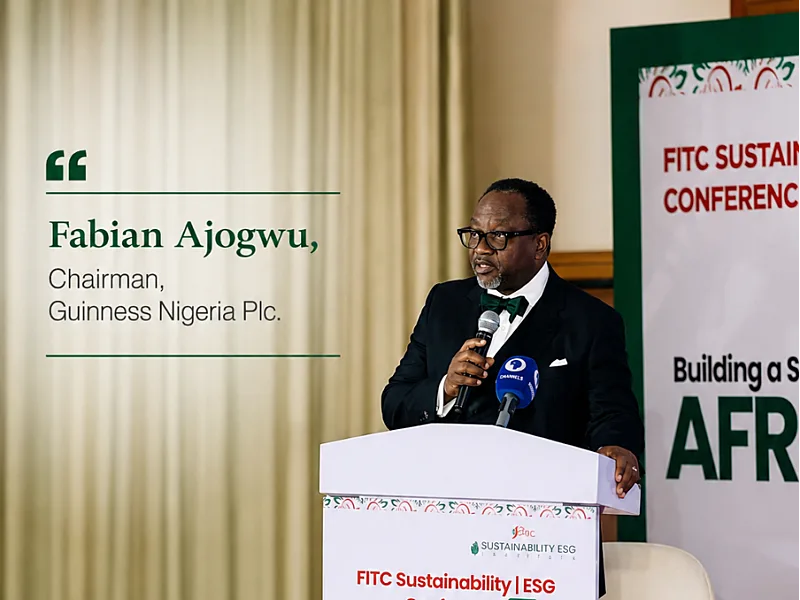
By mid-2026, African thought leaders and governance experts converged on the urgent need to build trusted institutions and governance frameworks that are deeply rooted in local realities rather than imported templates. As Fabian Ajogwu stressed, Africa must transition from being ESG rule takers to rule makers, crafting standards and governance models that reflect the continent's unique economic and social contexts to prevent resource wealth from fueling disorder. This foundational governance is critical, with Ajogwu warning that poor governance costs Africa up to $90 billion annually, while Mosun-Belo Olusoga emphasized that leadership and disciplined execution—not potential alone—are essential to convert Africa’s natural and human capital into sustainable prosperity.
The 2026 FITC Sustainability & ESG Conference in Lagos underscored that sustainable development in Africa hinges on robust collaboration between public and private sectors, embedding ESG into boardroom strategy and capital allocation. Leaders like CIoD President Otunba Adetunji Adetokunbo Oyebanji highlighted that sustainability must transcend compliance to become a core economic strategy driving competitiveness and investor trust. This shift is echoed by calls to unlock indigenous capital sources—such as pension funds, green bonds, and blended finance—to fund critical infrastructure, renewable energy, and inclusive enterprises, addressing the continent’s underutilization of green finance instruments despite their vital role in the green transition.
To build market trust and attract much-needed green finance, Africa is advancing locally relevant ESG standards and credible reporting frameworks tailored to its development priorities. Nigeria’s Financial Reporting Council, for example, is spearheading the phased adoption of IFRS Sustainability Disclosure Standards to enhance consistency and credibility in sustainability reporting. However, the continent’s ESG future depends on moving beyond rhetoric to measurable transformation through innovation, credible reporting, and behavior change, a call to action that dominated discussions at the 2026 conference and signals a maturing ESG ecosystem focused on tangible impact.
Tech and Capital Fuel ESG Gains
AI-driven compliance tools and a surge in sustainable finance are enabling African companies to turn ESG from a regulatory cost into a strategic growth engine and market differentiator.
By mid-2026, African companies have begun to unlock tangible business value from sustainability by embedding ESG metrics into enterprise risk management and corporate strategy, tracking indicators such as total contract value linked to sustainability criteria. This integration transforms ESG from a mere compliance obligation into a strategic growth driver, enabling CFOs and finance teams to quantify risk exposures—including physical climate risks—and steward profitability more effectively. Technologies like Workiva’s AI-powered GRC platforms further enhance this shift by automating compliance, anticipating emerging risks in real time, and scaling assurance without proportional increases in headcount, thus boosting operational efficiency and long-term value creation.
The expansion of sustainable finance across Africa, highlighted by institutions like the Central Bank of Nigeria, represents a pivotal opportunity to mobilize private capital toward projects that deliver measurable environmental and social outcomes alongside commercial returns. Sectors such as renewable energy have directly benefited from increased ESG investment, with institutional investors ramping up allocations for power generation and energy access. Meanwhile, exporters in carbon-intensive industries like steel and cement are leveraging compliance with emerging global carbon regulations to maintain competitiveness in European markets, turning regulatory burdens into strategic advantages that protect export revenues and enhance market access.
African companies are increasingly recognizing ESG as essential market infrastructure for securing investment and consumer trust, shifting sustainability from philanthropy to a core business imperative embedded at the board and capital budget levels. Nigeria’s Financial Reporting Council and governance leaders emphasize credible, consistent sustainability reporting aligned with international standards such as the IFRS Sustainability Disclosure Standards, which builds market confidence and transforms ESG into a strategic opportunity that drives brand relevance, especially among younger consumers. This boardroom-level integration enables companies to manage compliance costs proactively while unlocking long-term value creation.
Despite economic and geopolitical uncertainties, over 90% of African business leaders view sustainability investments as critical competitive advantages, increasingly integrating ESG considerations into core financial and operational decisions like capital allocation, supply chain management, and risk mitigation. Companies are adopting a 'crawl, walk, run' approach to transition from defensive compliance to strategic sustainability management, leveraging sustainability data as operational intelligence to reduce resource use and improve profitability. Automation of data collection and embedding repeatable workflows for double materiality assessments further enable efficient compliance and robust ESG disclosures, justifying investments in management systems by quantifying risk reduction and long-term performance benefits.