Agentic AI moves into autonomous teammates
The gist
Agentic AI is leaping from passive productivity helpers to proactive, autonomous teammates—reshaping how individuals and enterprises manage work, collaborate, and lead.
What to know
- By early 2026, agentic AI is deployed across major companies like Vercel, Workday, and LinkedIn, automating over 80% of IT tickets and boosting sales and self-service rates.
- Solopreneurs and creators are building personal AI stacks—multi-agent systems that run complex tasks (media, ops, research) with deep contextual personalization, even while they sleep.
- The rise of orchestration platforms like Relay.app signals a shift from SaaS to agent-driven architectures, where humans act as directors managing fleets of specialized AI teammates.
From Tools to Teammates
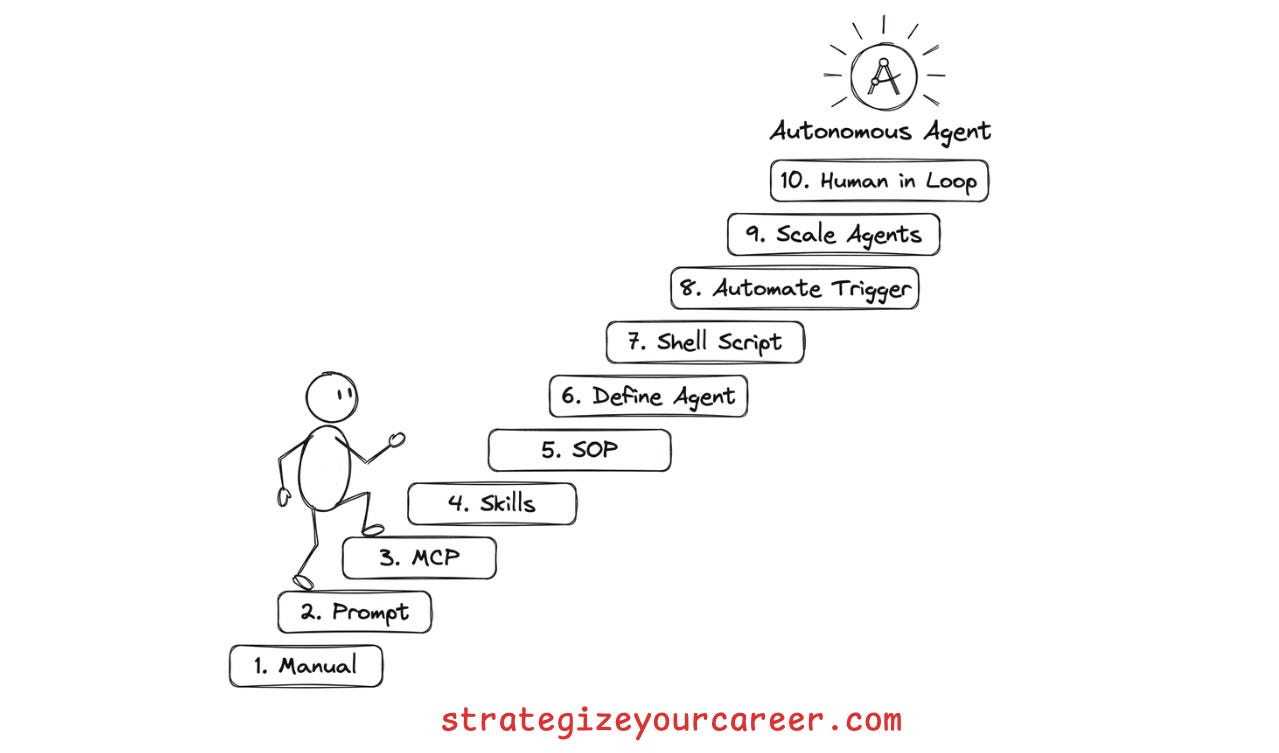
Agentic AI demands a mindset shift—from operating tools to managing autonomous collaborators—forcing organizations to develop new skills in oversight, trust calibration, and AI-native talent management.
The foundational challenge in agentic AI adoption stems from widespread confusion and skepticism fueled by early misrepresentations, such as OpenAI's initial 'Agent' demo that failed to demonstrate practical utility beyond scripted scenarios. Unlike traditional AI tools like ChatGPT, which fit neatly into existing user mental models as reactive assistants, true AI agents are defined by their proactive autonomy, deep integration into workflows, and capacity to perform and improve on repetitive tasks independently. This fundamental difference demands users shift from viewing AI as a tool they operate to a collaborator that works continuously on their behalf, even asynchronously.
By early 2026, thought leaders like Greg Brockman and productivity experts emphasized that harnessing agentic AI requires a profound mental model shift—from direct prompting to managing AI agents as if leading a small team. This new paradigm involves delegating complex, ongoing tasks to autonomous agents while maintaining active oversight and iterative engagement, akin to directing rather than doing. However, this transition is fraught with risks, including security vulnerabilities when safeguards are insufficient, underscoring the necessity of developing new management disciplines to calibrate trust, set boundaries, and ensure accountability.
Organizational adoption of agentic AI further reveals a critical talent and capability gap: companies often train employees on AI prompting but neglect the essential skills of leading and managing autonomous agents. As Gianpaolo Barozzi of Cisco and studies like the 2025 MIT Sloan Management Review highlight, the human role is evolving from user to director, requiring new frameworks to treat AI agents variably as interns, service providers, or teammates—each with distinct expectations around supervision and trust. This shift mandates aligning talent strategies to prioritize AI-native collaborators who can effectively partner with agentic AI, reallocating human effort from routine tasks to higher-level oversight.
Despite the transformative promise of agentic AI, mainstream adoption outside the tech sector remains limited due to complex user experiences and the cognitive load of articulating goals and delegating multi-step tasks. Unlike the viral simplicity of ChatGPT's single input-output interface, agentic AI demands users embrace a director mindset, which is currently supported primarily in enterprise environments where IT departments facilitate deployment and integration. Nevertheless, industry experts like Josh Miller remain optimistic that as UX improves and distribution channels mature, agentic AI will break through to broader consumer markets, unlocking its trillion-dollar potential.






Rise of Personal AI Stacks
Solopreneurs are building deeply personalized, multi-agent AI ecosystems that automate complex workflows with continuous, context-aware execution—turning AI into a proactive partner, not just a productivity tool.
By early 2026, individuals and solopreneurs have transitioned from using AI as simple productivity tools to orchestrating sophisticated personal AI stacks composed of multiple specialized agents. This evolution is exemplified by pioneers like Parth Patil and entrepreneurs such as Kat GBT and Kieran, who leverage advanced prompting techniques, multi-agent orchestration, and deep context engineering to automate complex workflows ranging from media creation to business operations. These personal AI ecosystems not only handle routine tasks like email triage and calendar management but also autonomously execute multi-step processes, demonstrating a shift toward AI as a meta-tool that acts more like a personal assistant or small team than a mere chatbot.
Hands-on experimentation and iterative refinement are critical in developing effective agentic AI workflows for individuals, as seen in practical guides and case studies where users build autonomous agents that run continuously—even while they sleep. This process involves meticulously describing tasks, breaking them into agent-shaped pieces, and employing separate agents for execution and verification to mitigate productivity losses from flawed automation. Tools like MCP standards and multi-agent orchestration platforms enable seamless integration with existing systems, reducing friction and enabling agents to manage complex tasks such as social media, payment processing, and research autonomously, as demonstrated by users like Nat Elias and the creator of Mr. Tibbs.
Personalization and deep contextual understanding are foundational to maximizing agentic AI’s impact on daily workflows, with users investing significant effort in onboarding their AI agents to capture personality traits, preferences, and detailed workflows. This deep personalization enables AI to proactively assist with complex tasks, from generating daily briefings and managing to-do lists to automating creative content production and business operations. Leaders like Garry Tan advocate building compounding AI stacks that evolve over time, effectively serving as a 'personal second brain,' while hands-on users emphasize that the more context an AI has, the more it can save time and enhance productivity, transforming the AI-user relationship into a trusted partnership.
Despite the transformative potential of agentic AI for personal and small-scale workflows, users must navigate significant risks and challenges, including security concerns and the need for proper safeguards. Experts caution that without context and controls, powerful AI agents can be dangerous, underscoring the importance of permission settings and environment segregation to prevent unintended consequences. Moreover, widespread adoption depends heavily on user experience design and hands-on engagement, as many remain skeptical until they personally experiment with AI agents. Emerging tools like Manis Mail and platforms such as Tasklet exemplify efforts to democratize access by embedding AI directly into familiar workflows like email, enabling even non-technical users to harness agentic AI effectively.





Enterprise Workflows Rewired
Major companies are embedding agentic AI directly into sales, IT, and HR processes, using new governance models and orchestration frameworks to achieve dramatic gains in efficiency and measurable business impact.
By early 2026, agentic AI had moved decisively from pilot projects to operational deployment across diverse enterprise workflows, notably in sales, IT service management, and HR. Vercel’s COO Jean Dwit Grosser highlighted how AI automation boosted sales teams’ customer-facing time from 30% to 70%, enabling strategic outbound prospecting in complex enterprise accounts. Similarly, Workday leveraged agentic AI to automate help desk ticket categorization and interview scheduling, significantly reducing human effort and enhancing candidate experience through real-time feedback and calendar integration.
The evolution of agentic AI architectures and governance models has been pivotal for scaling enterprise adoption. Leaders like Artur Huk advocate for Responsibility-Oriented Agent (ROA) frameworks that embed bounded authority, audit trails, and validation to securely manage multi-agent interactions. Meanwhile, vendors such as Automation Anywhere and KUKA demonstrate how unified operating systems and multi-agent orchestration enable continuous, autonomous execution of complex workflows—achieving over 80% auto-resolution rates in IT service desks and flexible automation in industrial settings without increasing headcount.
Enterprises are increasingly embedding agentic AI directly into core business processes and user environments to reduce friction and drive measurable impact. Rox’s transition to a 100% self-serve platform allows seamless integration with Salesforce and supports a broad suite of AI-powered sales workflows, from live call coaching to forecasting. Groweon’s AION platform advances this trend by enabling no-code AI configuration within CRM systems, balancing autonomous AI execution with human oversight through configurable escalation rules, thus transforming CRM from a system of record to a system of action.
Successful enterprise adoption hinges on a phased, process-first approach that emphasizes workflow design, human-AI role clarity, and robust governance. TechTarget’s case studies reveal that multi-agent architectures aligned to real-world roles can reduce task completion times by up to 90%, while governance frameworks involving AI steering committees and continuous monitoring ensure safe, consistent AI use. Moreover, maintaining humans in the loop for critical decisions and transparent communication about AI’s impact are essential to overcome cultural resistance and build trust, with outcome measurement focused on both efficiency gains and ROI.



Customer Service Gets Proactive
Agentic AI is transforming customer experience by autonomously resolving multi-step requests, scaling human agents into strategic advisors, and turning support from a cost center into a growth engine.
By early 2026, agentic AI was already reshaping customer experience from reactive Q&A bots to proactive, multi-step task completers, exemplified by ByteDance's Doubao 2.0 which emphasized 'less talking, more doing' to embed AI into daily customer habits. This evolution addresses customer demand for 'just handle it' moments, streamlining complex service interactions like refunds and rescheduling into single-request completions that reduce friction and frustration. Deloitte Digital data underscores the tangible business impact, with 43% of organizations expecting over 30% contact center cost reductions and 64% reporting boosted agent productivity, highlighting that managing AI as part of an integrated service system—not isolated automation—is key to sustainable gains.
Voice-enabled and multi-channel AI agents have become critical in lowering customer effort during high-stress journeys, as seen with Uber Eats’ AI that builds grocery carts and manages substitutions seamlessly, preventing order drop-offs. The rapid mainstreaming of voice AI—where 15% of organizations are actively building agents and 98% plan deployment within a year—signals a pivotal shift from novelty to revenue infrastructure. These agents now serve multifaceted roles, from qualifiers to upsell assistants, with advanced personalization through voice mimicry and multiple personas, enhancing naturalness and trust in customer interactions.
Leading companies like LinkedIn and Intercom illustrate how agentic AI scales human agents rather than replaces them, transforming support reps into trusted advisors who proactively engage customers and drive revenue growth. LinkedIn’s AI agents autonomously resolve common workflows end-to-end, increasing self-service rates to 65% and resolving 80% of questions via chat, while strategically positioning AI support at moments of curiosity rather than frustration to improve tone and outcomes. Intercom’s AI agent Finn, spun off as a separate brand, dramatically boosted growth rates from 4% to 37%, underscoring how proactive, AI-driven customer service can shift support from a cost center to a strategic growth function.
The successful scaling of agentic AI in customer service hinges on a balanced human-AI collaboration, robust data governance, and continuous operational refinement. Firms like KPN and GetVocal emphasize starting with small pilots to prove productivity gains, maintaining accurate knowledge bases, and integrating AI-generated task overviews that nudge human agents toward next actions, reducing handling time and frustration. Advanced systems incorporate layered supervision to minimize hallucinations and errors, with human escalation paths ensuring reliability surpasses human agent standards. This hybrid approach not only improves efficiency—doubling operational metrics in some cases—but also elevates customer experience by enabling personalized, context-aware, and proactive interactions across multiple channels.





Voice AI Becomes Revenue Core
Voice AI agents have evolved into indispensable, multi-role conversational interfaces—accelerating workflows, personalizing interactions, and setting new standards for seamless, real-time customer service.
By early 2026, voice AI agents had evolved far beyond their origins as simple chatbots or IVRs, transitioning into sophisticated multifunctional roles such as qualifiers, schedulers, concierges, and upsell assistants. This shift marked their emergence as essential revenue infrastructure rather than mere novelty, driven by the integration of multiple specialized large language models (LLMs) combined with advanced voice cloning and multi-modal context. Companies like Figure demonstrated this evolution by enabling end-to-end loan closings through 40-minute conversational calls, while Home Depot’s AI voice agent accelerated customer service by identifying intent in just 10 seconds, showcasing how voice AI is reshaping customer experience across industries.
Voice AI is rapidly emerging as a transformative conversational interface layer that complements existing digital channels rather than replacing them, creating a new medium for interaction that is particularly well-suited to frontline workers and complex enterprise workflows. As Mitel CTO Luiz Domingos explains, voice is becoming the natural interface for AI, enabling real-time insights, automated documentation, and intelligent routing that bridge gaps in traditional communication tools. This interface shift is especially pronounced in regulated industries like healthcare, insurance, and financial services, where voice AI’s capabilities for workflow control, identity validation, and agent monitoring have accelerated adoption beyond expectations.
Technological advances in voice cloning, latency reduction, and multi-turn conversational management have been pivotal in making voice AI agents practical and commercially viable by 2026. Innovations from companies like 11 Labs have overcome the uncanny valley with natural intonation and near-zero latency, enabling real-time interactions that small businesses—from plumbing services to large contact centers—can deploy for both inbound and outbound communications. Moreover, deep observability and precise handling of interruptions and context compaction have addressed critical challenges, ensuring conversations feel natural and responsive, with sub-500ms latency becoming the gold standard for seamless user experience.
Voice AI agents have found fertile ground in diverse and sometimes unexpected industries, revolutionizing workflows in logistics, education, government, and telephony by orchestrating complex, multi-system interactions with nuanced understanding of when to engage or remain silent. For example, Happy Robot integrates voice AI to coordinate fragmented enterprise logistics operations, while Ukraine’s government uses voice agents to provide frontline and educational information amid conflict. In telephony, voice AI replaces clunky touch-tone menus with natural conversations, enhancing collections and in-home patient check-ins, and offering 24/7 availability that reduces reliance on human answering services, thus broadening the scope and impact of conversational AI across sectors.





Orchestration: The New Platform Shift
Multi-agent orchestration platforms are redefining enterprise software, positioning AI agents as the new business logic layer and challenging the gravitational pull of traditional SaaS and systems of record.
The future of enterprise AI is rapidly coalescing around multi-agent systems and sophisticated orchestration platforms that enable seamless collaboration among specialized AI agents. Platforms like Relay.app and LangGraph act as central 'brains' coordinating diverse AI capabilities—ranging from OpenAI's GPT-4o for nuanced communication to custom Python scripts for execution tasks—allowing complex workflows to be automated end-to-end. This orchestration-first approach is transforming traditional workflows by enabling agents to hand off tasks like a relay team, as seen in luxury concierge use cases, and is driving a fundamental shift from isolated chatbots to integrated digital teammates that collectively learn and share context across teams.
While agentic AI systems increasingly automate repetitive and data-intensive tasks, human judgment remains indispensable for editorial, strategic, and governance decisions, ensuring trust and accountability within AI-augmented workflows. As articulated by the author working with Claude, 'AI handles the repetitive work... What it can't do is decide what matters. That's your job.' This human-agent collaboration is echoed by Meghna Shah, who emphasizes that humans and agents are collaborators rather than competitors, unlocking new possibilities through workflow orchestration and enabling simultaneous execution of multiple processes that vastly outpace traditional linear human workflows.
The transition from SaaS to agent-driven architectures marks a profound platform shift where AI agents assume business logic roles, fundamentally redefining workflow execution and enterprise software dynamics. Satya Nadella frames this evolution as moving from human-UI interaction to a new surface where agents autonomously read context, choose actions, and call tools. This shift is catalyzing significant investment and startup activity, with big tech and new entrants racing to build multi-agent orchestration platforms that supplement rather than replace SaaS, embedding agents within existing systems of record like Salesforce to ensure durability, security, and compliance. Bret Taylor’s analogy of systems of record as the 'sun' raises critical questions about whether the gravitational center of enterprise software will shift toward AI agents, reshaping governance and trust frameworks.
Looking ahead, the agentic enterprise faces complex challenges in embedding multi-agent systems safely and reliably at scale, requiring invisible infrastructure that balances autonomy with governance and accountability. Thought leaders like Artur Huk advocate responsibility-oriented agents with micro-contracts to maintain control in multi-agent interactions, while emerging roles such as 'AI operators' become crucial for orchestrating workflows and rethinking enterprise processes. The rise of multi-enterprise, multi-agent workflows operating beyond natural language interfaces demands new policy alignment and trust frameworks to manage 'alien intelligence'—a term highlighting AI’s unprecedented autonomy and complexity. As agent traffic on the internet now surpasses human traffic, the future hinges on scalable solutions that align AI behavior with business and societal goals, transforming not only workflows but also power dynamics within organizations and communities.