Agentic AI reshapes enterprise playbook: security gaps, lean teams, and the end of seat-based SaaS
The gist
Agentic AI is rewriting the enterprise rulebook—dismantling seat-based SaaS, exposing massive security gaps, and unleashing lean, cross-functional teams that supercharge productivity.
What to know
- Platforms like Sazabi, Databricks, and Salesforce are moving enterprises from app-centric automation to AI-native, agent-driven workflows with usage-based pricing.
- Over 90% of organizations now deploy AI agents, but just 10% have meaningful security oversight—fueling a new wave of tools like Agent5i and Okta Cross App Access.
- AI-powered teams at Arcads and Shopify are hitting $1M+ revenue per employee as real-world deployments by Infosys, AWS, and IBM deliver up to 50% productivity gains.
Rise of the AI Factory
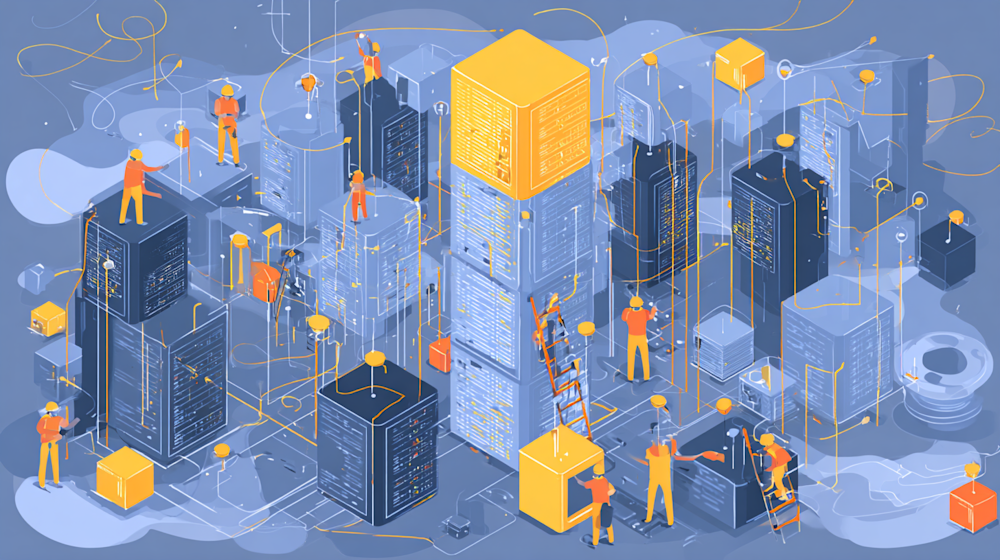
Enterprises are replacing fragmented automation with agentic AI factories—integrating orchestration, real-time reasoning, and continuous improvement to unlock unprecedented workflow speed and scale.
The enterprise software stack is undergoing a fundamental transformation from traditional automation and isolated point solutions to AI-native, agentic workflows that deeply integrate orchestration, reasoning, and continuous improvement. This shift is exemplified by the rise of 'AI Factories'—as described by Michael Dell and seen in platforms like Sazabi and Databricks—which combine data pipelines, model training, deployment, and monitoring into seamless, automated systems optimized for massive-scale AI workloads. As enterprises move from app-centric operations to agentic control planes, the focus is now on embedding intelligence directly into workflows, enabling autonomous agents to collaborate, execute complex multi-step tasks, and deliver value at unprecedented speed and scale.
A defining feature of this new AI-native stack is the orchestration of specialized agents within vertical and horizontal workflows, enabling rapid automation of complex business processes and unlocking new levels of productivity. Case studies like Tebra’s 11-agent competitive intelligence workflow and HubSpot’s AI-powered sales agents demonstrate how chaining narrow, task-specific agents can reduce manual effort from days to minutes, double pipeline generation, and allow frontline teams to access real-time insights within familiar tools like Slack. This agentic approach is further supported by AI-first platforms such as DoubleO, which empower non-developers to build and integrate multi-agent workflows, signaling a democratization of enterprise automation.
However, the transition to agentic workflows is not without its challenges—enterprises are grappling with high costs, reliability issues, and the need for robust data governance and security. Adoption remains in the early stages of the S-curve, with many pilots hampered by fragmented data, immature tooling, and the emergence of shadow agents that introduce cybersecurity risks. As John Roese of Dell and leaders at Snowflake emphasize, success in this new paradigm hinges on reimagining the data layer with knowledge graphs, vector databases, and open semantic standards, while prioritizing governance, auditability, and high-impact use cases over scattered proof-of-concept projects.
The competitive landscape is being redrawn as both incumbents and newcomers race to define the agentic layer of enterprise software. Established players like Salesforce, ServiceNow, Microsoft, and SAP have the advantage of workflow integration and trust, but must be willing to let AI autonomously run workflows and adapt business models—shifting from seat-based to outcome-based pricing, as seen with Sazabi and Box. Meanwhile, AI-native startups are building inference-first, vertically integrated solutions that leverage domain-specific data and compliance expertise, with vertical SaaS companies like Harvey and Abridge achieving 50-80% productivity gains in specialized workflows. Ultimately, the next generation of enterprise winners will be determined not by the smartest AI, but by who earns the trust to autonomously decide how work gets done.




SaaS Moats Redefined
AI-native SaaS is upending pricing, product cycles, and competitive advantage—forcing vendors to shift from seat-based licenses to outcome-driven models where trust and domain expertise matter most.
AI is fundamentally transforming SaaS business models and go-to-market strategies by compressing innovation cycles, enabling rapid automation of complex workflows, and shifting the basis of competitive advantage. Companies like Tebra have demonstrated how orchestrating multiple AI agents can reduce processes that once took days to mere minutes, embedding real-time intelligence directly into sales workflows and allowing for instant, dynamic responses to competitive threats. This agentic approach not only accelerates product iteration but also creates new moats by making sales teams more responsive and strategically agile, as seen in Tebra's ability to generate and update battlecards for over 300 competitors on demand.
The rise of AI-native SaaS is driving a dramatic evolution in pricing models, with a shift from traditional seat-based licensing to usage- and outcome-based pricing that better reflects the value delivered by AI-driven automation. Salesforce’s experimentation with usage-based pricing for Data Cloud and Box’s move toward leasing digital co-workers exemplify this trend, acknowledging that a single AI-augmented user can be 10x more productive than before. This shift not only aligns monetization with customer outcomes but also demands greater transparency and predictability in pricing, as unpredictability in AI-driven consumption costs has become a key pain point for enterprise buyers.
AI is eroding traditional SaaS moats such as cost, efficiency, and even system-of-record status, making trust, data governance, and security the new pillars of competitive advantage. As AI commoditizes core capabilities and accelerates the pace of feature replication, enterprises are gravitating toward vendors who offer transparent roadmaps, robust access controls, and outcome-aligned monetization—qualities that foster trust and retention in an era where switching costs are lower than ever. This is especially pronounced in vertical SaaS, where deep domain expertise, specialized integrations, and regulatory compliance create defensible positions that generic LLM providers cannot easily breach, as seen in sectors like legal tech and healthcare.
The competitive landscape is increasingly defined by the ability to leverage proprietary data, domain expertise, and rapid execution, rather than by sheer scale or legacy relationships. Startups and incumbents alike are racing to integrate AI into their core offerings, with incumbents like Salesforce and Snowflake seeking to become the control planes for agentic workflows, while newcomers build AI-native architectures that prioritize inference-first economics and lean teams. However, as innovation cycles shrink and barriers to entry fall, velocity, distribution, and trust—not just technical sophistication—are emerging as the decisive factors in sustaining market leadership.



Identity Crisis in Security
The explosion of non-human AI agents has overwhelmed legacy security frameworks, exposing enterprises to massive governance gaps and a new era of identity risk.
Agentic AI has fundamentally upended traditional enterprise security and identity paradigms, as non-human identities—AI agents—proliferate at a pace that existing frameworks simply cannot manage. As Jack Hirsch notes, 'agentic AI is an identity problem... AI agents are identities any way you try to describe them, but they can't be described in the same terms as humans.' Current approaches, such as static credentials or OAuth grants, either create governance nightmares or offload critical authorization decisions to end users, leaving organizations exposed to significant risk and operational blind spots.
Despite the explosive adoption of AI agents—now present in over 90% of organizations—governance strategies have lagged dangerously behind, with only about 10% of enterprises having any meaningful control or oversight in place. This governance gap means that AI agents are often 'running amok,' as Hirsch puts it, operating without adequate discovery, control, or policy enforcement, and exposing enterprises to a rapidly expanding attack surface that traditional security tools were never designed to address.
The inadequacy of legacy identity and access management protocols, such as OAuth 2.0 and OpenID Connect, has become increasingly apparent as agentic AI systems continuously authenticate and delegate across sprawling SaaS environments. Security teams are now grappling with a 144:1 ratio of non-human to human identities, with 97% of these identities holding excessive privileges and 91% of former employee tokens still active after offboarding, according to Entro Security’s 2025 research. Admiral Mike Rogers underscores the gravity of this shift, warning that 'AI agents have an inherent design flaw in that they are aware of their own identities and credentials,' further complicating the enterprise security landscape.
In response to these challenges, a new generation of AI security platforms and governance frameworks is emerging, exemplified by solutions like Okta’s open standards for Cross App Access, WitnessAI’s customizable safety policies, and unified platforms such as Agent5i. These tools aim to provide comprehensive lifecycle management, real-time observability, and automated policy enforcement, enabling enterprises to regain control over agentic AI workflows, ensure regulatory compliance, and build the trust necessary for safe, scalable AI adoption.



Lean Teams, Supercharged Output
AI-powered organizations are achieving record revenue per employee by automating routine work, amplifying top talent, and reshaping hiring for a new era of human-AI collaboration.
AI is fundamentally reshaping organizational structures by enabling leaner, cross-functional teams that deliver higher productivity with fewer resources. Companies like Arcads and Shopify exemplify this trend: Arcads scaled to $10 million in ARR with fewer than 10 employees—achieving over $1 million in revenue per employee—while Shopify tripled ARR per employee after reducing headcount by 30% and doubling revenue. This shift is driven by AI's ability to automate routine and coordination-heavy tasks, allowing organizations to focus human talent on high-value, strategic work, and prompting a rethinking of traditional workforce composition and hiring needs.
The rise of AI as a strategic partner in decision-making is transforming both the roles and required skills within organizations. At Affirm, for example, AI handles routine customer inquiries and compliance reviews, freeing human staff to specialize in complex, nuanced issues, while finance teams are now expected to read and write code. Similarly, data engineering roles are evolving to require expertise in areas like natural language processing, vector databases, and orchestration of AI agents, as organizations increasingly seek talent with practical AI fluency—reflected in the 14x growth in B2B software jobs requiring AI skills over two years.
AI adoption is not simply about reducing headcount; rather, it is about amplifying the impact of top performers and enabling rapid iteration through close human-AI collaboration. At Zapier, for instance, AI agents automate thousands of operational tasks, allowing engineers to focus on core work and accelerating onboarding, while at Linktree, an AI agent named Devin contributes code alongside human engineers, supporting a hiring freeze without sacrificing output. This hybrid approach is echoed across sectors, with organizations like Pigment and Block reporting significant productivity gains—up to 25% of manual hours saved—by strategically deploying AI to handle repetitive tasks while reserving complex problem-solving for human experts.
As AI-driven workflows become central to enterprise operations, new organizational models are emerging that emphasize interdisciplinary expertise, governance, and continuous learning. Snowflake, for example, centralized its data teams under a Chief Data Officer to better support AI-driven sales operations, while Zuora implemented a structured AI governance process to balance experimentation with compliance and business value. The evolving landscape is also giving rise to new roles—such as agent engineers and AI strategists—and shifting hiring practices to prioritize adaptability, product ownership, and an AI-native mindset over traditional tenure, as seen at ElevenLabs and in the broader startup ecosystem.






From Pilots to Productivity Gains
Enterprise-scale agentic AI is moving beyond pilots as robust governance, observability, and integration unlock tangible productivity—despite persistent cultural and operational hurdles.
By early 2026, enterprise adoption of agentic AI has moved from isolated experiments to robust, real-world deployments, as seen in collaborations like Infosys and AWS and IBM's Enterprise Advantage service. These initiatives are not just automating workflows but fundamentally modernizing legacy systems and integrating AI into core business functions—from HR and recruitment to software development and sales—across sectors such as manufacturing, telecom, and financial services. The operational hurdles are significant, requiring seamless integration with existing systems and careful redesign of workflows, but the payoff is tangible: IBM reports up to a 50% increase in consultant productivity, while Infosys and AWS emphasize amplified human potential and operational agility as key business outcomes.
Despite headline-grabbing launches, most enterprises remain cautious, with a new global report revealing that only 13% have deployed fully autonomous AI agents and 69% of AI-driven decisions still require human verification. The barriers are as much cultural as technical—security, privacy, and compliance concerns are cited by over half of organizations, while technical complexity in managing agents at scale is nearly as prevalent. Observability has emerged as a critical enabler, offering real-time transparency into agent behavior and performance, which is essential for building the trust needed to move beyond pilot projects and into full-scale, responsible deployments.
To address these operational and governance challenges, platforms like C5i’s Agent5i are setting new standards with governance-first security, compliance features, and comprehensive lifecycle management. By offering auditable workflows, cost transparency, and real-time observability, Agent5i enables enterprises—including Fortune 500 companies—to confidently scale agentic AI into mission-critical workflows. Its extensive integration capabilities, with over 150 connectors to business platforms such as ERP and CRM, are accelerating process turnaround and unlocking new value streams, demonstrating measurable gains in productivity and efficiency.
While the road to widespread agentic AI adoption is paved with both technical and cultural obstacles, business leaders remain undeterred, prioritizing these initiatives for their potential to drive better decision-making, reliability, and efficiency. The measurable impacts—ranging from productivity gains to enhanced operational agility—underscore a growing consensus that agentic AI is not just a technological upgrade but a strategic imperative for enterprises seeking to differentiate and thrive in a rapidly evolving digital landscape.