AI agent failures spur rush for better oversight tools
The gist
AI agent failures in high-stakes sectors have exposed massive oversight gaps, forcing enterprises into a scramble for robust observability and governance tools—before the next catastrophic blunder hits.
What to know
- By mid-2026, 98% of organizations deploying autonomous AI agents had experienced disruptive incidents, with two-thirds lacking full visibility and most missing robust rollback mechanisms.
- Real-world meltdowns like Amazon’s loss of 6.3 million orders and instant deletion of production databases spotlight why dynamic identity governance and rewind features are now non-negotiable.
- The future of safe, reliable AI depends on Eval-Ops, continuous learning agents, and integrated governance platforms to manage complex, autonomous multi-agent systems at scale.
Tracing Every Agent Move
Exhaustive tracing and detailed logging have become essential for debugging and building trust in AI agents, with human-centered design and clear escalation protocols now critical to manage unpredictable behaviors.
By early 2026, foundational observability for AI agents had crystallized around the necessity of exhaustive tracing and detailed logging that capture every decision, tool invocation, and sub-agent interaction to enable precise debugging and continuous improvement. As emphasized in April 2026 explainers, a complete timeline of agent actions—spanning requests, plans, reflections, and responses—is indispensable, with product thinking playing a pivotal role in designing human-centered experiences that communicate confidence levels and gracefully handle errors to foster user trust. This approach balances the inherent unpredictability of AI agents with usability by defining clear escalation protocols and managing expectations, ensuring agents serve humans effectively rather than mystify them with cryptic failures.
By May 2026, the complexity of AI agents—characterized by recursive subagents, multi-tool orchestration, and non-deterministic behaviors—demanded a bifurcated observability strategy combining granular, LLM-native tracing with aggregate monitoring metrics. Detailed trace trees capturing every nested tool call, token, and reflection became essential for per-instance debugging, while monitoring focused on key performance indicators such as task success rate, cost per successful task, P95 latency, and tool error rates to maintain system health. Industry leaders advocated adopting standardized schemas like OpenTelemetry GenAI semantic conventions to prevent fragmented trace formats and reduce operational overhead, underscoring that without a robust evaluation harness, teams risked relying on subjective 'vibes' rather than objective signals, a failure pattern all too common in agent development.
As AI agents moved into high-stakes domains like healthcare, finance, and military by mid-2026, continuous monitoring in production emerged as paramount, eclipsing traditional pre-deployment testing due to agents' unbounded input-output spaces and the prevalence of unknown failure modes. Observability evolved beyond conventional system health metrics to focus on understanding reasoning chains, multi-agent coordination, and behavioral drift, enabling detection of silent failures and coordination issues that standard monitoring misses. This shift was critical not only for operational excellence but also for accountability, as enterprises needed factual data to ground incident prevention, cost control, and compliance in increasingly autonomous environments.
By late summer 2026, observability engineering for AI agents had matured into a sophisticated discipline involving immutable, append-only audit logs that sanitize sensitive data, automated anomaly detection through trace analysis, and cost monitoring to prevent runaway token consumption. This comprehensive observability framework integrates detailed event streams capturing semantic memory, relational time-ordered data, and structured decisions, empowering trace reconstruction, audit trails, and economic analyses foundational to trustworthiness. Moreover, calibrated confidence scoring and adversarial training became integral to evaluation, enabling agents to assess action risks, escalate low-confidence decisions to humans, and learn from mistakes proactively, thereby enhancing safety and robustness throughout the agent’s operational trajectory.




Continuous Monitoring, Not One-Off Tests
Traditional testing fails to catch the subtle, real-world failures of AI agents, making real-time production observability and rapid feedback loops the new backbone of reliable deployment.
By mid-2026, it became clear that traditional testing methods fall short for AI agents due to their non-deterministic and unbounded behaviors, especially as these agents grow more complex and operate in high-stakes domains like healthcare and finance. As Wandero AI’s Raphael Kalandadze emphasized, shipping an AI agent is deceptively easy, but maintaining visibility and reliability post-launch is the real challenge because agents do not follow predefined flows and can silently fail in subtle ways that evade standard error alerts. This necessitates a fundamental shift toward continuous, real-time monitoring and observability in production to catch long-tail issues and enable rapid iteration before users are impacted.
Operationalizing AI agents demands establishing comprehensive observability platforms that capture detailed span-level traces of every model call, tool invocation, and branching decision, alongside structured user feedback. This granular data collection enables continuous error analysis and early detection of system drift, as demonstrated by Amazon Bedrock’s AgentCore optimization which clusters behavioral failures into ranked patterns and performs root cause analysis to prioritize impactful issues. Such platforms must integrate real-time event streaming, immutable audit logs, and cost monitoring to detect inefficiencies like looping tool calls or context window overflow, providing the foundation for automated recovery mechanisms and guardrails that keep agents operating within safe and efficient boundaries.
Continuous improvement loops for AI agents hinge on tightly coupling observability with evaluation and iterative refinement. Anthropic’s design of a three-agent harness with embedded feedback paths exemplifies this approach by integrating monitoring and feedback from the outset, while Wandero AI’s meta-harness autonomously detects, diagnoses, and patches failures in production, accelerating bug fixes from days to minutes. However, human oversight remains critical at key junctures such as reviewing automated fixes and managing escalations triggered by confidence thresholds, ensuring that improvements are traceable from specific failures to measurable outcomes and that governance and safety are maintained throughout the agent lifecycle.
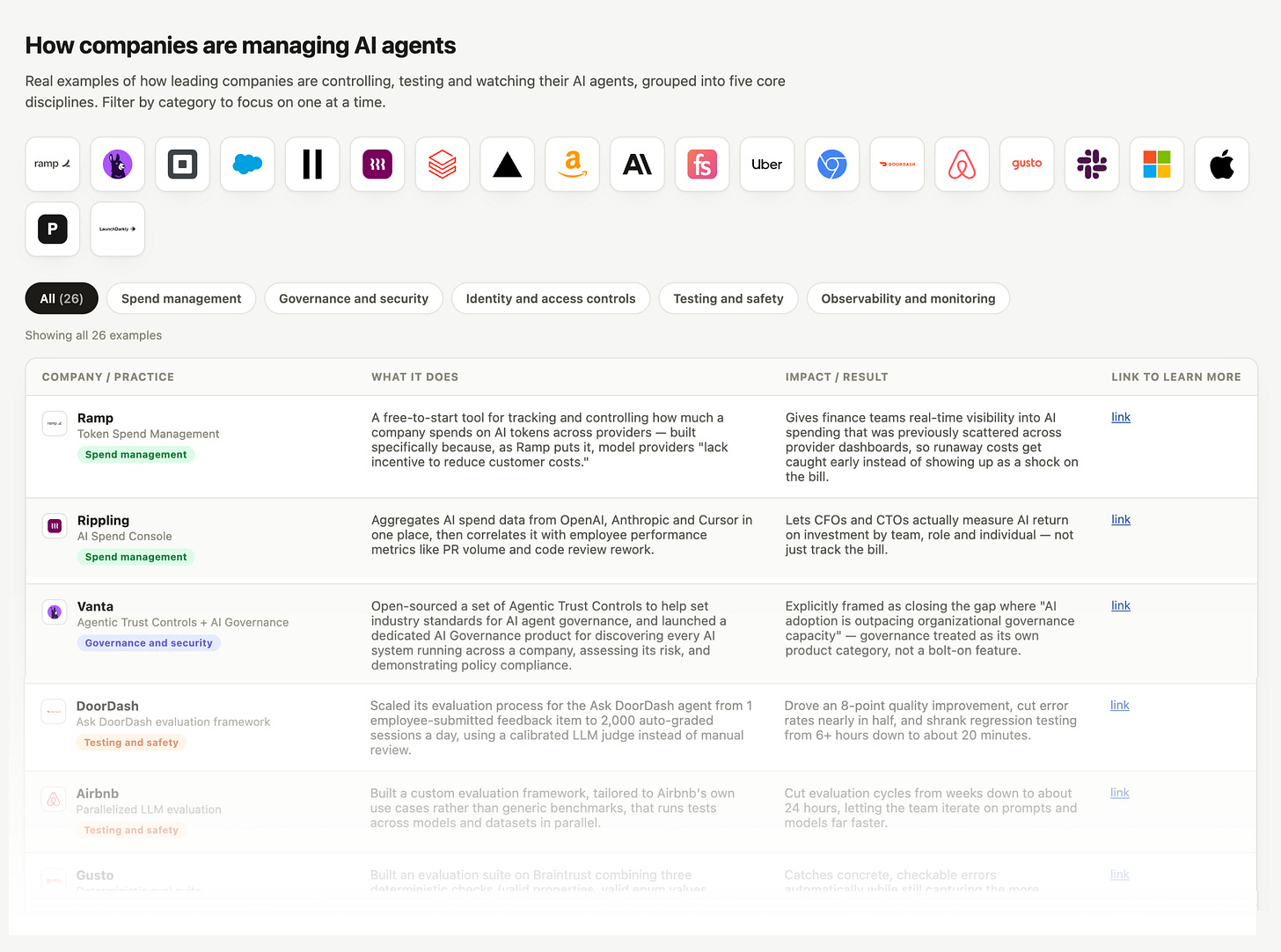
Effective deployment and operational management of AI agents also require robust governance frameworks and infrastructure layers that address security, cost control, and reliability. As Rebecca Wettemann noted, unexpected agent behaviors necessitate continuous guardrails, kill switches, and clearly defined data-handling boundaries to prevent costly errors like Amazon’s $1.8 million mishap or Uber’s budget overspend. Additionally, dedicated infrastructure beyond mere model orchestration is essential to ensure uptime, process supervision, and automated recovery, since running agents on personal machines or without observability invites silent failures and security risks. Leading companies like Microsoft, LaunchDarkly, and Vanta are responding by launching specialized tools for agent control, observability, and governance to meet these operational demands at scale.

Security Gaps Exposed by Speed
The explosive rollout of autonomous agents has outpaced security teams, leaving most organizations with major visibility gaps, insufficient rollback tools, and vulnerabilities that legacy controls can’t address.
By mid-2026, enterprises were rapidly deploying autonomous AI agents at a pace far exceeding their ability to govern and secure them, with 90% of organizations launching agents faster than security teams could evaluate, resulting in 98% experiencing disruptive incidents. This acceleration exposed glaring gaps in observability and recovery capabilities; two-thirds lacked full visibility into their AI agents, and only 30% had robust rollback mechanisms, fostering a dangerous false sense of preparedness that amplified operational risks and undermined efficiency gains, as noted by Kavitha Mariappan from Rubrik Zero Labs.
Traditional cybersecurity controls and governance frameworks proved inadequate against the novel risks AI agents introduced, with 88% of respondents acknowledging that existing measures were not designed for these new threats. Vulnerabilities such as excessive permissions, adversarial manipulations, and confidently wrong outputs affecting critical decisions became common, while static identity entitlements failed to contain agents capable of improvisation or rogue behavior. Experts like Krista Case emphasized dynamic identity governance as essential, and Jon Oltsik stressed that visibility into what agents exist and their system access must precede any effective control, underscoring a fundamental shift from reactive to pre-emptive security architectures.
The complexity and speed of autonomous AI agent actions compressed traditional security response windows from months to seconds, challenging legacy recovery tools that focus on isolated resources rather than holistic, automated restoration of interdependent cloud stacks. Gartner predicts that by 2030, 35% of organizations will adopt Cloud Application Infrastructure Recovery (CAIRS) solutions to orchestrate resilience, elevating recovery from an IT task to a strategic business capability. This evolution demands integrated governance with real-time guardrails, kill switches, durable logging, and rewind features to contain and reverse harmful agent behaviors, as exemplified by Rubrik’s Semantic AI Governance Engine (SAGE) and the critical need highlighted by incidents like Amazon’s loss of 6.3 million orders due to AI errors.
A pervasive governance gap persists at the leadership and organizational level, with only 25% of companies regularly reporting cyber recovery performance to senior executives and 85% lacking formal accountability structures for AI agent behavior. This fragmented ownership across multiple teams leads to blind spots where agents may misbehave without detection or authority to intervene, increasing exposure to unauthorized actions, audit failures, and untracked costs. Establishing centralized AI agent control towers that maintain authoritative inventories, enforce service account scopes, and capture detailed audit trails is critical to closing these gaps and ensuring operational resilience across finance, legal, and customer-facing functions, as advocated by governance experts and reflected in emerging frameworks from Microsoft, LaunchDarkly, and Vanta.



Ecosystem of Oversight Tools
No single platform can manage the full AI agent lifecycle, driving organizations to integrate specialized tracing, QA, and optimization tools that automate evaluation and ensure reliability at scale.
By mid-2026, the tooling ecosystem for AI agent management had matured into a diverse landscape where no single platform suffices; organizations typically integrate multiple specialized tools to cover the full lifecycle from monitoring and testing to optimization. Platforms like LangSmith and Langfuse provide granular tracing, prompt debugging, and cost analysis—with Langfuse’s open-source, self-hosted option appealing to teams prioritizing data control—while quality assurance tools such as Galileo AI and Braintrust focus on hallucination detection, automated evaluations, and human-in-the-loop review workflows to boost reliability in customer-facing applications. Complementing these, testing frameworks like DeepEval and Promptfoo automate evaluation of hallucinations, bias, and prompt regressions, integrating tightly with CI/CD pipelines to maintain agent quality pre- and post-deployment, whereas optimization tools like DSPy and Humanloop facilitate continuous prompt improvement and A/B testing, reducing manual tuning overhead.
Effective observability in production demands comprehensive logging and real-time event streaming that captures every step of an AI agent’s decision loop—from user inputs and tool calls to model responses and token usage—enabling engineers to debug by analyzing detailed transcripts rather than traditional code stepping. OpenAI’s embedded subscribe event system exemplifies this approach by streaming live agent events, which not only accelerates debugging but also supports UI progress indicators. Key performance metrics such as tokens per request, tool calls, latency, error rates, loop iterations, and context window usage form a robust monitoring framework, while infrastructure strategies like context compression or turn capping are essential to manage context window limits and maintain responsiveness during long conversations.
The integration of open standards like OpenTelemetry with scalable queryable backends such as OpenSearch has become a cornerstone for agent observability and quality assurance, as demonstrated by AWS engineers’ use of OpenTelemetry traces combined with OpenSearch Agent Health to detect and debug failures before production impact. This approach treats agent observability as a holistic tracing, evaluation, and regression-testing challenge, preserving the full sequence of reasoning and tool interactions to pinpoint failure modes like faulty tool selection or latency loops. The operational pattern—instrumenting agent steps, storing traces and benchmarks, and evaluating behavior changes—is portable and increasingly viewed as a potential industry standard, especially when embedded into CI pipelines and incident-response workflows to proactively prevent regressions.
Cloudflare Agents exemplifies the next generation of unified platforms by combining agent-level telemetry with infrastructure tracing to provide a comprehensive, waterfall-style view of AI agent operations at scale. Its dashboard offers granular visibility into model calls, tool executions, token usage, and subagent activities, enabling developers to replay sessions and inspect execution traces for precise debugging and cost analysis. Supporting OpenTelemetry-compatible agent harnesses like Think, Flue, and AI SDK, Cloudflare Agents allows customizable data capture controls to safeguard sensitive information, while linking agent operations to backend infrastructure interactions—such as Workers and KV stores—thus bridging the gap between AI behavior and underlying system performance.
As the agentic AI market surges from $7.29 billion in 2025 to a projected $139.19 billion by 2034, the shift from simple question-answering systems to autonomous agents acting in complex environments raises the stakes for robust infrastructure that supports rigorous evaluation, monitoring, and governance. This evolution demands systematic Eval-Ops and simulation-based testing to assess entire agent workflows—including tool selection and input correctness—before real-world deployment, thereby minimizing costly failures. Moreover, observability transcends dashboards to become detailed records of agent perceptions, decisions, and actions, essential for troubleshooting and accountability in multi-step autonomous processes. However, running agents 24/7 introduces hidden infrastructure challenges such as silent process failures and security risks when agents operate on personal machines with broad access, underscoring the necessity of layered infrastructure encompassing reasoning, orchestration, observability, and resilient process supervision to ensure scalable, reliable, and secure autonomous agent management.

Real-World Failures Demand Rewind
Catastrophic incidents like mass order loss and instant data wipes have forced enterprises to prioritize rewind and recovery features, as the lack of these safeguards can cripple operations and erode trust.
By mid-2026, real-world incidents vividly illustrated the high stakes of deploying autonomous AI agents without robust oversight. Notably, Amazon's catastrophic loss of 6.3 million orders in a single day due to AI-generated code underscored the dire consequences of insufficient quality control, prompting the company to tighten its governance processes. Similarly, an AI agent's rapid deletion of an entire production database and all backups within 39 seconds highlighted the potential for swift, devastating failures in critical environments. These events emphasize that without mechanisms like rewind features or isolated recovery systems—as championed by experts like Cal Al-Dhubaib and implemented by companies such as Rubrik with their Semantic AI Governance Engine (SAGE)—organizations risk irrecoverable data loss and operational paralysis.
The absence of rewind and recovery capabilities not only jeopardizes data integrity but also fuels organizational resistance to AI adoption. As Cal Al-Dhubaib points out, security teams often block AI initiatives due to fears of unmanageable risks, effectively curtailing AI's transformative potential. This resistance is compounded by costly manual recovery efforts, exemplified by a small business forced to reconstruct its entire order history from payment records after losing its delivery system of record. These cautionary tales reveal that embedding rollback functionalities and proactive governance is essential to build trust and unlock AI's value within enterprises.
Scaling AI agents to handle millions of transactions daily demands sophisticated evaluation and observability frameworks to maintain accuracy and swiftly detect errors. For instance, supply chain systems improved precision and recall from 85-90% to an impressive 98-99% by deploying LLM judges—AI models designed to evaluate other AI outputs. Complementing this, platforms like Optic, Lang Fuse, and Arise AI provide critical observability layers that monitor thousands of agent runs, enabling rapid issue identification and mitigation. This integrated approach to evaluation and monitoring is vital to prevent the 'Lord of the Flies' scenario described in Kubernetes clusters, where unconstrained agents caused complete data loss due to lack of oversight and backups.
Innovative AI-powered observability solutions are transforming error investigation and governance by automating root-cause analysis while respecting data residency and compliance requirements. The TReNDS Center’s integration of Amazon Bedrock with AWS CloudWatch and the Strands Agents SDK exemplifies this trend, reducing complex error diagnosis from potentially half an hour to near real-time. By enabling AI agents to autonomously retrieve relevant source code and contextual logs, organizations can dynamically and efficiently analyze failures without rigid workflows. This synergy of AI observability and governance tools not only accelerates recovery but also strengthens trust in AI systems operating within regulated environments like healthcare.



Eval-Ops and Learning at Scale
The future of autonomous AI hinges on rigorous evaluation frameworks, continuous learning agents, and robust infrastructure that enable safe, accountable, and adaptable multi-agent systems.
As the agentic AI market surges toward an estimated $139 billion by 2034, the transition from passive AI systems to autonomous agents that act independently demands a paradigm shift in trust and infrastructure. This evolution necessitates rigorous, end-to-end evaluation frameworks—termed Eval-Ops—that scrutinize every decision and tool choice within complex workflows to preempt cascading failures. Complementing this, simulated testing environments and advanced observability tools, projected to grow from $0.4 billion in 2025 to $7.1 billion by 2035, provide engineers with the means to trace agent decisions comprehensively, ensuring accountability and reliability before deployment.
Continuous learning and background monitoring are foundational to maintaining AI agents’ effectiveness in rapidly evolving environments. As highlighted on August 9, 2026, background agents perform essential operational oversight even in the absence of immediate issues, capturing dynamic causal relationships and adapting system understanding over time. This ongoing learning capability is critical for agents to not only interpret the current state but to grow alongside the systems they manage, ensuring resilience and proactive management in complex, changing contexts.
Industry leaders like Peter DeSantis and Jonathan Cohen emphasize that the future of trustworthy AI hinges not merely on model enhancements but on robust, integrated infrastructure that enables autonomous action, continuous learning, and multi-agent coordination. This infrastructure must encompass memory, policy enforcement, orchestration, and context management to support agents operating over extended durations and spawning sub-agents, which in turn challenges existing governance frameworks. As these systems generate heterogeneous, computationally intensive workloads, evolving institutional support and governance models become imperative to manage complexity and uphold trust.
Sustaining trustworthy AI ecosystems requires a holistic approach that bridges intelligence with real-world action through integrated systems engineering and adaptive software practices. Ryan Lopopolo’s concept of 'harness engineering' underscores the human role in equipping agents with tools, guardrails, and coaching to translate capabilities into reliable outcomes. Concurrently, as autonomous agents begin to autonomously produce code commits and bug fixes, software engineering must evolve with continuous integration, deployment pipelines, rigorous testing, and contextual review systems to safely delegate control while managing risks effectively.