AI agents double output, shift developers to oversight
The gist
AI agents like Claude Code and Cursor have doubled developer productivity by turning coders into strategic conductors of autonomous software workflows—but the real battle in 2026 is over oversight, governance, and who controls the new agentic frontier.
What to know
- Developers now orchestrate fleets of AI agents that automate coding, testing, and bug fixes, shifting their role from manual programming to high-level specification and validation.
- Productivity has surged—Blend doubled engineering output in four months and Cursor users saw a 281% jump in code added—yet technical debt and code complexity are rising fast, making smart governance and oversight essential.
- The AI arms race is fierce as modular, workflow-specific agents from startups like Windsurf and Trajectory.ai outpace generic solutions, while agent-driven automation rapidly transforms industries beyond software.
AI Agents Run the Factory
Developers now oversee fleets of autonomous AI agents that handle coding, testing, and bug fixes, shifting focus from writing code to defining specs and validating outcomes while treating code as disposable.
AI agents such as Claude Code and Cursor have fundamentally transformed software engineering workflows by automating not only code writing but also testing, bug fixing, and code review, enabling a 'dark factory' model where human oversight is minimized for low-risk tasks. This shift allows developers to focus more on specifying requirements and validating outcomes rather than manual coding, as articulated by industry experts who emphasize treating code as disposable and prioritizing whether software meets specs over code quality itself. As one analysis notes, “If you have the specs of what the software is, why do you care for the code quality if you can throw it away and rebuild it immediately?” [1, 2, 3]
The rapid adoption of AI coding agents has yielded dramatic but nuanced productivity gains. For example, Blend reported doubling engineering output within four months by automating bug fixes and pull request generation, while projects using Cursor saw a 281% spike in lines added and 55% more commits in the first month. However, these initial boosts often come with increased technical debt, including a 30% rise in static analysis warnings and a 41% increase in code complexity, which in turn slow future development velocity, underscoring the need for process upgrades like 'self-throttling' to maintain code health. [4, 5, 6, 7, 8, 9, 10, 11]
This AI-driven evolution is redefining developer roles from manual coders to orchestrators and decision-makers who manage fleets of autonomous AI agents. Industry voices like ex-Meta engineer Kun Chen and Anthropic’s Lyran Shapira describe developers as 'conductors' who set plans and success criteria while AI agents execute, self-verify, and iterate on tasks, delivering 40 to 60% speedups and doubling productivity in some teams. Claude Code’s transition from a terminal hack to a full agent platform exemplifies this new paradigm where developers focus on higher-level problem solving, collaboration, and technical decision making rather than typing code. [12, 13, 14, 15, 16, 17, 20, 28, 39, 40, 41, 42, 43, 45]
The integration of AI agents into developer workflows is also driving the creation of sophisticated tooling ecosystems that blend orchestration, iteration, and personal productivity enhancements. Custom AI-driven tools, such as Notion workers automating API integrations and data syncs, are essential to optimize these workflows, as off-the-shelf products alone cannot address diverse project needs. This rapid evolution demands continuous adaptation, with best practices becoming obsolete within months, and has made human oversight the critical bottleneck in 2026’s AI-powered software development arms race. [21, 22, 23, 29, 30, 33, 34, 35, 36, 37, 38, 44, 46]
Developers Become AI Conductors
Human oversight and strategic orchestration have become the linchpin of AI-driven software development, as developers move from coding to governing autonomous workflows and mitigating new risks.
By 2026, developers have largely transitioned from hands-on coding to orchestrating AI agents through spec-driven development, focusing on high-level decision making and strategic oversight rather than line-by-line code inspection. As one analyst observed, developers now prioritize specifying inputs and validating outcomes, trusting AI-generated code quality while investing effort upfront to guide AI agents with precise specifications, which reduces iteration cycles and improves results. This evolution is exemplified by tools like Anthropic’s Claude Agents, which empower coders to become conductors of autonomous, self-correcting workflows, fundamentally reshaping software craftsmanship and teamwork.
Despite AI’s rapid advances in automating code writing and review, human oversight remains the critical bottleneck in 2026’s software development workflows due to persistent risks such as hallucinations, complexity, and accountability concerns. As Garry Tan’s Claude Code demonstrates, iterative adversarial subagents help mitigate hallucination risks, but developers must still exercise judgment and continuous review, especially for high-risk changes. This ongoing reliance on human-in-the-loop dynamics underscores that while AI amplifies developer productivity, it cannot replace the nuanced expertise and contextual understanding essential for safe and effective software delivery.
The shift toward AI orchestration elevates developers into roles centered on governance, orchestration, and strategic oversight, demanding mastery of agentic system design beyond mere coding. As Lyran Shapira and ex-Meta engineer Kun Chen highlight, this transformation turns coders into AI conductors who manage complex, autonomous workflows supported by richly visual planning tools, yet also exposes human judgment and cultural acceptance as bottlenecks. In this chaotic AI arms race, sharper governance frameworks and human oversight are indispensable to balance automation gains with security, speed, and trust challenges that define 2026’s developer landscape.





Mastering Agent Orchestration
The rise of persistent, collaborative AI agents demands advanced skills in context engineering, token management, and autonomous feedback loops to maintain reliability and control in complex workflows.
Mastering AI agent orchestration in 2026 demands a sophisticated grasp of tokens, context windows, and reusable instruction libraries to optimize both developer workflows and enterprise AI architectures. As highlighted in the 'Mastering Natural Language in the Agent-Native AI Era' explainer, effective orchestration hinges on managing token budgets and model selection to balance cost and performance, while context engineering—accounting for 75% of AI output quality—ensures the right information is delivered at the right time and format, mitigating hallucinations and enhancing reliability.
The rise of persistent multiplayer agents, exemplified by Anthropic’s Claude Tag, has introduced unprecedented complexity in AI workflow orchestration, necessitating advanced governance and security frameworks to manage collaborative, asynchronous automation at scale. This evolution transforms AI agents from mere coding assistants into enterprise workflow powerhouses, yet security, speed, and continuous human oversight remain critical bottlenecks in the rapidly intensifying AI arms race.
Agentic AI workflows increasingly rely on structured human feedback and iterative self-improvement loops, as seen in tools like Garry Tan’s Claude Code and AutoAgent, which autonomously refine performance by running evaluations and updating system prompts without human intervention. This shift toward autonomous reasoning and execution demands new operational skills, including spec-driven agent development and advanced context engineering, to maintain trust and control amid growing orchestration complexity.
Open-source, terminal-first platforms such as PI and Superpowers empower developers with unprecedented control over AI workflow orchestration and planning, enabling them to navigate the chaotic AI arms race by mastering agentic system design rather than just coding with AI agents. This focus on orchestration and human-in-the-loop oversight is essential to reigniting developer flow while addressing the escalating governance, security, and token cost challenges inherent in scaling agentic AI workflows across enterprises.



Specialized Agents, Industry Shakeup
A new breed of modular, domain-specific AI agents is disrupting not just software but entire industries, as startups and tech giants race to embed intelligence and automation deep into business operations.
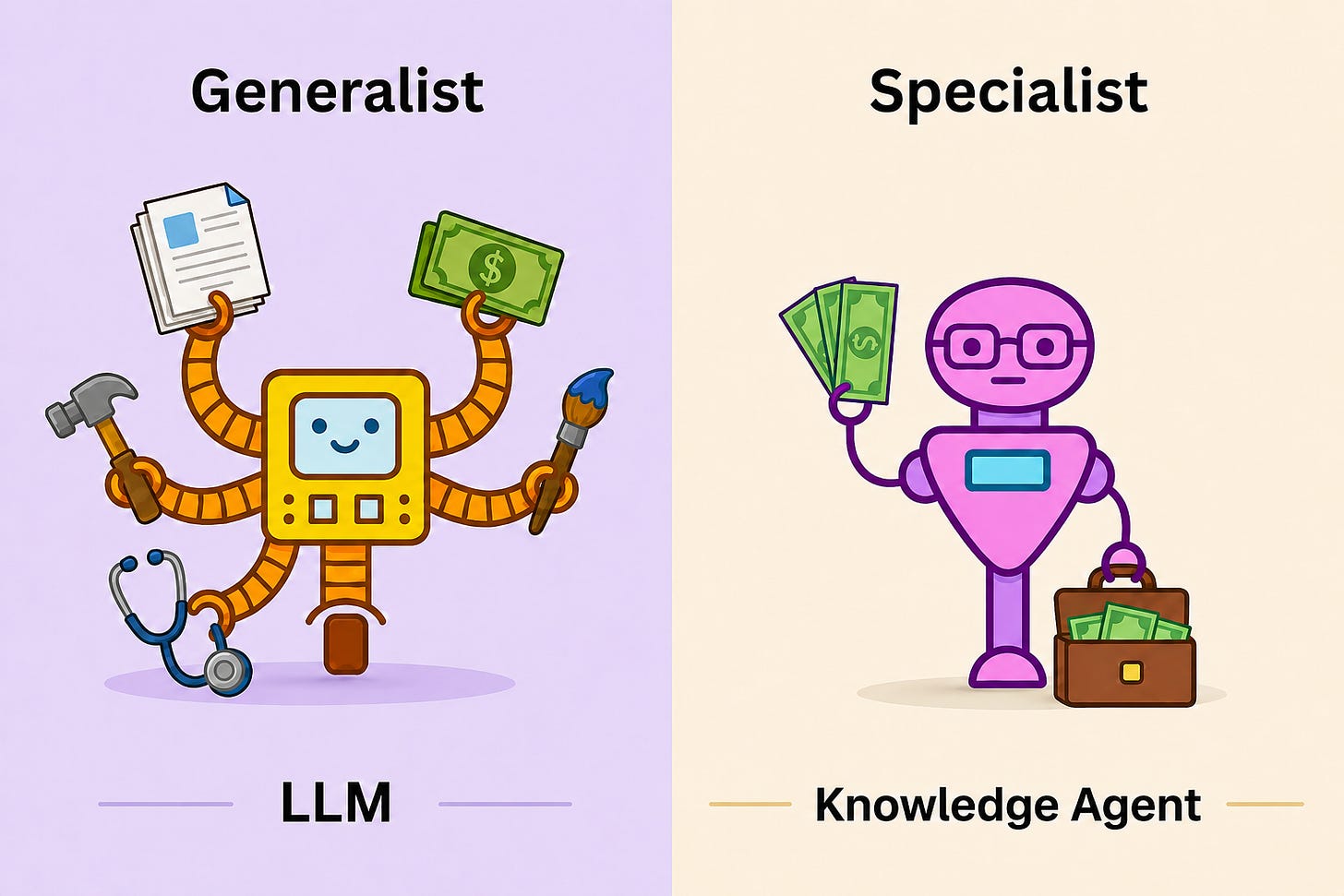
By mid-2026, the AI arms race has accelerated into a fierce competition marked by breakthroughs in both proprietary and open-source agentic AI platforms. Companies like Cloudflare are iterating rapidly to develop next-gen AI agents that rival established players such as Cursor and GitHub-originated tools, while Trajectory.ai’s innovations in self-distillation policy optimization are turbocharging continual learning and adaptive model design. This dynamic is further intensified as knowledge agents embedding domain-specific expertise into smaller, locally run models challenge the dominance of costly frontier LLMs, prompting a fundamental shift in AI architecture, spending, and agent design patterns that reshape the competitive landscape.
The competitive edge in AI development increasingly hinges on building modular, specialized agents that directly address workflow blockers rather than deploying generic solutions. As Salman Shah emphasizes, agents must deliver tangible value by overcoming specific engineering obstacles, a philosophy embodied by startups like Windsurf, which has evolved from autocomplete models to custom foundation models through continuous user-feedback loops. This targeted approach compresses complex processes into efficient workflows, enabling teams to accelerate productivity and innovation amid the hypercompetitive environment described by Julius Marminge, where speed, smart orchestration, and product prioritization are paramount.
The AI arms race is not confined to software engineering but is reshaping entire industries and business models, exemplified by Omnichat’s deployment of agentic AI platforms like OmniClaw in retail. These autonomous agents transcend traditional chatbot capabilities by autonomously executing complex operational tasks—such as processing refunds and updating inventory—and synthesizing cross-departmental data to provide actionable business insights that accelerate decision-making. Strategic partnerships with tech giants like Meta and LINE grant Omnichat a competitive moat in the Asian market, illustrating how deep technical alliances are becoming critical differentiators in this escalating contest.
The rapid evolution of AI agents is fundamentally transforming software delivery and developer roles, as highlighted by JD Trask’s journey from coder to SaaS AI entrepreneur. Developer-centric tools and agentic workflows are enhancing team productivity and shifting focus toward orchestration and human oversight rather than manual coding. Aaron Levie underscores this shift, noting that enterprise software is being reshaped at breakneck speed by headless platforms and agent-centric workflows, demanding relentless execution and fueling intense competition for investment and talent in the AI ecosystem.