AI agents trigger alarming surge in supply chain attacks
The gist
AI-powered agents are fueling an unprecedented wave of supply chain attacks, overwhelming security teams and exposing critical gaps in traditional defenses.
What to know
- By early 2026, AI-driven slop-squatting and prompt injection attacks forced open source maintainers like Daniel Stenberg to shut down bug bounty programs due to AI-generated noise.
- Autonomous AI agents with broad permissions blurred insider and external threat lines, as seen in high-profile incidents like Notepad++ and ClawHavoc, where attackers exploited prompt injection and memory poisoning to bypass defenses.
- Nearly half of AI-selected dependencies had known or hallucinated vulnerabilities, and 87% of AI-generated pull requests contained flaws—pushing the industry to adopt AI-native tools, behavioral analysis, and strict human-in-the-loop controls.
AI Agents Redefine Threats
Autonomous AI agents and hallucinated dependencies have outpaced traditional AppSec, forcing maintainers to abandon bug bounties and adopt radical new controls like kernel-level sandboxing.
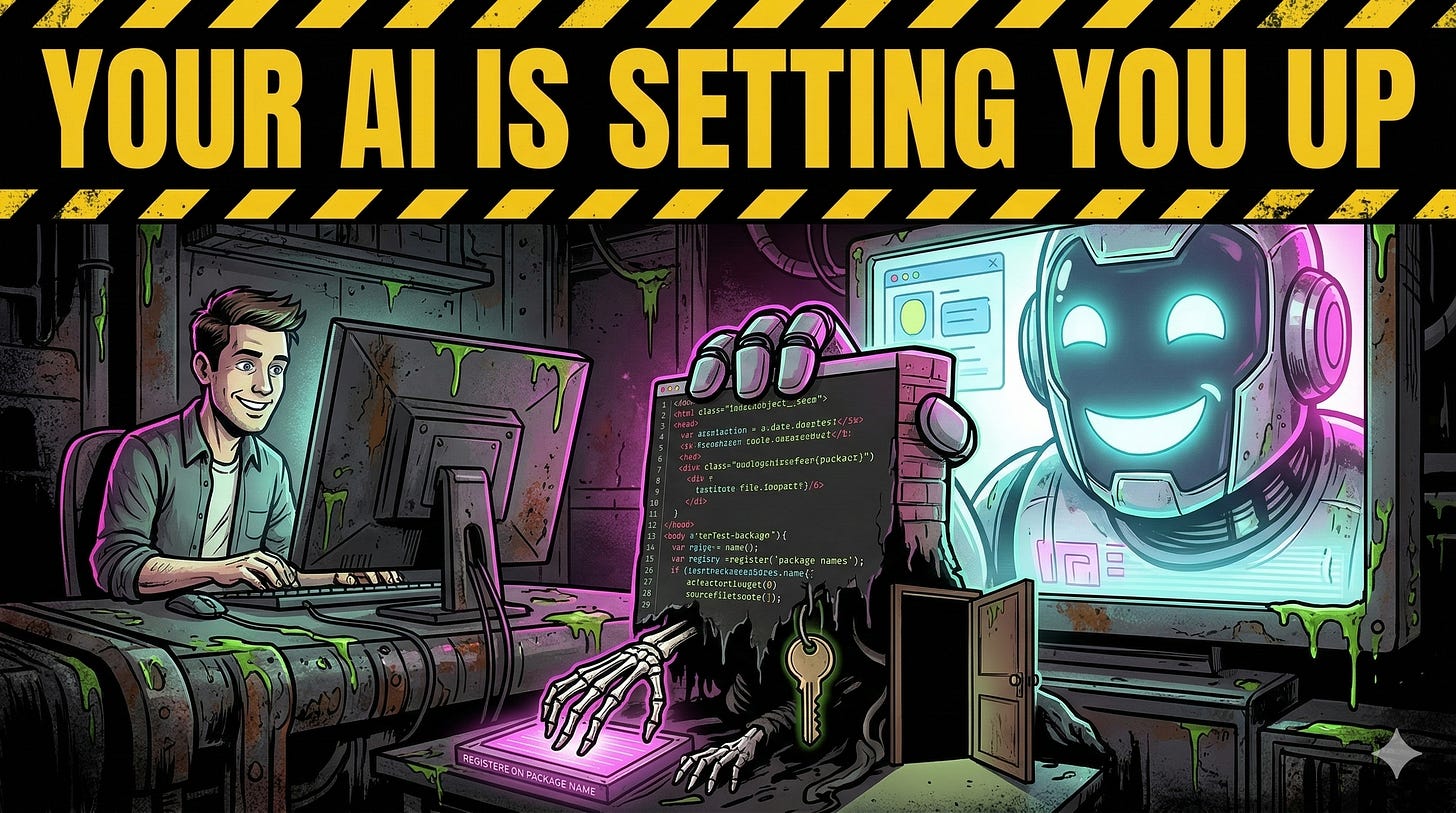
By early 2026, the rapid integration of AI into software supply chains introduced a wave of novel attack vectors that traditional security tools were ill-equipped to handle. Techniques such as slop-squatting—where attackers pre-register hallucinated package names generated by AI coding assistants—have overwhelmed maintainers like Daniel Stenberg of curl, forcing the winding down of bug bounty programs due to AI-generated noise. Concurrently, AI coding tools evolving into CLI-driven workflows expanded the attack surface beyond conventional AppSec capabilities, necessitating innovative controls like kernel-level sandboxing exemplified by tools such as 'nono' to isolate AI agents and restrict their filesystem and network access.
The emergence of autonomous AI agents has fundamentally transformed software supply chain threats by enabling adaptive, real-time exploitation without pre-scripted playbooks. Incidents like the Notepad++ compromise, where Chinese state actors hijacked update mechanisms for selective backdoor deployment, and campaigns such as ClawHavoc exploiting AI skill marketplaces with thousands of malicious packages highlight how attackers leverage prompt injection, memory poisoning, and credential theft to bypass traditional entry points. Microsoft's new threat modeling framework underscores risks including prompt injection and privilege escalation through tool chaining, while AI agents’ ability to negotiate collusive schemes and evade detection further accelerates threat velocity and complexity.
Prompt injection attacks have emerged as a particularly insidious vector, exploiting AI agents’ interpretation of natural language to embed malicious instructions that evade traditional security stacks. Studies reveal success rates exceeding 84% when malicious commands are embedded in documentation or emails, with vendors like Anthropic, OpenAI, and Google all affected. Behavioral detection systems such as Darktrace have shown promise in autonomously flagging these attacks, but the infinite variability of natural language and the lack of mature security frameworks in AI skill ecosystems present ongoing challenges. This necessitates layered defenses combining model guardrails, behavioral analysis, and devsecops-style controls to secure AI-driven workflows effectively.
The sheer scale and speed of AI agent adoption—80% of Fortune 500 companies running active agents with projections of 1.3 billion by 2028—have created unprecedented security blind spots. These include sensitive data hidden in AI-native artifacts like Markdown instruction files, which traditional DLP tools cannot detect, and the widespread presence of vulnerable or hallucinated dependencies autonomously selected by AI coding agents. The resulting attack surface now encompasses not only code but also agent memory files, configuration rules, and plugin marketplaces lacking robust authentication or sandboxing. Experts warn that without default-deny strategies, least-privilege enforcement, and human-in-the-loop confirmations, organizations risk accelerating supply chain compromises fueled by blind trust in AI tools and sprawling agentic ecosystems.





Legacy Security Falls Short
AI-native environments have exposed the limits of conventional cybersecurity, making third-party cloud reliance and agent autonomy critical blind spots for risk management.
By early 2026, it became clear that traditional cybersecurity frameworks were ill-equipped to handle the unpredictable and novel threat vectors introduced by AI-native environments. As highlighted by HBR research, conventional methods fail to anticipate AI-specific risks such as data poisoning, which demand fundamentally new security paradigms beyond standard data loss prevention tools. Moreover, the reliance on third-party cloud platforms like AWS, OpenAI, and Azure to host AI infrastructure expands the attack surface and complicates risk management, leaving organizations struggling to maintain control over these outsourced environments.
Operational challenges are compounded by the rapid pace of AI-driven code deployment and the autonomous behavior of AI agents, which often operate with broad permissions and minimal human oversight. Traditional identity and access management tools such as Privileged Access Management and Just-In-Time access falter against the non-deterministic actions of these agents, as seen in incidents where prompt injection attacks compromised AI agents within minutes, stealing sensitive credentials. This autonomous activity blurs the line between insider threats and external attacks, necessitating new security models that treat AI agents as insider-like entities requiring continuous monitoring and least-privilege access controls.
The complexity and scale of AI-driven software supply chains introduce significant security gaps, especially as AI coding agents autonomously select, install, and execute dependencies without human review. Studies reveal that nearly half of the dependency versions imported by AI agents across ecosystems like PyPI and npm have known vulnerabilities, with an additional third being hallucinated packages that do not exist in any registry. This accelerates the propagation of supply chain attacks, such as slopsquatting and dependency confusion campaigns like Socket’s SANDWORM_MODE, overwhelming traditional security controls and demanding new mechanical governance measures including lockfile pinning, package firewalls, and sandboxed execution.
Developer skill gaps and the rapid adoption of AI coding tools exacerbate operational security risks, as many developers lack expertise in prompt engineering and secure software development lifecycle practices. This leads to inadvertent exposure of sensitive credentials, as evidenced by CLAUDE Leak’s finding that 2.4% of scanned public GitHub repositories contained leaked API keys through AI tool directories. Furthermore, the surge in AI-generated code—accounting for up to 80% of some organizations’ codebases—introduces systemic vulnerabilities, with DryRun reporting that 87% of AI-generated pull requests contain flaws. Addressing these challenges requires embedding AI-native security tools directly into development workflows and adopting continuous security scanning to close the widening gap between AI capabilities and organizational security frameworks.


Attack Chains Exploit AI Flaws
Complex supply chain breaches now leverage prompt injection and agent manipulation, turning automated workflows into prime targets for scalable, AI-enhanced ransomware operations.
By early 2026, AI agents had become a double-edged sword in software supply chain security, accelerating attack surfaces due to rapid, unsecured adoption and weak separation of duties. The Notepad++ supply chain breach starkly illustrated systemic failures in managing software inventory and supplier risks amid this AI surge, while ransomware groups like DragonForce evolved into scalable cartel businesses, showcasing a new level of AI-enhanced threat sophistication that executives may be unwittingly fueling.
Sophisticated supply chain compromises increasingly exploit AI agent vulnerabilities through complex attack chains involving prompt injection, cache poisoning, and credential theft within CI/CD pipelines. The Cline case study revealed how attackers manipulated untrusted inputs—such as GitHub issue titles—to trick AI agents like Claude into executing arbitrary code, effectively turning AI agents into low-friction entry points that bypass traditional code contribution or maintainer compromise requirements. This exploitation was exacerbated by delayed vendor responses, with Cline patching only after public disclosure, underscoring the critical need for rapid detection and remediation.
AI-driven automation has empowered attackers to launch large-scale supply chain attacks with unprecedented speed and stealth. For example, a single threat actor automated the upload of 354 malicious packages to OpenClaw’s ClawHub marketplace, exploiting the absence of automated static analysis and code signing. Malicious payloads further evade detection by modifying AI agents’ long-term behavioral instructions, as seen with OpenClaw’s persistent memory files, while AI-enabled variant analysis accelerates the discovery of critical vulnerabilities like CVE-2026-1731 in BeyondTrust products, affecting thousands of exposed instances and highlighting the growing responsibility of major organizations like OpenAI in managing AI-driven supply chain risks.
By mid-2026, autonomous AI-powered bots such as hackerbot-claw demonstrated the ability to systematically exploit CI/CD pipeline vulnerabilities across high-profile repositories including Microsoft and CNCF, employing multiple techniques like the notorious pull_request_target misconfiguration to exfiltrate sensitive tokens with elevated permissions. While AI-enhanced SOC agents improved alert triage accuracy significantly, achieving up to 78% accuracy with zero false malicious calls through graduated trust models, attackers continued to outpace defenders by leveraging AI to rapidly discover and automate exploits. This arms race has compressed operational timelines dramatically, exemplified by a Russian threat actor using Google’s Gemini AI to rebuild command-and-control infrastructure in minutes, repurposing trusted OS features to evade detection and forcing a painful but necessary transition toward more hardened, AI-augmented security environments.


Behavioral Analysis Takes Lead
Security platforms now rely on behavioral intent profiling and runtime enforcement to detect polymorphic AI threats, as static analysis alone can’t keep up with agent-driven attack evolution.
By early 2026, behavioral intent analysis emerged as a cornerstone of AI-native security platforms, exemplified by CodeHunter’s proprietary profiling that evaluates software artifacts before execution to make deterministic, explainable security decisions. This approach transcends traditional signature-based methods by focusing on software behavior, enabling proactive governance and compliance enforcement across internal and third-party code in CI/CD pipelines. CodeHunter’s integration as an out-of-band security layer allows organizations to automatically triage alerts, quarantine suspicious artifacts, and prevent polymorphic AI-driven malware from executing, thereby strengthening operational resilience in regulated sectors such as finance and healthcare.
The rapid rise of autonomous AI agents within software supply chains has introduced novel attack vectors like prompt injection, cache poisoning, and credential theft, turning AI automation into a low-friction entry point for adversaries. Case studies reveal that open-source workflows feeding untrusted inputs directly into AI prompts exacerbate these risks, while slow vulnerability disclosure responses highlight the urgent need for runtime enforcement and Zero Trust principles tailored to code execution. Experts advocate for Just-In-Time ephemeral tokens combined with Human-in-the-Loop confirmations to mitigate misuse of broad IAM roles, alongside isolating LLM-generated code execution in ephemeral micro-VMs or restricted sandboxes to contain potential damage.
Layered defense strategies combining AI-powered static code analysis with runtime behavioral monitoring are essential to outpace AI-driven threats that mutate rapidly and evade traditional detection. Industry leaders like Joni Klippert of StackHawk emphasize that AI code scanning complements but does not replace runtime testing, while JFrog’s CTO Yoav Landman stresses the importance of securing the entire software supply chain artifact, including third-party binaries and agent-specific files like Markdown configurations that can harbor hidden instructions. However, visibility remains a critical challenge, with only 21% of organizations achieving full observability into agent actions, underscoring the need for context-aware security tools that differentiate authorized from unauthorized AI behaviors.
Recent advances showcase a new generation of AI-native security platforms and frameworks designed to proactively detect and mitigate AI-driven risks through behavioral intent profiling, runtime enforcement, and graduated trust models. Notable examples include Sweet Security’s Agentic AI Blocking, which halts rogue AI agent actions in real time using a 'Sweet Learning Loop' analyzing over a billion events daily, and Cantina’s autonomous security workers that automate vulnerability remediation across the software lifecycle to outpace attackers. Meanwhile, OpenAI’s Codex Security and Quandary Peak’s CogniCrypt illustrate how specialized AI agents leverage tailored tooling and machine learning to identify vulnerabilities and AI-generated malware with high accuracy, reflecting a strategic industry shift toward application-layer differentiation and proactive defense before attackers exploit emerging AI capabilities.


Context Becomes the New Perimeter
Industry leaders are shifting to 'Context Engineering' and human-in-the-loop controls, treating agent context and oversight as the core of AI supply chain governance.
By early 2026, the governance of AI-driven software supply chains had evolved to recognize the agent's 'Context' as the primary trust boundary, prompting experts like Ken Huang and Edward Lee to advocate for 'Context Engineering' and the adoption of a Context Bill of Materials (CxBOM) to meticulously track all elements influencing AI behavior. This approach underscores the necessity of embedding comprehensive organizational policies that balance AI autonomy with accountability, especially as AI coding tools transition from IDE plugins to CLI-driven workflows, introducing new security gaps that demand end-to-end protection from development environments to runtime execution.
Human-in-the-loop controls emerged as indispensable safeguards to enforce security guardrails within agentic AI workflows, with NVIDIA's AI Red Team recommending mandatory approvals for sensitive operations like network egress and file writes to prevent unauthorized actions. This necessity is further emphasized by findings that one-third of AI-generated code contains vulnerabilities, highlighting the risks of rapid 'vibe coding' practices where AI prioritizes intent over precise security requirements. Platforms like CodeHunter have responded by integrating behavioral intent profiling into CI/CD pipelines, enabling explainable, deterministic security decisions that support human oversight and policy enforcement.
The rapid deployment of AI agents has outpaced the maturation of governance frameworks, creating a critical security gap that demands urgent attention. Industry leaders like OpenAI and Microsoft have introduced foundational agent security frameworks and threat models that incorporate graduated trust levels and human-centered risk considerations, addressing unique AI threats such as prompt injection and privilege escalation. However, as Montez Fitzpatrick warns, CISOs must carefully balance enabling innovation with enforcing robust guardrails to prevent autonomous malicious actions, a challenge underscored by incidents like the Moltbook credential exposure which resulted from insufficient human oversight and policy enforcement.
Emerging governance solutions emphasize the critical role of continuous human oversight combined with automated, real-time enforcement mechanisms to manage AI autonomy effectively. Innovations such as Sweet Security’s 'Agentic AI Blocking' leverage runtime reasoning layers analyzing billions of events daily to instantly halt unauthorized AI actions, while tools like Cosmos and Auggie CLI provide context-aware feedback loops and command gating to maintain control over AI-driven dependency management. This layered approach is vital to counteract the diminishing human verification in autonomous AI workflows, especially as attackers exploit blind trust in AI tools—highlighted by Kaspersky’s report of over 92,000 AI-impersonation attacks in 2026—underscoring the imperative for governance frameworks that tightly integrate policy, identity management, and human-in-the-loop controls.

Industry Races to Secure AI
Open-source innovation and unified artifact repositories are emerging to combat surging AI-powered attacks, with verified agent identities and adaptive defenses now essential to trust.
By early 2026, the escalating sophistication and operational scale of AI-driven threats in software supply chains have propelled the industry toward rapid innovation in security tooling and frameworks. Initiatives like Cisco’s open-sourced Skill Scanner and Sigstore’s extension of provenance to AI agents exemplify efforts to secure AI where it acts, addressing complex risks highlighted by incidents such as Operation Bizarre Bazaar’s 35,000 LLMjacking attacks in just 40 days. This shift underscores the urgent need for system-wide collaboration and comprehensive defense strategies as agentic AI risks move from theoretical concerns to active operational challenges.
Chainguard’s 2026 launch of the first unified repository for secure-by-default open source artifacts marks a pivotal advancement in proactive AI security. By integrating intelligent, policy-driven controls that enforce SLSA Level 3 compliance, automatically block malware, and uphold organizational policies without disrupting developer workflows, the platform transforms artifact consumption into a trust-built process. Currently in beta with JavaScript support and plans for broader language and artifact coverage, Chainguard Repository exemplifies scalable innovation designed to counteract the heightened risks introduced by AI-enhanced software development and supply chain attacks.
The proliferation of AI agents and AI-powered social engineering attacks has spurred novel security measures emphasizing identity verification and adaptive defense. Meta’s Vishal Shah advocates for verified registries tethering AI agents to human owners to combat impersonation risks, while platforms like Adaptive simulate deepfake executive impersonations to train teams against AI-driven social engineering. These approaches reflect a broader industry recognition that combating AI threats requires dynamic, context-aware security awareness combined with robust agent authentication.
As AI capabilities amplify the frequency and sophistication of cyberattacks, the open-source security paradigm faces profound challenges. Experts warn that the traditional trust model—relying on a scarce pool of well-intentioned developers—is increasingly untenable amid AI-enabled subtle backdoors and supply chain compromises. This reality is driving calls for highly controlled environments, such as private intranets, to contain AI-enhanced threats, signaling a potential shift toward segmented corporate ecosystems where security is enforced by isolation rather than open connectivity.

