AI arms race heats up: OpenAI’s GPT-5.5 instant spurs enterprise gold rush as rivals double down
The gist
OpenAI’s new GPT-5.5 Instant turbocharges ChatGPT’s accuracy and personalization, igniting an enterprise AI arms race that’s rewriting the playbook in finance, healthcare, and cybersecurity.
What to know
- GPT-5.5 Instant slashes critical hallucinations by 52.5% and lets users transparently control how their data shapes responses.
- Anthropic and Perplexity are cashing in on AI verticalization, with Anthropic clinching a $1.5B Wall Street joint venture and Perplexity rolling out specialized finance tools.
- Anthropic’s 80x quarterly revenue surge and OpenAI’s $4B deployment blitz—backed by Bain, McKinsey, and Goldman—signal all-out war for enterprise AI dominance.
GPT-5.5: Accuracy Meets Agency
OpenAI’s GPT-5.5 Instant not only slashes hallucinations but empowers users with transparent control over their data, while multimodal upgrades and real-time voice refresh signal a new era of customizable, efficient enterprise AI.
OpenAI's launch of GPT-5.5 Instant as the new default ChatGPT model marks a major leap in accuracy and personalization, achieving 52.5% fewer hallucinations on high-stakes prompts in medicine, law, and finance. This upgrade not only reduces errors flagged by users by 37.3% but also introduces transparent memory sources that allow users to see, delete, or correct which saved memories, past chats, or connected Gmail data influence responses, enhancing trust and customization.
Beyond accuracy, GPT-5.5 Instant significantly advances multimodal capabilities, improving image understanding and STEM question handling while making smarter decisions about when to leverage web search. OpenAI has also rebuilt the WebRTC stack for ChatGPT voice and the Realtime API, reducing latency and maintaining natural speech pace, signaling an imminent voice interaction refresh that complements the model’s enhanced baseline intelligence and tone.
The development of GPT-5.5 Instant reflects a coordinated effort by OpenAI’s post-trading frontiers team to optimize efficiency, latency, and reasoning, enabling the model to perform on par with the world’s most powerful systems on select tasks. By focusing on horizontal improvements such as instruction following, function calling, and minimizing token usage, OpenAI has delivered a model that is not only more accurate but also faster and more efficient, embodying a strategic shift toward usability and seamless user experience.





AI Goes Vertical in Finance
Anthropic and Perplexity are redefining enterprise AI by embedding specialized models into high-stakes financial workflows, fueled by billion-dollar partnerships and a race to optimize domain-specific performance.
AI verticalization is rapidly reshaping enterprise adoption in finance and healthcare, with Anthropic and Perplexity emerging as pivotal leaders driving this transformation. Anthropic’s strategic $1.5 billion joint venture with Wall Street giants like Blackstone, Hellman & Friedman, and Goldman Sachs exemplifies how tailored Claude-powered AI systems are being meticulously integrated into complex financial operations, underscoring finance as their second highest revenue segment. Meanwhile, Perplexity’s launch of Perplexity Computer for Finance signals a broader industry shift from general-purpose AI chatbots to specialized tools designed for domain-specific workflows, reflecting a maturation of AI services that prioritize model–harness–task fit to optimize performance within verticals.
Anthropic’s partnership with SpaceX not only boosts its compute capacity but also enhances its enterprise AI offerings by enabling more robust finance agent templates and extending operational limits, such as doubling Claude Code’s usage hours for paid tiers. This collaboration highlights the critical role of strategic alliances in scaling AI capabilities tailored to industry needs, while OpenAI’s parallel efforts through The Deployment Company—backed by 19 investors and raising $4 billion—illustrate a competitive landscape where major players are aggressively pursuing joint ventures with private equity firms to commercialize AI software for businesses. Together, these developments underscore how upgrading IT infrastructure, modernizing workflows, and managing human-agent interactions are creating vast market opportunities and new job categories as AI agents become integral to knowledge work beyond coding.

Anthropic’s Surge, OpenAI’s Counter
Anthropic’s explosive 80x revenue growth and bold infrastructure bets have shifted the enterprise AI landscape, forcing OpenAI to escalate with multibillion-dollar alliances, targeted acquisitions, and aggressive cybersecurity deployments.
Anthropic has surged ahead in the enterprise AI race, overtaking OpenAI in spending and capturing significant mindshare with an extraordinary 80x revenue growth in a single quarter. This rapid expansion is underscored by strategic infrastructure moves such as renting an entire data center from Elon Musk’s xAI to meet soaring demand, signaling a decisive shift in market dynamics where Anthropic’s Claude and Mythos models are becoming indispensable assets for enterprises.
OpenAI is mounting a robust counteroffensive to Anthropic’s gains by launching a $4 billion-backed deployment venture supported by heavyweight investors including Bain Capital, McKinsey, and Goldman Sachs, directly challenging Anthropic’s $1.5 billion initiative. This strategic alignment with major consulting firms reflects a consensus that frontier AI deployment is among the most defensible enterprise products, with OpenAI further bolstering its capabilities through the acquisition of UK-based Tomoro and its 150 Forward Deployed Engineers to scale personalized AI integration.
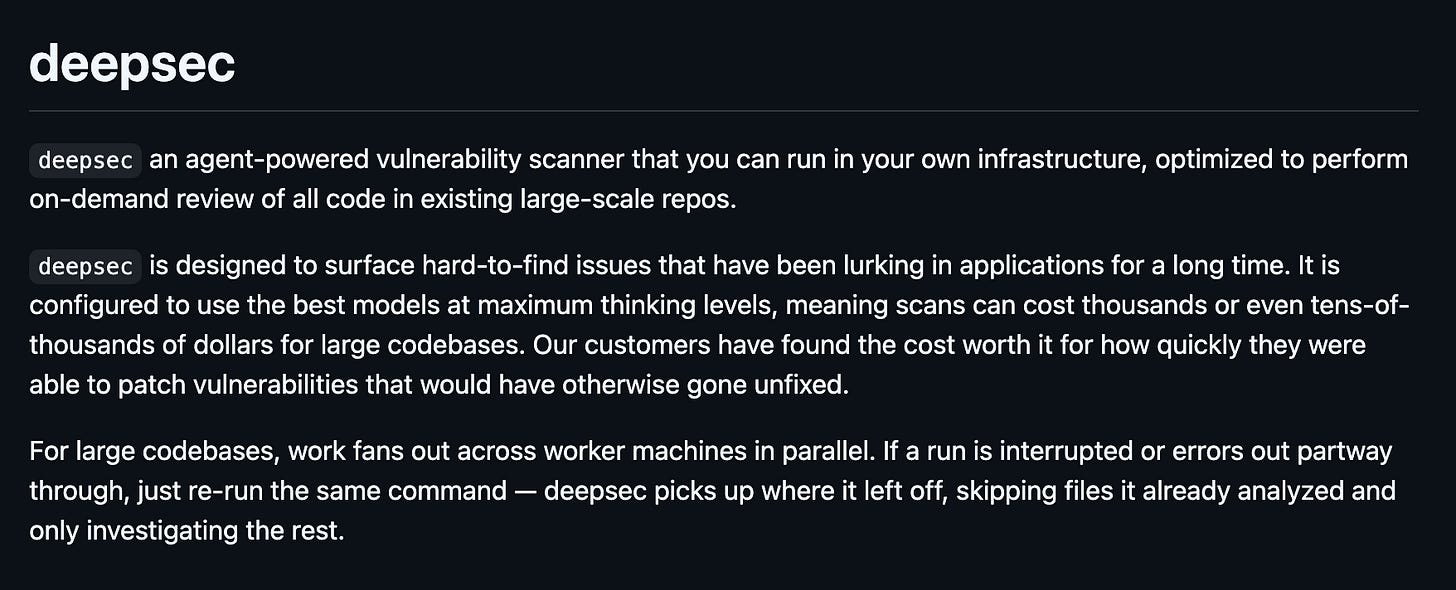
In cybersecurity, OpenAI’s Daybreak program exemplifies its multi-pronged strategy to maintain enterprise leadership by deploying specialized GPT-5.5 models tailored for diverse security workflows, partnering with industry giants like Cloudflare and CrowdStrike. This initiative directly counters Anthropic’s Project Glasswing and Mythos, highlighting a broader trend of AI verticalization where both companies are honing domain-specific tools to address complex challenges such as vulnerability management and offensive security research.
While OpenAI’s Daybreak program emphasizes integrated, specialized GPT-5.5 models for cybersecurity, competitors like Microsoft’s MDASH adopt a different approach by orchestrating a swarm of roughly 100 agents focused on Windows vulnerability detection, illustrating diverse strategic philosophies in enterprise AI. This competitive landscape underscores the increasing specialization and verticalization of AI solutions, as companies tailor models to meet nuanced enterprise demands across finance, healthcare, and cybersecurity sectors.