AI becomes creative co-pilot, not replacement, in 2026 boom
The gist
In 2026, AI has become the indispensable creative co-pilot—supercharging human imagination without stealing the spotlight.
What to know
- Breakout tools like Google DeepMind’s NanoBanana Pro and Genie are now essential in creative workflows, fueling rapid ideation and stylistic leaps while leaving the human spark in charge.
- Platforms such as PixVerse and ChatGPT Images have unified text, animation, and video pipelines, giving creators professional-grade prototyping power across formats from manga to interactive art.
- Innovators like Piotr Mirowski and Sougwen Chung are proving that AI-human collaborations can amplify agency and artistry—so long as ethical guardrails and human oversight stay firmly in place.
AI as Creative Amplifier
AI turbocharges execution and stylistic exploration, letting creators preserve human ideation while multiplying artistic possibilities and even channeling historic voices.
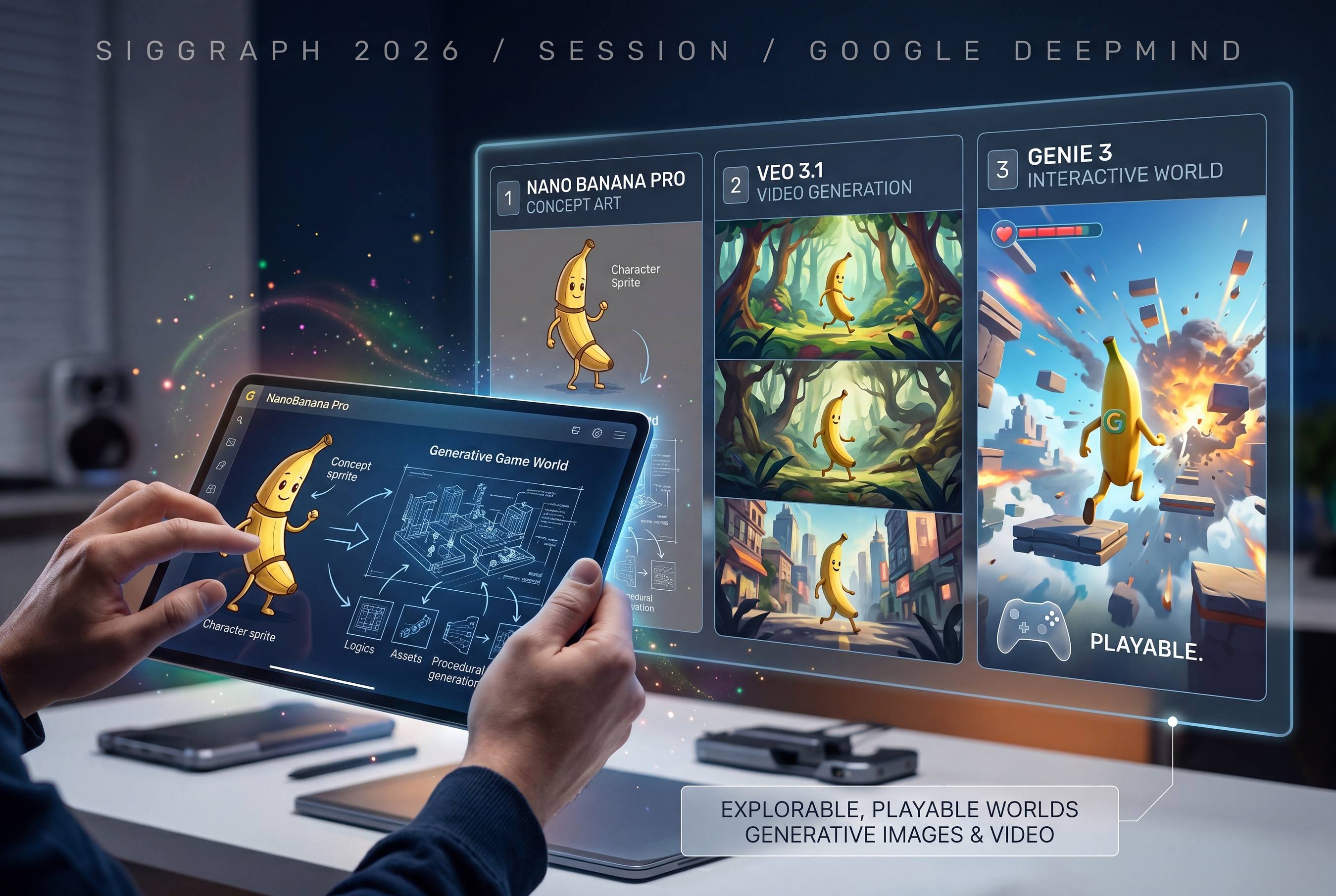
By mid-2026, industry leaders and creators alike have embraced AI as an augmentative partner that enhances rather than replaces human creativity, facilitating co-creation and iterative exploration in workflows. At SIGGRAPH 2026, Google DeepMind’s Paige Bailey showcased tools like NanoBanana Pro and Genie that enable artists to blend AI with human insight, exemplified by installations such as 'The Long Fall' which revived Rachel Carson’s voice, illustrating AI’s role as a co-pilot in both ideation and execution. This collaborative framing is echoed by creators like Todd Dewett, who describes AI as a 'key co-pilot' that stimulates new directions and accelerates creative thought without supplanting the unique human spark.
Practical creative workflows reveal that AI’s greatest strength lies in amplifying execution rather than originating ideas, allowing creators to maintain traditional ideation practices while leveraging AI’s capacity for infinite variations and rapid realization. One creator emphasizes returning to foundational methods—sketching and gathering feedback away from screens—before deploying AI to generate countless renders and stylistic permutations, thereby expanding creative possibilities beyond prior constraints of tools, budgets, or resources. This approach underscores a synergy where 'human creativity plus AI execution equals amplified,' preserving human agency at the core of the process.
Beyond technical execution, AI enriches the creative language itself by enabling creators to explore historical artistic styles and philosophical perspectives, effectively facilitating a form of creative 'time travel.' By invoking the sensibilities of figures like Matisse or Dostoyevsky, AI expands expressive possibilities and deepens the human experience of creativity. As one commentator notes, this augmentation not only enhances artistic output but also 'makes us more human,' highlighting AI’s role in deepening rather than diminishing the essence of human creativity.
Leading voices such as Fei-Fei Li and researchers emphasize that AI’s true promise lies in augmenting human creativity, empathy, and judgment—especially in fields like design where emotional intelligence and storytelling are paramount. Li’s work at World Labs exemplifies this ethos by developing AI models that empower creators to imagine and build new digital worlds collaboratively. Similarly, thought leaders caution that while AI can offload routine tasks and accelerate workflows, overreliance risks diminishing critical thinking and imaginative debate, underscoring the need to balance AI’s speed and scale with the irreplaceable nuances of human insight.
Case studies from creative professionals like Jonathan Brazeau illustrate AI’s role as a co-artist that generates raw material and sparks ideation, enabling rapid exploration of options that creators refine and combine to craft unique outputs. Despite early technical limitations such as imperfect rendering, Brazeau’s experience with tools like Stable Diffusion demonstrates how AI can produce vast quantities of foundational content—'like 40,000 images'—which artists then enhance, reinforcing the collaborative dynamic where AI acts as a wild-idea partner rather than a replacement.




Unified Multimodal Workflows
Seamlessly integrated AI pipelines now empower creators to prototype, animate, and edit across formats—breaking down creative silos and democratizing professional-grade content.
By mid-2026, AI platforms such as PixVerse and ChatGPT Images have revolutionized multimodal creative workflows by seamlessly integrating text, static images, animations, and video production into unified pipelines. PixVerse’s AI video tools enable creators to transition fluidly from static visuals to dynamic sequences enriched with particle effects and thematic color palettes, while ChatGPT Images streamlines the fusion of textual concepts and intricate character designs into cohesive manga and multimedia narratives. This integration supports rapid prototyping and iterative experimentation, democratizing access to professional-grade content creation across domains like manga, interactive art, and marketing without requiring heavy infrastructure investments.
AI-driven workflows now facilitate a connected creative process that breaks down traditional silos between concept development, illustration, animation, and video editing. Tools empower creators to generate quick visual references from simple descriptions, enabling experimentation with characters, environments, and styles before committing to production. By leveraging existing images as animation references and segmenting projects into manageable sequences, creators maintain visual consistency and gain greater editorial control, while AI-assisted video editors handle technical tasks such as clip arrangement and platform-specific formatting, leaving artistic decisions firmly in human hands.
In the specialized realm of manga production, AI models like PixAI’s Tsubaki.3 have advanced the integration of text, image, and panel layout generation, enabling creators to transform scripts and rough layouts into detailed storyboards with consistent characters and panel hierarchies. This multimodal approach supports rapid iteration of pacing, camera angles, and dialogue, while allowing writers with limited drawing skills to generate initial visual drafts from dialogue and templates. The expanded model libraries and refined generation panels further enhance stylistic experimentation across manga, Webtoon, and anime formats, fostering cross-domain innovation and streamlined workflows.
Human-Machine Artistic Fusion
Artists like Sougwen Chung and Piotr Mirowski are redefining collaboration, using AI and robotics to expand human expression and agency through interactive, embodied performances.
By mid-2026, pioneering theatrical practices led by Piotr Mirowski demonstrated how AI language models could enhance spontaneity and co-creation on stage, overcoming human actors' tendencies toward self-censorship. In productions like 'Improbotics Presents: Artificial Reality,' AI does not replace human creativity but serves as an augmentative partner within interactive feedback loops, enabling performers to collaboratively explore pressing societal themes such as capitalism and self-replacement while maintaining strong human agency and control.
Sougwen Chung’s innovative integration of brainwave data with robotic arms in live performances exemplifies a deeply embodied human-machine collaboration that transcends mere tool use. Her concept of 'operational art' weaves drawing, programming, and robotics into co-regulated feedback loops, where the machine acts as a collaborator rather than an assistant, and generative errors become creative opportunities. This approach reinterprets traditional artistic techniques like the calligraphic 'duan' through contemporary neuro-robotic interfaces, expanding sensory and expressive modalities while highlighting the intertwined nature of human and machine nervous systems.
Chung further argues that creative technologies, including AI, are not neutral instruments but extensions of human expression that fundamentally reshape agency by expanding the human sensorium. She advocates for artists to build bespoke systems to fully engage with creative potential, emphasizing that co-creation involves navigating tensions and error states essential to authentic collaboration. Moreover, emerging biocompatible materials like silk proteins blur the boundaries between human and machine, prompting profound existential questions about identity and agency in both artistic and medical robotics contexts.
The expansion of creative possibilities through human-machine collaboration also hinges on learning to 'speak the language' of different technologies and species, a process that broadens worldviews and artistic horizons. Drawing inspiration from cultural references such as the film Arrival, Chung highlights how immersive education and practice in these new languages can transform perceptions of time and reality, underscoring the importance of interdisciplinary fluency in the evolving landscape of AI-augmented artistic practice.

Ethics at the Creative Core
Deliberate human oversight and ethical frameworks are reshaping AI’s creative role, ensuring originality, agency, and respect for intellectual property remain central in the 2026 boom.
By mid-2026, theatre director Piotr Mirowski articulated a nuanced ethical framework for AI integration in creative workflows, emphasizing that AI must serve as an enabler rather than a replacement to preserve authentic human experience. He insists on deliberate human involvement, noting that his company employs a full-time AI operator to ensure that AI tools complement rather than supplant professional actors, thereby maintaining creative ownership and agency. This approach counters the simplistic binary of AI as either threat or boon, advocating for intentional, ethical deployment that respects the artist’s vision and audience’s craving for genuine human connection.
Mirowski’s production 'Improbotics Presents: Artificial Reality' cleverly satirizes societal anxieties about AI replacing humans, framing these concerns within a parody of reality TV where contestants risk elimination in favor of AI versions or celebrity replicas. This theatrical critique not only highlights ethical dilemmas around technology’s encroachment on creative labor but also serves as a broader commentary on capitalist impulses to commodify and replace human effort whenever convenient, underscoring the societal stakes of AI’s expanding role in the arts.
Beyond theatrical contexts, practical ethical considerations in AI-driven creative workflows extend to licensing and originality, as highlighted in a September 2026 analysis of AI manga generation. The recommendation to use original or properly licensed character references when publishing or commercializing AI-generated images underscores the necessity of respecting intellectual property rights, ensuring that AI’s creative outputs do not infringe on existing creators’ work and that ethical standards keep pace with technological innovation.