AI co-founders power solo startups’ breakout growth
The gist
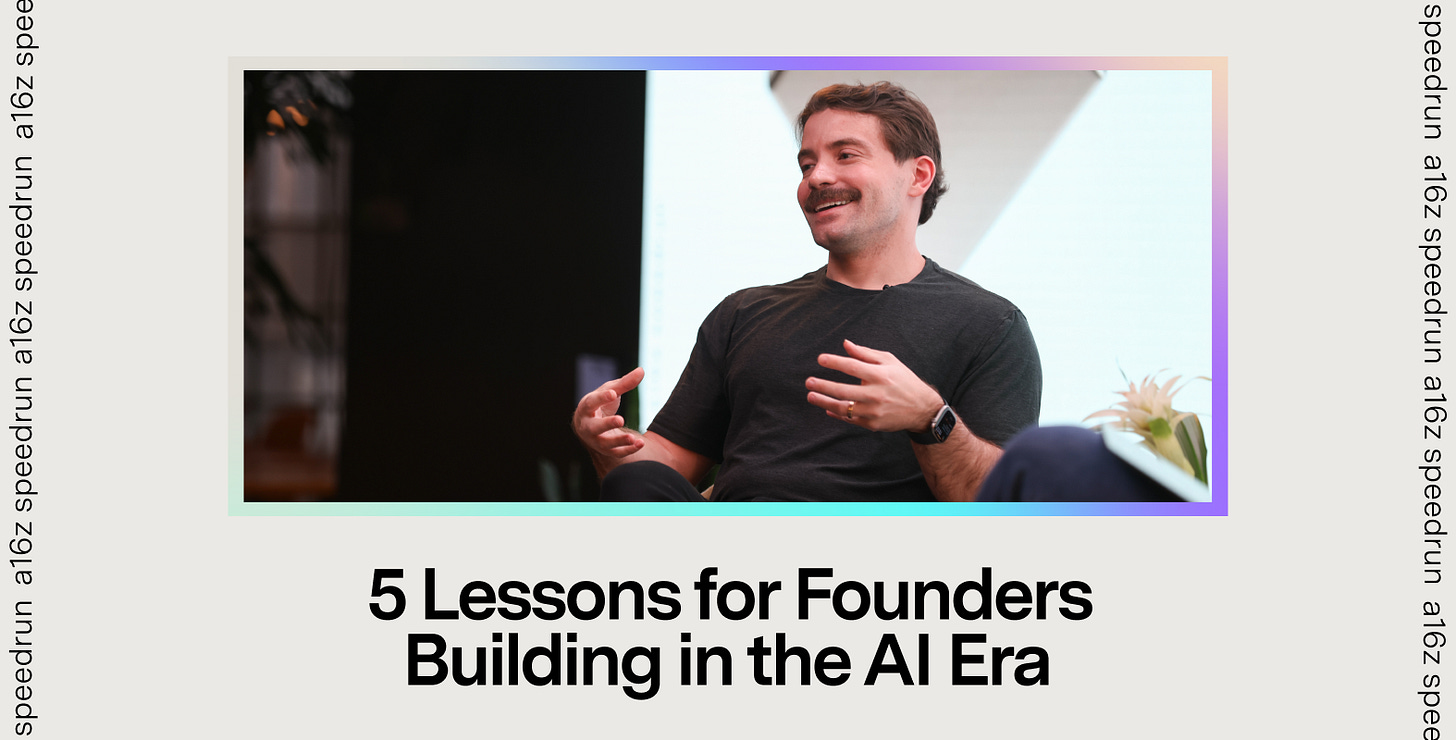
Startups are supercharging growth by treating AI as a strategic co-founder, enabling lean teams to outpace big players with record execution, authentic branding, and a new playbook for sales and investor trust.
What to know
- By mid-2026, startups like Linktree and Arcads used AI agents to drive execution up to 40x faster, letting teams under ten generate over $1M revenue per employee.
- AI is a force multiplier in founder-led sales and content strategies, but human persistence and authentic engagement still seal high-value deals.
- Personal branding on LinkedIn—think humor, storytelling, and consistency—has become a must-have asset for founders, with investors now demanding both AI efficiency and genuine human skills.
AI as the New Teammate
Startups are replacing routine hires with AI agents that autonomously ship code, resolve support tickets, and force teams to rethink culture and talent density for outsized productivity.
By late 2025, startups like Linktree demonstrated that integrating AI agents as junior team members can dramatically boost execution efficiency without increasing headcount, with AI contributing roughly two pull requests per engineer weekly on routine tasks such as bug fixes and dependency upgrades. This AI-driven approach enabled Linktree to scale operations cost-effectively, achieving 25x cheaper moderation and an 80% increase in customer support capacity, underscoring AI’s potential to substitute traditional hiring for repetitive functions. However, successful AI adoption required deliberate technical debt cleanup and active cultural management, including CTO-led usage tracking and fostering social pressure through AI demo meetings and dedicated Slack channels to ensure team-wide engagement and effectiveness.
By the end of 2025, the emphasis on talent density became paramount, with AI amplifying the productivity of top performers up to 40 times that of average employees, as these individuals leveraged AI tools more intelligently. Founders and investors recognized that building small, tightly-knit, talent-dense teams empowered by AI could out-execute larger incumbents through agility and close communication, justifying large seed rounds like $20 million to fuel rapid product development and early traction exemplified by 50,000 candidates on platforms. This shift also transformed engineers’ roles, requiring them to engage deeply across business functions, while founders were urged to anticipate multiple future AI model generations and build products with long-term strategic vision rather than incremental automation.
Early 2026 case studies such as Arcads and SuperMe illustrated how AI-enabled startups achieve exceptional revenue efficiency and rapid growth with lean teams under ten people, generating over $1 million in revenue per employee while maintaining profitability. These startups leveraged AI not only to accelerate coding cycles—using tools like Claude Code to 'vibe code' through voice commands—but also to empower non-engineers with an engineering-first mindset, fostering a culture of rapid experimentation, iterative learning, and high agency. Founders evolved into strategic 'taste makers,' focusing on product distribution, design, and community building, while AI handled much of the coding complexity, enabling small teams to maintain agility and avoid premature scaling despite pressure to hire.
By mid-2026, AI had redefined startup execution dynamics to the extent that solo founders equipped with the right AI architecture could operate at the level of well-staffed startups, effectively gaining a knowledgeable AI co-founder that accumulates contextual learning over time. Despite these advances, gaps remain in complex areas like senior recruiting, international expansion, and regulatory compliance, highlighting opportunities for specialized AI skill modules. Founders who combine hands-on AI prototyping with strong technical talent are better positioned to scale, as AI alone cannot replace the need for skilled engineers to complete and maintain robust codebases. Moreover, the competitive edge now hinges less on proprietary technology moats and more on rapid learning, ruthless focus, and building trust through meaningful customer relationships and transparent communication.



Sales: Human Grit, AI Speed
Founders now lead sales with AI-powered outbound tactics, but real wins hinge on relentless personal outreach and emotional resonance, not just automation.
Founder-led sales and go-to-market strategies have evolved from traditional audience-building to rapid, content-driven experimentation that taps into the emotional desires of the market. As highlighted in late 2025 analyses, founders increasingly act as authentic brand ambassadors, leveraging platforms like TikTok and Twitter to create direct, persistent engagement that resonates emotionally, enabling startups to validate ideas quickly without large teams. This democratization of reach, powered by interest graph algorithms, levels the playing field so that even small accounts can achieve significant market validation, emphasizing speed and emotional connection over scale.
By early 2026, AI has become a force multiplier in founder-led outbound sales, dramatically enhancing productivity and enabling lean teams to achieve outsized results. Leaders like Carles Reina at ElevenLabs demonstrate how aggressive compensation plans combined with AI-augmented sales efforts can scale revenue rapidly, shifting focus from inbound to predominantly outbound strategies. However, human persistence and direct engagement remain irreplaceable, especially in complex enterprise deals where personal presence and multi-channel, coordinated outreach—often involving internal champions—are crucial to overcoming resistance and closing high-value contracts.
Founder-led sales efforts remain essential through early-stage growth, with a strong consensus that founders themselves must be the primary sales drivers until repeatable, templatized acquisition playbooks emerge. Experts like Jeanne DeWitt Grosser and analyses from 2026 emphasize delaying hiring dedicated sales reps until predictable revenue patterns are established, often beyond $3-6M ARR. Moreover, hiring 'non-salesy' reps who blend seamlessly with product and engineering teams—as practiced at Stripe and Dropbox—enhances early GTM effectiveness, while founder persistence in direct outreach, especially on LinkedIn, continues to be a cornerstone of successful early customer acquisition.
The integration of AI-driven GTM agents and tools is reshaping founder-led sales by enabling scalable, data-driven outbound workflows and content creation, yet these technologies complement rather than replace the fundamental need for persistence and authentic engagement. As Jason Lemkin and other founders note, AI acts as a 'hive mind' working 24/7 to amplify human efforts, with platforms like Salesforce serving as critical hubs connecting AI agents to customer data. However, AI’s effectiveness is contingent on existing brand presence and realistic expectations, underscoring that no tool can force prospects to engage or buy without genuine demand and founder-driven relationship-building.



LinkedIn: Founders’ Content Engine
Consistent, authentic storytelling and multi-format content on LinkedIn transform founders into trusted brands, compounding reach and trust far beyond ads or executive posts.
By early 2026, authentic personal branding on LinkedIn emerged as a powerful yet underutilized strategy for founders seeking to build trust and visibility. Experts like Sol Betesh of Fallen Media emphasized the value of hiring creators who resonate with LinkedIn’s unique culture, advocating for humor and genuine storytelling over traditional, corny ads. Meanwhile, Michael Ridd’s disciplined approach—waking up at 5 AM for daily content creation over six months—demonstrated how consistency and internal motivation cultivate compounding trust and distribution, turning content into a structural asset that blurs the line between creator and founder.
LinkedIn’s professional environment uniquely rewards depth and authenticity, making it a fertile ground for founder-led marketing that extends beyond executive voices. Jenny McCoy of goodhelp highlighted that Thought Leadership content featuring diverse internal and external creators drives 3-4x stronger ad performance, while Jay Clouse’s Creator Science exemplifies how educational, transparent storytelling positions founders as trusted teachers, attracting engaged audiences through owned channels like email and LinkedIn. This approach aligns with the platform’s algorithmic favoring of original posts and the longer shelf life of substantive content, enabling founders to build authority and customer acquisition pipelines effectively.
Strategic content distribution on LinkedIn and beyond hinges on intentionality, volume, and repurposing. Founders are encouraged to flood the zone with varied formats—carousels, videos, text posts—and to repurpose high-performing content into newsletters, polls, and podcasts, maximizing reach across owned channels. This multi-platform, data-driven approach, championed by Gary Vee and others, balances quantity with quality and leverages algorithmic insights rather than subjective opinions. Moreover, shifting audiences from social platforms to owned channels like email lists and podcasts mitigates algorithm risks and fosters direct, trust-based relationships, as evidenced by solopreneurs planning to double down on these owned platforms despite LinkedIn’s current revenue-driving role.
Authenticity and vulnerability remain at the core of successful founder branding, with storytelling that celebrates human elements—failures, lessons, and personal journeys—resonating deeply and fostering connection. Diana Cohen’s experience illustrates how dedicating substantial time to content creation, even at the expense of other roles, yields opportunities with major retailers like Sephora. Similarly, Courtney Johnson advocates for vulnerable storytelling on LinkedIn to drive lead generation and community building. Founders like Alex Dees and Chris J. “Mohawk” Reed emphasize transparency, direct engagement, and avoiding aggressive sales tactics, underscoring that magnetic marketing through genuine conversations outperforms traditional pitches. This human-centered approach is essential in an AI-driven market where trust in the founder often outweighs product features, as highlighted by a16z executives and exemplified by Elon Musk’s personal brand overshadowing Tesla’s metrics.






AI as Strategic Co-Founder
Founders are treating AI as a core partner in decision-making and GTM, orchestrating multi-model agent stacks and asynchronous workflows to drive strategy and scale.
By early 2026, a profound shift emerged as founders began treating AI not merely as a tool but as a strategic co-founder integral to decision-making, product ideation, and shaping vision. This mindset, described as a 'mass opt-out of the status-quo career ladder,' reflects a broader cultural movement toward creativity and agency, with 32.9% of founders using AI for strategic decisions and 78% reporting positive ROI, underscoring AI's role as a thought partner rather than a mere feature factory.
Founders are pioneering sophisticated AI-driven go-to-market (GTM) strategies that embed AI deeply into sales and customer success workflows, effectively scaling founder-led interactions while preserving authentic communication. For instance, Mohamed Mohamed of Smart Bricks employs a multi-model AI stack combining GPT-4.1, Claude 3.7, and Gemini 1.5 orchestrated by a LangGraph agent loop to dynamically reprioritize pipeline efforts, while Anderson Petergeorge of Quanto leverages custom GPT projects to enable teams to respond in the founder’s voice, illustrating AI’s evolution into a co-pilot for teams.
Despite the allure of numerous AI tools, many founders emphasize focused, deep engagement with a curated set of AI applications to maintain clarity and effectiveness in GTM operations. Andy Baran’s approach of centering outward-facing stacks on Exa and Superhuman, alongside inward tools like Notion and Slack, highlights a strategic restraint that counters the distraction of tool overload. Meanwhile, asynchronous management of AI agents, as practiced by Stefano Delmanto of Mercury with his '5-agent AI sales org,' showcases how founders can remotely steer autonomous AI processes to handle lead sourcing and personalized outreach efficiently.
AI’s strategic partnership role extends into relationship-driven industries and early-stage startups, where custom dashboards and AI GTM agents enrich data and pipeline building without relying solely on cold outreach. Ke Ma’s Concorda dashboard, which integrates public and LinkedIn data, exemplifies AI’s critical role in warm-connection-heavy sectors like legal. Moreover, while AI tools are not yet capable of generating millions in revenue from zero without brand presence, companies like Monaco demonstrate that startups—even pre-brand—can leverage AI GTM agents effectively to build pipelines, signaling a pragmatic yet optimistic trajectory for AI-enabled growth.


Investors Recalibrate for AI Teams
AI blurs traditional signals of team strength, forcing investors to weigh solo founder efficiency against the irreplaceable value of human expertise and technical depth.
By early 2026, investors faced a paradox in evaluating AI-driven startups: while AI tools streamlined due diligence by enabling solo founders to produce institutional-quality outputs, this blurred the traditional signals of organizational capacity, complicating assessments of team robustness. Despite the shrinking minimum viable team due to AI, co-founders remain invaluable for motivation and complementary skills that AI cannot replicate, underscoring a nuanced investor expectation that balances AI efficiency with human dynamics.
Investors like Nicole DeTommaso emphasize that founder expertise and rigorous, data-driven customer research outweigh rigid distinctions between AI application layers, trusting founders to tailor foundation models to industry needs. However, scaling beyond prototypes demands specialized technical talent to audit and maintain codebases, reflecting a dual expectation: founders must be deeply knowledgeable and supported by engineers capable of delivering robust, scalable products.
The evolving complexity of AI startups has prompted investors such as DeTommaso to upskill technically themselves, enhancing their underwriting capabilities in this intricate landscape. Concurrently, founders who architect AI as a strategic co-founder—embedding personalized, contextual learning—gain a compounding advantage, as each interaction refines decision-making and adaptability, aligning closely with investor demands for nuanced capital allocation and domain-specific expertise.
Investor thought leaders like Ben Horowitz and Shiv Rao converge on the imperative of founder adaptability and authentic storytelling in securing funding and market success. Horowitz’s mantra, 'Your ONLY job is Right Product, Right Time,' highlights the inseparability of strategy and narrative, while Rao underscores the need for high-judgment executives who can execute rapidly amid compressed decision-action cycles. Founders must embrace 'founder mode'—intense, focused leadership without micromanagement—and maintain transparent, rapid communication with investors, exemplified by Jensen Huang’s midnight calls, to meet the dynamic demands of AI-driven markets.


Lead Gen Gets Personal
B2B marketers are ditching mass events and generic content for intimate communities, precise follow-up, and disciplined campaign execution that convert intent into real deals.
By early 2026, the landscape of lead generation and client retention in SaaS and B2B sectors has shifted markedly towards more intimate and strategic engagement methods. Virtual and local community events have emerged as smarter, cost-efficient alternatives to massive conferences like Google Cloud Next, fostering deeper relationship-building and trust through targeted networking and brand nurturing. This approach aligns with Josh Baez of NetLine’s emphasis on the critical follow-up phase in demand generation campaigns, where timely, personalized communication—not just lead capture—determines conversion success, underscoring that many campaigns falter by mishandling early prospect engagement.
Content strategy in 2026 demands a delicate balance between volume and precision, as demonstrated by B2B marketers’ pivot to producing three to four daily LinkedIn posts combined with event-driven content capture at trade shows. Amplifying high-performing posts through targeted media spend and leveraging emerging platforms like Substack and YouTube Shorts positions brands for future search and discovery technologies, enhancing lead generation and community engagement. However, analysis reveals that broad, high-viewership webinars and viral content often generate superficial engagement, whereas narrowly focused content tailored to an ideal customer profile yields fewer but significantly more qualified leads who spend more, highlighting the trade-off between reach and lead quality.
Despite widespread adoption of third-party intent data by 99% of B2B technology marketers, only 7% find it very effective, largely due to slow sales follow-up and unclear lead scoring, as seen in fintech marketing struggles. The key to unlocking pipeline growth lies in converting intent signals into clear, timely actions with accountability rather than letting them languish as cluttered alerts. This shift in focus—from measuring campaign activity volume to evaluating which campaigns drive real deals and accelerate deal velocity—reflects a maturing understanding that data alone is insufficient without disciplined execution in follow-up and lead conversion.
The perennial growth challenge for startups, exemplified by real estate agents, is not generating leads but mastering effective follow-up and sustained engagement. Research shows most buying decisions require five to 12 touches, yet agents typically stop after two, revealing a critical gap that undermines conversion rates. A structured approach categorizing business activities into keep, cut, and change helps focus resources on high-impact actions, while consistent, scheduled, and personalized follow-up—eschewing automation masquerading as personalization—is essential to prevent lost opportunities. Moreover, nurturing an existing sphere of influence and past clients through meaningful contact consistently outperforms chasing large volumes of cold leads, emphasizing quality over quantity in community engagement.