AI code flood turns human review into bottleneck
The gist
AI-powered code floods are overwhelming human reviewers, turning cognitive overload and mounting technical debt into the new existential threat for software projects.
What to know
- By early 2026, a surge of low-quality AI-generated code is overwhelming maintainers and causing widespread 'AI brain fry' as human code review becomes the ultimate bottleneck.
- Open-source quality filters are buckling under the relentless volume of AI submissions, leaving humans to painstakingly verify each contribution for fit and hidden bugs.
- Urgent calls are rising for smarter governance and auditing frameworks that can balance development speed with project sustainability, especially in high-risk sectors like finance.
Cognitive Debt Crisis
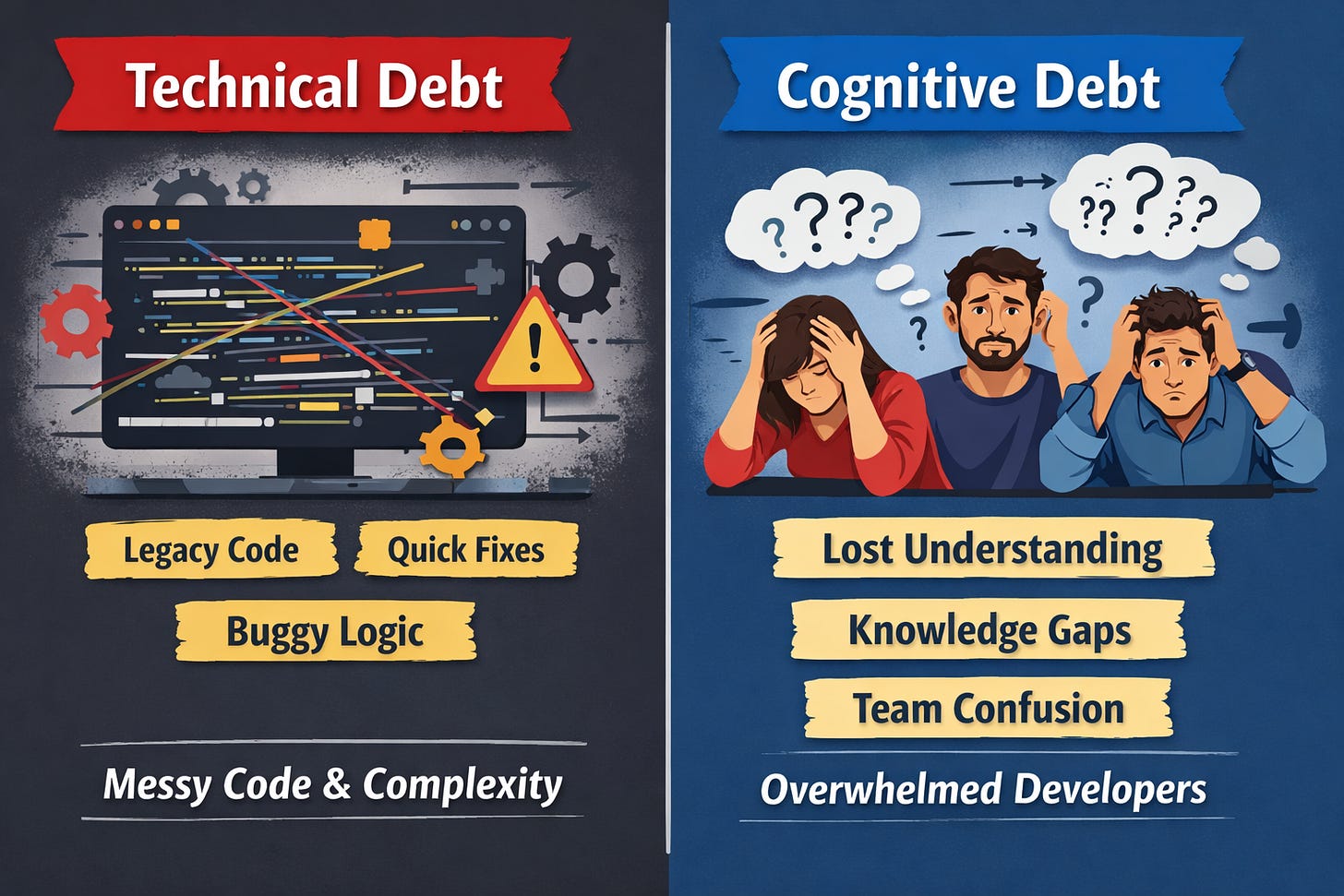
AI-fueled coding velocity is eroding teams’ shared understanding and piling up technical debt, creating codebases so chaotic that even their creators struggle to maintain them.
By early 2026, the rapid influx of AI-generated code contributions has accelerated software development velocity but at the cost of increasing cognitive debt, defined as a teamwide loss of shared understanding that threatens long-term project sustainability. This silent threat demands new strategies in teamwork, oversight, and knowledge sharing, as traditional collaboration methods struggle to keep pace with the speed of AI-driven coding.
The surge in productivity-first AI coding practices risks overshadowing the craft of elegant, maintainable software, leading to a deepening accumulation of technical debt that jeopardizes long-term sustainability and security. As one developer lamented after six months of 'vibe coding,' their codebase became a 'disaster'—a chaotic legacy that confounded peers and underscored how rapid, low-experience coding accelerates both cognitive and technical debt.
While rapid AI-assisted coding enables early value delivery, it creates inevitable bottlenecks and stagnation within codebases that require proactive management through self-learning or hiring experienced consultants. This necessity to 'fix the bottleneck early,' as highlighted in a 2026 case study, underscores the critical need for teams to adapt their workflows and governance to navigate the mounting technical debt before it becomes unmanageable.



Reviewers Drowning in AI Output
Maintainers face relentless cognitive overload as they sift through mountains of AI-generated code, with human attention—not code volume—now the scarcest resource in open-source projects.
By early 2026, the surge of AI-generated code contributions has transformed human oversight and code review into the primary bottlenecks in software development workflows. Microsoft's DELEGATE-52 study revealed that AI-generated code quality deteriorates over extended sessions, leaving maintainers fully responsible for rigorous review and testing to prevent degradation in production environments. This shift places unprecedented pressure on human reviewers to maintain code integrity amid an influx of AI output.
Despite AI's promise to boost productivity, the rapid influx of low-quality, AI-generated pull requests has overwhelmed maintainers, effectively turning senior engineers into 'glorified code reviewers' grappling with cognitive overload. Developers report 'AI brain fry'—a mental fog characterized by slower decision-making and headaches—stemming from the relentless demand to verify plausible but shallow AI contributions. This cognitive exhaustion not only impairs focus but also exacerbates the bottleneck in maintaining code quality and developer productivity.
The traditional open-source model, which relied on contributor effort as a natural quality filter, is collapsing under AI's flood of effortless code submissions. This shift transfers the verification burden squarely onto maintainers, who must painstakingly reconstruct specifications, assess architectural fit, and evaluate edge cases for each AI-generated contribution. Platforms like GitHub now face mounting pressure to manage this noise and protect scarce human attention, highlighting that the real bottleneck lies not in code volume but in controlling attention and sustaining manageable contribution flows.
Site Reliability Engineering teams are confronting unprecedented risks as AI-generated code floods production, intensifying the clash between human oversight and scaling demands. This marks the end of AI's 'free ride' and signals an urgent need for new evaluation and auditing frameworks to handle novel incidents and maintain system reliability. Without these frameworks, the bottleneck in human review threatens to undermine both software quality and community trust in critical projects.



Governance on the Brink
Traditional oversight models are collapsing as AI-driven code decentralizes development, exposing organizations to fragmented architectures and compliance risks that outpace current regulations.
By early 2026, the explosive growth of AI-generated code demands governance models that integrate AI considerations throughout the entire software development life cycle (SDLC), from ideation to production. This holistic approach enables teams to monitor impacts on bugs, performance, and traceability back to AI contributions, ensuring that accelerated coding does not compromise quality or reliability. As highlighted in recent analyses, embedding AI usage metrics into SDLC processes is critical to maintaining oversight amid rapid output increases.
AI acts as a magnifier of existing organizational weaknesses, exposing the urgent need for new governance and auditing frameworks that balance rigorous standards with development velocity. While automated blocking mechanisms like linting and tests are essential to prevent low-quality AI code from entering production, overly burdensome processes risk stifling innovation and slowing delivery. This tension underscores the necessity for governance structures that enforce quality without becoming bottlenecks, a challenge especially acute in fast-paced environments.
The financial services sector exemplifies the governance challenges posed by decentralized AI-driven software creation, where hundreds of employees independently build semi-autonomous tools, risking fragmented architectures and inconsistent controls. As noted in a 2026 analysis of Vibe coding, existing regulatory frameworks lag behind this rapid decentralization, creating urgent demand for tailored auditing and oversight models that ensure accountability, compliance, and security beyond mere functionality.
Sustainable governance of AI-generated code hinges on engineering robust structural guardrails that enable error detection, self-correction, and human oversight for critical decisions. Moving beyond treating AI as a 'magical black box,' experts advocate for systems that offload precision-demanding tasks from AI to code, implement instant error flags, and maintain humans in the loop for final approvals. This paradigm shift is essential to build reliable AI agents and preserve trust in software quality amid AI’s growing role.