AI cold war: U.S.-China risk talks stalled by mistrust, export standoffs, and bipartisan alarm
The gist
Stalled by mutual distrust and export standoffs, the U.S.-China AI risk talks are devolving into a digital Cold War as both sides prioritize rivalry over real safety cooperation.
What to know
- Washington’s strict AI export controls and new laws like the 2026 Deterring American AI Model Theft Act are fueling Chinese demands for concessions before any real dialogue.
- Internal U.S. divisions ahead of the Trump-Xi summit have reduced ambitions to modest, parallel steps—like lead times for AI model launches and DNA synthesis safeguards—instead of meaningful binding agreements.
- With AI capability doubling every four months, bipartisan U.S. leaders and 95% of Americans want global AI safety modeled on nuclear risk frameworks—even as private innovation outpaces government action.
Export Controls Fuel Stalemate
Escalating U.S. export restrictions and China’s demand for concessions have locked both sides in a cycle of mistrust, shifting the AI rivalry from hardware to the fiercely contested realm of model outputs and intellectual property.
The U.S.-China AI risk management dialogue is deeply entangled in broader strategic competition and mutual distrust, with Washington imposing stringent export controls targeting China’s advanced semiconductor sector and AI model technologies. The Commerce Department’s directives to companies like Applied Materials and Lam Research to halt shipments to Hua Hong underscore America’s intent to curb China’s chipmaking capabilities, while legislative efforts such as the Deterring American AI Model Theft Act of 2026 aim to block unauthorized extraction of U.S. AI innovations. These measures reflect a shift from regulating hardware to aggressively protecting AI model outputs, as officials accuse Chinese entities of 'organized' and 'industrial-scale' appropriation, raising concerns not only about intellectual property but also about safety and ideological risks posed by Chinese firms like DeepSeek and Moonshot AI.
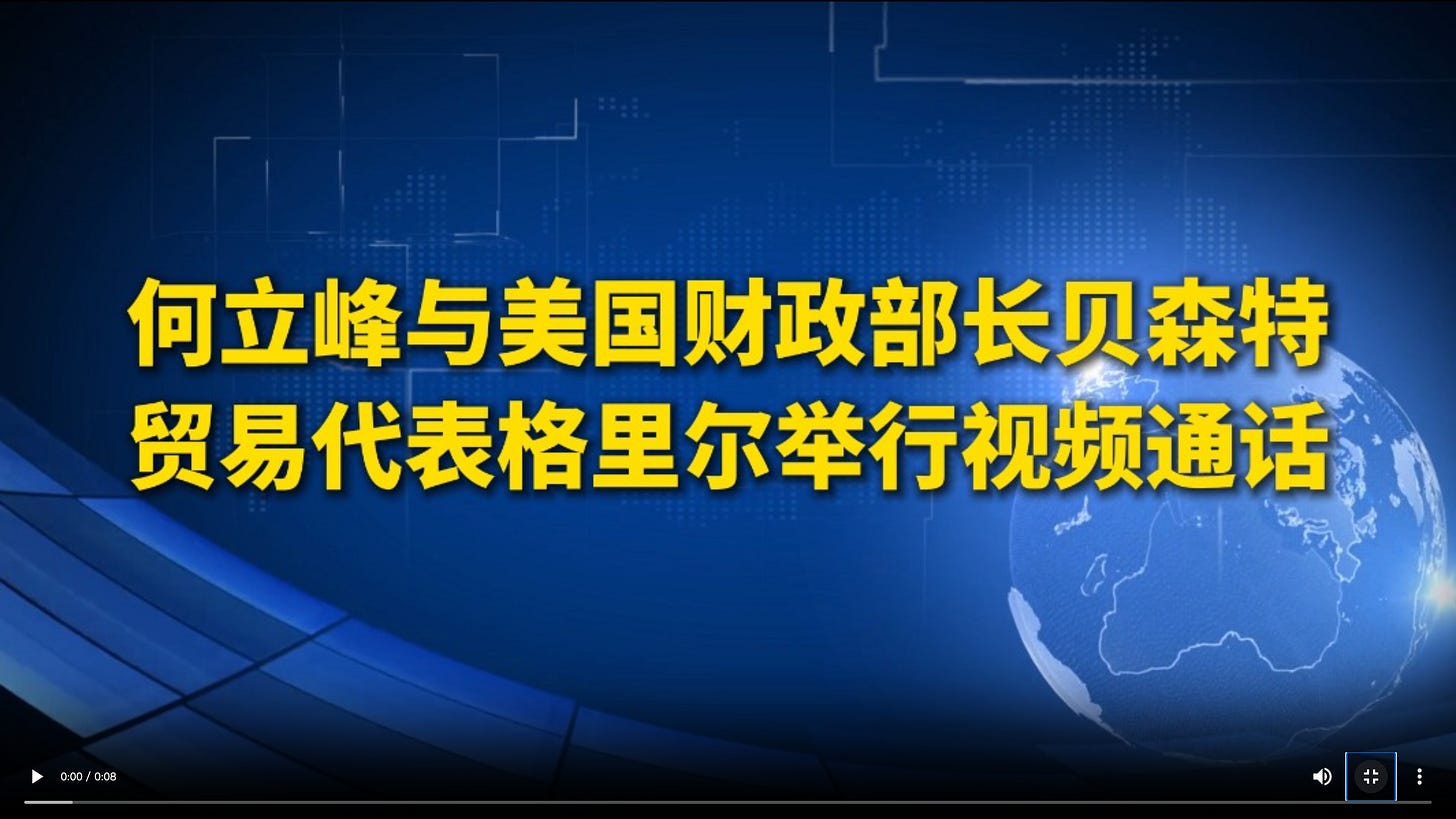
China’s response to U.S. restrictions has been one of vocal opposition and strategic posturing, with Vice Premier He Lifeng expressing 'serious concerns' over American economic and trade measures during talks with U.S. officials. Beijing’s insistence on relaxing chip export controls as a precondition for meaningful AI risk dialogue highlights the transactional nature of these talks, where China offers limited engagement on AI safety while prioritizing political stability over genuine risk mitigation. This skepticism is compounded by U.S. perceptions of Chinese AI governance as a 'hollow political instrument' focused more on censorship than on addressing fundamental safety deficits, fueling doubts about China’s intentions and complicating prospects for substantive cooperation.
Underlying the AI risk discussions is a persistent trust deficit shaped by historical patterns of broken promises and competing strategic goals, which make Cold War–style arms control frameworks both appealing and elusive. While some U.S. policymakers advocate for crisis planning and communication channels reminiscent of U.S.-Soviet détente, others view engagement with Beijing as appeasement, wary that China has previously used dialogues to 'muddy the waters' and weaken export controls. The absence of mechanisms for verification or transparency, coupled with divergent priorities—Washington’s emphasis on sovereignty and innovation versus Beijing’s focus on political control—renders meaningful AI safety cooperation unlikely, limiting the dialogue to modest coordination efforts aimed primarily at nudging both governments to take AI risks seriously without deep collaboration.
The strategic rivalry extends beyond bilateral tensions into global technology diffusion, with initiatives like the U.S. Pax Silica and American AI Exports Program countering China’s Digital Silk Road, underscoring AI as a new frontier of geopolitical competition. Export controls on advanced chips not only serve as leverage in negotiations but also impose 'compounding costs' on China’s AI industry during a critical development phase. Beijing’s framing of export control relief as a prerequisite for serious engagement contrasts with Washington’s posture of strength, reflecting a dynamic where the U.S. views these controls as appreciating assets rather than bargaining chips, further entrenching the trust deficit and shaping the trajectory of AI governance talks ahead of the Trump-Xi summit.



U.S. Divided on AI Strategy
Internal U.S. policy battles and industry pushback are fracturing attempts at a unified AI approach, forcing officials to settle for minimal coordination as the Trump-Xi summit looms.
The internal U.S. debate on AI engagement with China is sharply divided between those advocating for a Cold War-style arms control framework and skeptics who view any dialogue as mere appeasement, reflecting deep mistrust and divergent strategic visions. While the U.S. government acknowledges that meaningful cooperation on AI safety is currently unattainable due to a lack of shared goals and trust, officials aim for modest coordination through parallel domestic commitments rather than binding agreements or verification mechanisms. This cautious approach underscores recognition that constraining AI capabilities, unlike nuclear arms, is unrealistic given political and technical barriers, with U.S. policymakers wary of compromising critical advantages such as computational power custody. Even minimal bilateral dialogue is valued internally for forcing government coordination and clarifying jurisdiction over the sprawling AI governance issue set ahead of the Trump-Xi summit.
Within the U.S. government, forming a coherent AI policy stance remains a challenge amid interagency disputes over whether AI should be treated as a normal technology, complicating the ability to present unified demands to China. As one analyst noted, four weeks after the Mythos summit, Washington is still 'picking sides' in this internal feud, highlighting the difficulty senior officials face in deciding what they are prepared to ask of Beijing—and by extension, of themselves domestically—before the Trump-Xi meeting. This internal discord reflects broader tensions between cybersecurity, AI policy, and innovation constituencies, with debates intensified by the recent departure of influential AI advocate David Sacks and nuanced philosophical differences that transcend partisan lines.
The U.S. AI oversight debate is further complicated by bipartisan and industry pushback against extreme regulatory proposals such as strict licensing regimes for AI model releases, which are widely viewed—even by safety advocates—as likely to stifle innovation and cede competitive advantage to China. Industry leaders like David Sacks, Sriram Krishnan, and Marc Andreessen emphasize the importance of allowing companies to release AI models on their own schedules to maintain U.S. technological leadership. Despite these tensions, a rare bipartisan consensus is emerging against an uncontrolled AI race, with figures across the political spectrum—from Bernie Sanders to Steve Bannon—calling for action, supported by polling showing 95% of Americans oppose a reckless AI arms race. This growing political cohesion underscores a shared recognition of the need for global engagement on AI governance, drawing lessons from past international cooperation on existential risks such as nuclear weapons and pandemics.

Summit Eyes Modest AI Steps
With deep distrust on both sides, U.S. and Chinese negotiators are considering incremental, low-risk commitments—like AI model lead times and cyber incident dialogues—rather than sweeping agreements.
Ahead of the Trump-Xi summit, U.S. and China officials are considering initiating recurring, official dialogues focused on practical AI risk management issues such as unpredictable AI model behavior, autonomous military systems, and cyber threats from nonstate actors. These talks aim to establish a foundation for cooperation on manageable, incremental steps—like restricting public access to sufficiently advanced AI models—as a pragmatic first measure to build trust and address enforceability challenges before tackling more complex commitments.
China, represented by Liu Pengyu of the Chinese Embassy in Washington, signals a willingness to engage in AI risk mitigation talks that balance fierce competition with cooperation to prevent global shocks and cyber misuse. This approach emphasizes stability over alignment, focusing on safety protocols, technical safeguards, and governance frameworks, reflecting a cautious openness to dialogue without compromising strategic rivalry.
The proposed modest coordination commitments for the summit include three low-cost, parallel actions: formalizing lead times for technical evaluation before releasing frontier AI models, implementing DNA synthesis screening to prevent AI-assisted biological misuse, and establishing a flexible AI-related cyber incident dialogue modeled after the Military Maritime Consultative Dialogue. Each commitment can be domestically implemented without granting either side an asymmetric advantage, while exerting competitive pressure on China to demonstrate serious AI risk management efforts.
Despite the urgency to coordinate, internal U.S. policy fragmentation complicates the summit’s prospects, as agencies like the Department of War and Treasury remain at odds over AI governance approaches. This internal discord underscores the importance of maintaining a coherent U.S. stance that avoids conceding critical advantages—such as control over computational power—while preparing clear, unified requests for Beijing, making the summit a pivotal moment to clarify and solidify U.S. AI policy objectives.

AI Risks Demand Global Unity
As AI advances outpace government action, bipartisan leaders and international experts are pushing for multilateral, depoliticized frameworks to manage global AI threats beyond just U.S.-China competition.
As AI capabilities accelerate exponentially—doubling every four months and projected to be 250 times more powerful by the next U.S. presidential inauguration—experts emphasize that managing these risks transcends mere U.S.-China rivalry. Senator Bernie Sanders and other policymakers argue that AI safety should be framed as a global risk-management challenge akin to nuclear arms control or pandemic response, urging that the upcoming Trump-Xi meetings expand their agenda to include AI cooperation to build on existing dialogues and address emerging threats.
Private sector innovation, rather than government initiatives, is driving the rapid AI advancements, underscoring the necessity for inclusive, multistakeholder dialogues that incorporate companies alongside governments. This approach is echoed by Chinese experts like Xue Lan, who highlight the fragmented nature of current international AI governance efforts—from summits in the UK, Delhi, and Geneva to UN scientific panels—and call for agile, coordinated global mechanisms to keep pace with technological change and effectively mitigate risks.
Despite political sensitivities and backlash—illustrated by Fox News and The Washington Post’s criticism of Sanders’ inclusion of Chinese AI governance experts—there is a growing bipartisan consensus in the U.S. opposing an uncontrolled AI race. Figures like Max Tegmark note an unlikely 'Bernie-to-Bannon coalition' united by concern, with polling showing 95% of Americans rejecting a dystopian superintelligence arms race. Advocates stress that major AI powers, including the U.S. and China, must collaborate on safety standards, technical protocols, and risk prevention, ideally through depoliticized, multilateral frameworks such as the United Nations.
Geopolitical tensions and fears of ceding leadership complicate global AI safety cooperation, as Treasury Secretary Scott Bessent warns against allowing any nation other than the U.S. to set global AI standards. Meanwhile, Chinese experts caution that these tensions hinder the design of effective guardrails, exacerbating a critical mismatch between public perception and AI’s true capabilities—sometimes distorted by companies claiming AI has consciousness or emotions—thereby reinforcing the urgent need for transparent, trust-building international dialogue to align governance with rapid technological progress.