AI content gold rush sparks authenticity crisis—and a battle for who gets paid
The gist
The AI content gold rush is fueling unprecedented productivity—and a fierce battle over authenticity, attribution, and who gets paid.
What to know
- Generative AI has let publishers like Dow Jones Newswires boost output by up to 90% and brands churn out thousands of personalized videos for under $1 each.
- Audiences and platforms are pushing back hard against 'AI slop,' with Pinterest letting users disable AI posts and Google rewarding content with clear human bylines.
- Publishers are fighting to protect their value as AI tools like ChatGPT siphon up to 30% of their traffic, fueling calls for collective licensing, direct partnerships, and new rules for fair compensation.
AI Supercharges Content—And Disrupts
Generative AI is not just scaling content output but fundamentally reshaping who controls creativity, how audiences engage, and who profits in the new media economy.
Generative AI has unleashed a new era of scale and efficiency in content creation, transforming everything from social media posts to advertising and editorial workflows. On platforms like LinkedIn, leaders such as Adam Robinson openly leverage AI tools like Claude to maintain engagement while freeing up time for higher-level priorities, and marketers report that over half now use generative AI for content creation, with ChatGPT dominating the tool landscape at 75% adoption. This rapid uptake is mirrored in publishing and media, where platforms like Symbolic.ai have delivered productivity gains of up to 90% for Dow Jones Newswires, and Fortune 500 brands are turning to AI-native agencies to produce thousands of personalized videos for under $1 each, signaling a profound disruption of traditional business models and content economics.
Yet, this explosion of AI-generated content is not without its growing pains and backlash. While AI enables mass production—evident in Inception Point AI's 200,000 podcast episodes and the rise of AI-driven YouTube channels with millions of subscribers—audiences and platforms are pushing back against the loss of authenticity, with Pinterest allowing users to turn off AI content and publishers enforcing strict no-AI policies to preserve the unique value of human authorship. Marketers and creators alike are becoming more selective, emphasizing the importance of maintaining a distinct human voice and warning that copy-pasted AI content is easily spotted and risks eroding both trust and creative skill.
The disruption extends beyond content creation into the very structure of social media and advertising. Platforms like Sora are pioneering a third phase of social media, where AI dynamically generates personalized content feeds, potentially sidelining traditional creators and shifting monetization toward 'cameo' features that inject human likeness into AI content. This model, predicted to be adopted by giants like TikTok and Instagram, challenges the economic power of influencers and creators, as platforms seek to maximize engagement with vast catalogs of AI-generated content tailored to individual users, fundamentally rewriting the rules of content distribution and advertising.
Amid these seismic shifts, AI is also unlocking new frontiers for creators and brands, expanding the global reach of content through multilingual translation and enabling new forms of digital entrepreneurship. Creators are now building value not just through content, but by developing software and fine-tuned AI models—platforms like WABI and Civit exemplify this trend—while brands such as Authentic Brands Group are harnessing AI to streamline asset creation and brand management, achieving up to 60% higher return on ad spend. The result is a rapidly evolving ecosystem where the boundaries between content, technology, and commerce are increasingly blurred, and where both opportunities and challenges abound for those navigating the age of AI-generated content.






Authenticity Becomes a Status Symbol
The flood of AI-generated ‘slop’ is fueling a cultural backlash, making visible human authorship and originality the new gold standard for trust and brand value.
The backlash against 'AI slop'—low-quality, mass-produced AI-generated content—has intensified across industries, as both creators and audiences grow weary of its erosion of trust and originality. As Minlo partner DD Doss observed, a proliferation of 'slop as a service startups' has flooded the internet with generic blogs aimed at gaming SEO, but this short-term strategy is now seen as undermining the very fabric of digital trust and risking search penalties. This mounting fatigue has led industry leaders to draw a hard line: as one analyst put it, 'I would never let anybody produce, you know, AI directly to publish on the web for any of our properties,' underscoring the renewed premium on human oversight and editorial control in marketing and publishing.
Amid the deluge of synthetic content, authenticity and clear human authorship have become critical differentiators for brands and creators seeking to maintain trust and value. Platforms like Google and TechMe Gabe's database are increasingly able to semantically recognize known authors, rewarding content with transparent, human attribution in search rankings and audience engagement. As a result, companies that invest in visible, human-driven editorial processes and link their content to real people are positioned to command a premium in both credibility and discoverability.
The cultural fatigue with AI-generated content is not just about quality, but about the loss of genuine human connection and creativity—a sentiment echoed in the backlash against AI-generated podcasts and essays, and in the skepticism voiced by creators like Margaret Atwood and Jon M. Chu. Listeners and readers increasingly reject even well-crafted AI content once its origins are revealed, as seen when Ted Gioia removed an AI-written essay from his 'best of' list, and when podcast audiences expressed discomfort with AI-hosted episodes. This highlights a deep-seated belief that true originality, improvisation, and emotional resonance remain uniquely human, and that the visible effort and imperfection of human creation are now prized as markers of authenticity.
While AI tools can enhance productivity and support creative processes, their value is maximized when used as assistants rather than autonomous creators—a principle increasingly adopted in journalism, marketing, and publishing. The 'AI sandwich' model, where human judgment bookends AI assistance, reflects a strategic balance: AI may help generate ideas or refine drafts, but the core narrative, evaluation, and final decisions remain firmly in human hands. As Brett Stevens of The Globe and Mail asserts, 'we are in the trust business,' and audiences are seeking anchors in content that is rooted in genuine human experience and discernment.





Human-AI Teams Win Hearts—and Eyes
Content that blends AI’s speed with unmistakable human voice and judgment is outperforming generic AI output, forcing creators to double down on personal style and authenticity.
As AI-generated content floods digital spaces, organizations and creators are finding that blending AI efficiency with human insight is crucial for maintaining authentic, differentiated voices. Purely AI-driven posts remain easy to spot and risk eroding the unique craft and personal connection audiences crave, which is why founder-led and human-centered content—where the creator's judgment and voice remain front and center—continues to outperform generic brand messaging. As one SaaS content strategist put it, 'I would never copy and paste content from AI... people gravitate towards people,' underscoring that effective human-AI collaboration means using AI to augment, not replace, the creator's skill and perspective.
The rapid advancement of AI tools has made it possible for creators to produce content that rivals or even surpasses the average human effort, but this very power has led to a new problem: content homogenization. As models quickly templatize and replicate writing styles, the market is flooded with lookalike posts, making it even more vital for creators and brands to develop a unique, hard-to-copy style—one defined by distinctive voice, tone, and judgment. This challenge has prompted marketers and publishers to adopt workflows where AI handles organizing, editing, or research, while humans retain control over ideation and narrative, ensuring that the final product reflects genuine expertise and individuality.
By late 2025 and into 2026, a clear competitive advantage has emerged for those who strategically leverage AI as a creative partner while foregrounding human authenticity and emotional connection. Companies like Metro and BBDO exemplify this approach: Metro uses AI for ideation but insists on human editorial control to curate, contextualize, and challenge conventional wisdom, while BBDO's 'Brave Bot' benchmarks ideas against decades of top ads, pushing creative teams to refine concepts without ceding the final say. This human-AI collaboration not only preserves trust and audience loyalty but also enables advanced personalization, faster production, and the agility needed to thrive in a fragmented, AI-saturated media landscape.
Amid growing skepticism toward algorithm-driven feeds and generic AI content, creators and brands are doubling down on direct audience relationships, micro-communities, and human-first marketing strategies. Platforms like LTK and independent tech media such as TBPN and Newcomer are bypassing traditional institutions to build trust-based, authentic connections, while marketers emphasize empathy, purpose, and visible leadership as new pillars of differentiation. As Phil Treagus-Evans puts it, 'trust is the new marketing currency,' and Google's E-E-A-T guidelines now reward human-centered content, making authenticity both an ethical imperative and an SEO advantage.




Publishers Fight AI’s Traffic Drain
With AI platforms siphoning off audiences and ad dollars, publishers are reinventing their business models and demanding compensation as the old rules of digital distribution collapse.
AI-driven platforms like ChatGPT and Claude have precipitated a sharp decline in publisher search traffic, with some outlets losing up to 30% of their audience as these tools scrape content without offering compensation or monetization opportunities. In response, there is a mounting call within the publishing industry to demand compensation, brand credit, and attribution from AI companies, with collective licensing frameworks emerging as a strategic necessity to protect content value in an environment where traditional revenue streams are rapidly eroding.
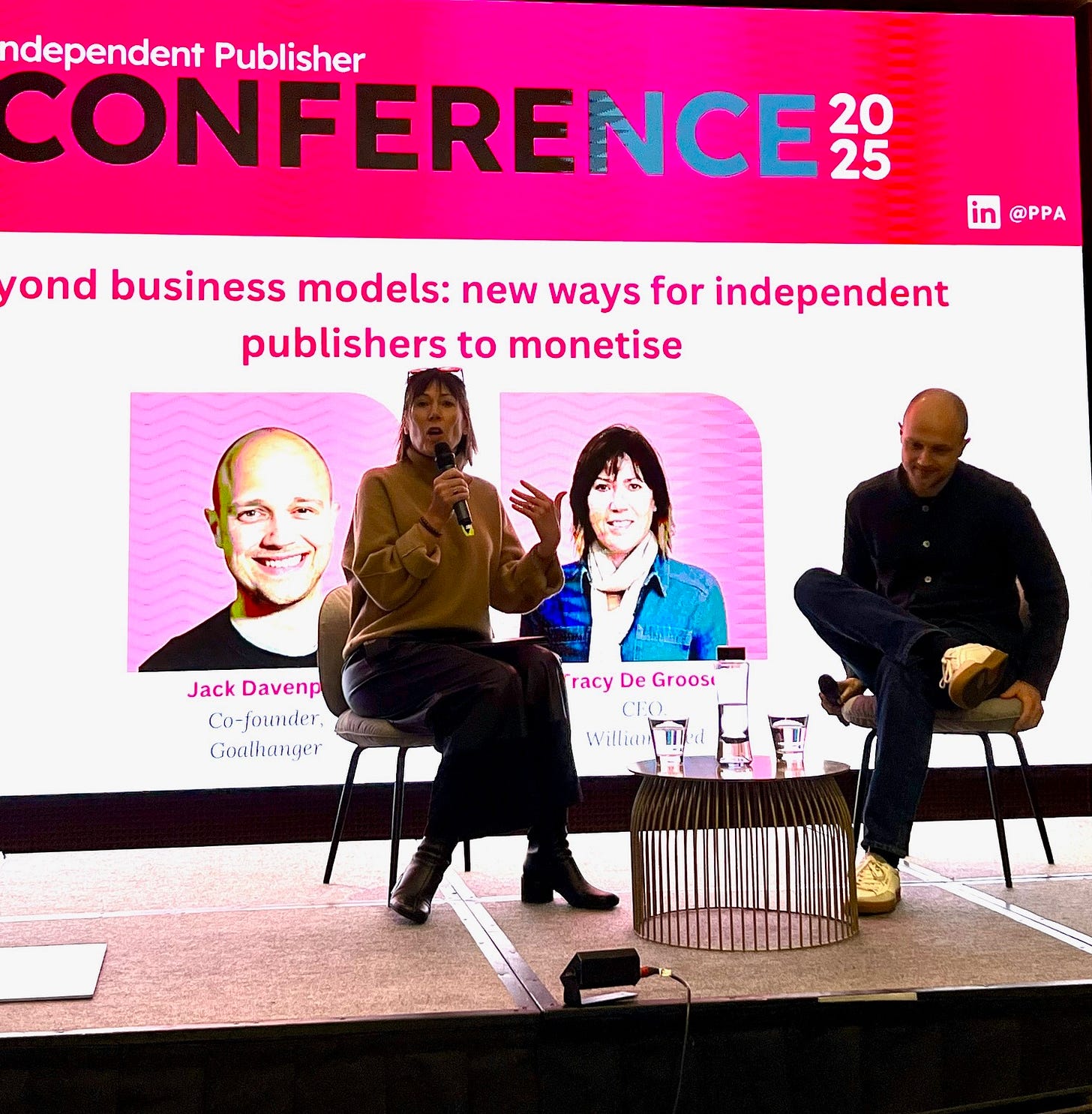
Facing the commoditization of content and the erosion of ad-based revenue, publishers are rapidly diversifying their business models, shifting away from reliance on social media algorithms and display ads toward subscriptions, direct partnerships, events, and email-driven engagement. Industry leaders like Black Business Magazine and Condé Nast exemplify this trend, with email newsletters now surpassing social traffic and driving higher lifetime value, while brands like Goalhanger have built multi-pronged models spanning podcasts, video, and live events to maintain relevance and revenue.
The explosive growth of generative AI—ChatGPT reportedly expanding three times faster than the early internet—has outpaced publishers’ ability to adapt, fundamentally threatening the search-based traffic model and forcing a re-evaluation of platform dynamics and monetization strategies. As Google and other tech giants integrate AI features that reduce publisher visibility, the industry is grappling with a future where content distribution and value are dictated by AI-driven ecosystems rather than traditional human-centric discovery.
As AI-generated content floods digital platforms, the value of human creators and original publisher content is increasingly under threat, with new business models emerging around licensing, attribution, and even cameo compensation for digital likenesses. The Atlantic’s partnership with OpenAI and the rise of AI-native social platforms like Sora illustrate a landscape where sustainable monetization may depend on ongoing revenue-sharing agreements and direct audience relationships, while the commoditization of informational content pushes publishers to focus on highly visual, analytical, and personality-driven offerings that retain destination appeal.
Ethics and Credit in the AI Age
Legal battles and industry reforms are erupting over AI’s use of creative work, as transparency, fair pay, and the irreplaceable value of human creativity take center stage.
The ethical and legal landscape surrounding AI-generated content is rapidly evolving, as creators and platforms grapple with issues of transparency, copyright, and fair compensation. High-profile campaigns like 'Stealing Isn’t Innovation,' led by Scarlett Johansson and R.E.M., underscore mounting frustration over the unauthorized use of creative works by AI companies, echoing Jon M. Chu and Margaret Atwood’s concerns about the 'original sin' of data mining without consent. In response, media organizations such as The Atlantic are pioneering new licensing models and direct audience relationships, while frameworks like Pro Rata’s revenue-sharing and Anthropic’s publicly released 'Claude Constitution' signal a broader industry push toward transparent, accountable, and ethically governed AI ecosystems.
Transparency and human oversight have become central pillars in the governance of creative AI, with calls for legal mandates to criminalize undisclosed AI authorship and publishing platforms deploying AI checkers to enforce human originality. As Brett Stevens of The New York Times asserts, journalism and creative industries are 'in the trust business,' making it imperative to clearly disclose when AI is involved and to maintain an 'AI sandwich' workflow—beginning and ending with human judgment. This emphasis on transparency is mirrored in permissioned marketing strategies, which prioritize user consent and data clarity to foster trust, particularly in high-stakes B2B contexts.
Despite AI’s growing role as a creative assistant, the irreplaceable value of human creativity, judgment, and connection remains clear. Research by James C. Kaufman and commentary from artists like Jon M. Chu and Margaret Atwood highlight that AI amplifies existing creative disparities and cannot replicate the spontaneity, originality, or authentic voice that define human artistry. In both education and professional settings, overreliance on AI risks eroding meaningful skill development and personal agency, making it essential to set boundaries that preserve the unique contributions and identities of creators.
The global governance of AI-generated content is complicated by geopolitical tensions and divergent ethical standards, as nations race to define 'bad actors' and outpace rivals in AI development. This fragmented landscape challenges the creation of universal frameworks for responsible AI use, making international collaboration and adaptive regulation increasingly urgent. Meanwhile, companies like Anthropic are setting new benchmarks for ethical AI governance with comprehensive, transparent constitutions, aiming to influence both industry norms and regulatory policy on a global scale.