AI control towers move into execution
The gist
AI-powered control towers are obliterating supply chain silos, uniting real-time data and human-agent collaboration to supercharge speed, resilience, and transparency across industries.
What to know
- By mid-2026, platforms like InterSystems, Cleo, and TraceLink have unified data and workflows, enabling AI-driven insights that bridge planning and execution for manufacturing, logistics, and customer service.
- TraceLink’s no-code OPUS Platform links over 315,000 business entities, boosting productivity by up to 100% and service levels by 50% through seamless human-agent collaboration.
- Healthcare supply chains are tackling costly 'workflow debt' with connected intelligence platforms that unify contracts, inventory, ERP, and payments to slash exception costs and foster proactive collaboration.
AI Orchestration Breaks Silos
AI-powered orchestration layers unify fragmented data and bridge planning with execution, empowering supply chains to anticipate disruptions and make real-time, market-driven decisions.
By mid-2026, platforms like InterSystems Supply Chain Orchestrator have pioneered the creation of a unified, real-time data environment that harmonizes and normalizes disparate data sources, enabling accurate and timely analytics. This foundation supports advanced machine learning and AI-driven prescriptive insights, allowing companies to anticipate and resolve supply chain issues proactively before they escalate into costly disruptions.
A critical innovation lies in the introduction of an AI-enabled orchestration layer that bridges the traditional divide between supply chain planning and execution systems. This layer, exemplified by Cleo’s AI-native orchestration, provides contextual awareness and real-time visibility into the 'information supply chain'—a digital twin mirroring physical operations—empowering companies to track orders, shipments, and inventory dynamically and make rapid course corrections amid volatile demand cycles.
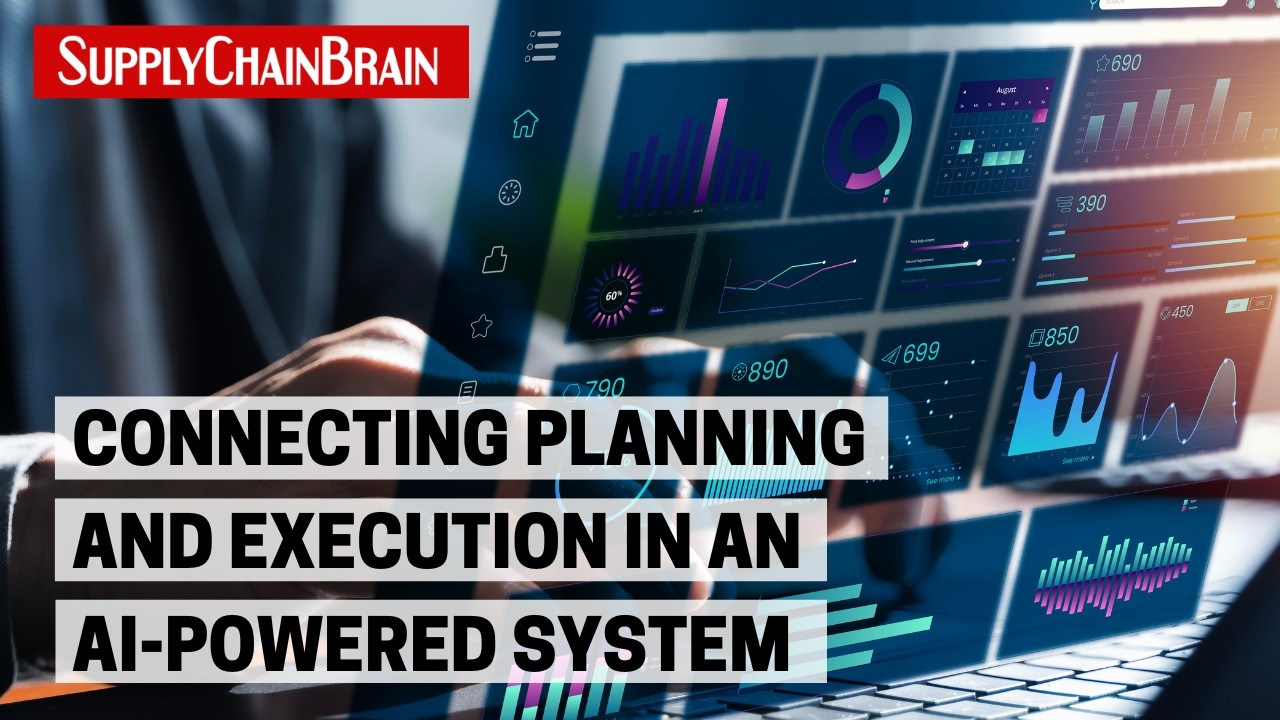
Connecting planning and execution into a seamless, AI-powered system fundamentally transforms supply chain management by breaking down silos across manufacturing, logistics, and customer service. As Alan Dow articulates, this integration fosters real-time decision-making through intelligent agents that identify disruptions and evaluate scenarios, ultimately reducing inventory risk, enhancing responsiveness, and delivering a competitive edge in an increasingly fast-paced market.

Agentic Platforms Supercharge Workflows
No-code agentic platforms like TraceLink’s OPUS enable rapid, risk-reducing workflow automation and human-AI collaboration, delivering unprecedented gains in productivity and service.
TraceLink’s no-code OPUS Platform, launched in mid-2026, revolutionizes supply chain workflow orchestration by seamlessly integrating over 315,000 authenticated business entities through its Agentic Supply Chain Operating System. This platform enables rapid, customizable configuration of workflows that connect people, AI agents, enterprise systems, and trading partners without the need for custom software development, allowing supply chains to swiftly adapt to regulatory and market changes.
By shifting from manual processes to governed human-agent collaboration, TraceLink’s OPUS Platform delivers dramatic operational improvements—boosting productivity by 50–100% and enhancing service levels by 30–50% while simultaneously reducing risk and costs. This human-agent synergy is further amplified in the Agentic AI Control Tower, which leverages event-driven intelligence and continuous observability to provide trusted business context and deterministic reasoning, enabling coordinated execution across people, systems, and AI agents as emphasized by CEO Shabbir Dahod.
The Agentic AI Control Tower, unveiled shortly after OPUS, accelerates analytics by at least 30% and scales from thousands to millions of data rows, dramatically enhancing decision-making speed and operational resilience in life sciences supply chains. Built atop the OPUS Platform and powered by the OPUS Brain’s agentic reasoning, this control tower exemplifies how AI-driven workflow automation and collaboration can proactively manage complex supply chain dynamics with unprecedented efficiency.
Connected Intelligence Tackles Workflow Debt
Healthcare supply chains are erasing costly inefficiencies by redesigning processes and unifying data streams, turning exception-heavy operations into proactive, collaborative networks.
Healthcare supply chains are burdened by 'workflow debt,' a term GHX uses to describe the inefficiencies stemming from disconnected systems, fragmented data, and manual processes that cause approval bottlenecks, rework, and exception chasing. Addressing these challenges requires more than just implementing ERP or cloud technologies; as Mr. Luoma highlights, a fundamental process redesign paired with an end-to-end connected intelligence platform is essential to foster proactive, two-sided visibility and collaboration among trading partners, moving beyond piecemeal fixes to holistic transformation.
The financial toll of managing supply chain exceptions independently is significant, with one GHX customer reporting that exception handling consumes about 1.5% of its overall annual supply chain costs. This underscores the urgency for connected intelligence platforms that unify contracts, inventory, ERP, and payment data into a single, coordinated operational framework. As Mr. Luoma explains, this integration transforms fragmented data into actionable insights, enabling organizations to anticipate and address potential disruptions before they escalate.
Building true supply chain resilience in healthcare hinges on creating a connected ecosystem where visibility, intelligence, and action flow bidirectionally between providers and suppliers. Mr. Doner emphasizes that such a platform approach fosters a shared understanding of issues and collaborative problem-solving, which are critical for proactive interventions and sustained operational continuity across trading partners.
Agentic Networks Redefine Scale
By embedding AI agents across a vast, authenticated business network, TraceLink’s agentic model delivers elastic productivity, collaborative governance, and real-time resilience at global scale.
By mid-2026, TraceLink emerged as a pioneer in the strategic shift toward agentic, AI-driven supply chain operating models, earning the Global AI Award for its innovative OPUS Platform and Integrate-Once™ Agentic Business Network. This model redefines supply chain operations by embedding AI agents alongside human oversight, enabling organizations to scale their operations without proportionally increasing manual effort. The result is a transformative elasticity in work specialization that enhances productivity, resilience, and service levels while strengthening governance and transparency across complex, multienterprise networks.
Central to this agentic operating model are three pillars—Agentic Business Processes, Agentic Control Towers, and the Integrate-Once™ Agentic Business Network—that collectively break down traditional silos and foster unprecedented collaboration and visibility. By linking over 315,000 authenticated entities and facilitating hundreds of billions of transactions annually, TraceLink’s network enables real-time intelligence and decision-making that align AI agents and human teams around shared objectives and measurable outcomes. This integrated approach not only accelerates exception resolution but also ensures robust governance and coordinated responses to dynamic supply chain conditions, marking a significant evolution in how supply chains are managed globally.