AI crossfire: states, silicon valley, and publishers clash over regulation, rights, and revenue
The gist
America’s AI future is a battleground—states, tech giants, and publishers are locked in a high-stakes fight over who controls the rules, reaps the rewards, and protects the public.
What to know
- California and New York ignited a national showdown in 2025 by enacting tough AI laws on labor rights and transparency, sparking fierce pushback from Silicon Valley’s $100M ‘Leading the Future’ coalition.
- Publishers faced up to 30% drops in AI-driven search traffic, forcing a pivot to direct audience revenue and collective licensing deals, while legal slugfests erupted over content scraping.
- Congress overwhelmingly rejected a decade-long AI liability shield in 2026 amid mounting public skepticism, but deep industry lobbying and partisan rifts threaten sustainable AI governance.
States Lead, Tech Fights Back
California and New York’s pioneering AI laws triggered a high-stakes battle as Silicon Valley mobilized millions to push for flexible, industry-friendly rules and challenge federal inaction.
In 2025, states like California and New York spearheaded the first significant legislative efforts targeting frontier AI risks, with California's SB53 and New York's RAISE Act focusing on labor rights, developer transparency, and catastrophic risk mitigation such as cyberattacks and biothreats. These laws adopt an entity-based regulatory approach that requires large AI developers to self-determine safety protocols and report critical incidents without direct government approval, positioning themselves as 'pseudoregulatory' frameworks that balance flexibility with public accountability amid federal regulatory uncertainty and potential Big Tech opposition.
Amid this burgeoning state-level regulatory landscape, the AI industry mobilized swiftly, launching the 'Leading the Future' coalition in August 2025 with over $100 million in backing from major players like Andreessen Horowitz, Greg and Anna Brockman, and Ron Conway. This coalition aims to shape U.S. AI policy by promoting pro-innovation regulations, organizing political support through PACs to elect AI-friendly candidates, and countering restrictive measures such as proposals for an 'AI FDA,' reflecting an early, strategic push to influence both federal and state governance while advocating for 'sensible guardrails' rather than outright deregulation.
This dynamic interplay between proactive state legislation and vigorous industry pushback underscores broader tensions in U.S. AI governance, where federalism challenges emerge as states like California, New York, Texas, and Nevada pursue divergent AI policies reflecting local priorities. Bipartisan attempts to restrict state AI regulations by threatening broadband funding highlight the complexity of balancing innovation leadership with local autonomy, as stakeholders debate whether a unified national framework or a patchwork of state rules best serves the nation’s technological and ethical imperatives.
While the 'Leading the Future' coalition’s substantial financial muscle and political strategy have raised concerns about potential regulatory capture and prioritizing industry interests over public safety, especially amid intensifying U.S.-China AI competition, the coalition’s emergence marks a critical early phase in the contest over AI’s future. Its efforts to counterbalance stringent regulations with innovation-friendly policies reveal the high stakes and competing visions shaping AI governance as the technology’s societal impact rapidly expands.




Federal Gridlock and Industry Muscle
A $100M Silicon Valley coalition poured money into shaping national AI policy, deepening ideological rifts as Congress struggled to balance innovation, state autonomy, and public safety.
By late 2025, the federal AI policy landscape was marked by Silicon Valley’s strategic mobilization to shape regulation through the $100 million 'Leading the Future' coalition, backed by heavyweights like Andreessen Horowitz and OpenAI’s Greg Brockman. This coalition sought to promote pro-innovation policies and counteract stringent regulations, employing tactics reminiscent of crypto PACs, including funding political candidates favorable to AI development. However, this industry-driven push sparked concerns about regulatory capture and prioritizing corporate interests over public safety, intensifying ideological tensions amid a broader U.S.-China AI competition.
Federal debates revealed a complex tug-of-war between the desire for a unified national AI strategy and the preservation of state-level autonomy, with bipartisan efforts attempting to penalize states enacting independent AI regulations by threatening broadband funding access. This tension underscored ideological divides, as some policymakers argued that states like California should not be forced to adopt uniform rules akin to Texas or Florida, reflecting the challenge of harmonizing innovation, safety, and federalism principles in AI governance.
Into 2026, pragmatic and incremental approaches gained traction, exemplified by proposals from figures like Dean Ball and Alex Bores advocating for balanced frameworks relying on common law for harm redress, mandatory transparency, and moratoria on certain state-level AI laws to foster collective reasoning. Bores’ comprehensive eight-point framework, emphasizing mandatory reporting, independent safety testing, and diplomatic engagement, garnered bipartisan support despite opposition from powerful industry-aligned super PACs. This period also saw the White House actively opposing state-level bills perceived as burdensome, reflecting ongoing ideological friction in balancing innovation with oversight.
By mid-2026, bipartisan consensus emerged on the necessity of reasonable AI guardrails, as evidenced by the Senate’s overwhelming 99-1 vote rejecting a decade-long liability shield for AI companies and broad support for regulatory frameworks addressing child protection, labor, and transparency. Notably, OpenAI shifted toward endorsing stronger safety legislation and third-party audits, distancing itself from earlier opposition to regulation. Yet, despite this progress, significant challenges remain due to entrenched industry lobbying, political resistance, and unresolved debates over the feasibility of truly safe AI models, leaving federal AI governance in a state of cautious evolution.




Publishers Pivot Amid AI Disruption
Facing steep search traffic declines, publishers raced to rebuild their business models around direct audience monetization, collective licensing, and newsletters that now out-earn social media.
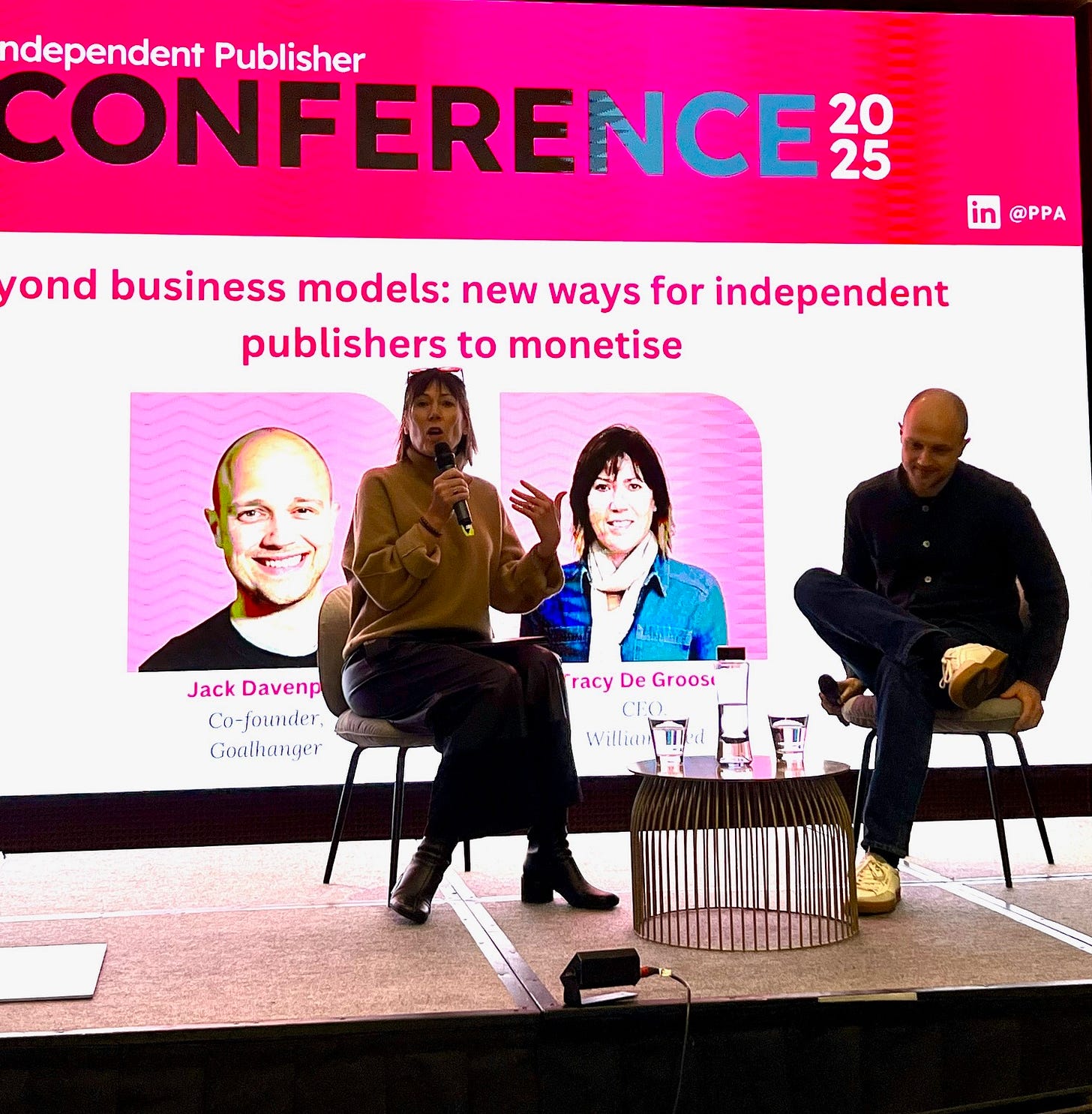
By late 2025, publishers were grappling with a sharp decline in AI-driven search traffic—up to 30% losses—as platforms like ChatGPT and Google’s AI features rapidly redefined content discovery, siphoning traffic without offering monetization opportunities. This disruption, described by David Buttle as AI’s growth outpacing the early internet threefold, forced publishers such as Goalhanger to pivot from chasing algorithmic clicks to cultivating direct audience relationships through podcasts, subscriptions, and events, exemplified by their 40-million-member network engaging users for hours monthly.
In response to AI companies scraping content without compensation, publishers have increasingly embraced collective licensing as a strategic necessity, echoing Lucio Mesquita’s call to demand non-negotiable compensation, branding, and attribution. This coalition approach, crystallized by initiatives like the SPUR group formed by the BBC, Financial Times, and Guardian, aims to counteract the two-tier system where large publishers secure modest revenue deals while smaller outlets remain uncompensated, thereby strengthening bargaining power in negotiations with AI giants like OpenAI.
To mitigate the erosion of traditional search traffic and advertising revenue—projected to approach near zero within two years—publishers are innovating business models that emphasize direct audience monetization and diversified revenue streams. The Atlantic’s pragmatic licensing deal with OpenAI and its focus on print, apps, and newsletters exemplify this shift, while Time has reduced its Google dependency from 60% to 51% by expanding franchise sponsorships and branded content, achieving 22% ad revenue growth in 2025. Simultaneously, newsletters have emerged as critical revenue drivers, surpassing social media in traffic and generating up to 50% more revenue per subscriber, as reported by Condé Nast.
Amid operational challenges posed by AI-generated content—such as hallucinations, fabricated quotes, and ethical dilemmas—publishers like the Financial Times and The Guardian are embedding AI tools within editorial workflows to enhance quality and efficiency while reinforcing human judgment as the core differentiator. The Guardian’s appointment of a Chief AI Officer and establishment of an AI Council underscore a strategic commitment to navigate AI’s unprecedented disruption thoughtfully, balancing innovation with accountability to maintain trust in journalism.


Litigation, Licensing, and Content Wars
Major publishers, led by The Atlantic and The New York Times, combined lawsuits and multimillion-dollar licensing deals to fight AI-driven content theft and set new standards for compensation.
By early 2026, major publishers like The Atlantic and The New York Times adopted a dual strategy of litigation and licensing to combat unauthorized AI scraping and secure fair compensation. The Atlantic’s landmark deal with OpenAI exemplified a pragmatic approach, emphasizing direct partnerships grounded in economic incentives rather than goodwill, advocating revenue-sharing models akin to Pro Rata’s search engine framework to ensure sustainable value for content creators. Meanwhile, the New York Times pursued costly lawsuits against AI giants including OpenAI and Microsoft, while also forging licensing agreements such as with Amazon, underscoring the high stakes and financial burdens publishers face in protecting intellectual property amid AI’s rapid expansion.
Meta’s multi-year AI licensing deal with News Corp, committing up to $50 million annually for access to prestigious outlets like the Wall Street Journal and the New York Post, marked a pivotal moment in media-AI partnerships. This deal not only signaled Meta’s belated but significant entry into compensating publishers but also set a precedent likely to elevate industry-wide licensing standards, as other AI firms have inked agreements ranging from single-digit millions to $25 million annually. Faced with declining direct traffic due to AI-generated content, many media companies are strategically favoring licensing deals over litigation to secure revenue streams, with emerging opportunities for promotional arrangements that could prioritize certain publications’ content in AI responses.
The fragmented and passive response of the news industry to AI content scraping has drawn sharp criticism from leaders like A.G. Sulzberger of The New York Times, who branded the unauthorized use of journalism by AI companies as 'brazen theft' threatening the future of quality reporting. In response, publishers have begun forming coalitions such as SPUR, which includes the BBC, Financial Times, and Guardian, to collectively negotiate with AI firms and mount a more coordinated defense of intellectual property rights. Public sentiment strongly favors compensating content creators, contrasting with AI companies’ stance that publicly available internet data is fair game, intensifying the ethical and legal battles over content rights.
Legal confrontations have escalated with CNN’s landmark copyright infringement lawsuit against AI company Perplexity, the first by a television network targeting unauthorized AI use of journalistic content, reflecting a broader trend of publishers taking aggressive legal action. Despite the critical role of journalism in training AI models—The New York Times alone being the largest proprietary data source in a major training set—compensation remains disproportionately low, with licensing deals accounting for less than half a percent of AI industry revenues. AI companies have often resisted paying for content, resorting to scraping, pirated materials, and lobbying for legal immunity, prompting calls from Sulzberger for publishers to litigate vigorously, license only on sustainable terms, and push for stronger legislative protections including bot identification and transparency requirements.


Public Skepticism Fuels Political Divide
Rising distrust in AI galvanized unions and lawmakers to demand real safeguards, while partisan narratives and aggressive industry lobbying threatened to fracture regulatory efforts.
By late 2025, public skepticism toward AI had crystallized into a potent force shaping regulatory debates, with labor unions like the California AFL-CIO demanding meaningful guardrails rather than mere financial handouts from companies such as OpenAI. This skepticism intertwined with a growing bipartisan legislative push, exemplified by Dean Ball’s Federal AI preemption rule proposal, which sought to balance innovation with transparency and risk mitigation, including a moratorium on conflicting state laws. Yet, industry lobbying complicated this landscape, as powerful AI stakeholders were urged to cease opposing regulation and divest from political action committees that hinder legislative progress, underscoring the tension between public demands and corporate influence.
The narrative of 'AI doomerism' emerged as a central theme fueling partisan divides, particularly on the left, where it served as a rallying point for economic control and information regulation agendas reminiscent of earlier climate change catastrophism. This perspective influenced Biden administration staffers, who advocated consolidating AI development into a handful of American companies to mitigate superintelligence risks, a stance that even some Republicans found persuasive despite its pseudoscientific veneer. Such narratives have contributed to a polarized and often superficial public discourse, especially outside expert forums like The Curve, where political expediency and voter anxieties ahead of midterms have overshadowed nuanced debate, risking fragmentation of expert communities along partisan lines.
Entering 2026, the AI regulatory environment remained fraught with uncertainty and internal political complexity, particularly within the Republican Party, where excitement about AI’s potential coexisted with confusion and concern over governance approaches. The absence of comprehensive federal legislation led states to enact disparate AI laws, creating a patchwork regulatory landscape that raised questions about federal leadership. Meanwhile, figures like Alex Bores championed robust federal frameworks emphasizing mandatory reporting, independent safety testing, and international diplomacy, positioning AI regulation as a pivotal political issue despite facing fierce opposition from industry-backed super PACs linked to OpenAI and Silicon Valley titans, highlighting the ongoing clash between public unease and entrenched tech lobbying.
By early 2026, bipartisan consensus against granting AI companies sweeping regulatory immunity became evident, as the U.S. Senate overwhelmingly voted 99-1 to deny a decade-long shield from state-level AI regulations, reflecting shared concerns across ideological lines about AI’s rapid and unchecked growth. While the left focused on protecting jobs, safety, and curbing corporate power, the right emphasized issues of censorship and state authority, yet both converged on the necessity for guardrails. However, industry lobbying continued to dilute regulatory efforts, as seen in the weakening of provisions aimed at controlling technology transfer to China, and tensions persisted between engineers advocating for regulation and executives resisting oversight, illustrating the multifaceted challenges in crafting effective AI governance amid public skepticism and geopolitical rivalry.



Balancing Safety, Security, and Innovation
The scramble for robust AI oversight exposed urgent gaps in safety standards, national security coordination, and regulatory philosophy—challenging leaders to avoid both overreach and abdication.
The path toward a sustainable AI ecosystem demands rigorous safety standards and ethical deployment practices akin to those in aviation and medicine, as emphasized by the urgent calls from November 2025 analyses. The rapid compression of robotics development timelines—from prototype to consumer in just three years—exacerbates risks, especially for vulnerable populations like nursing home residents and service workers who face premature exposure to unsafe AI systems, underscoring the need for mandatory incident reporting, independent certification, and ongoing monitoring to break the recurring 'tombstone cycle' of catastrophic failures.
Addressing AI’s national security and market challenges requires a nuanced balance between government support and industry autonomy. By late 2025, experts warned against making AI giants like OpenAI 'too big to fail,' advocating for calibrated policies that derisk innovation without imposing disproportionate burdens on governments. This balance extends into early 2026, where calls for close collaboration between government agencies—especially the Department of Defense—and AI companies highlight the necessity of personnel exchanges and transparency to construct effective guardrails, while preventing private entities from wielding unchecked superintelligence power that could destabilize political and financial systems.
Effective AI governance must transcend reactive regulation and embrace proactive, adaptive policies that foster innovation while safeguarding critical societal domains such as health and democracy. By early 2026, analysts stressed that regulatory frameworks—like those in Europe, which have hindered AI progress due to excessive interference—should instead correct market distortions gently, promoting decentralization and new worker roles without stifling the market. Dean Ball’s advocacy for modest technocratic regulation encapsulates this approach, warning against extremes of either total decentralization or government overreach, and cautioning that coercive tactics, such as threats to destroy noncompliant companies, undermine American principles.
The evolving regulatory landscape signals expansive government oversight, particularly through mechanisms like supply chain risk designations anticipated by Defense Secretary Pete Hegseth. While legal interpretations suggest these designations will be limited to government contract fulfillment, concerns persist about potential overreach and harassment tactics reminiscent of the numerous investigations faced by Elon Musk’s companies under the Biden administration. This dynamic underscores the delicate tension between ensuring national security and preserving a fair, innovation-friendly environment for AI companies amid intensifying geopolitical competition and domestic scrutiny.