AI data center gold rush slams headfirst into power grid reality
The gist
AI’s relentless data center gold rush is slamming headfirst into America’s aging power grid, threatening to stall a $300 billion infrastructure boom just as it hits full throttle.
What to know
- AI data center capital spending is on track to hit $300 billion by 2027, with megaprojects like MATTER’s $1.5B Texas facility and Nvidia’s Blackwell GPUs fueling unprecedented growth.
- Aging grids, transformer shortages with 3-year waits, and 4–7 year interconnection delays have become the #1 bottleneck, pushing operators to build onsite natural gas plants and seek power-rich regions like Texas and Arizona.
- Despite a projected 330 million square feet added to U.S. real estate by 2035 and an industrial renaissance, $89 billion in projects are blocked by regulatory hurdles and community pushback, forcing a scramble for new energy and locations.
AI’s Power-Hungry Expansion
As AI data centers race past $300B in spending, their unprecedented energy appetite is driving grid stress, local backlash, and a scramble for new power sources that reshape both infrastructure and community relations.
The explosive growth in AI workloads, fueled by Nvidia’s Blackwell GPUs and major investments like MATTER’s $1.5 billion gigawatt-scale data center in Texas, has propelled data center capital expenditures well beyond expectations, with revenues projected to reach up to $300 billion by 2027. This surge has triggered an unprecedented industrial buildout, exemplified by facilities the size of Lower Manhattan and investments totaling half a trillion dollars, underscoring the massive scale of AI-driven infrastructure expansion.
Power grid constraints have emerged as the primary bottleneck in scaling AI data centers, overshadowing traditional concerns like chip supply or capital availability. Industry leaders, including Oracle’s CEOs and Nvidia’s Beth Kinderg, highlight that grid capacity limits—exacerbated by aging infrastructure, transformer shortages with delivery times nearing three years, and interconnection delays of 4 to 7 years—are forcing operators to adopt alternative strategies such as building onsite natural gas plants, behind-the-meter generation, and partnering with bitcoin miners who bring operational energy expertise.
The soaring energy demands of AI data centers, with single AI racks expected to draw up to 600 kW by 2027 and total U.S. data center power needs projected to triple to over 150 gigawatts by 2034, are driving electricity prices up by over 267% in some regions and sparking community backlash due to strained local grids. This power hunger has pushed companies like Microsoft and Meta to secure multi-gigawatt power supplies, including repurposing nuclear plants, while regulatory hurdles and social opposition continue to delay renewable energy projects, complicating the transition to cleaner power sources.
To mitigate these energy bottlenecks and environmental concerns, data center operators are increasingly innovating with hybrid energy solutions, including fuel cells, large-scale solar-plus-storage, and designing AI facilities as dispatchable grid assets capable of rapid load shedding to support grid stability. Yet, the mismatch between rapid AI hardware cycles and slow power infrastructure development, coupled with the necessity for immediate power availability, often prioritizes natural gas and behind-the-meter solutions over longer-term renewable projects, highlighting a complex balancing act between speed, cost, and sustainability.






Onsite Power and New Tech
Desperate for reliable energy, data centers are building massive onsite gas plants and experimenting with liquid cooling and photonics, fueling an industrial-scale workforce boom and accelerating innovation in energy efficiency.
Facing unprecedented power scarcity, AI data centers have increasingly turned to behind-the-meter energy solutions, notably onsite natural gas plants, to secure reliable and rapid power access. The Stargate facility in Abilene, Texas, exemplifies this trend with its own 10-turbine natural gas plant, using simple cycle turbines from GE Vernova and Caterpillar due to a seven-year shortage of advanced models. This industrial-scale buildout demands massive human capital, with 7,000 specialized workers locally engaged, underscoring the scale and complexity of energy infrastructure deployment amid supply chain constraints.
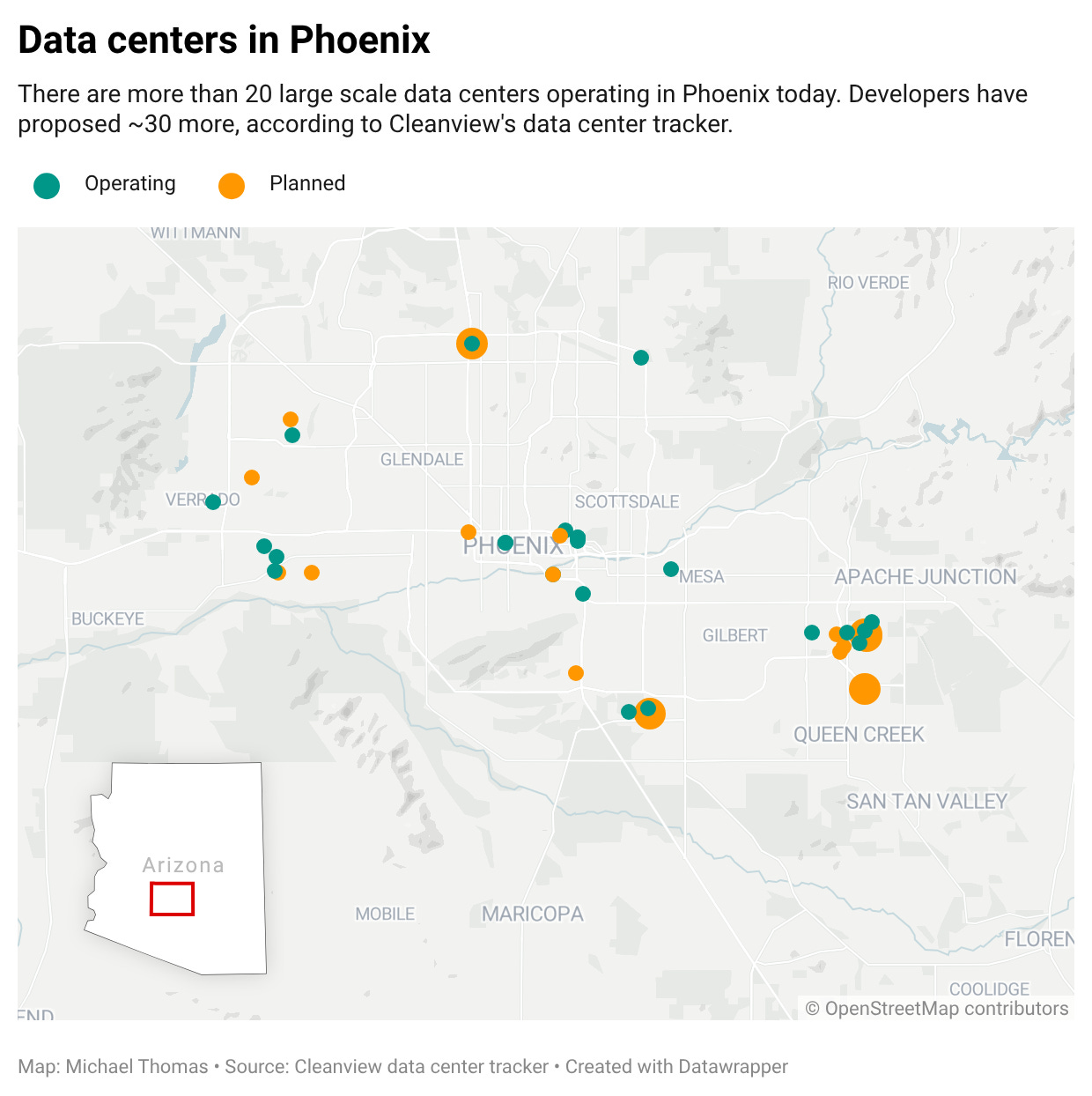
The explosive growth in AI workloads is driving a seismic shift in energy demand profiles, with power consumption per AI rack projected to surge to 600 kW by 2027, far outstripping current capacities and causing electricity prices near major US data centers to spike by 267% over five years. This power scarcity has catalyzed innovative approaches, including AI data centers acting as dispatchable grid assets capable of rapid load shedding, and hyperscalers co-funding residential energy efficiency measures to alleviate grid stress. Meanwhile, integrated energy campuses combining gas, solar, storage, and nuclear—such as Carlyle’s $30 billion Copia project in Arizona—are emerging as critical solutions to ensure 99.999% power reliability and timely delivery.
Technological innovations in cooling and photonics are reshaping AI data center energy efficiency and design paradigms. Liquid cooling systems now enable ultra-high-density racks up to 1 MW, demanding new plumbing and building architectures, while photonics promises to reduce power consumption by 25-30% and dramatically increase data rates beyond copper’s limits. Although still nascent and challenged by manufacturing complexities and component reliability, investments by NVIDIA, Broadcom, and Coherent signal a robust push toward integrating photonics and co-packaged optics, aiming for commercial viability within a decade and transforming the energy footprint of AI infrastructure.
The US power grid’s aging infrastructure and protracted regulatory and supply chain hurdles threaten to bottleneck AI data center expansion, contrasting sharply with China’s aggressive grid buildout adding 500 GW annually. Critical equipment like high-voltage transformers face delivery delays extending up to nearly three years, while interconnection queues are clogged by speculative filings, prompting reforms such as PJM’s 'first-ready, first-served' rule and utilities leveraging capacity transfers from retiring coal plants. These systemic challenges elevate the importance of behind-the-meter generation and long-term power purchase agreements, with big tech’s contracting decisions poised to unlock supply chain investments and accelerate infrastructure modernization.



The Great Data Center Migration
With grid constraints and community pushback in legacy tech hubs, data centers are relocating to power-rich regions and even Latin America, but face new grid bottlenecks, ESG hurdles, and fierce competition for scarce energy.
The geographic migration of AI data centers from traditional hubs like Northern Virginia and Silicon Valley to emerging regions such as Texas, Arizona, the Southeast, and parts of Latin America is primarily driven by the critical need for abundant and reliable power. Texas, with its deregulated ERCOT grid and onsite natural gas plants like the Stargate complex in Abilene featuring 10 simple cycle turbines, exemplifies this shift, offering a 'free market' for power that contrasts sharply with constrained regions like Oregon and congested grids in Virginia and Arizona. However, this power-centric relocation introduces new challenges, including supply chain bottlenecks for advanced turbines, grid reliability concerns—highlighted by Arizona Public Service’s refusal to serve some data center requests to protect existing customers—and the environmental trade-offs of increased reliance on gas-fired generation, as seen in Microsoft's 900-megawatt planned power plant in Texas.
Alongside power availability, community resistance and regulatory hurdles have emerged as formidable barriers to data center expansion, often eclipsing even energy constraints. By early 2026, $89 billion worth of projects faced blockage due to local concerns over noise, water usage, and environmental impact, with some counties in Virginia considering moratoriums on new data center permits amid resident protests over cooling water noise. CEOs acknowledge that securing community and governmental support is now as vital as power access, prompting developers to pivot toward frontier markets—small towns and rural areas—where local stakeholders are more receptive, even as these shifts transform data center development into a contentious political issue.
In Latin America, the data center boom is transitioning from speculative hype to execution, yet the region faces a unique power paradox: while renewable energy resources are abundant, a geographic mismatch between generation sites and data center locations creates transmission bottlenecks that limit usable green power. Brazil’s emergence as a sovereign-scale AI compute hub, exemplified by TikTok’s $37 billion investment, and Mexico’s Querétaro cluster’s rise as a hyperscale center are tempered by power scarcity and grid stress. Developers increasingly invest in grid-adjacent infrastructure like substations to circumvent utility bottlenecks, but stringent ESG standards on renewable energy sourcing and timing further narrow viable green power options, making schedule risk and time-to-power decisive competitive factors.
The evolving nature of AI workloads is reshaping data center siting criteria, with training operations—less sensitive to network latency—migrating to power-rich, land-abundant regions like Texas deserts and the Midwest rust belt, while inference workloads cluster near metropolitan areas requiring low latency. This bifurcation drives a two-phase geographic shift, benefiting utilities that span both rural and urban territories, such as AEP and Duke Energy. Crucially, 'speed-to-power'—the ability to rapidly secure and deploy energy—has supplanted traditional geographic preferences, compelling developers to adopt behind-the-meter energy solutions and modular infrastructure to overcome grid interconnection delays that can stretch from four to seven years, thereby accelerating deployment despite regulatory and community challenges.



Capital Collides With Grid Limits
Investors are pouring record funds into AI data centers, but power scarcity, regulatory risk, and rapid tech turnover are forcing a pivot to modular sites, diversified energy bets, and creative financial strategies to avoid stranded assets.
By late 2025, tech giants and investors were committing unprecedented capital to AI data center expansion, exemplified by MATTER's $1.5 billion gigawatt-scale project in Texas and Carlyle's $30 billion Arizona campus integrating power generation with compute. However, this capital deployment increasingly collided with severe power constraints, as utilities like Quanta Services faced a $36 billion backlog modernizing grids, and Oracle executives emphasized that supply, not demand, was the true bottleneck. This mismatch drove a strategic pivot toward medium-sized, modular data centers distributed geographically to absorb local grid excess capacity, rather than massive 1–10 GW facilities requiring whole-grid power upgrades.
Investor skepticism grew amid the high-risk environment shaped by power scarcity, regulatory fragmentation, and rapid technological obsolescence—GPUs, which constitute 70% of capex, become worthless after three years, while buildings and infrastructure last decades but risk being overbuilt for non-AI workloads. This skepticism was compounded by the binary nature of AI demand, where a sudden slowdown could derail returns, and by regulatory demands for data centers to collateralize grid upgrade costs, as well as utilities' varied willingness to invest, with some refusing due to balance sheet constraints. Consequently, investors favored diversified energy strategies combining gas, solar, and storage, and innovative financial instruments like securitized cash flows and equity stakes linked to GPU supply chains to mitigate these intertwined technological and political risks.
By early 2026, capital deployment had surged beyond historic US infrastructure booms, reaching nearly 2% of GDP, with global spending on data centers surpassing oil exploration investments. Yet, the primary gating factor remained power availability, leading to a strategic emphasis on securing power early through on-site generation, long-term PPAs, and integrated energy campuses co-located with data centers, as Carlyle’s approach illustrates. This alignment of capital with energy infrastructure was critical to unlocking faster delivery and higher returns, particularly in markets like Latin America where $60 billion-plus in AI data center investments hinge on grid access, permitting, and social license rather than demand alone.
Despite abundant capital, the disconnect between investment pace and power infrastructure development intensified, with up to 50% of announced US data centers at risk of never being built due to lack of permits, power, water, and fiber. Operators controlling energized power assets from prior Bitcoin mining hold structural advantages that billions in fresh capital cannot easily replicate, underscoring the premium on existing power access. Blackstone’s strategy to mitigate tech obsolescence risk by focusing on versatile, long-leased data center infrastructure and investing in utilities reflects a broader industry shift toward aligning capital deployment with power realities. Success increasingly depends on synchronizing power availability, site selection, and tenant demand ahead of regulatory and market friction, rather than simply deploying the most capital.
Real Estate’s AI Revolution
AI-driven infrastructure is adding hundreds of millions of square feet to U.S. real estate, igniting an industrial renaissance that is transforming supply chains, property markets, and the entire economic landscape.
By early 2026, Cushman & Wakefield's report projected that AI-driven expansion would add a staggering 330 million square feet to U.S. commercial real estate demand over the next decade, pushing total net absorption beyond 3.0 billion square feet by 2035. This surge is not isolated to data centers alone but spans industrial, office, multifamily, and retail sectors, with a pronounced emphasis on high-quality, flexible office spaces and industrial facilities. AI's role as a potent economic engine is underscored by its capacity to enhance productivity and growth, which in turn sustains capital markets with healthy returns and broadens investment opportunities, particularly in data centers, signaling a transformative reshaping of the real estate landscape.
The AI data center boom is catalyzing a broader industrial renaissance, significantly boosting U.S. manufacturing and logistics sectors alongside commercial real estate. This explosion in digital infrastructure construction acts as a growth engine for industrial activity, reflecting how AI's infrastructural demands ripple beyond traditional tech hubs to invigorate supply chains and production facilities nationwide. Such dynamics not only reshape the physical footprint of industry but also influence infrastructure policy and utility markets, positioning AI data centers as pivotal nodes in the future economic and industrial ecosystem.