AI data center gold rush: trillion-dollar bet reshapes cloud, sparks investor frenzy—and growing pains
The gist
A trillion-dollar AI data center gold rush is transforming the cloud landscape, thrilling investors and exposing tech’s biggest growing pains yet.
What to know
- Hyperscalers are set to pour nearly $1 trillion into AI infrastructure by 2026-2027, triggering a computer-rebuild cycle that dwarfs previous tech booms.
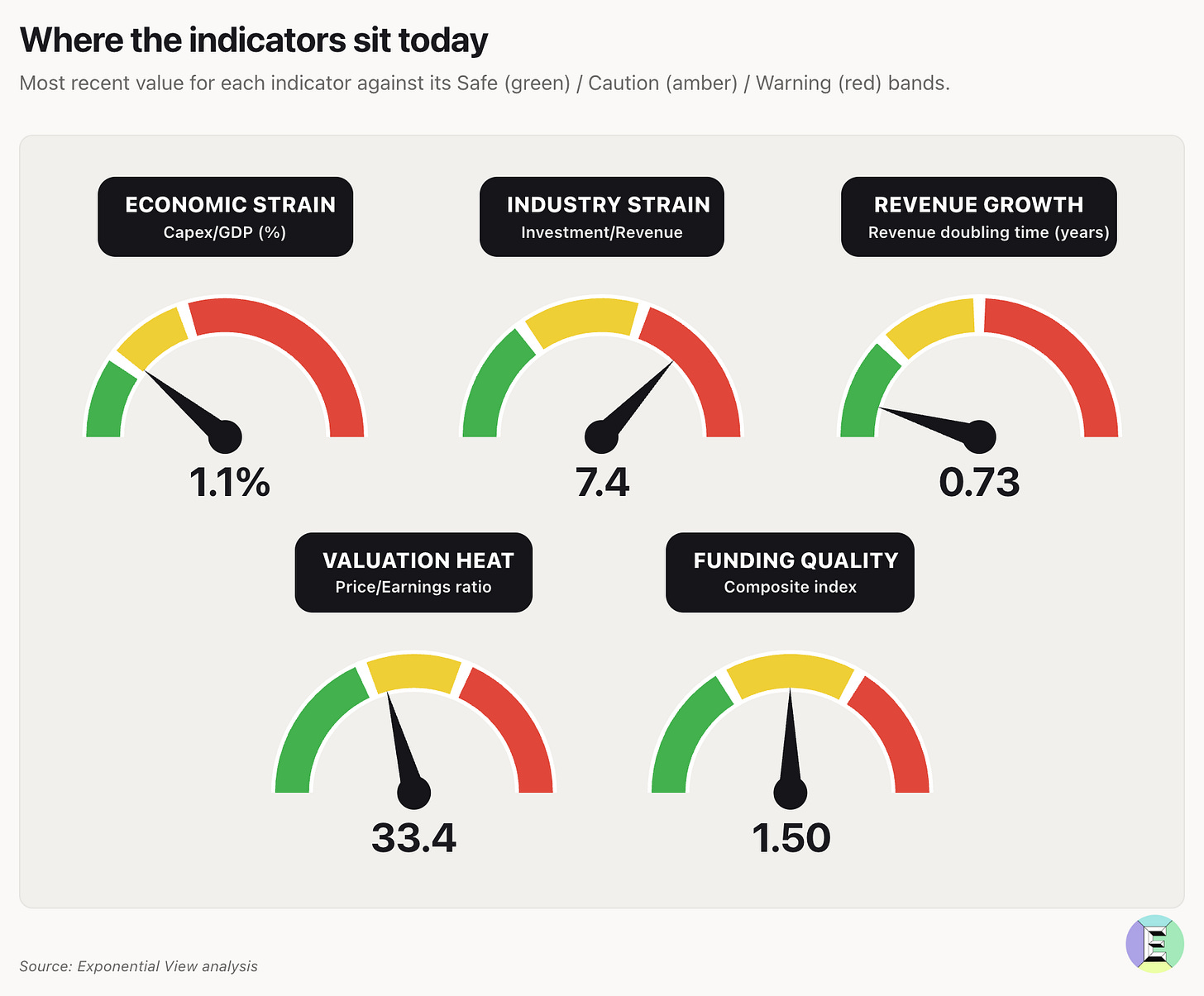
- AI-driven data center buildouts will rack up $7.5 trillion in capital expenditure over 4.5 years—about 5% of US GDP—with GPUs alone eating up half the bill and fueling a $13.5 trillion surge in enterprise value.
- Investor mania is mounting for stocks like Nebius, Dell, and Nvidia, even as power, cooling, and delivery bottlenecks force operators to rethink everything from chip supply to data center design.
Hyperscalers Enter Uncharted Territory
AI’s insatiable compute demands are forcing hyperscalers to rewrite the rules of infrastructure investment, triggering a capital arms race that eclipses every previous tech cycle.
Hyperscaler capital expenditure is undergoing a transformative rebuild driven by the unprecedented demands of AI infrastructure, marking a fundamental shift beyond traditional cloud or web investment cycles. As noted in the May 2026 analysis, this is a 'computer-rebuild cycle' at planetary scale, with the physical infrastructure costs far exceeding current public market valuations. This paradigm shift underscores the scale and strategic importance of AI workloads in reshaping data center investment priorities.
The scale of investment in AI infrastructure is staggering, with forecasts for 2026-2027 data center capital expenditure approaching nearly $1 trillion, fueled by accelerating AI workloads and expanding cloud growth. According to the Dell'Oro Group's June 2026 report, rising memory component costs have further inflated these capex figures, driving significant upward revisions in hyperscaler spending outlooks. This near trillion-dollar capex outlook reflects a sustained and massive expansion in AI supply capacity, equating to roughly two years’ worth of AI infrastructure supply in a single year.
Looking ahead, the upward trajectory of hyperscaler capex is expected to surpass the trillion-dollar threshold in 2026, propelled by wildcards such as intensified AI workload demands and persistent component cost inflation. This dynamic environment not only challenges market expectations but also sets the stage for an IPO window that will critically test the investment thesis underpinning this vast AI infrastructure buildout. The convergence of these factors signals a new era of capital intensity and strategic competition among hyperscalers.


AI Buildout Rivals Historic Booms
The $7.5 trillion AI data center surge is not just about chips—it’s fueling a multi-layered supply chain transformation and creating new cloud titans in the process.
The AI-driven data center buildout represents an unprecedented economic surge, with projected capital expenditures reaching approximately $7.5 trillion over 4.5 years—equivalent to about 5% of annual US GDP—surpassing historic infrastructure booms like the US Railroads and the Apollo Program. This massive investment wave, led by hyperscalers and emerging Neocloud providers such as Coreweave and IREN, is expected to generate over $13.5 trillion in enterprise value, reshaping market dynamics and creating vast wealth opportunities within the cloud ecosystem.
The capital intensity of AI data centers is heavily skewed towards compute hardware, particularly GPUs which account for roughly 50% of build costs, underscoring the critical role of semiconductor supply chains in this industrial expansion. Yet, this investment extends beyond chips to encompass networking, power, and physical infrastructure, each capturing significant value and driving a broad, multi-layered supply chain transformation that parallels the scale and complexity of major historic government projects.
This historic surge in AI infrastructure investment is catalyzing a profound industrial shift, fostering the rise of specialized Neocloud providers and attracting substantial private equity interest, reminiscent of the independent power provider market evolution. As Jensen Huang of NVIDIA articulates, AI data centers are evolving from passive warehouses into profitable 'token factories' where every unit of compute directly generates revenue, fundamentally altering the economic model and fueling a business investment boom that decouples growth from traditional consumer spending patterns.
Beyond the technology sector, the AI capital expenditure boom is exerting a multiplier effect across diverse industries including industrials, real estate, utilities, and energy grids, contributing to robust earnings growth of 26-27% in recent cycles. With global AI spending projected to reach $2.59 trillion in 2026—nearly half dedicated to infrastructure—and compute capacity expanding over threefold annually since 2022, this investment wave is not only reshaping data center economics but also driving broad macroeconomic momentum.





Investor Mania Hits New Highs
AI infrastructure stocks are breaking records as sophisticated investors double down on earnings-backed winners, while FOMO and sector volatility reshape the market’s winners and losers.
Market optimism around AI infrastructure stocks is surging, fueled by robust earnings growth and strategic financial moves. Companies like Nebius (NBIS) and Dell Technologies have seen their stocks soar—NBIS jumped 8.6% to an all-time high after Leopold Aschenbrenner's stake acquisition, while Dell’s AI server revenue surged 757% year-over-year to $16.1 billion, driving a 32% stock increase. This enthusiasm extends to neocloud players such as CoreWeave and Applied Digital, which are breaking into new price territories amid soaring demand for AI compute capacity, underscoring a broad-based investor appetite for firms capitalizing on expanding AI workloads and cloud growth.
Investor confidence in marquee AI infrastructure names like Nvidia is underscored by sophisticated valuation and accumulation strategies. Dan Loeb of Third Point deems Nvidia reasonably valued at 15 times forward 2027 earnings, highlighting its strong cash flows and durable competitive moat against rivals like AMD and Intel. Third Point’s consistent multi-quarter accumulation of over 2.8 million Nvidia shares, alongside significant stakes in hyperscalers Microsoft, Amazon, and Google, reflects a financial strategy tightly aligned with the broader AI infrastructure expansion and hyperscaler capital expenditure growth.
While semiconductor stocks have rallied sharply—evidenced by the Philadelphia Semiconductor Index’s 40% year-to-date climb—investors remain discerning, differentiating between hype-driven price spikes and earnings-backed growth. For example, Micron’s stellar earnings performance has yet to fully translate into elevated valuations, suggesting room for further investment, whereas Marvell’s 32.57% jump following a high-profile endorsement illustrates FOMO-driven volatility. Meanwhile, firms like New Core, combining AI-related steel production with stable infrastructure demand, exemplify financial strategies favoring diversified earnings streams to mitigate AI sector risks.
The rapid expansion of AI infrastructure is creating unprecedented capital and debt challenges that are reshaping financial engineering in the sector. Nvidia’s explosive GPU sales growth demands approximately $800 billion in debt financing to sustain its trajectory, while hyperscalers such as Microsoft, Google, Amazon, and Meta are increasingly resorting to complex off-balance sheet arrangements to manage mounting capital expenditures. However, this frenetic capacity buildout raises questions about the immediate utility and efficiency of new AI infrastructure, as industry insiders debate how much additional compute power is truly needed and how effectively it will be deployed.


Bottlenecks Reshape Data Center Playbook
Power constraints, regulatory hurdles, and the shift to distributed AI workloads are forcing hyperscalers and partners to reinvent data center design with advanced rack systems and next-gen photonics.
Expanding AI infrastructure, particularly in emerging markets like India, presents unique operational challenges that extend beyond traditional data center builds. Hyperscalers typically delegate the management of physical environments in on-premises or colocation settings to channel partners, who must possess specialized expertise in high-density rack design, power planning, and thermal management to handle the elevated power density and cooling demands of AI workloads. These deployments, while smaller than hyperscale campuses, require partners to navigate complex phased rollouts and address capacity bottlenecks intensified by stringent data residency and sovereignty regulations in sectors such as banking and healthcare, underscoring the critical role of technically proficient partners in regional AI infrastructure expansion.
The rapid surge in AI infrastructure capital expenditure—now exceeding 1% of US GDP and approaching telecom build-out levels of the late 1990s—has shifted the primary bottleneck from chip shortages to the availability of powered, ready-to-use data center capacity. Constraints related to power contracts, transmission access, permitting, and equipment lead times have extended delivery schedules for large AI campuses to 24-48 months or more, while near-record-low vacancy rates (1.4% in North America by end-2025) reflect demand outpacing supply. This dynamic is driving a move toward more distributed, latency-sensitive inference workloads that favor interconnected colocation and metro-area facilities over traditional hyperscale campuses, with neocloud providers increasing their share of AI infrastructure spending from 12% to 18%, signaling evolving regional deployment patterns.
To overcome the operational and technical hurdles of scaling AI infrastructure, hyperscalers and cloud providers are innovating with rack-scale system designs that optimize energy efficiency and component utilization, such as Dell’s AI factories which engineer bespoke racks housing millions of dollars in GPU gear. However, physical limitations of copper interconnects in high-density GPU racks are prompting interest in optical and photonic solutions, despite current cost and supply chain barriers. Industry experts anticipate that as AI workloads scale and ROI improves, photonics could become a standard technology to address energy and performance challenges inherent in large-scale AI deployments.
Amid rising cloud prices driven by hyperscalers’ efforts to recoup massive AI investments, IT infrastructure and operations leaders face mounting pressure to optimize costs while managing evolving AI workloads. Gartner warns that half of AI projects in IT support risk failure due to unforeseen costs and poor ROI, emphasizing the necessity of rigorous data hygiene and cautious deployment of agentic AI capabilities. To mitigate these risks, organizations are advised to adopt platform-centric models, establish AI centers of excellence, and build fully automated delivery pipelines with strict cost controls, shifting operational focus from traditional uptime metrics to business outcomes and customer satisfaction, as advocated by experts like Autumn Stanish.

