AI data centers ditch the grid as bottlenecks bite
The gist
AI data centers are unplugging from the grid at breakneck speed, as slow connections and soaring demand force operators to build their own power plants.
What to know
- By late summer 2026, 29% of data centers planned to operate off-grid, a massive jump from just 1% eighteen months prior.
- Interconnection delays of five to seven years and missing transmission lines are pushing operators like NRG and xAI to snap up modular gas turbines and build on-site power fast.
- The off-grid pivot has gone industrial: 48 GW of new data center capacity—about one-third of all planned—will skip the grid entirely, up from just 2 GW in December 2024.
AI Outpaces Power Grid
Explosive AI demand has transformed the grid from a theoretical concern into a hard bottleneck, forcing data centers to seek power far beyond what utilities can deliver.
By late summer 2026, the argument had shifted from whether AI would stress the grid to whether the grid had already become the binding constraint. Catalyst with Shayle Kann had foreshadowed the turn when Bloom Energy CEO K.R. Sridhar said data centers were being built faster than the electricity system could handle, and then quantified the behavioral change: “Two months ago… 29% of the respondents said they will use on site power without being connected to the grid,” up from “1%… 18 months ago,” a swing he tied directly to “lack of availability of the power.”
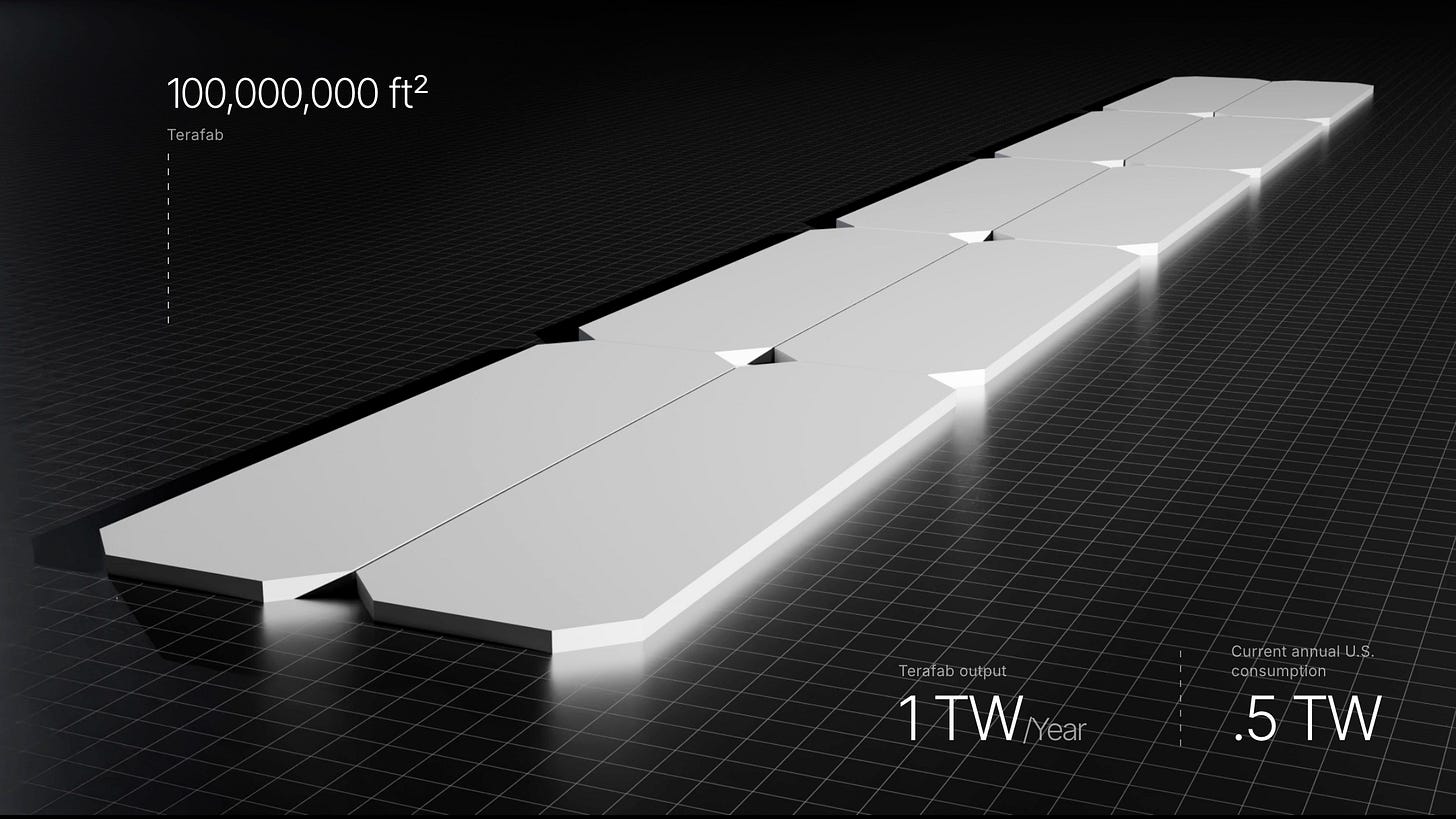
What made the August-to-October burst decisive was the convergence of giant demand forecasts with hard evidence that grid access runs on multi-year timelines. The Pareto Investor described xAI’s Terafab with “targeted continuous output: 1 TW” versus “Current U.S. average continuous power consumption: ~0.5 TW,” concluding it would be “~2x current U.S. power consumption,” while quoting Musk’s call to “Build or secure 1 terawatt (1,000 GW) of dedicated power capacity” and projecting OpenAI from 230 megawatts in 2025 to 250 gigawatts by 2033; against that backdrop, Baton Rouge Business Report said Enverus expects “about 40% of new U.S. data center capacity additions through 2030” to be powered off-grid.

Self-Supply Becomes Survival
Grid delays stretching up to seven years are pushing hyperscalers to lock in hybrid and on-site power deals, treating resilience and speed as critical infrastructure.
The immediate trigger is not abstract demand growth but the mechanics of getting power delivered: Sourcery says the “interconnection queue” is “backed up for years in most markets,” with developers expecting “five to seven years for approval and connection,” while transmission for giant rural campuses “does not exist and cannot be built” on hyperscaler timelines. That mismatch is severe because a “single gigawatt data center” uses power comparable to nearly one million U.S. households, and campuses at several times that scale are, in effect, trying to plug small cities into infrastructure built for suburbs, helping explain why NextEra is committing to “15 to 30 GW of new capacity for data centers” under “long term contracts with hyperscale and cloud customers.”
Once operators accept that the grid cannot move at AI speed, power strategy shifts toward self-supply and hybridization: Latitude Media described permitting delays, transmission constraints, and reliability risks as forcing developers to rethink where power comes from, while Bloom Energy’s KR Sridhar said many facilities will operate like refineries with captive, off-grid generation prioritizing resilience, speed, and local control. The same logic shows up in Texas, where nearly 200 proposed large users sought 438 GW of grid connections in Q1 2026, ERCOT later logged more than 438 GW of large-load requests with data centers making up nearly 89%, and Bloomberg reported many projects are therefore building energy infrastructure behind the meter; NRG, for example, “partnered with GE Vernova (GEV) to reserve 5.4 GW of natural gas-fired turbines to power data centers across two huge markets,” with “the first 1.2 GW… online in 2029” and “the remaining 4.2 GW… through 2032.”



Behind-the-Meter Goes Mainstream
In less than a year, on-site generation has scaled from a niche workaround to a $100 billion industrial movement, with 48 GW in new projects bypassing the grid entirely.
The clearest sign that this is no longer a niche workaround is sheer volume: Distilled reported that “48 GW of proposed data centers—roughly 33% of all planned capacity—now plan to skip the grid by building ‘behind-the-meter’ projects.” Just as important, the ramp happened with startling speed: “In December 2024, there was less than 2 GW of planned behind-the-meter data center capacity… By the end of 2025, developers had announced roughly 40 projects… with a combined 48 GW of capacity,” turning on-site generation from a pilot strategy into an industrial build cycle.
That scale is visible not only in aggregate totals but in the size of individual commitments and the capital gathering behind them. Distilled said it was tracking “more than 30 projects that plan to use onsite gas with a combined 48 GW of capacity,” with “virtually all of those projects” announced in the prior year; one example, Homer City Energy Campus, pairs a proposed 4.5 GW gas plant entirely with an onsite data center and expects to start delivering power by 2027, while Flash Stock Reports said NextEra is “securing equipment slots for 4 GW of combined cycle gas turbines” and has “identified 6 gigawatts of small modular reactor co location opportunities” for AI power needs.


Modular Power Wins the Race
Rapid-deploy turbines, fuel cells, and batteries are beating traditional grid upgrades, letting data centers energize campuses in weeks instead of waiting years.
What makes the new power stack attractive is not just autonomy but deployability: the favored technologies arrive in modular blocks that match AI build schedules. SemiAnalysis drew the contrast starkly, noting that “there is typically a multi-year lead time to get large turbines” and that “construction and commissioning of a large combined-cycle power plant takes ~2 years - an eternity in the AI era,” whereas xAI’s BYOG model used “small modular 16MW turbines from Solar Turbines… [that] are deployed in a matter of weeks,” with rental and mobile assets further compressing timelines.
That same logic explains why fuel cells, batteries, and microgrid controls are moving into the preferred architecture: they can be added incrementally while sites are already coming alive. Data Center Frontier said FuelCell Energy “builds around modular 2.5 MW units and adds capacity incrementally,” letting operators “energize portions of a campus while additional generation is still being installed,” a practical answer when, as Yuval Bachar put it, California developers face utility-power timelines “measured in years” and “In seven years, this is not a relevant discussion,” while AI Energy Parks warned large new grid connections can take “Up to 10 years.”

Cost, Location, and Limits
Skeptics warn that off-grid power comes at a steep price, with massive capital outlays and the risk of misallocating resources as grid constraints shift and evolve.
The debate is not whether power demand is real, but whether on-site generation is the only rational answer once cost, fuel, permitting, and emissions are counted. On All-In, one investor argued, “We do not need AI demand to keep the power markets incredibly tight for the next 20 years,” describing data centers as “the exact same thing as a refinery” where “you put electricity in, and … out comes photons or tokens,” a “big capital intensive asset, $50 billion per gigawatt,” while adding that “Jensen … we need 1,000 times more power than we currently have.”
Skeptics say that scale does not automatically justify defaulting to behind-the-meter power, because some constraints are operational and locational rather than purely generational. In July, Alfonso Salema said grid bottlenecks are “almost surgical,” calling a “300 billion plan to operate the European grid” “wasted money because instead of moving loads to where that capacity is, we're trying to force feed in locations which are already strained,” yet ERCOT’s Batch 0 process showed the counterproblem: centralized accommodation can be slow and uncertain, after it “delayed its planned issuance of Batch 0 conditional classifications on Monday, citing unfinished data validation and due diligence,” even though conditional baseload status “will be included in the… Quarterly stability assessments,” including one that “began on August 1st” and “ends October 2026” for “projects seeking power from January through March 2027.”


