AI data centers face water wars: drought-stricken towns push back amid tech industry thirst
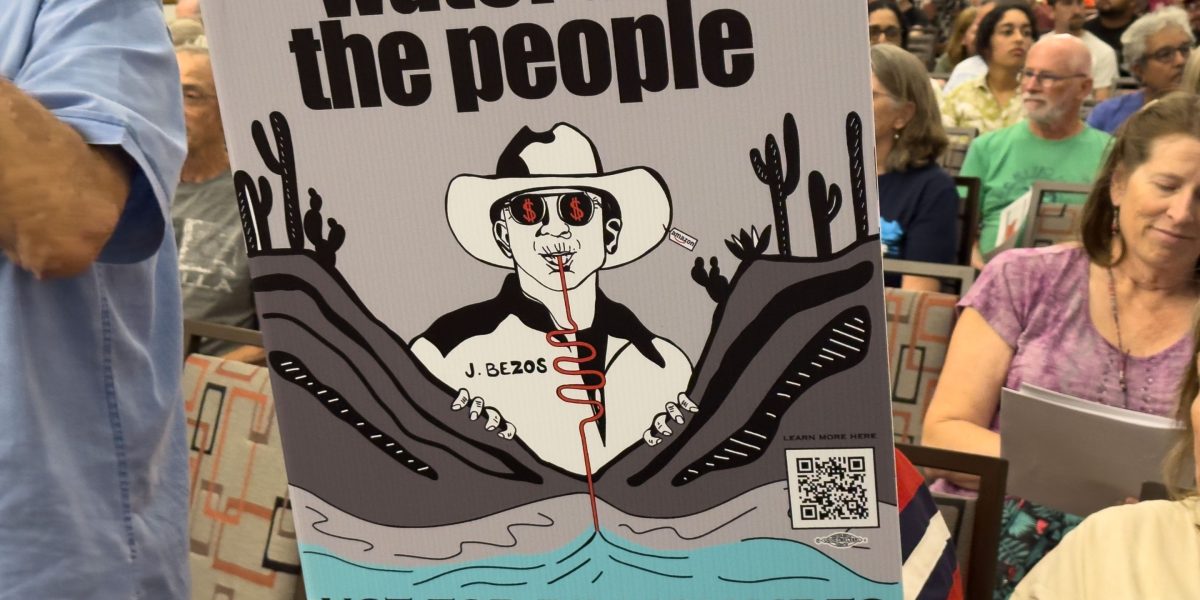
The gist
AI data centers’ thirst for water is colliding with drought-stricken communities, sparking fierce battles over every last drop.
What to know
- By early 2026, AI data centers guzzled 23 cubic kilometers of water annually—enough to double by 2050—putting enormous strain on places like Oregon and Arizona.
- Unauthorized water grabs and well disruptions have triggered protests, moratoria in over 50 cities, and forced some residents near Meta’s Georgia facility to haul their own water.
- While tech giants like Microsoft and Oracle boast major water-saving innovations, a high-profile contamination scandal and mounting local pushback are driving demands for radical transparency and tighter oversight.
AI’s Hidden Water Toll
AI data centers’ massive thirst for water—often exceeding local industry use—exposes fragile ecosystems to risks that go far beyond headline numbers, with evaporative cooling and hydroelectric losses compounding their true environmental footprint.
By early 2026, AI data centers have emerged as significant water consumers in drought-stressed regions, exemplified by Google's Oregon facility which uses a quarter of The Dalles’ municipal water supply and has sought to tap into the Mount Hood National Forest reservoir, sparking environmental concerns. While comparisons to other water-intensive activities like beef production or fast food chains—such as xAI’s Colossus 2 using water equivalent to 2.5 In-and-Out burger restaurants—offer some perspective, they risk oversimplifying the nuanced local environmental impacts and the scale of water use in vulnerable ecosystems.
The primary driver of AI data centers' water consumption is evaporative cooling of chips, which, combined with hydroelectric power generation losses—such as those from Columbia River dams powering Google's Oregon site—creates a complex water footprint that extends beyond direct usage. This evaporative cooling process alone leads to substantial freshwater loss, underscoring the hidden environmental costs embedded in AI infrastructure.
Globally, AI data centers consumed 23 cubic kilometers of water annually as of early 2026, a figure projected to more than double to over 54 cubic kilometers by 2050, intensifying pressure on water resources amid a world where 4 billion people already face scarcity and demand is expected to outstrip sustainable supply by 40% by 2030. Training large AI models like GPT-3 alone can evaporate hundreds of thousands of liters of clean freshwater, yet transparency about such water consumption remains limited, complicating efforts to fully grasp and mitigate AI’s environmental footprint.
Although AI data centers currently consume far less water than other sectors—America’s golf courses use roughly 5,474 times more water than ChatGPT—two-thirds of data centers built since 2022 are located in water-stressed regions like Maricopa County, Arizona, where they account for 0.12% of water use compared to golf courses’ 3.8%. This geographic concentration, coupled with rapid growth, raises localized environmental concerns, and dispels misleading narratives such as the claim that a single AI prompt uses a bottle of water, which distorts actual per-query consumption closer to 0.3 milliliters.



Local Backlash Intensifies
Despite using far less water than golf courses, concentrated AI data center growth in drought-prone regions has sparked fierce community opposition, moratoria, and legal battles over unauthorized consumption and strained infrastructure.
Although AI data centers currently consume far less water than golf courses—Masley’s analysis shows golf courses use roughly 5,474 times more water than ChatGPT—the rapid proliferation of data centers in water-stressed regions like Maricopa County, Arizona, has sparked disproportionate local conflicts. Despite data centers accounting for only 0.12 percent of county water use compared to golf courses’ 3.8 percent, their concentrated growth strains limited supplies and fuels community tensions over resource allocation.
Unauthorized and unmetered water usage by data centers has intensified community conflicts and infrastructure strain, as seen in May 2026 incidents where facilities in Arizona and Fayette County, Georgia, consumed over 29 million gallons without proper authorization or billing. These practices, coupled with rapidly increasing consumption—U.S. data centers used 17.4 billion gallons in 2023 with projections up to 73 billion by 2028—have led to public protests, moratoria in over 50 cities, and direct harm to residents, such as families near a Meta facility in Newton County, Georgia, forced to haul water due to disrupted private wells.
The development of Project Jupiter, a massive OpenAI and Oracle data center in drought-stricken New Mexico, exemplifies the clash between data center expansion and local environmental stress. While the project sources water by purchasing 2,400 acre-feet annually from a sod farm—deemed by State Engineer Elizabeth Anderson as non-detrimental to farmers—community concerns persist amid a state grappling with tripled tree mortality and a projected 25% water availability decline over 50 years. Oracle touts closed-loop, recycled non-potable water use, yet OpenAI’s silence on water data transparency exacerbates mistrust.
A pervasive lack of transparent, localized disclosure about water sourcing and consumption fuels community mistrust and opposition, often culminating in moratoria or bans on new data center projects. As one analyst put it, 'If a project cannot clearly disclose its water source, expected consumption, and mitigation strategy in terms a community can understand, it should not be approved.' This opacity—exacerbated by companies treating water data as proprietary or burying it in technical jargon—has led to heightened scrutiny in places like Texas, where data center builders declined to testify before the House Committee, frustrating officials like State Rep. Cody Harris who lamented that 'county officials are an afterthought.' Such dynamics underscore that water is a local constraint, not a national resource, demanding meaningful community engagement to prevent conflict.


Tech Giants Race to Innovate
Facing mounting scrutiny, Microsoft, Oracle, and Meta are radically reengineering cooling systems and water strategies, with Microsoft replenishing more water than it uses and Oracle slashing potable water needs through closed-loop tech.
The AI data center industry has faced intense scrutiny over water consumption, particularly due to the reliance on evaporative cooling technologies that drive high water use, as seen in Google's Oregon facility which controversially used a quarter of the city’s water. This scrutiny has pressured companies like Google and xAI to reconsider their water sourcing strategies, especially when proposals to tap sensitive sources such as Mount Hood National Forest sparked environmental concerns, underscoring the urgent need for innovation in water-efficient data center design.
By mid-2026, industry leaders Microsoft, Oracle, and Meta have demonstrated significant strides in reducing water footprints through cutting-edge technologies and ambitious sustainability commitments. Microsoft's Fairwater data center in Wisconsin uses as much water annually as a neighborhood restaurant by employing innovative cooling systems and vertical design, while scaling these efficiencies across its 500+ Azure data centers worldwide. Similarly, Oracle’s Project Jupiter integrates fuel cell technology to replace water-intensive natural-gas turbines and closed-loop recycled water systems, achieving a 53% potable water reduction since 2015 and targeting a 50% cut in water-stressed regions by 2035. Meta complements these efforts with closed-loop liquid cooling and local restoration projects aiming for water positivity by 2030, reflecting a broad industry shift toward sustainable water management.
Microsoft’s ongoing innovations have culminated in AI data centers that nearly eliminate water use during normal operations, improving water efficiency by almost 90% since the early 2000s. This breakthrough enabled the company to achieve a milestone in fiscal year 2025 by replenishing more water globally than it consumes, advancing toward its ambitious goal of becoming water positive by 2030. Such achievements highlight how reimagined cooling designs and comprehensive water stewardship can transform the environmental footprint of AI infrastructure at scale.
Meta’s new data center in El Paso exemplifies strategic water management by aligning its estimated daily water use—around 480,000 gallons, with peaks up to 2.5 million gallons during extreme heat—with the city’s water master plan. This careful calibration, combined with advanced closed-loop cooling systems and a commitment to water positivity through local restoration, demonstrates how large-scale AI facilities can responsibly integrate into regional water ecosystems while addressing public concerns.


Transparency Crisis Fuels Distrust
Opaque water data and inadequate disclosures from AI data centers have eroded public trust and triggered tougher regulations, as communities demand clear, standardized reporting and accountability from tech firms.
By mid-2026, the AI data center industry's opaque approach to water management has sparked growing community distrust and regulatory scrutiny, as projects frequently fail to provide clear, localized disclosures about water sources, consumption, and mitigation strategies in accessible terms. This lack of standardized transparency frameworks—where water use details are often treated as proprietary or buried in technical jargon—has become a critical barrier to project approval, compelling developers to rethink designs and consider alternative cooling and recycled water options to meet governance expectations.
Regulatory bodies, exemplified by the Texas House Committee, have confronted significant challenges in monitoring data center water usage due to poor industry responsiveness, with only 17% of centers replying to the Texas Water Development Board’s survey and a mere 8% to the Public Utility Commission’s, which relied on outdated communication methods like physical mail. Lawmakers such as Rep. Cody Harris and Rep. Jeff Barry have voiced frustration over companies’ reluctance to engage transparently, while industry voices like Dan Diorio acknowledge the importance of openness, highlighting a persistent gap between stated commitments and community experiences.
The contamination incident at Meta’s $800 million Cheyenne campus in July 2026 starkly exposed the regulatory and transparency deficits in AI data center water management, as a rare bacterium (Cupriavidus gilardii) introduced during contractor Goat Systems LLC’s fill-and-flush commissioning led to the suspension of wastewater discharges by local authorities. This event revealed conflicting narratives between Meta and municipal officials, underscored the overlooked risks of commissioning discharges despite marketing of closed-loop systems as near-zero-water solutions, and prompted Cheyenne to halt all similar discharges, signaling a shift toward stricter oversight and community demands for accountability.
In response to emerging water quality risks highlighted by contamination events, regulatory frameworks are evolving to impose more rigorous governance, including revoking discharge privileges, mandating pre-discharge pathogen testing, and requiring onsite wastewater treatment to internalize environmental costs. The Cheyenne Board of Public Utilities’ decisive actions—such as prohibiting fill-and-flush discharges and compelling data centers to build independent collection systems—reflect a broader push for multi-stakeholder coordination and transparent operational standards that address novel microbial threats not yet covered by existing regulations, thereby reinforcing the need for comprehensive oversight throughout all phases of data center development.

Contamination Reveals Systemic Risks
A rare bacterial outbreak at Meta’s Cheyenne site exposed how data center construction can contaminate municipal water systems, forcing citywide shutdowns and exposing overlooked health and infrastructure vulnerabilities.
In early 2026, Meta's $800 million AI data center campus construction in Cheyenne triggered a rare bacterial contamination of the city's reclaimed water system, traced to the contractor Goat Systems LLC's fill-and-flush cooling operations. The culprit, Cupriavidus gilardii, a metal-resistant bacterium not typically screened for, was detected during routine sampling and led to a two-month shutdown of Cheyenne's entire reuse water network, underscoring the hidden risks wastewater discharge from data centers pose to municipal water infrastructure. This incident revealed a critical blind spot in 'near-zero-water' claims and highlighted how construction-phase activities, not just operational data centers, can introduce significant public health and infrastructure vulnerabilities.
The contamination prompted swift regulatory and operational responses: Cheyenne's Board of Public Utilities revoked Goat Systems' discharge privileges on March 24, suspended all data center wastewater discharges citywide, and mandated that companies employing fill-and-flush and closed-loop cooling systems develop their own wastewater collection rather than relying on municipal sewers. City officials described the event as a 'significant and unexpected challenge,' while Meta contested the impact citing independent tests. This policy shift reflects a broader national pattern of municipalities reconsidering wastewater management costs and safety amid rapid AI data center expansion, as seen in states from Georgia to New Mexico.
The presence of Cupriavidus gilardii, a bacterium linked in clinical reports to severe pneumonia and fatal sepsis in immunocompromised patients, exposed the complexity of contamination risks posed by AI data centers. Frank Strong, engineering manager at Cheyenne's Board of Public Utilities, emphasized that this pathogen is not part of standard testing protocols, raising concerns about aerosolized microbial health impacts. Although the contamination did not affect drinking water, it polluted two treatment plants and temporarily halted irrigation reuse water, illustrating how data center commissioning processes can strain and expose vulnerabilities in urban water reclamation infrastructure.
Growth vs. Community Survival
As billions pour into rural data center development, unauthorized water grabs and environmental fallout pit economic promises against local rights, driving a wave of bans, activism, and urgent calls for sustainable solutions.
AI data center investments, such as those by QTS and Meta, undeniably fuel significant economic growth and infrastructure development across rural America, promising billions in capital and powering regional economies. However, these benefits come with steep environmental and community costs, including unauthorized water withdrawals and excessive consumption that strain already scarce local water supplies, as seen in Arizona and Georgia where data centers took public water without authorization, triggering local opposition and legal battles. This tension is further complicated by national security concerns, with companies like Google aggressively protecting proprietary data usage figures amid disputes, underscoring the complex interplay between economic ambitions, environmental stewardship, and community rights.
Local governments and communities are increasingly pushing back against unchecked data center expansion due to environmental degradation and insufficient regulatory oversight. Over 50 cities, including Fayetteville, Georgia, and Dodge County, Wisconsin, have enacted moratoria or bans on new data center construction, citing water contamination, drying wells, and drastic alterations to farmland and neighborhoods. Residents like Maily Kocinski have voiced concerns about water quality and property impacts, highlighting systemic gaps in monitoring and accountability that challenge the balance between fostering economic development and protecting community welfare.
Efforts to reconcile economic development with environmental sustainability are emerging through technological innovation and strategic water management, exemplified by projects like OpenAI and Oracle’s Project Jupiter in New Mexico. Despite the state’s severe drought and tripled tree mortality rates, officials emphasize that the project repurposes existing water rights rather than drawing new resources, while Oracle commits to halving water use in stressed regions by 2035 through fuel cell technology and closed-loop recycling. Similarly, Microsoft’s AI data centers have improved water efficiency by nearly 90% since the early 2000s and aim to be water positive by 2030, demonstrating industry attempts to mitigate environmental impacts while supporting regional growth.
The balancing act between economic growth and environmental sustainability is further complicated by demands for greater transparency and community engagement, as highlighted by Texas lawmakers probing data center water use. While recognizing the economic benefits, officials like State Rep. Cody Harris criticize the lack of data and community involvement, with only 17% of data centers responding to water usage surveys. National security concerns, including foreign influence and AI’s role in information warfare, add layers to the debate, prompting calls for responsible growth and moratoriums until impacts are fully understood. Meanwhile, companies like Meta in El Paso seek to reassure the public by adopting water-efficient technologies and offsetting consumption through local restoration, though local officials remain wary of climate change effects and regulatory oversight gaps.