AI data centers fuel grid bottlenecks, moratoriums
The gist
America’s AI data center boom is sending power grids into overdrive, driving up electricity bills and sparking a political backlash across the country.
What to know
- Hyperscale data centers from tech giants like Meta, AWS, Microsoft, and Google could gulp up 20% of US electricity by 2035—an 83% jump in projected demand in just seven months.
- Grid bottlenecks and sluggish equipment supply are delaying up to 20% of planned data center projects, forcing companies to pour trillions into backup power solutions.
- Electricity price spikes—over 13% in Virginia alone—are fueling a wave of local moratoriums, with over 15 states and 127 jurisdictions now restricting new data center builds.
AI Workloads Reshape Power Maps
A handful of tech giants are driving AI data centers to consume as much power as entire cities, clustering demand in regional hubs and overwhelming local grids far faster than experts predicted.
Revised forecasts from BloombergNEF and other major analysts reveal a dramatic surge in electricity demand from AI-driven data centers in the US, projecting these facilities could consume up to 20% of the nation's power by 2035. This represents an 83% upward revision in just seven months, with BloombergNEF now estimating US data center capacity needs at 194 gigawatts by 2035, up from 106 gigawatts in late 2025. Such rapid growth underscores AI workloads as the primary driver, with AI training and inference expected to constitute more than half of total data center capacity by mid-decade.
The power demand explosion is largely fueled by hyperscale operators like Meta, Amazon Web Services, Microsoft, and Google, who collectively control 42% of North America's live IT capacity and invested $700 billion in 2025 alone. These tech giants' sprawling AI infrastructure projects are pushing data centers to unprecedented scales, with some facilities consuming as much electricity as 100,000 households, and the largest under construction expected to use twenty times that amount. This concentration of capacity in a handful of players amplifies the scale and complexity of forecasting future electricity needs.
Despite the vast national generation capacity, the clustering of AI data centers in five regional hubs is intensifying localized grid stress, complicating transmission planning and power delivery. The International Energy Agency warns that one in five planned projects could face delays due to grid bottlenecks, highlighting the urgent need for innovative solutions such as on-site gas generation and nuclear power deals to meet the rapid pace of AI infrastructure deployment. This localized strain threatens to slow project timelines and contribute to rising electricity prices amid growing demand.


Grid Bottlenecks Stall Expansion
With transformer wait times stretching years and half of planned capacity facing delays, data center operators are spending trillions on off-grid power just to keep up with surging AI demand.
The US power grid faces unprecedented strain as data center electricity demand is projected to more than double from 31 GW in 2025 to 66 GW by 2027, with generating capacity falling 50 to 80 GW short by 2030. This surge, driven largely by AI workloads, has made power delivery the primary bottleneck constraining data center growth, overshadowing capital availability and land concerns. As Goldman Sachs Research highlights, only 50-60% of scheduled data center capacity is expected to come online on time over the next few years due to these constraints, underscoring how power—not demand—is the gating factor in the AI infrastructure buildout.
Grid infrastructure challenges manifest as prolonged interconnection queue delays and critical equipment supply chain bottlenecks, with lead times for large transformers and generator step-up units averaging 128 and 144 weeks respectively. These national-level issues ripple through regional markets—Northern Virginia grapples with transmission delays, Texas enforces new curtailment rules, and Phoenix and Santa Clara face power shortages—highlighting the fragmented US grid landscape where distinct utility territories and tariffs complicate planning and slow project timelines by up to 12 years in some cases. The result is a patchwork of localized bottlenecks that collectively throttle data center expansion.
In response to these grid constraints and lengthy interconnection delays, major hyperscalers like Amazon, Google, and Microsoft are increasingly adopting behind-the-meter (BTM) power solutions, including onsite natural gas generation and battery storage, to accelerate capacity deployment and ensure reliable, flexible power supply. Enverus projects that roughly 40% of new US data center capacity additions through 2030 will rely on off-grid power, requiring an estimated $5 trillion investment and adding 62 GW of natural gas-fired generation. While BTM solutions often carry higher upfront costs, they offer operators greater control and speed to market, mitigating the risks posed by strained grid infrastructure and transmission planning challenges concentrated in hotspots such as Texas, the PJM market, and the Western US.
The concentration of AI data centers in a handful of regional clusters intensifies transmission bottlenecks, as delivering massive, steady loads to localized grids differs fundamentally from distributing electricity across millions of homes. The IEA estimates that about 20% of planned data center projects in advanced economies could face delays due to grid connection risks, with transmission upgrades taking four to eight years and equipment wait times doubling in just three years. To alleviate these constraints, operators are deploying flexible computing workloads, onsite batteries, and backup generation to reduce peak grid draw, while grid operators explore enhanced interconnection processes and behind-the-meter storage to transform data centers into grid assets capable of providing demand response and reliability services.
Political Blowback Intensifies
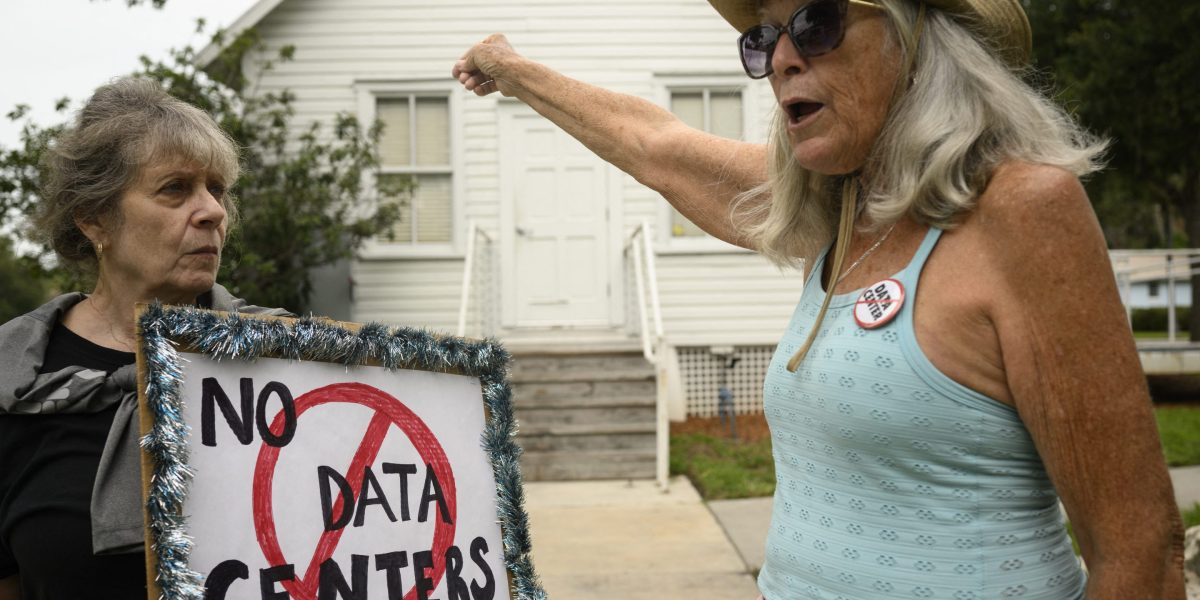
Skyrocketing electricity costs and grid stress are fueling a wave of moratoriums and public backlash, forcing states and localities to clamp down on new AI data center projects.
The explosive growth of AI-driven data centers is sparking significant political backlash, with states like New York imposing moratoriums on new construction and reconsidering tax incentives amid rising public concern. By mid-2026, over 15 states and 127 jurisdictions had enacted similar restrictions, reflecting widespread unease about the strain these facilities place on local grids and communities, as well as fears of escalating electricity costs and resource depletion.
Rising electricity prices are a central economic concern linked to data center expansion, with states such as Virginia experiencing residential electricity cost increases exceeding 13% in just one year. PJM, the largest U.S. grid operator, projects a $6.3 billion rise in consumer electricity costs over three years largely driven by data center demand, while research from multiple universities forecasts price hikes up to 57% in some states by 2030, fueling public opposition that has surged from 42% to 71% within a year.
Localized grid bottlenecks caused by the continuous, high power demands of sprawling data center campuses are complicating transmission planning and causing costly project delays. Operators like Flexential emphasize that reliable grid access is paramount, with 89% of IT decision makers citing power availability as critical and 72% concerned about price volatility. These constraints not only slow AI deployment timelines but also force data center developers to shoulder a fair share of grid upgrade costs, adding complexity to project economics.
The $7 trillion data center buildout through 2030 carries economic risks if anticipated AI demand fails to materialize, potentially leaving utilities and consumers to absorb fixed grid and infrastructure costs spread over fewer users, which could drive electricity prices even higher and stall projects. Despite industry claims attributing rising costs to inflation and fuel volatility, public skepticism remains high, with over 500 organized groups opposing new centers and states like Georgia requiring data centers to finance necessary grid capacity expansions, underscoring a shifting market and regulatory landscape.