AI data centers turn to off-grid power
The gist
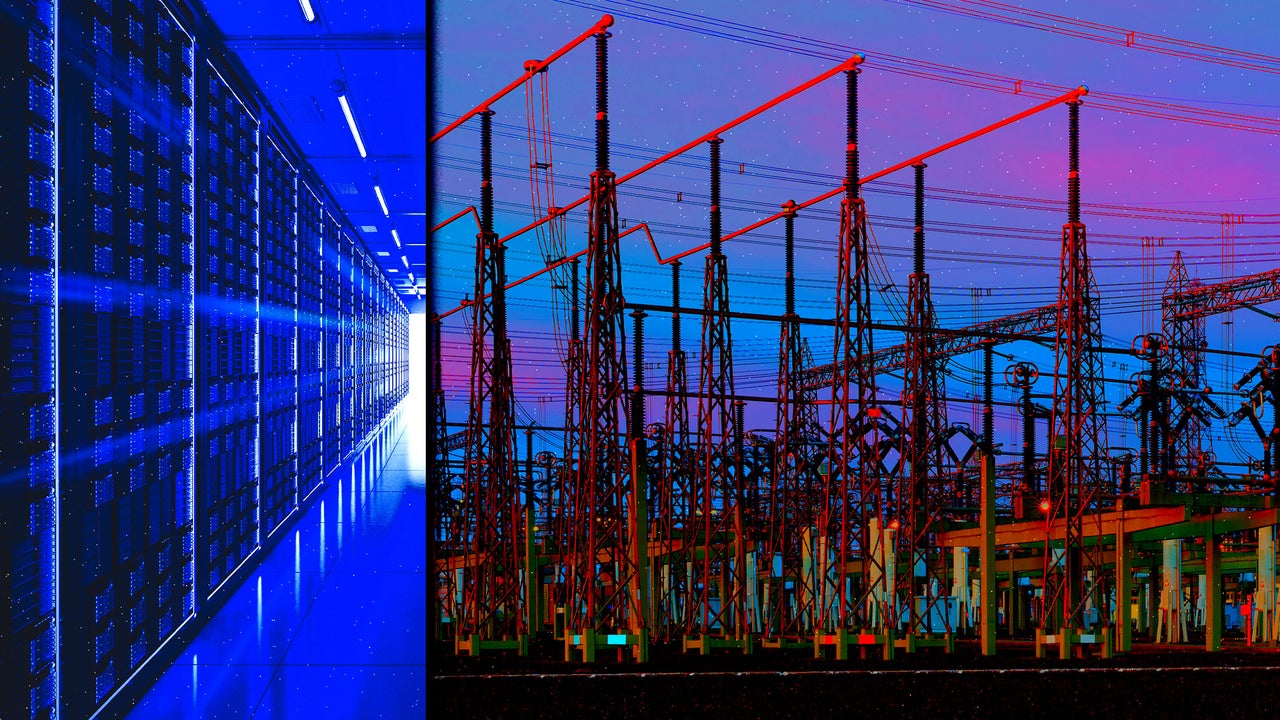
AI data centers are ditching the grid and powering up with off-site solutions as power connection delays stretch into years, threatening America’s digital ambitions.
What to know
- Grid hookup delays now run 5–7 years for new data centers, forcing developers to seek faster, off-grid power sources like gas turbines, batteries, and microgrids.
- Distilled reports 48 GW—about a third of all planned U.S. data center capacity—now aims to skip the grid entirely, with 40% of future data center growth projected to be off-grid by 2030.
- Skeptics warn much of this off-grid boom is still on paper, with only 13% of generation projects making it to operation and key suppliers like GE Vernova nearly sold out through 2030.
Grid Queues Upended
A 2023 federal order forced utilities to swap their outdated, first-come grid connection system for a readiness-based approach after years of crippling project backlogs.
Before 2023, U.S. large generating projects were processed through a serial queue that rewarded filing order more than project readiness. “Before 2023, U.S. large generating projects were connected through a serial, first-come, first-served interconnection queue” managed by transmission providers, with requests studied one at a time, and that design became a bottleneck as applications surged and transmission constraints tightened, turning what had been an administrative pathway into a source of multi-year delay for new generation trying to reach the grid.
By 2023, the evidence of systemic failure was hard to ignore: TipRanks noted that “project interconnection timelines have extended to a median of about five years for projects reaching operation in 2025, compared with under two years in 2008,” while a LinkedIn post citing Berkeley Lab’s “Queued Up” report said there was “a 2 terawatt backlog of clean energy and storage projects awaiting grid interconnection versus 1.37 terawatts of current installed capacity” and that “only 13% of capacity that entered interconnection queues between 2000 and 2020 has been built, with roughly 75% withdrawn.” On July 28, 2023, FERC issued Order No. 2023, “mandating transmission providers to replace the serial, first-come, first-served interconnection process with cluster studies and a first-ready, first-served model to reduce backlogs and improve certainty for new generation projects.”
AI Demand Outpaces Utilities
Explosive AI-driven electricity needs are overwhelming grid planners, pushing data centers to rapidly embrace on-site power as the only way to meet urgent timelines.
What changed is not simply that AI needs more electricity, but that it needs it on timelines the grid cannot meet. Sourcery called the specific mechanism the interconnection queue, “backed up for years in most markets,” with developers expecting to wait five to seven years for approval and connection; meanwhile, PG&E said it entered 2026 expecting a year’s worth of new demand and, barely two months later, nearly all of it was already spoken for, with interconnection requests piling up faster than planners expected.
That delay is colliding with a grid built for slower growth and smaller, steadier loads: load growth that had long run below 1% annually hit 4% at some grid operators last year, while Bain projected AI data centers could reach up to 9% of total U.S. electricity by 2030, adding more than 150 terawatt-hours the current grid was never built to handle. As Sourcery put it, “The grid is just really not built for that,” so “data centers now have to figure out how to bring their own power online,” a shift reflected in K.R. Sridhar’s survey jump from 1% to 29% willing to use on-site power disconnected from the grid.


Build-Fast Power Kits Rise
Data centers are assembling modular, behind-the-meter power systems that can energize campuses in months—not years—sidestepping the slow utility process entirely.
What has emerged is less a single technology than a build-fast kit: on-site gas turbines and reciprocating engines, fuel cells, solar, batteries, and microgrid controls assembled behind the meter so a campus can energize in phases instead of waiting for a full utility solution. SemiAnalysis says the old model’s “main issue is deployment speed,” with multi-year turbine lead times and roughly two years to build and commission a large combined-cycle plant, whereas xAI’s bring-your-own-generation approach used transportable 16 MW Solar Turbines units because “they’re deployed in a matter of weeks.” That speed imperative is sharpened by the wider grid backdrop: long-distance transmission infrastructure can take “up to 15 years to build,” and grid interconnection queues reached over 2,200 GW of planned capacity in mid-2026.
The point of that mix is not just self-supply but speed and operability: as Pierangeli put it, a data center can be built in 18 to 24 months while a grid connection takes three to seven years, so “hyperscalers simply cannot afford to wait years for a utility interconnection.” That is why the new model also includes stabilizing and distributed pieces—mtu Kinetic PowerPacks as “fast-reacting buffers” for AI load swings of plus or minus 20 MW within seconds, co-located solar and storage, and even fast-track frameworks like SPP’s HILLGA, which offers connection agreements in under 90 days for loads that bring their own generation. Developers were planning roughly 56 GW of on-site capacity as of early 2026, described as accounting for 30% of all planned data center builds nationwide, with Texas alone at over 20.6 GW of planned capacity.

Off-Grid Surge Goes Mainstream
Nearly one-third of all planned U.S. data center capacity now aims to bypass the grid, with tens of billions in investment pouring into behind-the-meter projects announced just this year.
The clearest sign this is no longer a niche workaround is sheer volume: Distilled reported that “48 GW of proposed data centers—roughly 33% of all planned capacity—now plan to skip the grid by building ‘behind-the-meter’ projects,” and that by the end of 2025 developers had announced roughly 40 such projects. Just as important, “virtually all of those projects were announced in just the last 12 months,” meaning the off-grid pipeline has expanded fast enough to become material not just to data-center planning, but to the broader power system’s future load and supply balance.
That buildout also looks system-relevant when set against demand forecasts: CreditSights, via Tracy Alloway’s newsletter, estimated 94 GW of data-center power needed by 2030 and 138 GW by 2035, implying net growth of 59 GW and 103 GW after current usage is subtracted, even as utilities are “building twice as much power capacity as is currently forecast to be needed by 2030.” Baton Rouge Business Report cited Enverus projecting that about 40% of new U.S. data center capacity additions through 2030 will be powered off-grid, requiring roughly $5 trillion in investment and adding 62 GW of natural-gas generation.

Skeptics Warn of Bottlenecks
Despite the off-grid hype, most proposed projects never get built and key suppliers like GE Vernova are already booked solid, raising doubts about whether the boom can deliver real power.
Skeptics say the off-grid rush is being mistaken for delivered power, because much of what gets announced is still paperwork rather than operating generation. That caution is backed by queue data showing how often proposed capacity stalls: “At the end of 2025 it found about 8,200 projects waiting, representing 1,312 gigawatts of generation,” yet “Most of what is in that line never gets built at all,” and Berkeley Lab found “Only 13% of generation capacity that entered U.S. interconnection queues from 2000–2020 had reached commercial operation by the end of 2025.” In the previous edition of the same study, only 13 percent had reached operation by the end of 2024.
The second skeptic argument is that even viable projects move too slowly to solve near-term AI demand, because approvals and equipment remain hard constraints. The same analysis said, “For plants that actually started running in 2025, the median wait from first application to switch-on ran over five years,” while Berkeley Lab likewise found the median time from interconnection request to commercial operation exceeded five years; meanwhile GE Vernova “reported 116 gigawatts of gas turbines under contract and said it expected at least 125 gigawatts by the end of the year,” with its CEO saying the company was “mostly sold out through 2030.”