AI factories go hybrid as enterprises shun cloud-only costs
The gist
Enterprises are ditching pure cloud AI for hybrid 'AI factories' as soaring costs and governance headaches force a rethink on how—and where—AI gets built.
What to know
- SUSE, NVIDIA, and Vultr debuted validated 'AI factory' stacks in 2026, promising secure, scalable AI from edge to cloud.
- Enterprise pilots are bottlenecked by lengthy model reviews and strict governance, with one UK law firm facing 2–3 month approval cycles and a Southeast Asian telco keeping almost all production on proprietary APIs.
- Hybrid setups can slash three-year AI costs by 40–60% versus cloud-only, while open-model routing delivers 10x more tokens per dollar—and agentic workloads are driving trillions of tokens monthly with 40% growth.
AI Factories Become Reality
AI factories now offer full-stack enterprise solutions with orchestration and governance, delivering up to 90% cost savings and outperforming hyperscalers on price-performance.
By September 2026, the term “AI factory” had become a concrete product category rather than a loose metaphor. GlobeNewswire reported that “SUSE partners with NVIDIA to launch SUSE AI Factory, a turnkey enterprise AI software stack designed for seamless deployment from edge to cloud,” announced at SUSECON 2026 in Prague, while Yahoo Finance Australia said Vultr, SUSE, and NVIDIA launched the same stack on Vultr infrastructure as a “validated full-stack enterprise AI platform” combining AI software, GPU acceleration, and global cloud infrastructure for seamless production deployment.
What made these launches factory-like was not just infrastructure but the addition of orchestration, governance, and open deployment logic. SiliconANGLE theCUBE said the Vultr–SUSE partnership promised “50-90% cost savings” and “82% better performance-per-dollar than traditional hyperscalers,” while AI21 Labs on November 5 described Maestro as “an agent orchestration system helping customers enterprises to build reliable agents… it needs to be a model agnostic framework,” and framed its broader offer as “lab as a service… every company in the world right now wants to own their own AI.”


Hybrid AI Tackles Governance Gridlock
Enterprises are orchestrating hybrid AI deployments to overcome slow model approvals and hardware bottlenecks, using workload-aware routing to optimize scarce GPU resources.
What stalls pilots is not model access but turning it into governed production. A Large UK Legal Services Firm A said vendor and model reviews take two to three months, with OpenAI’s review taking 2.5 months and Anthropic’s three. A Large Southeast Asian Telecom Operator A said all production traffic still runs on third-party proprietary-model APIs, while open-source models remain only 5% to 6% of internal R&D testing ahead of a phased rollout from early 2027. This caution reflects governance friction and capacity economics, since Gupta says GPUs are roughly 100 times more expensive than CPUs and take about 10 times longer to acquire, and warns against casually overprovisioning GPU capacity.
Enterprises are therefore moving toward hybrid, orchestrated deployment paths rather than wholesale model swaps. A Large Asian Gaming Company A deployed GLM 5.2, DeepSeek and K3 on company servers and changed its internal AI gateway default from Sonnet 4.6 to GLM 5.2, yet locally deployed models were still only 16% of token usage; Large Indian HR Services Company A kept open-source models at 20% of API testing, limited to engineering POCs. Gupta and Ahuja note that demand scales as users times calls per user times tokens per call, and that a single research agent fires off 50 separate model calls, making routing, control planes, and workload-aware scheduling central to production economics.


Token Economics Drive Hybrid Shift
Surging token-based costs and the need for operational control are pushing enterprises to hybrid AI, where open models deliver 10x more tokens per dollar and mitigate vendor lock-in.
The break from pure cloud starts with economics. As SiliconANGLE theCUBE put it, “What happened in the last six months is tokenomics,” because API-based token production services are now usage-based, turning AI from a predictable software line item into a volatile consumption bill. AMD quantified why CFOs are pushing alternatives: a fleet of 500 AMD AI PCs in a hybrid configuration, 50% local and 50% cloud, can deliver projected three-year savings of 40-60% versus cloud-only. Open-weight advocates also describe blended routing that keeps 50% spend on each but gets 10 times the amount of tokens on cheaper open models.
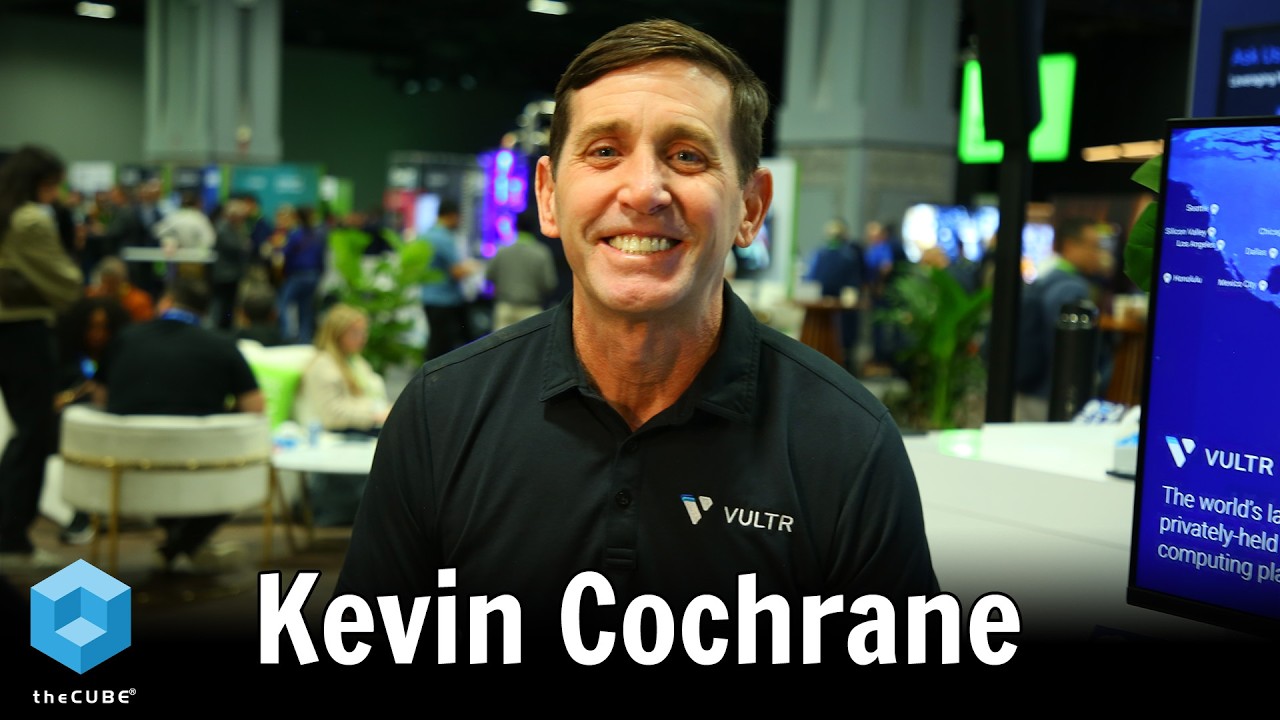
Cost alone does not explain the shift; control and fit do. Kevin Cochrane told Fierce Network he expects a 20/80 split, with open models for sensitive core workloads and frontier services for everything else, on infrastructure the enterprise controls. Another speaker cited CIOS of Fortune 500 companies saying they are playing with open source to stay hedged even when proprietary models would be acceptable at a given price. Heavy Strategy warned that agentic systems can drive token demand from a few thousand tokens into six-figure territory, and in 2023, 1,000 input tokens and 4,000 tokens across three turns showed how multi-agent workflows multiply usage. Combined with Nikesh Aurora’s point that compute is highly dear, a single-provider stack looks structurally rigid.


Sovereign AI Goes Production-Scale
Enterprise AI has shifted from pilots to production, with massive token throughput and agentic workloads forcing organizations to adopt sovereign, hybrid infrastructure for scale and security.
The evidence now points to a market moving past AI experimentation and into live deployment. Digital Realty’s September survey explicitly framed the enterprise shift as moving “from AI strategy to execution,” with infrastructure emerging as the top barrier, while Dell told Mexico Business News that the country’s AI race is moving “from pilots to production” — language that matters because it signals organizations are no longer mainly testing use cases, but trying to run them reliably at scale across business operations.
That production turn is also visible in usage intensity and architecture choices. In the October interviews, Nvidia said it is doing “about trillions of tokens a month now and growing 40% month over month,” and contrasted earlier GenAI patterns — “in 2023… 1,000 input tokens… KVCASH was about 4,000 tokens… three turns” — with agentic workloads at “142,000 token imports,” saying “we’ve gone from gen… in the last 18 months… Agentic AI… cannot do good work until… [it]… continuously running… touching your source code… proprietary data,” as continuously running systems touch source code, context, and proprietary data, pushing large and regulated enterprises toward dual hybrid and internal infrastructure.