AI goes enterprise: finance moves from pilots to powerhouse
The gist
AI has officially graduated from fintech pilot to financial powerhouse, driving enterprise-scale sales, compliance, and wealth management transformations across the industry.
What to know
- By early 2026, companies like Total Expert were running nearly 150 million AI-powered calls annually, turning post-call automation into full-blown strategic sales support.
- Forter’s two-person RevOps team achieved 15x quota coverage in just six weeks by harnessing AI for territory design, real-time sales insights, and seamless Salesforce-Slack integration.
- Banks and wealth managers slashed compliance time by over 90% and cut regulatory breaches up to 80% by embedding agentic AI and robust governance frameworks, with leaders like Revolut and Mercer at the forefront.
AI Transforms Sales Workflows
Early AI in sales moved from basic post-call automation to context-rich assistants that solved memory decay and personalized millions of borrower interactions in regulated industries.
Early AI integration in sales workflows primarily focused on automating tedious post-call tasks to boost productivity and accuracy. Solutions like the 5-Click Sales Workflow leveraged tools such as Gong for call recording, Zapier for automation, and CRM platforms to seamlessly generate call summaries, transcripts, follow-up drafts, and sync notes directly into CRMs, significantly reducing manual entry time. However, these early implementations faced challenges with AI memory and thread decay, where prolonged account threads could cause jumbled or inaccurate responses, prompting the development of concise, structured account snapshots to maintain clarity and relevance in AI-generated insights.
By early 2026, companies like Total Expert had advanced AI sales assistants to serve highly regulated sectors such as lending, where personalized and context-rich borrower interactions are critical. Launched about 14 months prior, Total Expert’s AI assistant addressed common pain points like forgotten follow-ups and lack of conversational context, enabling loan officers to maintain perfect memory and personalized engagement at scale. CEO Joe Welu highlighted that their platform was on pace to conduct nearly 150 million AI-driven calls annually, powered by their evolving 'Customer IQ' system that automates precise, timely follow-ups based on detailed borrower data, effectively amplifying human sales capabilities.
Firefliesai exemplifies the practical push to deepen AI adoption in sales workflows by focusing on CRM integration to automate post-call note entry, a task that typically consumes 10 to 15 minutes per call and risks misassignments. Their approach includes live, interactive sessions offering real-time onboarding and configuration support to ensure meeting summaries sync accurately with relevant contacts, deals, and tasks. This targeted solution not only saves time and enhances data accuracy but also aims to increase usage intensity, reduce churn, and accelerate conversion from trials to paid deployments, thereby strengthening Firefliesai’s foothold in the competitive sales productivity and meeting intelligence market.
Beyond automation, early AI sales workflow integrations began evolving into strategic decision-support tools by ingesting diverse data sources—call transcripts, account research, CRM notes, and persona context—into unified account threads powered by GPT models. This allowed AI to act as a thinking partner, pressure-testing sales strategies and guiding outbound messaging and deal progression. While promising, this approach demanded sophisticated memory management to prevent thread decay and maintain accuracy, underscoring the complexity of embedding AI deeply into sales decision-making processes even in these nascent stages.


Sales Teams, Supercharged by AI
AI-driven tools let lean sales ops teams outpace traditional orgs by automating territory design, enriching data flows, and embedding real-time coaching directly into daily workflows.
By early 2026, companies like Vercel and Forter demonstrated how scaling AI integration revolutionizes operational efficiency and sales collaboration by automating routine tasks and enriching data workflows. Vercel’s COO Jean Dwit Grosser highlighted a dramatic shift where AI tools increased direct customer interaction time from 30% to 70%, freeing sales teams to engage in complex, strategic outbound prospecting rather than reactive inbound tasks. Meanwhile, Forter leveraged AI-powered platforms such as Clay for data enrichment and Carve for territory design, enabling rapid scenario testing and territory optimization that previously took days, while a two-person RevOps team achieved global account assignments and 15x quota coverage in just six weeks, showcasing AI’s ability to compress timelines and scale impact.
The evolution of AI tools has also fostered real-time sales collaboration and enhanced decision-making by seamlessly integrating intent data, CRM updates, and coaching within existing communication platforms. Forter’s integration of Common Room signals into SalesLoft and Salesforce empowered reps to prioritize accounts immediately upon login, while Momentum’s Slack integration provided instant call summaries and contact updates, accelerating deal support and strategic alignment. Deal One’s AI agent further advanced this trend by automating sales coaching and competitive tracking directly within Slack, illustrating how AI-driven workflows are embedding actionable insights and operational efficiency into daily sales rhythms.
Beyond automation and collaboration, AI’s true value lies in elevating the quality of sales decisions and cultural shifts toward data-driven insights. As noted in April 2026 analyses, AI’s primary contribution is enabling better, in-the-moment decision-making rather than merely speeding up tasks, with human research and thoughtful engagement remaining essential for authentic sales excellence. Forter’s win-loss analysis initiative exemplifies this by transforming customer call recordings into strategic competitive assets, fostering a culture that values recorded conversations as critical data rather than surveillance, thereby deepening organizational learning and responsiveness.
The maturation of AI-driven workflow integration depends heavily on foundational investments in clean data, process codification, and user adoption support to maximize operational gains. Forter’s emphasis on clean data and the use of LLMs like ChatGPT as thinking partners to pressure-test assumptions underscores the necessity of structured inputs for AI effectiveness. Complementing this, Firefliesai’s 2026 initiative to automate CRM synchronization of meeting summaries with live onboarding sessions highlights the importance of reducing manual entry and accelerating time-to-value, thereby increasing product stickiness and enabling sales teams to focus on higher-value activities rather than administrative burdens.





Agentic AI Redefines Compliance
AI agents now autonomously execute multi-step compliance tasks with explainable intelligence, prompting banks to pioneer new governance models that balance speed with regulatory control.
By mid-2026, agentic AI had evolved from assisting compliance employees to autonomously executing complex, multistep workflows in banking, exemplified by firms like TransferMate and Backbase embedding AI agents directly into AML and compliance processes. This shift enabled dramatic efficiency gains—TransferMate reduced deep-dive AML analyses from 40 minutes to as little as two—while maintaining rigorous human oversight through explainable intelligence and full audit trails, ensuring regulatory defensibility and fostering organizational trust.
The rapid operational scaling of AI in compliance workflows brought governance challenges to the forefront, particularly around authorization, accountability, and liability as AI assumed more autonomous roles. Financial institutions like Revolut and Morgan Stanley addressed these by implementing two-loop governance models that integrate real-time human expert interaction with AI agents, centralized governance layers, and deterministic workflows, balancing automation with human oversight to maintain auditability and control in regulated environments.
Leading AI providers and financial institutions have underscored the critical importance of transparency, explainability, and robust audit trails to satisfy regulators and mitigate operational risks, especially as generative AI introduces novel challenges such as plausible but potentially fabricated outputs. For instance, Smarsh and AWS achieved a 77% reduction in manual compliance workload with near-perfect risk detection by building AI models with clear documentation and versioning, while regulatory bodies like the OCC and Federal Reserve have taken cautious stances recognizing generative AI’s unique governance demands.
The democratization of AI-driven compliance tools is empowering smaller banks and financial firms to meet stringent regulatory standards despite limited resources. Companies like Fenrock AI provide agentic AI solutions that automate alert processing—enabling staff to handle 20 times more cases daily—while preserving human verification and auditability, thereby helping smaller institutions pass audits and remain competitive in an environment where AI adoption is no longer optional but essential for effective financial crime compliance.



Wealth Platforms Go AI-Native
Integrated AI platforms in wealth management automate compliance, consolidate fragmented systems, and embed intelligence throughout the client journey—tripling advisor capacity and trust.
By mid-2026, wealth management has decisively moved from fragmented advisory tools toward integrated, AI-native platforms that unify the entire client lifecycle into seamless workflows. Firms like fincite and d1g1t exemplify this evolution by embedding AI directly into advisory platforms, enabling real-time data sharing and automated task execution without manual intervention. This closed-loop approach not only enhances operational efficiency but also deepens client engagement by embedding intelligence throughout onboarding, communication, and relationship management phases, transforming organic growth into a self-reinforcing engine.
A critical advantage of these integrated platforms lies in embedding compliance within advisory workflows, dramatically reducing regulatory breaches and improving suitability assessments. fincite reports system-side checks cutting investment restriction breaches by up to 80%, while platforms like Prometeia’s Digital Wealth Management Platform provide real-time compliance guidance at decision points. This regulatory embedding, combined with consolidated total wealth views across custodians and asset classes—as seen in fincite and Mercer’s Aspen 2.0 platform—enables advisors to identify concentration risks and unlock new advisory opportunities, with advisers on such platforms managing on average three times more assets.
Advisor adoption hinges on software that genuinely reduces workload by automating documentation and consolidating disparate systems into a unified interface, where AI acts as an assistant rather than a replacement. Platforms like fincite • cios and Prometeia’s embedded AI save advisors up to 12 weeks annually by eliminating system hopping and automating meeting preparation, while d1g1t’s MCP server integrates ChatGPT and Claude as a 'Chief of Staff' to streamline tasks using natural language. This AI augmentation respects fiduciary roles, ensuring advisors remain in control, which is essential for trust and acceptance in wealth management workflows.
The launch of large-scale AI-native platforms like Mercer and Avantos’ Aspen 2.0, which unifies $110 billion in assets under management for over 1,100 advisors, signals a transformative shift toward institutional-grade, integrated wealth management solutions. These platforms embed supervised AI agents to streamline onboarding, acquisition integration, and daily client service while preserving human fiduciary advice. Despite rapid AI adoption—71% of investment firms had deployed generative AI by mid-2025—many firms still lack formal ROI measurement methods, though they recognize AI investment as critical for long-term survival and competitive advantage.



Governance: The New AI Battleground
As agentic AI scales across finance, centralized governance frameworks and auditable workflows have become mission-critical, slashing costs and mitigating risk while enabling enterprise-wide automation.
By mid-2026, the financial services industry had decisively moved beyond AI as a mere decision-support tool toward deploying agentic AI capable of autonomously executing complex, multistep workflows such as information gathering, documentation review, and exception escalation with minimal human intervention. This evolution, championed by innovators like Catena Labs, Primitive, and Saris, reflects a broader maturation from experimental pilots to enterprise-scale AI integration deeply embedded in core banking processes, driven by escalating fraud sophistication—46% of institutions reported more complex fraud schemes—and heightened regulatory scrutiny that prioritizes governance alongside capability.
Governance has emerged as the linchpin of scalable AI adoption in regulated finance, with firms like Backbase exemplifying this through their June 2026 acquisition of Kasisto, which integrated agentic AI with robust regulatory controls directly into their Banking OS. This move underscores a shift toward AI as a governed, collaborative partner executing auditable, multi-step workflows rather than isolated conversational agents, supported by deterministic governance layers, strong core banking connectors, and comprehensive decision logs to reduce integration friction and meet compliance demands.
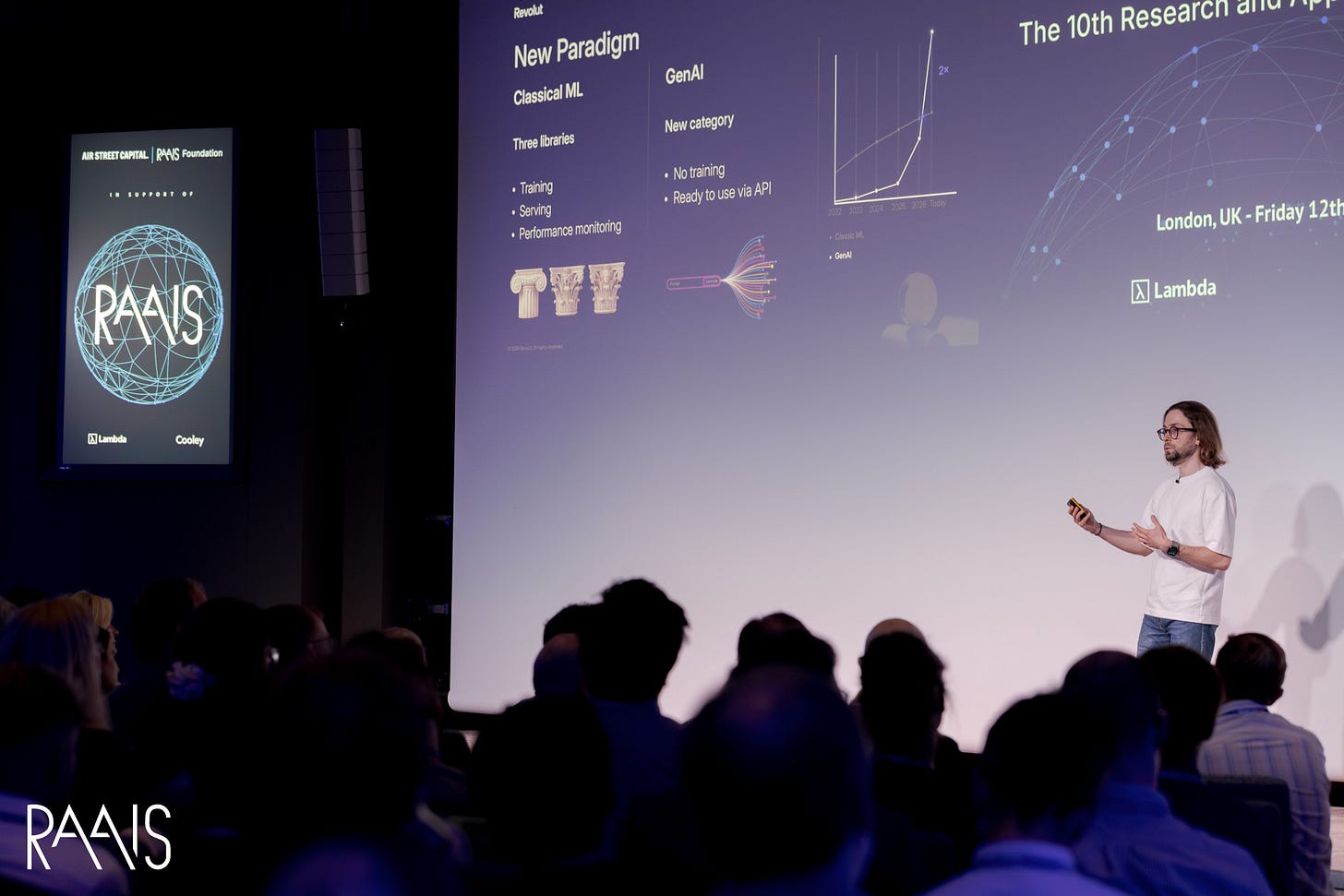
Leading financial institutions such as Revolut have pioneered centralized, use-case-based AI governance frameworks aligned with the EU AI Act, consolidating risk, budget, and rule management across multiple models via a single gateway platform. This approach not only streamlines compliance and monitoring but also enhances operational resilience through fallback chains for generative models and cost efficiency by right-sizing AI workloads, achieving up to eightfold cost reductions without sacrificing quality—demonstrating that mature AI deployment balances innovation with pragmatic governance and resource optimization.
The industry-wide maturation is further evidenced by wealth management and family office platforms like Mercer’s Aspen 2.0 and d1g1t’s MCP server, which unify fragmented operations and embed AI as a collaborative 'Chief of Staff' across multi-cloud environments. These platforms leverage knowledge graph architectures and open standards to integrate deeply with custodians and technology providers, enhancing advisor efficiency and client service while preserving fiduciary trust. Despite significant investments, firms acknowledge the challenge of quantifying AI’s ROI, yet view such spending as essential for long-term survival, highlighting AI’s role as an augmentative partner rather than a replacement for human expertise.