AI gold rush leaves consumers in the lurch as memory prices skyrocket and specs shrink
The gist
The AI boom has hijacked the global memory supply, sending RAM and SSD prices through the roof while leaving everyday consumers with slimmed-down, pricier gadgets—and no relief in sight until at least 2027.
What to know
- DRAM and SSD prices have doubled or tripled since late 2025 as Samsung and Micron prioritize AI servers over consumer tech.
- Tech giants like Apple and Lenovo are weathering the storm by stockpiling memory, while smaller brands are squeezed out by soaring costs and shrinking specs.
- With new memory factories years away, analysts warn this is the longest and most painful memory crunch the tech industry has ever seen.
AI Demand Reshapes Supply
Memory makers are diverting production to high-margin AI chips, leaving consumer and automotive markets with shrinking supplies and soaring prices.
The explosive growth in AI infrastructure has fundamentally reshaped memory chip production priorities, with manufacturers like Samsung and Micron shifting their focus toward high-bandwidth memory (HBM) and other advanced chips essential for powering AI servers. This pivot has come at the expense of consumer electronics and automotive markets, which now face dwindling supplies of standard memory types such as LPDDR and GDDR. As a result, analysts warn that the supply constraints initially triggered by this reallocation are now reverberating through the broader tech ecosystem, threatening the availability of memory for everything from smartphones to cars.
Memory chipmakers are capitalizing on the lucrative margins offered by AI-driven demand, raising prices and prioritizing enterprise and data center customers—moves that have left consumer and automotive sectors grappling with both shortages and soaring costs. Samsung, for instance, has hiked memory chip prices by as much as 60% since September 2025, while Dell and HP have publicly warned of unprecedented cost increases and plan further price hikes into 2026. This market dynamic is further exacerbated by U.S. sanctions, which have limited the technological capabilities of Chinese competitors and funneled even more business toward dominant players like Nvidia and their suppliers.
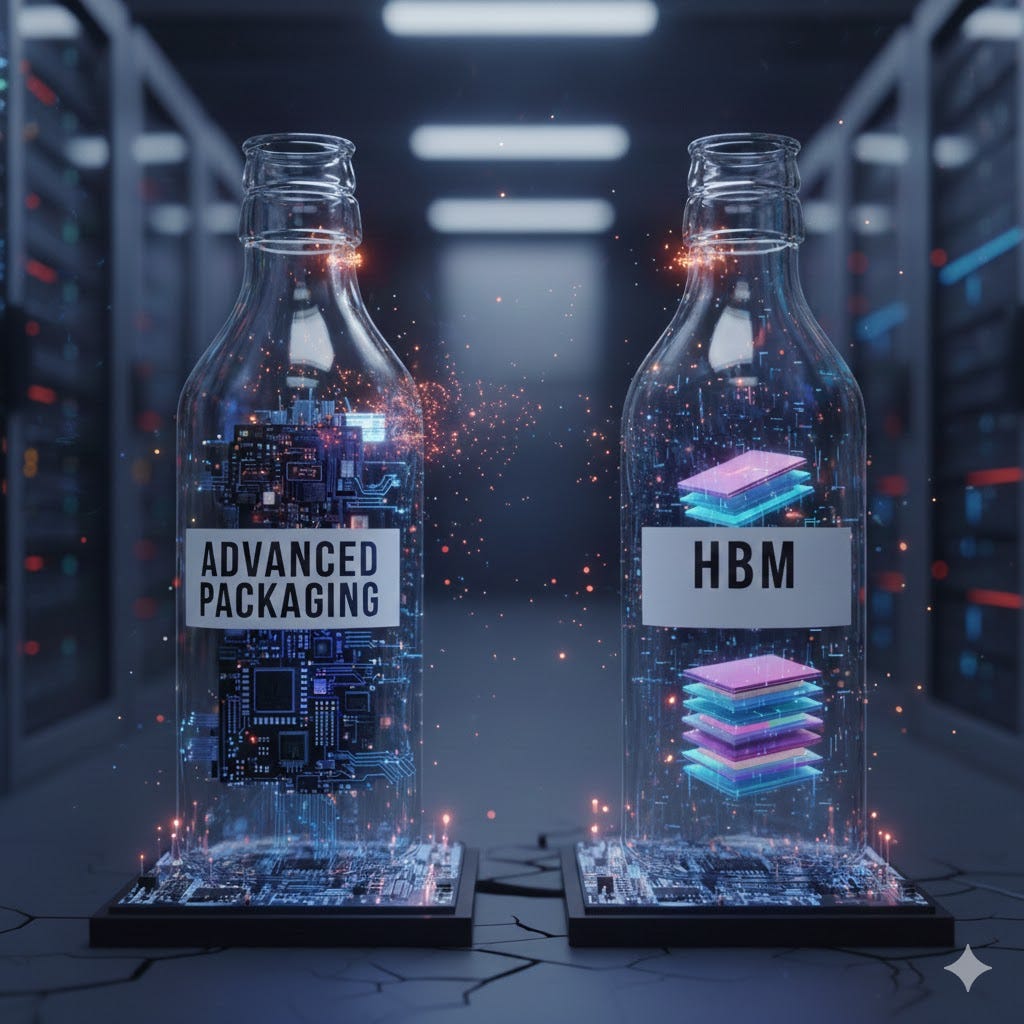
Structural bottlenecks in memory manufacturing—rooted in under-investment during the 2023-2024 downturn—have collided with the AI boom to create a perfect storm of supply constraints. While companies are now scrambling to build new capacity, these efforts are hampered by the complexity of HBM production, which requires specialized TSV technology and up to three times the raw wafer material of standard DRAM. As SK Hynix’s CFO put it, 'We have already sold out our entire 2026 HBM supply,' and TSMC’s advanced packaging lines remain fully booked, underscoring how long lead times and cautious expansion will keep the market tight for years.
The prioritization of enterprise and data center customers has left consumer manufacturers in a state of uncertainty, with many hesitant to place orders due to unclear chip availability. This anxiety is reflected in the actions of companies like Lenovo, which has begun stockpiling memory chips to gain a competitive edge, while others such as Xiaomi have preemptively raised device prices. Meanwhile, the squeeze is so severe that up to 30% of product manufacturing costs could soon be attributed to memory, and major brands like Micron have axed consumer-focused lines such as Crucial RAM to double down on serving the AI gold rush.
The consequences of this AI-fueled memory crunch are stark: prices for DRAM and SSDs have doubled or even tripled in markets like South Korea since late 2025, with Counterpoint Research forecasting a 50% price surge through mid-2026. Lead times for traditional HDDs have stretched to two years, forcing data centers to adopt pricier SSD alternatives, and Kioxia’s entire SSD production is sold out through 2026. As the industry races to expand capacity, the reality is that relief will be slow in coming, locking the tech world into a prolonged 'high-end and expensive phase' where both supply and affordability remain elusive.






RAM Inflation Hits Home
RAM and SSD prices have eclipsed even high-end GPUs, forcing device makers to cut specs and pass unprecedented costs directly to consumers.
Since late 2025, the AI-driven memory crunch has sent shockwaves through the consumer tech market, with RAM prices tripling in a matter of months and retailers like Central Computers and Micro Center abandoning fixed price tags in favor of daily market rates. This volatility has forced major players such as Valve and Microsoft to reconsider product pricing and launch strategies—Valve, for instance, declined to commit to a Steam Machine price due to memory costs, while Sony reportedly stockpiled RAM to shield the PS5 from immediate disruption. The ripple effects are being felt across the industry, as manufacturers scramble to adapt to a landscape where memory is as unpredictable—and as expensive—as lobster.
The affordability crisis has deepened as RAM and SSD prices have soared, with DDR5 kits now costing more than Nvidia’s flagship RTX 5090 GPU and high-end workstation memory kits exceeding $2,200. This relentless inflation, ongoing since late 2025, has made memory one of the most expensive components in PC building, reversing years of declining costs and forcing companies like Framework to repeatedly hike prices on upgrade modules. Even discounted deals, such as Amazon’s $345 'flash deal' for a 32GB DDR5 kit, remain more than double their price just four months prior, underscoring the persistent squeeze on consumer budgets.
Manufacturers across sectors—from PCs and smartphones to TVs and cars—are responding by reducing device specifications and prioritizing high-end models, as memory costs now account for up to 30% of product manufacturing expenses. HP and Dell have openly acknowledged cutting RAM in new PCs and raising prices, while smartphone makers like Xiaomi are holding the line on flagship specs but scaling back memory in mid- and low-tier models. Even smart gadgets and toys are losing features, with analysts warning that the era of cheap, abundant memory is over and that consumers should brace for leaner devices and fewer premium features well into 2026.
The memory shortage’s impact is uneven across the industry, favoring giants like Apple and Lenovo—who leverage supply-chain muscle and long-term contracts to maintain shipment stability—while smaller boutique PC builders and custom gaming shops struggle to secure inventory or absorb soaring costs. As a result, global notebook shipments are projected to decline by 5.4% in 2026, with entry-level and midrange devices hit hardest by reduced specs and shrinking margins. Meanwhile, memory chipmakers like SK Hynix and Kioxia are reaping the benefits, selling out production well into 2026 and enjoying surging stock valuations amid the ongoing supply crunch.

Big Tech Tightens Its Grip
Industry giants with deep pockets and supply chain muscle are securing memory and expanding market share, while smaller brands face existential threats from relentless shortages.
The AI-driven memory shortage has dramatically shifted market power toward memory suppliers and large-scale OEMs, fundamentally redrawing industry dynamics. Memory giants like Samsung, SK Hynix, and Micron have seen their stock prices soar and inventories sell out, with SK Hynix reporting its entire memory chip lineup for the coming year already spoken for. Meanwhile, OEMs such as Lenovo and Apple are leveraging their scale, supply chain prowess, and procurement leverage to not only weather the crisis but also expand market share, as evidenced by Lenovo's 14.6% shipment growth in 2025 and Apple's 16.4% surge. In stark contrast, smaller PC builders and regional brands are squeezed by soaring costs and limited access, with some facing existential threats as memory allocation increasingly favors high-value AI and datacenter applications.
Memory and storage manufacturers—especially those producing high-bandwidth memory (HBM) and advanced packaging—have emerged as the primary winners, capitalizing on surging demand from AI titans like Nvidia, Google, and OpenAI. HBM suppliers such as Micron, Samsung, and SK Hynix are now fielding urgent requests from big tech, with HBM sold out through 2026 and prices rising by as much as 60%. This prioritization of HBM and datacenter-grade storage has left other DRAM segments, including those for phones and gaming hardware, in chronic shortage, driving up prices for both DDR5 and even older DDR4 modules as consumers and smaller players scramble for alternatives.
The crisis has also catalyzed a strategic shift in supply chain management and product design across the tech sector. Large tech companies are aggressively securing long-term supply agreements and even stationing procurement teams in Korea to lock in capacity, while manufacturers like AMD and Apple are redesigning products to absorb or mitigate RAM cost spikes—AMD by supporting cheaper DDR5 in its CPUs, Apple by absorbing costs to keep iPhone prices stable. At the same time, semiconductor capital equipment firms like ASML are seeing record bookings as the industry races to expand capacity, signaling that the current memory supercycle may have long-term ramifications for both supply chains and competitive hierarchies.
While memory suppliers and AI-focused chipmakers are thriving, traditional consumer electronics, automotive, and smaller PC segments are increasingly marginalized. The notebook market is contracting, with TrendForce projecting a 5.4% YoY decline in 2026 shipments and warning of a potential 10.1% drop if price pressures persist. Gamers and custom PC builders, in particular, are being outbid by AI companies, with DDR5 prices skyrocketing from $100 to as much as $900 per unit on secondary markets. This bifurcation underscores a broader realignment, as market power consolidates around those with scale, capital, and direct supplier relationships—leaving smaller players and legacy sectors to grapple with shrinking margins, cautious inventory strategies, and, in some cases, market exit.




Survival by Stockpiling and Strategy
Major manufacturers are weathering the crunch by stockpiling memory, redesigning products, and shifting marketing to downplay AI features that now drive up costs.
In the early stages of the memory crunch, major manufacturers like Lenovo and Apple moved quickly to insulate themselves from volatility by stockpiling components and locking in long-term supply contracts, a strategy that allowed them to weather the transition from DDR4 to DDR5 more smoothly. As DDR4 production wound down and demand for DDR5 surged, these forward-looking procurement moves became essential for maintaining stable supply chains amid intensifying scarcity across both memory types. This proactive approach highlights how industry giants leverage their scale and foresight to navigate supply shocks that leave smaller players more exposed.
As memory shortages persisted into 2026, manufacturers began to rethink product design and feature sets, with companies like Framework and AMD exemplifying the trend. Framework, for instance, was forced to hike prices for its desktop PCs—sometimes by as much as 50% for high-capacity models—while AMD responded by bundling CPUs with DDR5 RAM and designing new chips that support lower-cost memory options. Simultaneously, engineers across the industry focused on software optimization, writing tighter code to deliver performance with less memory, a shift that Arteris' Michal Siwinski and OWC's Larry O'Connor both described as a long-overdue reckoning with software bloat.
To maintain consumer trust and manage expectations amid rising component costs, manufacturers have strategically adjusted both product configurations and marketing narratives. IDC and Omdia analysts report that mainstream PC RAM specs are being lowered to preserve inventory, with mid- and low-tier models becoming leaner to protect margins. Meanwhile, companies like Dell have pivoted away from touting AI capabilities—whose high memory requirements are now a liability—and instead emphasize traditional selling points such as build quality and battery life, reflecting a broader industry recalibration in response to both supply constraints and shifting consumer priorities.
While some manufacturers have reluctantly passed increased memory costs onto consumers, often after delaying price hikes as long as possible, others—like Apple—have chosen to absorb these costs to keep retail prices stable. Framework’s recent price increases underscore the severity of ongoing supply chain disruptions, while Apple’s reported willingness to 'eat the price of RAM' in upcoming iPhones demonstrates a commitment to shielding customers from market volatility. This divergence in strategies underscores the varying degrees of flexibility and market power among tech companies as they navigate a memory market that, according to Framework, may remain turbulent for years.

No Quick Fix in Sight
New factories and infrastructure won’t arrive for years, as bottlenecks in memory, packaging, and even electricity threaten to prolong the industry’s most severe crunch yet.
The outlook for relief from memory shortages remains bleak, as surging demand from AI data centers has sent RAM prices soaring—doubling or even tripling in just a few months—and the transition from DDR4 to DDR5 has only intensified these constraints. Major players like Apple and Lenovo have managed to shield themselves by stockpiling components or locking in long-term contracts, but smaller manufacturers face little choice but to pass rising costs onto consumers. Meanwhile, SSD prices are climbing due to cloud providers snapping up QLC drives for cold storage, and even GPU prices, which had briefly softened, are poised to rise again as memory shortages ripple through the supply chain.
Despite mounting pressure, meaningful relief is years away: building new memory fabs and advanced packaging plants is a slow, capital-intensive process, with companies like SK Hynix investing billions in U.S. facilities that won’t come online until 2028 and TSMC racing to nearly double its CoWoS packaging capacity by 2027. Yet, even as these expansions loom, demand from AI giants—OpenAI, Meta, Microsoft, Google, and now China’s appetite for Nvidia’s H200 GPUs—continues to outstrip supply, with HBM memory and advanced packaging capacity already sold out through 2026. As Micron’s CEO Sanjay Mehrotra bluntly put it, 'tight industry conditions' will persist beyond 2026, and analysts warn this is the longest, most intense memory cycle in history.
Complicating the path to recovery, the tech ecosystem now faces a trio of bottlenecks—HBM memory, advanced packaging, and power infrastructure—that collectively threaten to prolong shortages and high prices well into the late 2020s. As manufacturers repurpose DRAM lines for HBM4, traditional RAM supply shrinks, while TSMC’s advanced packaging lines are already booked solid, with Nvidia securing over 70% of 2025 capacity. On top of that, the International Energy Agency projects data center electricity demand will more than double by 2030, and grid connection delays can stretch up to seven years, prompting Microsoft to restart nuclear plants and Google to invest billions in power infrastructure. In short, even as investments ramp up, the tech world should brace for a protracted period of supply constraints that will reshape the industry’s competitive landscape.
