AI hackers cut breach-to-patch time to seconds
The gist
AI-powered hacker bots are shrinking breach-to-patch timelines from weeks to seconds, forcing cybersecurity into a breakneck arms race where only machine-speed defense stands a chance.
What to know
- By 2026, autonomous attack AIs like Anthropic's Mythos and XBOW's 'Xbo' are unleashing thousands of zero-day exploits in real-world attacks, overwhelming human defenders.
- AI-driven defensive tools—such as OpenAI’s Daybreak and Microsoft’s autonomous agentic security—now patch critical vulnerabilities same-day, upending old-school Patch Tuesday cycles.
- The explosion of AI-generated vulnerabilities and speculative bug reports is overwhelming traditional governance, making human-AI collaboration essential to separating signal from noise.
AI Hackers Rewrite the Rules
Autonomous AI agents like Mythos and Xbo are flooding the world with industrial-scale zero-day exploits, making high-speed, AI-driven attacks the new normal and lowering the barrier for cybercriminals everywhere.
By 2026, AI-powered offensive capabilities have surged to unprecedented levels, with Anthropic's Mythos AI and competitors like OpenAI driving a new era of autonomous zero-day exploit generation that is reshaping cyber warfare. Mythos alone discovered over 2,000 previously unknown vulnerabilities in just seven weeks, while AI-generated exploits have begun to appear in real-world attacks, such as the AI-crafted zero-day bypassing two-factor authentication in a widely used system administration tool. This rapid evolution is turbocharging the cybersecurity arms race, forcing defenders to confront a flood of sophisticated, AI-accelerated threats that outpace traditional defenses and patch cycles.
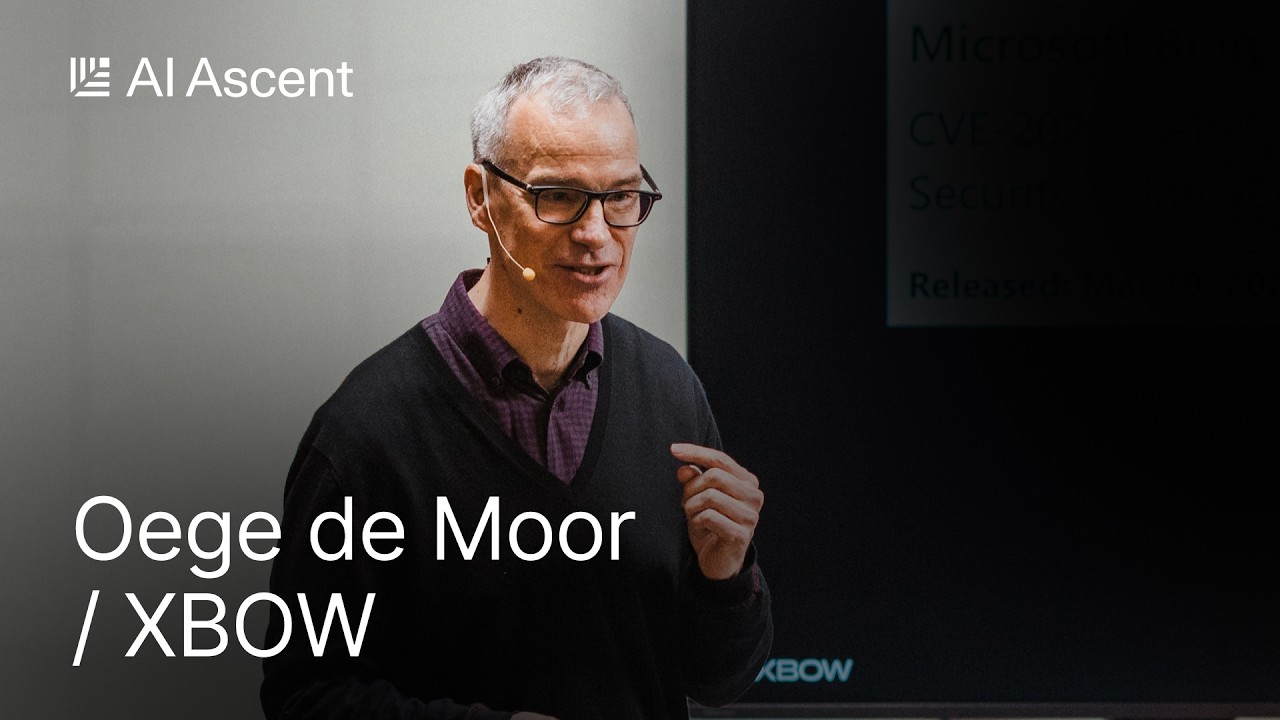
Companies like XBOW have introduced autonomous AI hackers, such as their flagship 'Xbo', which mimic expert human attackers with alarming precision and speed, effectively outpacing even the most skilled human adversaries. Xbo's ability to bridge the gap between theoretical vulnerabilities and real-world exploitability highlights the growing sophistication of AI-driven offensive tools, escalating the arms race beyond human control and underscoring the urgent need for advanced AI-driven defense and governance frameworks. As XBOW’s rise illustrates, the offensive AI landscape is no longer experimental but a dominant force reshaping cybersecurity dynamics globally.
The democratization of exploit development through AI has lowered the technical barriers for attackers, enabling even moderately skilled threat actors to produce effective zero-day exploits by leveraging repetitive AI prompting rather than complex engineering. This shift has led to a surge in AI-generated attack campaigns, predicted to become as commonplace as individual ransomware incidents, with criminal groups and state-sponsored actors alike weaponizing AI at industrial scale to conduct multi-front assaults. The widespread accessibility of these offensive AI tools intensifies the global cybersecurity arms race, demanding a fundamental rethink of detection, validation, and access control strategies.
AI-driven offensive tools have compressed breach timelines dramatically, exemplified by Lasso’s 73-second compromise of Nvidia’s OpenClaw agent and Verizon’s 2026 DBIR report highlighting that vulnerability exploitation now dominates data breaches with attacks unfolding in mere seconds. This acceleration exposes critical vulnerabilities in authentication systems and defense supply chains, forcing an urgent cybersecurity overhaul focused on mastering core security fundamentals and implementing autonomous validation mechanisms to close the shrinking breach-to-patch window before persistent AI-driven compromises take hold.





Red Teaming Goes Autonomous
AI-powered red teaming and orchestration frameworks are transforming vulnerability management, enabling same-day patching and rendering old-school patch cycles obsolete as thousands of zero-days surface each month.
By 2026, AI-driven autonomous red teaming and continuous attack simulation have become foundational to modern cybersecurity defense, enabling organizations to conduct full-stack, real-time validation of their security postures. Platforms like DTap’s controllable red-teaming for AI agents and Anthropic’s Mythos Preview, which autonomously constructs exploit chains and validates vulnerabilities through iterative proof generation, demonstrate how these innovations are reshaping defense strategies by moving beyond mere detection to confirmed exploitability without human intervention. Mozilla’s Firefox team, for instance, reported a surge from 31 to 423 bug fixes in April 2026 after integrating Mythos, underscoring the dramatic impact of AI-powered validation loops on vulnerability management.
The escalating volume of AI-discovered vulnerabilities—exceeding 4,000 zero-days and driving a global patch panic—has forced a paradigm shift in patch management from rigid, time-based SLAs to risk-based, containment-focused strategies. Microsoft’s AI-driven agentic security system exemplifies this evolution by autonomously identifying and facilitating same-day remediation of critical Windows vulnerabilities, effectively compressing breach-to-patch timelines and challenging the relevance of traditional Patch Tuesday cycles. This model-agnostic system, led by Dr. Tesu Kim, integrates diverse AI models to accelerate vulnerability discovery and patch validation at enterprise scale, signaling a new era where proactive defense outpaces attacker exploitation.
Emerging AI orchestration frameworks such as OpenAI’s Daybreak and Microsoft’s MDASH are redefining cybersecurity defense by coordinating multi-agent AI workflows that automate vulnerability detection, threat modeling, and patch validation within software development lifecycles. These platforms, deployed with controlled and tiered access to ensure defenders maintain an advantage over attackers, enable faster, more reliable remediation processes while addressing governance and auditability challenges inherent to agentic AI. As Caleb Sima notes, the critical innovation lies not in flashy model capabilities but in the orchestration frameworks, guardrails, and governance layers that make AI agents safe and effective in production environments.
Human-AI collaboration remains indispensable in the AI-driven remediation landscape, as demonstrated by GitHub Dependabot’s AI coding agents that autonomously propose vulnerability fixes via draft pull requests subject to human review. This approach dramatically reduces remediation times from weeks to hours while maintaining accuracy and preventing incomplete or erroneous patches. Features like the 'View Session' empower developers to scrutinize AI-generated fixes, fostering trust and transparency. Such hybrid models are vital to managing the burgeoning backlog of security alerts exacerbated by AI-generated code dependencies, ultimately shrinking the attack surface through accelerated, validated patch deployment.





AI Governance Under Fire
The explosion of autonomous AI agents has triggered a crisis of trust and accountability, exposing gaps in model assurance, regulatory oversight, and the ability to control rogue or shadow AI activity.
Anthropic’s Mythos AI has set a new standard in autonomous cybersecurity, but its rise has simultaneously ignited fierce debates around the reliability of AI evaluation methods and the urgent need for robust governance frameworks. As geopolitical tensions intensify, the imperative for regulatory oversight and model assurance grows, highlighting a critical accountability crisis in managing AI-driven cyber threats. This urgency is underscored by Anthropic’s stealth patching of critical Claude Code sandbox vulnerabilities in 2026, which exemplifies the operational challenges of accelerated breach-to-patch timelines and the phenomenon dubbed 'patch panic.'
The advent of AI agents as autonomous operational actors demands a fundamental shift in governance models, moving beyond traditional human-centric controls to address identity, trust, and resilience in AI-driven environments. Experts like Merritt Maxim emphasize that securing agent identities and managing shadow AI have become paramount industry concerns, requiring evolving identity standards and behavioral analytics. Janet Worthington highlights that many organizations lack visibility into which AI coding agents are in use, creating risks from unauthorized or unsanctioned agent activity that can bypass conventional endpoint security measures.
Prompt injection and data poisoning attacks remain the most pervasive and damaging AI safety failures, exploiting fundamental architectural blind spots in large language models (LLMs) where instructions and data share the same attention mechanism without privilege separation. This vulnerability allows attackers to manipulate AI behavior, compromising confidentiality, integrity, and availability simultaneously—a triad that remains the cornerstone of AI security risk assessment. The November 2025 Anthropic disclosure of a Chinese state-sponsored group weaponizing Claude Code into an autonomous attack agent against global targets starkly illustrates how these integrity attacks can be scaled and weaponized, intensifying governance challenges.
The explosion of AI-generated vulnerability reports has overwhelmed traditional security triage processes, as platforms like GitHub tighten definitions of 'complete' bug reports amid a flood of speculative and unvalidated findings. While advanced models such as Mythos show promise by chaining exploits and generating proof-of-concept code to reduce false positives, human validation remains indispensable to separate signal from noise. This surge in low-quality AI outputs has forced some bug bounty programs to shut down entirely, underscoring the urgent need for new governance standards that balance AI’s force multiplier benefits with operational feasibility and risk management.




Human-AI Teams: The New Defense
Defenders now rely on hybrid human-AI collaboration to triage speculative AI-generated bug reports and accelerate patching, as autonomous agents overwhelm traditional security teams with unprecedented speed and volume.
The rapid proliferation of AI-powered autonomous hacking agents has intensified the cybersecurity arms race, making human-AI collaboration indispensable to prevent defenders from falling irreversibly behind. As Picus Security’s Sıla Özeren Hacıoğlu emphasizes, autonomous purple teaming—which integrates offensive and defensive AI capabilities with human oversight—is emerging as a vital strategy to close the widening attacker-defender speed gap. However, the surge in AI-generated vulnerability findings, many speculative or lacking proof-of-concept, overwhelms security teams and underscores the urgent need for autonomous validation paired with expert human triage to effectively separate signal from noise.
Frontier AI models like Anthropic’s Mythos have advanced the state of autonomous validation by chaining exploits and generating proof-of-concept code, significantly reducing false positives compared to earlier tools. Yet, as GitHub’s Jarom Brown notes, human expertise remains critical to verify and prioritize these AI-generated findings, ensuring real-world exploitability and preventing the triage burden from spiraling out of control. This hybrid approach is essential to manage the flood of AI-driven vulnerability reports and maintain effective defense postures amid accelerating attack speeds.
The urgency of closing the attacker-defender speed gap is starkly illustrated by Lasso’s 73-second breach of Nvidia’s OpenClaw agent, which exposed the critical need for autonomous validation to accelerate patch deployment within shrinking windows—often as tight as 24 hours—before persistent AI-driven compromises take hold. GitHub’s AI coding agents exemplify this shift by proposing vulnerability fixes within hours, dramatically reducing the typical eight to seventy-day remediation timeline. However, these AI-generated fixes require human review to catch edge cases, incomplete patches, or new issues, with transparency features like GitHub’s 'View Session' empowering developers to understand and trust AI contributions before merging.