AI hits trust ceiling: consumers demand human touch and transparency in customer service
The gist
Despite AI’s rapid takeover of customer service, most consumers still demand a human touch and transparent answers before they’ll trust the tech.
What to know
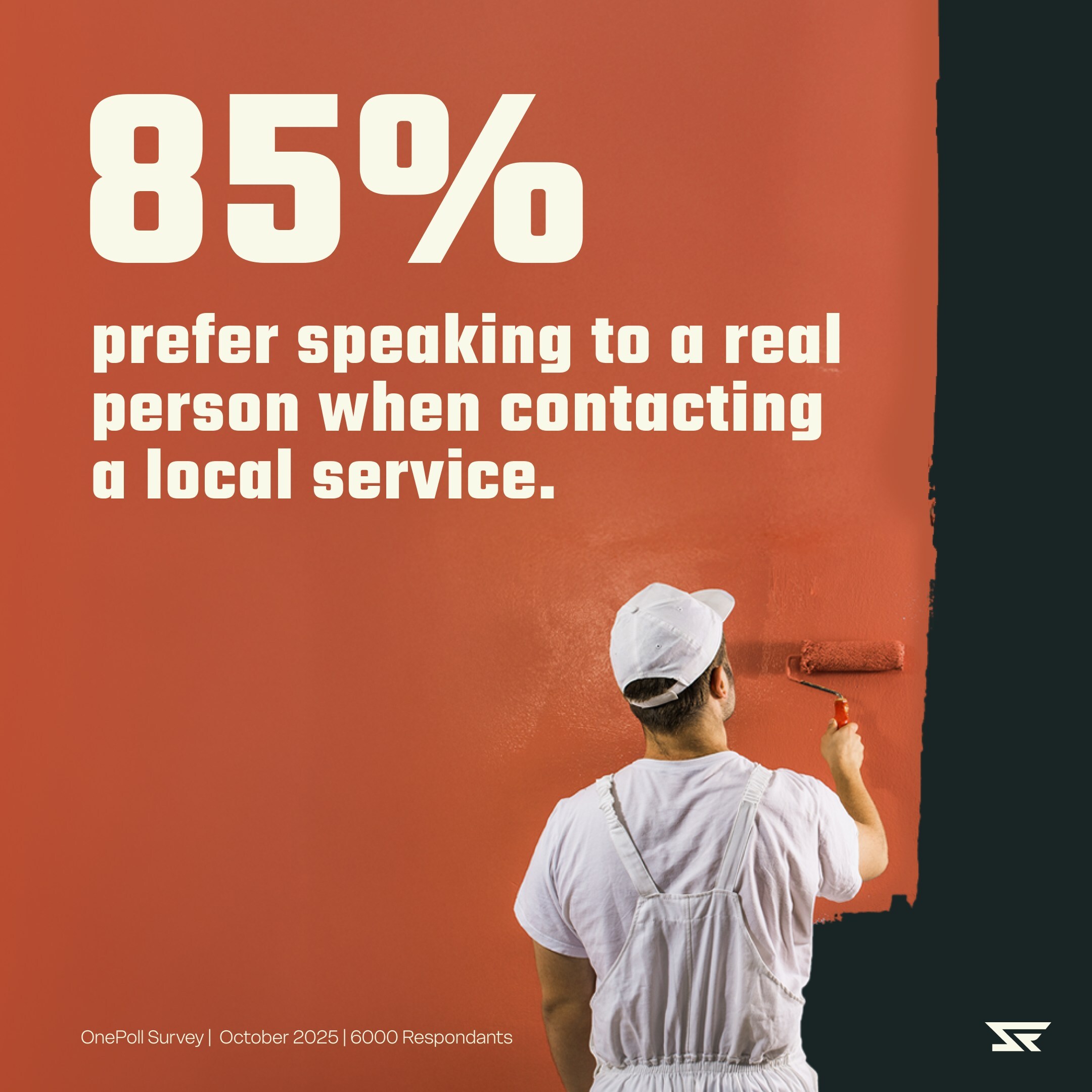
- By early 2026, just 14% of consumers trust AI shopping recommendations alone, while 85% prefer human support for customer service.
- Companies like Zendesk and Airbnb are blending AI with human workflows, keeping bots on routine tasks and real people on complex or sensitive issues.
- A whopping 95% of consumers now expect clear explanations for AI decisions and 72% want to know exactly where AI gets its info—transparency is non-negotiable.
The Human Trust Gap
Despite AI’s rapid adoption, deep skepticism and emotional fatigue are sending consumers back to human agents for authenticity and reassurance.
By early 2026, consumer trust in AI-driven customer experience remains markedly low despite increasing AI integration. For instance, only 14% of consumers trust AI shopping recommendations enough to purchase based on them alone, while 31% require detailed product descriptions alongside AI suggestions to be persuaded. This skepticism extends deeply into frontline service interactions, where customers often feel uncertain whether AI is genuinely helping or merely masking automation, and employees question their evolving roles and value, underscoring a significant emotional and trust gap that CX leaders must address through clear delineation of AI versus human responsibilities.
Consumer resistance to AI-powered customer service is widespread and cross-industry, with surveys revealing that 85% of consumers prefer human interaction when contacting local service providers and 83% of homeowners actively request human representatives over AI. This preference is echoed in sectors like healthcare, real estate, and law, where one in three consumers would hang up immediately if confronted by an AI bot. The data highlights that human-led service remains a critical trust builder and competitive advantage, as 64% of consumers lack confidence in GenAI-powered service and 77% report better outcomes with human support, while only 2% favor exclusively AI-led interactions.
The growing phenomenon of AI fatigue is driving consumers back toward authentic human connection, reversing a two-decade trend favoring automation. As Mike observes, the novelty of AI has worn off, with 80% of interactions now feeling artificial and 'never quite right,' fueling a desire for human agents who can offer empathy and nuanced communication that AI cannot yet replicate. This sentiment is reinforced by research showing that consumers are willing to pay premiums for guaranteed human support and would cancel services lacking human representatives, emphasizing that AI should augment rather than replace human agents, especially in complex, high-stress transactions like real estate.
Despite rising AI adoption—51% of Americans now use AI tools for research—trust remains elusive, with 76% expressing skepticism about AI-generated information and 80% concerned about AI's societal impact, including job loss fears. This paradox of widespread use coupled with deep hesitation underscores a critical demand for transparency, accountability, and human oversight in AI applications. Ipsos and Quinnipiac polls reveal that only a minority trust government regulation of AI, fueling bipartisan calls for clearer guardrails. Consequently, companies must prioritize designing AI experiences that reassure customers through transparency and easy human fallback options rather than racing to automate rapidly.




Limits of AI Automation
Even leading tech firms admit full AI automation is a myth—complexity, legacy systems, and customer emotions keep humans at the heart of service.
By early 2026, industry experts like Cresta CEO Ping Wu and analyses from Zendesk underscore that AI automation in customer support is inherently limited by the complexity of conversations, legacy IT infrastructure, and diverse customer demographics. While some companies claim up to 90% automation, the reality is that full automation remains unrealistic, especially for high-emotion or complex interactions that demand human empathy and expertise. Effective deployment thus requires a nuanced segmentation of interactions into those best eliminated, fully automated low-emotion tasks like password resets, and those needing hybrid human-AI workflows to ensure accountability and customer loyalty.
The operational rollout of AI voice agents, as demonstrated by Zendesk’s expansion from chat and email into live calls, highlights practical constraints that necessitate cautious, incremental adoption. Starting with simple call reasons and instituting strict 'stop rules' for sensitive issues—such as payments, identity verification, or angry customers—ensures that AI handles straightforward queries end-to-end while seamlessly escalating complex cases to human agents. This approach not only preserves trust but also addresses legacy system challenges by transmitting call transcripts and summaries to human agents, preventing frustrating customer repetition and enhancing accountability.
Speed and efficiency brought by AI automation risk eroding customer trust if not balanced with transparency and control. As multiple analyses emphasize, customers do not blame the AI for errors; they hold the company accountable, making trust the paramount currency in CX. Therefore, hybrid human-AI workflows are essential—not just to manage complexity but to maintain a human touch where it matters most, ensuring that rapid AI responses do not come at the cost of customer confidence or satisfaction.
Sustainable scaling in customer support hinges on integrating AI and human intelligence into a unified system that mitigates agent burnout and customer frustration. Cresta’s work with clients like United Airlines and Porsche exemplifies this model, where AI augments human experts rather than replacing them, enabling companies to handle volume without sacrificing the quality of emotionally charged or complex interactions. This hybrid approach reflects a mature understanding of AI’s operational realities and the necessity of human accountability in delivering exceptional customer experiences.

Clarity Builds Confidence
Defining clear boundaries and accountability between AI and humans is crucial to prevent confusion and maintain customer trust in high-stakes moments.
By early 2026, industry leaders like Zendesk and KODIF emphasized that successful AI integration in customer experience hinges on crystal-clear role definitions and accountability frameworks that delineate what AI handles versus what humans own. This clarity prevents confusion and erosion of trust, especially during critical, high-stress moments, ensuring neither customers nor agents feel unsupported. As highlighted in KODIF's model, specialized AI agents mirror human CX roles—such as AI Support Agent and AI Concierge—enabling automation to act decisively within ecommerce ecosystems while preserving meaningful human oversight.
Balancing AI efficiency with human touch requires a strategic approach where automation tackles routine, low-emotion tasks, reserving human intervention for complex or sensitive issues to maintain empathy and trust. As noted by CX experts, blind automation risks alienating customers, exemplified by delayed responses to simple requests, while companies like Burger King deploy AI assistants to support rather than replace frontline employees. Setting 'stop rules' for sensitive topics and ensuring seamless, context-rich handoffs—such as Zendesk’s AI voice agents passing transcripts to humans—are critical to preventing friction and fostering customer confidence.
Customer trust increasingly depends not just on speed but on transparency and accountability in AI-driven interactions. With 95% of consumers expecting explanations for AI decisions, designing experiences that combine fast responses with clear rationales is essential to avoid perceptions of opacity or deceit. Moreover, measuring success by handoff quality, customer effort, and repeat contacts rather than mere call deflection rates ensures that AI-human collaboration remains meaningful. Companies like Zoom and Crescendo AI exemplify this by integrating AI into workflow orchestration and quality management frameworks that hold bots and humans to consistent standards.
Despite AI’s growing role, consumer demand for authentic human connection is resurging, reversing a two-decade trend toward automation-only interactions. Research shows 50% of consumers would cancel services lacking human support, and 42% would pay premiums for guaranteed access to humans. Industry voices like Mike and Steve Brown stress that AI should enhance agent efficiency—creating 'super agents'—without inserting barriers between customers and humans. High-stakes, emotional transactions, such as real estate or healthcare, remain firmly in the human domain, underscoring the necessity of preserving human roles for relationship-building and empathy even as AI handles routine tasks.

Measuring AI as Labor
Salesforce’s 'Agentic Work Units' transform AI from a black box into accountable digital labor, demanding new metrics and relentless quality oversight.
By early 2026, Salesforce pioneered the concept of 'Agentic Work Units' (AWUs), redefining AI performance measurement from traditional capacity metrics like token counts to outcome-based metrics that quantify discrete tasks completed by AI agents. This shift transforms AI from a nebulous feature into a tangible form of labor, enabling organizations to treat AI output as accountable, tradable, and benchmarkable work. However, maintaining this accountability demands rigorous operational discipline, including weekly reviews of AI work and tracking metrics such as volume, quality, rework, and risk by intent to uncover hidden costs like repeated customer contacts that inflate expenses.
As AI capabilities evolve rapidly, continuous training and adaptive quality assurance become indispensable to sustaining trustworthy customer experiences. With projections indicating that by 2027, 40% of core tech skills will be partially obsolete and the half-life of tech skills shrinking to less than two years, organizations must move beyond annual training cycles to monthly refreshers on AI workflows. This proactive approach mitigates emerging failure modes that static QA rubrics might miss, ensuring AI reliability remains robust amid fast-paced technological change.
AI-Human Synergy in Action
Airbnb’s hybrid approach and real estate’s cautious pilots show that blending AI with human expertise boosts satisfaction and overcomes industry-specific trust barriers.
By early 2026, Airbnb demonstrated the tangible benefits of AI-human collaboration in customer experience by deploying AI-powered support agents that handled about one-third of North American service requests, effectively reducing routine contacts while preserving human escalation paths. CFO Ellie Mertz emphasized that AI was used to streamline common inquiries without replacing human judgment, a strategy that improved customer satisfaction and underscored the importance of automating high-volume, low-complexity tasks first to maintain trust alongside efficiency gains.
In the mortgage and real estate sectors, AI adoption faces unique challenges rooted in deep-seated trust deficits and regulatory constraints. Millennials and Gen Z buyers, who feel overwhelmed and skeptical—only 12% trust loan officers not to take advantage—are increasingly turning to AI-driven digital channels like chatbots to build confidence before engaging with human agents. This shift highlights the critical role of AI in providing scenario-building and financial literacy tools that position human advisors as trusted partners rather than mere salespeople.
Mortgage industry leaders advocate for a cautious, pilot-based AI rollout to build trust and refine models gradually, especially given stringent regulations that mandate human underwriters retain final decision authority. Transparency measures, such as disclaimers informing borrowers about AI-based document evaluations, help manage expectations and reduce frustration. While perfect AI accuracy is unattainable, achieving near-perfect rates around 99.95% is deemed sufficient to foster consumer trust, mirroring reliability standards seen in major tech systems.
Despite the operational benefits AI offers—such as shortening mortgage closing times by up to three months and enabling lenders to recycle capital more efficiently—consumer trust in AI for mortgage decisions has sharply declined from 30% in 2025 to 16% in 2026. This erosion is compounded by low tolerance for AI errors, especially among older generations, and a strong demand for transparency, with nearly 70% of buyers insisting on clear AI labeling and 45% willing to pay extra for human verification of AI-generated decisions. Notably, younger buyers remain more receptive, valuing AI’s efficiency and confidence-building capabilities, underscoring the need for AI-human collaboration strategies that balance speed, accuracy, and accountability.



Transparency or Bust
Americans demand AI ‘show its work’—with source links, evidence, and regulatory clarity—before they’ll trust its answers or intentions.
By early 2026, a paradox had emerged in the American public’s relationship with AI: while adoption of AI tools was widespread, trust in their outputs remained strikingly low. Research from March 2026 revealed that 76% of Americans trusted AI only rarely or sometimes, with a majority expressing deep concern about AI’s societal impact—55% believed AI would do more harm than good. Chetan Jaiswal of Quinnipiac University captured this sentiment, noting that Americans are adopting AI 'with deep hesitation, not deep trust,' underscoring a critical trust gap that transparency must address.
This trust gap is further complicated by a pervasive skepticism toward government regulation, with only 31% of Americans confident in the US government's ability to effectively oversee AI technologies. The bipartisan demand for clearer regulatory guardrails reflects widespread anxiety about economic disruption and AI’s societal consequences. Analysts highlight a fundamental disconnect between expert optimism and public wariness, making transparency about AI processes and source attribution not just desirable but essential for bridging these divergent perceptions and fostering accountability.
Transparency emerges as the cornerstone for rebuilding AI confidence, particularly in AI-powered search tools where trust issues are acute. Surveys from April 2026 show that nearly three-quarters of users (72%) insist AI platforms always disclose their information sources, while 66% want verifiable links to trusted outlets like news sites and review platforms. The perception of AI as a 'walled garden'—notably felt by 51% of respondents—fuels distrust and compels 63% to double-check AI outputs elsewhere. Consumers reject opaque 'black box' systems, instead demanding that AI 'show the receipts,' with over half (52%) saying visual evidence such as photos would boost their trust.