AI hype meets investor skepticism as SaaS valuations slide
The gist
Despite record-breaking AI-driven growth from SaaS giants like Salesforce and ServiceNow, investor skepticism has sent enterprise software valuations to decade lows as Wall Street demands real proof of sustainable AI monetization.
What to know
- By early 2026, enterprise software valuations hit a 10-year low with median NTM revenue multiples sliding to 3.6x—even as companies repeatedly beat earnings expectations.
- Mid-2026 saw investor capital rotate from AI chipmakers to AI-enabled SaaS leaders like Salesforce, whose Agentforce platform exploded 205% YoY to $1.2B ARR, and ServiceNow, which set a $1.5B AI contract target.
- Persistent macro headwinds and doubts about legacy SaaS firms’ ability to monetize AI quickly have kept investor caution high, with Salesforce’s stock down 33% YTD despite rapid AI innovation.
The SaaS Valuation Paradox
Despite record earnings beats, legacy SaaS firms face decade-low valuations as investors debate whether AI will erode their core business or reinforce their compliance-driven moats.
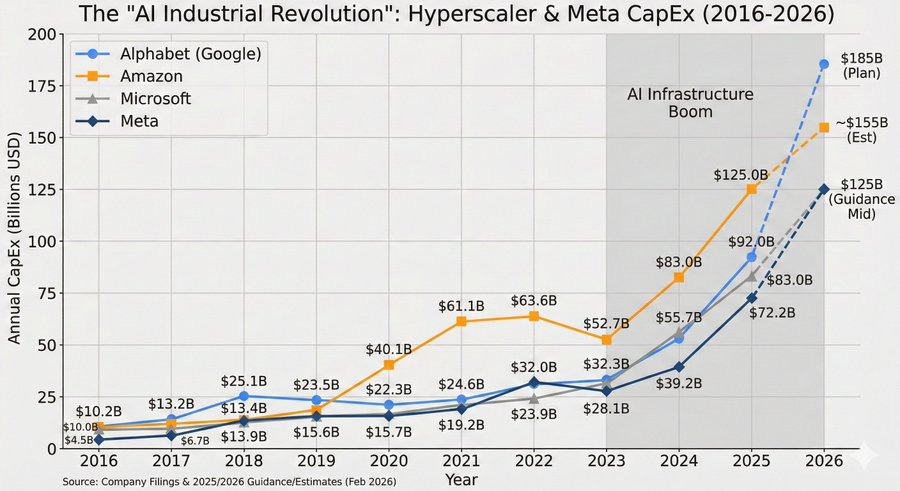
By early 2026, despite public software companies consistently beating earnings expectations—with median Q4 beats at 3.0% and guidance raises at a three-year high of 2.0%—enterprise software valuations plunged to a decade low, with the median next-twelve-month (NTM) revenue multiple dropping to 3.6x and 39% of the software index trading below 3x. This stark disconnect highlights investor skepticism about legacy SaaS firms’ ability to harness AI for near-term growth, even as hyperscalers like Google Cloud and AWS ramped CapEx dramatically, signaling confidence in AI infrastructure but not necessarily in traditional software vendors’ revenue prospects.
Investor sentiment remains sharply divided: bears argue that classic enterprise software has entered a 'late maturity' phase with exhausted total addressable markets (TAMs) unlikely to benefit from AI-driven revenue, while bulls emphasize the complexity of core enterprise features—such as RBAC, SSO, audit logs, and SOC2 compliance—that AI alone cannot easily replicate. This debate underscores a fundamental tension between fears of obsolescence and recognition that legacy software’s compliance and security demands create durable moats against rapid AI disruption.
By mid-2026, the market began reassessing the AI disruption narrative as fears of an overnight SaaS collapse proved exaggerated; companies like ServiceNow delivered strong earnings that lifted the sector, reinforcing that legacy SaaS businesses still generate robust cash flows and maintain healthy balance sheets. Private equity and credit firms with software exposure, initially battered by AI-related concerns, started to rebound as the consensus emerged that AI-driven disruption will be gradual rather than immediate, allowing incumbents time to adapt and innovate.
The AI revolution is reshaping enterprise software valuations by injecting uncertainty into the sustainability of recurring revenues over the next two to three years, prompting a significant repricing as investors demand tangible proof of AI-enabled revenue acceleration. Lowered barriers to software development—thanks to AI coding agents that reduce team sizes and complexity—challenge traditional SaaS models, compelling incumbents to demonstrate that they can not only survive but thrive by integrating AI effectively, or risk valuation discounts in this more discerning investment environment.


Capital Shifts to AI SaaS
Investor money is flowing out of AI chipmakers and into SaaS leaders with proven AI monetization, but macro risks and second-tier vendor vulnerabilities keep caution high.
By mid-2026, investor sentiment decisively shifted from semiconductor and AI infrastructure stocks toward AI-driven enterprise SaaS leaders like Salesforce, ServiceNow, and HubSpot, driven by strong operational performance and clear AI monetization pathways. Salesforce’s shares surged 5.4% after Guggenheim upgraded it to Buy, citing dismissal of severe AI disruption fears, while its Agentforce AI product rapidly scaled to $1.2 billion in annual recurring revenue, supported by a $25 billion share buyback and raised revenue guidance. Similarly, ServiceNow increased its Now Assist AI contract target to $1.5 billion, signaling robust demand for AI-enhanced workflows that directly monetize proprietary data, a trend echoed by surges in ZoomInfo, Elastic, Veeva, and SentinelOne amid a broad rotation out of chip stocks.
This capital rotation reflects a nuanced investor recalibration recognizing that AI disruption will not rapidly cannibalize existing SaaS revenue models but rather augment them through premium AI add-ons and workflow integration. Analysts like Guggenheim’s John DiFucci argue that the worst-case AI disruption scenario is already priced in, fostering renewed confidence in leading SaaS companies’ sustainable growth prospects. However, caution remains as macroeconomic headwinds—such as rising oil prices and geopolitical tensions in the Middle East—could pressure CIOs to consolidate vendors, posing risks particularly to second-tier software firms lacking clear AI monetization strategies.
Investor enthusiasm for AI-enabled SaaS is further exemplified by companies like Asana and Freshworks, which have launched AI application-layer products such as Asana’s Agentic Work Management suite, attracting capital flows away from oversold semiconductor stocks. This rotation is driven more by shifting sentiment than immediate fundamental changes, with investors betting on AI-driven monetization potential despite concerns over competitive pressures on renewal pricing and customer retention. Freshworks’ volatile stock movements underscore ongoing investor recalibration within the AI ecosystem, balancing optimism about proprietary data leverage against economic risks.
By August 2026, the market narrative had evolved to acknowledge that AI-related cost structures, such as token-based usage charges, will temper the pace of disruption, preserving the value of existing SaaS business models and prompting a recovery in software stocks and private equity exposure. Analysts noted that fears of AI destroying SaaS overnight were 'a bit crazy,' as companies begin to 'right-size their token spend,' making it less feasible for competitors to quickly undercut incumbents. This broader understanding has fueled renewed investor confidence, evidenced by rallies in ETFs like SKYY and IGV and strong earnings reports from ServiceNow.

AI Growth: Promise and Limits
Salesforce and Asana’s rapid AI revenue growth highlights both the power and the organizational friction of integrating new agentic AI platforms into legacy software models.
Salesforce has demonstrated a remarkable AI-driven growth trajectory through its Agentforce platform, which surged 205% year-over-year to $1.2 billion in annual recurring revenue within just 18 months, marking one of the fastest ramps in enterprise software history. CEO Marc Benioff emphasizes 'agentic AI' as a strategic cornerstone, with Agentforce now embedded across every Customer 360 application, underscoring the company’s deliberate pivot to AI-powered automation as a key growth catalyst. Despite this momentum, Salesforce’s broader revenue growth remains modest at 9% organically, weighed down by legacy segments like Marketing and Tableau, reflecting the complex challenge of integrating AI innovation with existing business lines while managing investor expectations.
Salesforce’s aggressive monetization of AI is further evidenced by its strategic financial maneuvers, including a $25 billion accelerated share repurchase financed by debt, signaling confidence in its AI-driven growth despite tempered revenue guidance. The company’s AI initiatives, such as the Slack-Anthropic integration and enhanced Tableau capabilities, reinforce its leadership in the AI-powered SaaS market and have contributed to record quarterly revenue surpassing $11 billion with a 13-14% year-over-year increase and a record non-GAAP operating margin of 34.8%. This robust performance has sustained bullish retail investor sentiment even amid broader SaaS sector challenges and a significant stock price correction, positioning Salesforce as a compelling AI valuation play.
Asana is carving out its own AI-led growth trajectory by transforming its work management platform into an 'operating system' that seamlessly coordinates human teams with AI agents, a vision materially advanced by its $75 million acquisition of no-code AI agent builder StackAI—the company’s first acquisition in 18 years. This strategic move underpins Asana’s raised fiscal 2027 revenue guidance to $855.5 million–$863.5 million and fuels investor optimism about its potential to reach $1 billion in revenue and $127.4 million in earnings by 2029. However, while AI-driven automation and improved net revenue retention are promising growth levers, competitive pressures on renewal pricing and retention remain key risks that could temper long-term financial outcomes.
Beyond Salesforce and Asana, other enterprise SaaS leaders like Workday are also capitalizing on agentic AI to drive substantial revenue growth, with Workday reporting over 200% year-over-year increases in new contract value fueled by AI-enabled expansion deals. Combined with high gross retention rates of 97%, margin improvements, and significant share buybacks, Workday’s strategic initiatives position it well for sustained profit growth amid a cautious market, illustrating a broader industry trend where AI investments are reshaping growth trajectories and investor expectations across leading SaaS companies.



Agentic AI Reshapes Products
AI-powered automation is transforming CRM and content platforms, but heavy R&D spending and execution risks threaten to offset the gains from these next-gen features.
By mid-2026, agentic AI innovations have fundamentally reshaped enterprise software product offerings, particularly in CRM, content management, and marketing automation. AI-powered CRM platforms, exemplified by Salesforce’s Einstein GPT introduced in 2023, automate sales and marketing workflows through predictive lead scoring, intelligent chatbots, and real-time insights, driving a CRM market growth from $11.04 billion in 2025 to $15.06 billion in 2026 at a 36.4% CAGR. Strategic acquisitions like Cordance Corporation’s 2024 purchase of Spiro.AI underscore the competitive imperative to embed advanced AI capabilities, while the shift to cloud-native AI CRM solutions reduces infrastructure costs and broadens adoption amid enterprise IT tariff pressures.
Adobe’s aggressive integration of agentic AI technologies, notably the June 2026 rollout of Firefly across Creative Cloud and Experience Cloud, links AI-driven content creation directly to campaign orchestration, positioning Adobe as a pivotal player in the $2.65 billion content intelligence market. These innovations enable enterprises to automate content production, personalize at scale, and optimize marketing performance in real time, enhancing Adobe’s competitive stance. However, execution risks remain significant, as complex AI integrations and evolving pricing models could constrain margins if adoption lags or costs escalate.
Progress Software’s July 2026 introduction of agentic AI capabilities in its Sitefinity Generative CMS—embedding custom AI agents and page-level intelligence within content workflows—advances its narrative as an intelligent, workflow-aware content engine. While these enhancements bolster its AI-enabled digital experience tooling, their impact on near-term growth is incremental rather than transformative, given ongoing challenges with M&A execution and cloud transition. Moreover, increased R&D and AI-related expenditures to support these innovations pose margin pressures if revenue growth does not keep pace, highlighting the delicate balance between AI-driven product evolution and financial performance.

Investors Demand Proof, Not Hype
SaaS stocks remain pressured as investors scrutinize AI-driven growth claims, wary of macro headwinds and shifting CIO budgets toward hardware at the expense of software deals.
Despite Salesforce's impressive AI-driven growth metrics—such as Agentforce's $1 billion ARR achieved in just 18 months and a 152% quarter-over-quarter increase in tokens processed—investors remain skeptical due to modest overall revenue growth and unclear monetization pathways. The company's current remaining performance obligations (RPO) growth of 13% fell short of the 15% threshold needed to validate a broader growth re-acceleration, reinforcing a cautious 'show-me' stance as the market awaits stronger execution in the second half of 2026.
Macroeconomic headwinds and shifting enterprise spending priorities are exerting significant pressure on AI-driven software valuations. IBM's earnings miss in mid-2026 highlighted a notable pivot by CIOs toward hardware investments—specifically servers and memory chips—causing delays in large software deals and triggering share price declines for SaaS companies like HubSpot, Workday, and Asana. This reprioritization, compounded by supply constraints and anticipated hardware price hikes, introduces pricing uncertainties and execution challenges, particularly threatening second-tier vendors with heightened volatility and potential consolidation risks.
Geopolitical tensions and rising oil prices have further dampened investor enthusiasm by increasing the cost of capital and intensifying scrutiny on AI-related spending. The reinstated U.S. naval blockade on Iran pushed Brent crude above $85 per barrel, leading to expectations of sustained Federal Reserve interest rates near 3.5–3.75%, which in turn has prompted a rotation of capital within the AI sector—from infrastructure chip stocks toward application-layer software firms capable of monetizing AI as premium add-ons. However, this strategic shift does not fully alleviate concerns over execution risks and valuation uncertainties amid a volatile macroeconomic backdrop.
Even with Salesforce's CEO Marc Benioff championing AI integration as the 'biggest growth opportunity' and the company reporting robust fundamentals—including a $33.6 billion backlog and 52% year-over-year earnings growth—the market response remains muted. Salesforce's stock has declined 33% year-to-date despite beating sales and profit expectations, reflecting persistent investor caution fueled by softer forecasts, execution risks, and broader valuation corrections that have halved its P/E ratio from above 40 to 21. This tension underscores the ongoing challenge for AI-driven SaaS companies to convert innovation narratives into sustained market confidence.
Spotting Real AI Momentum
Sustainable AI-driven growth hinges on tangible metrics like net retention and backlog, with financial discipline and defensible moats separating winners from the hype-fueled pack.
Investors seeking to distinguish genuine AI-driven revenue acceleration from hype should focus on concrete financial indicators such as improved net revenue retention, rising AI-related bookings, and profitability trends. As demonstrated by Asana's 2026 Q1 fiscal results, where revenue reached $205.1 million alongside a narrowed net loss and raised full-year guidance, the ability to monetize AI-led automation at the application layer—impacting renewal cycles and seat expansions—is critical. Similarly, Workday’s over 200% year-over-year growth in new contract value driven by agentic AI and its high 97% gross retention rate underscore that robust demand and durable customer relationships are key signals of sustainable AI integration rather than transient market enthusiasm.
Durable moats and long migration cycles remain essential yet increasingly challenged pillars in the AI enterprise software landscape. Asana’s strategic $75 million acquisition of StackAI to become an operating system coordinating human and AI workflows signals a commitment to building defensible platforms, but intensifying competition threatens renewal pricing and retention stability. Adobe’s integration of AI-driven content creation with campaign orchestration through Firefly and Experience Cloud further exemplifies moat reinforcement by aligning tightly with enterprise marketer needs. Meanwhile, Salesforce’s surge in Agentforce and Data 360 recurring revenue by over 200% year-over-year highlights how leveraging agentic AI can deepen customer entrenchment, though investors must remain vigilant about competitive pressures that could erode these advantages.
Sustainable financial performance amid AI-driven transformation is signaled by consistent revenue growth, margin improvements, and strong backlog positions, yet investors must critically assess execution risks and cost pressures. Salesforce’s $33.6 billion backlog and guidance projecting 10-11% revenue growth, paired with a P/E ratio contraction from above 40 to 21 despite 52% earnings per share growth, illustrate how market overreactions to AI fears can create buying opportunities grounded in fundamentals. Conversely, companies like Progress Software face margin pressures from heavier R&D and AI spending, with sharply divergent analyst forecasts on 2029 earnings underscoring the need to scrutinize AI growth assumptions. Similarly, HubSpot and Pegasystems show that premium valuations and high returns on equity come with execution risks tied to AI integration and competitive dynamics.
Investors should maintain a cautious stance by balancing enthusiasm for AI product momentum against retention risks, profitability challenges, and the quality of deal flow. SentinelOne’s case, with ongoing losses and reliance on hyperscaler partnerships despite AI-driven international expansion, exemplifies the importance of earnings visibility and funding stability. Progress Software’s incremental AI enhancements, while fitting into a broader product push, do not yet transform near-term financial catalysts, highlighting that not all AI integrations translate immediately into sustainable growth. This nuanced view encourages investors to differentiate between incremental AI adoption and transformative AI-driven business model shifts when evaluating enterprise software valuations.