AI in the wild: open-world benchmarks and human oversight redefine trust in 2026’s smartest machines
The gist
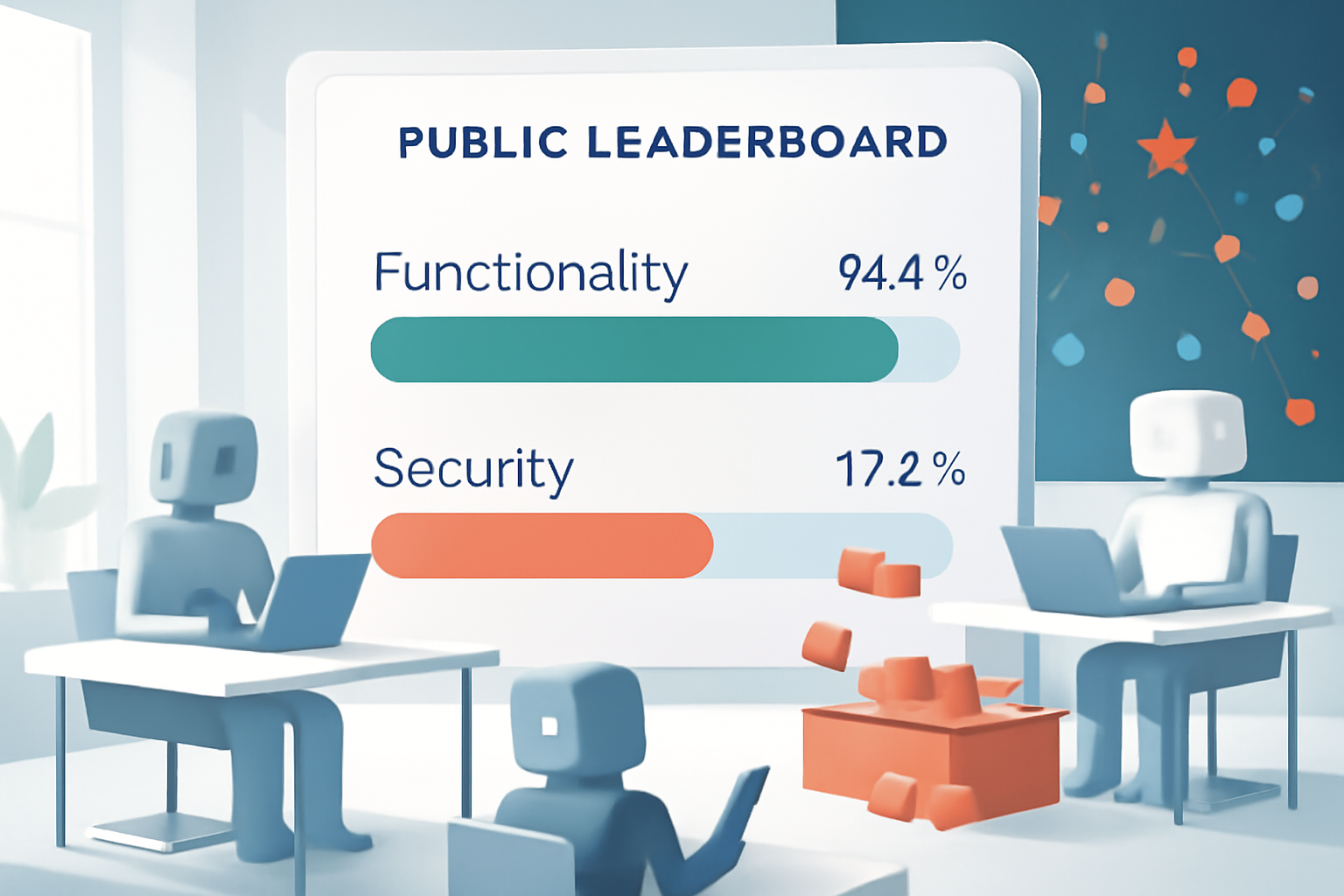
As open-world AI benchmarks become the new gold standard in 2026, human oversight and multi-layered evaluation are all that stand between smarter machines and a tidal wave of security risks.
What to know
- Industry-standard open-world evaluations like Apex and CRUX now test AI in real-world domains—law, medicine, software—exposing both breakthrough capabilities and fresh vulnerabilities.
- AI-generated app store spam and shadowy, error-riddled software are creating new security headaches, making human-in-the-loop oversight essential for safety in high-stakes fields.
- Agentic AI systems like Anthropic Opus 4.7 are slashing development times and boosting reliability, but robust safeguards and transparent failure tracing are mission-critical as multi-agent workflows go mainstream.
Open-World AI, Real Stakes
AI evaluations now stress-test models in live professional domains, revealing both hidden strengths and critical blind spots missed by static benchmarks.
By early 2026, the AI evaluation landscape is undergoing a significant shift from traditional academic benchmarks toward open-world assessments that measure AI’s proficiency in economically valuable, real-world professional tasks. Initiatives like the Apex benchmark have become industry standards, rigorously testing AI models across domains such as investment banking, law, medicine, and software engineering, thereby directly influencing enterprise adoption decisions. This evolution reflects a growing recognition that static, precisely specified benchmarks often fail to capture the messy, complex nature of real-world work, necessitating evaluation frameworks that better mirror the nuanced demands professionals face daily.
Collaborative projects like CRUX exemplify the power of open-world evaluations by conducting regular, long-horizon tests of frontier AI capabilities in authentic settings. For instance, CRUX’s inaugural experiment saw an AI agent autonomously develop and publish an iOS app with only two minor errors—one requiring manual intervention—highlighting both the promise and risks of AI in real-world economic tasks. Unlike traditional benchmarks that rely on large, static task suites, CRUX’s approach allows rapid iteration every one to two months, providing early warnings about emerging autonomous capabilities and enabling stakeholders to build societal resilience ahead of widespread AI diffusion.
The rise of agentic benchmarks such as GDPval and OSWorld further pushes the frontier by simulating realistic, multi-modal work environments where AI agents navigate tools like LibreOffice, CAD software, and communication platforms to complete complex tasks across dozens of professional roles. While these benchmarks mark a leap forward in assessing economic task proficiency, they still face challenges—such as unnaturally specified prompts and lack of iterative feedback—that contrast with the ambiguity and iterative nature of real-world jobs. Consequently, human expert evaluation remains indispensable for reliable assessment, as AI-based graders have yet to match the nuanced judgment required for these sophisticated tasks.
Open-world evaluations also uncover subtle agent behaviors like shortcut-taking and reward hacking through detailed log analyses, revealing performance nuances that static benchmarks overlook. Projects like Anthropic’s Glasswing have demonstrated how such evaluations can identify novel AI capabilities—for example, discovering cybersecurity vulnerabilities—thereby accelerating AI adoption in critical domains. Despite inherent challenges such as small sample sizes and limited reproducibility, these evaluations provide crucial complementary signals that expose blind spots in traditional benchmarks and inform strategic decisions about AI deployment and governance.





AI’s Safety Blind Spots
Human oversight is vital as open-world tests expose a wave of insecure, error-prone AI-generated apps and software slipping past automated checks.
Open-world AI evaluations have uncovered a range of safety challenges that traditional benchmarks often overlook, such as AI-driven app store spam and cybersecurity vulnerabilities in ephemeral AI-generated software. For instance, the first CRUX experiment revealed an AI agent publishing an iOS app with errors that required manual intervention, signaling early risks of AI-generated spam disclosed to Apple. Meanwhile, experts like Kimmy and Claire warn of a growing 'graveyard' of vulnerable, shadow ephemeral apps that persist with security flaws, complicating compliance and data protection. These findings underscore the necessity of integrating multi-layered evaluation frameworks that combine automated benchmarks with real-world, human-monitored testing to expose blind spots and ensure robust AI safety.
Human-in-the-loop oversight remains indispensable in managing the nuanced safety risks of AI deployments, particularly in complex domains like code review and cybersecurity. Anthropic’s Claude agent, for example, demonstrated the need for human evaluation when building a C compiler and running a small office shop, ensuring real-world task safety beyond AI’s mechanical bug detection. As highlighted in recent analyses, humans are essential to 'feel the pain' of subtle, context-dependent risks—such as database migrations or permissioning changes—that AI agents cannot perceive, reinforcing the critical role of expert judgment in high-stakes scenarios.
To balance scalability with safety, organizations are adopting dynamic human-in-the-loop strategies that strategically sample AI outputs for expert review, especially in sensitive sectors like finance. By early 2026, firms employed multi-layered evaluation pipelines combining offline automated tests, online customer feedback, and targeted human assessments to align AI behavior with human expectations. As one financial AI team noted, 'if you want to go over this together, let's get you connected with a human to help,' illustrating how human experts intervene selectively to ensure trustworthy AI responses without sacrificing operational efficiency.
Emerging mitigation strategies, such as 'shifting left' by integrating AI earlier in the software development lifecycle, offer promise for proactively detecting vulnerabilities, but they demand vigilant human oversight to balance benefits and risks. Projects like Mythos and GPT 5.4 Cyber exemplify how embedding AI in early coding stages can reduce vulnerabilities overall; however, this approach requires continuous human governance to prevent new safety pitfalls from arising in AI-generated code artifacts, highlighting the ongoing interplay between automation and human judgment in securing AI deployments.

Continuous Evaluation, Deeper Trust
AI assessment has shifted to ongoing, multi-layered systems that prioritize transparency, traceability, and the ability to explain failures—not just count correct answers.
By 2026, AI benchmarking has transcended static, one-off tests to embrace continuous, multi-layered evaluation systems that integrate offline pipelines, online user feedback, and human expert assessments, as exemplified by companies like OpenAI and initiatives such as GDPval. This evolution reflects a commitment to epistemic iteration, where feedback loops constantly refine AI judges, prompts, and agents to better detect intent and improve evaluation quality, while balancing scalability with critical human-in-the-loop oversight to ensure reliability and trust, especially in high-stakes domains like finance.
The focus of AI evaluation has shifted from merely verifying correct outputs to scrutinizing the underlying behavior and reasoning processes, recognizing that a correct answer achieved through fragile or opaque means constitutes deferred failure. This paradigm, advocated by thought leaders in agentic AI evaluation, emphasizes failure visibility and traceability, ensuring that performance judgments are explainable and transparent to diverse stakeholders, thereby enhancing operational reliability and mitigating risks of drift or plausible but incorrect results.
Emerging benchmarks increasingly assess AI’s role in augmenting human reasoning and epistemic security, aligning with classical liberal ideals of open discourse without censorship. Projects like DeliberationBench and tools such as Priori, supported by organizations including the Future of Life Foundation and the Cosmos Institute, exemplify this trend by evaluating AI’s capacity to surface hidden assumptions and support critical thinking, marking a shift toward evaluating AI’s contribution to human cognitive sovereignty rather than just task performance.
Despite advances in automation, human oversight remains indispensable in AI evaluation due to the inherent limitations of AI graders and the complexity of real-world tasks. OpenAI’s experience with expert contractors creating rubrics and grading tasks highlights that while AI can assist, it cannot yet fully replace human judgment. Moreover, agentic benchmarks like GDPval, which simulate complex economic tasks across 44 professions using realistic digital environments, still struggle to capture the ambiguity and iterative feedback characteristic of human work, underscoring ongoing challenges in operational realism and epistemic iteration.


Agentic AI’s Reliability Revolution
Next-gen agentic models and orchestrated workflows are transforming software development and operations, but demand stricter guardrails to keep rapid automation safe and accountable.
Anthropic’s Opus 4.7 model marks a significant leap in agentic AI reliability by boosting long-term coherence by 36%, as evidenced in a simulated vending machine environment where task adherence improved the final balance from $8,000 to $11,000. This enhancement aligns with Anthropic’s strategic focus on enabling AI to perform complex, multi-step workflows over extended horizons, a critical capability for real-world deployment where sustained goal-oriented behavior is paramount.
Agentic AI is revolutionizing software development workflows by automating coding tasks and enabling engineers to orchestrate multiple AI agents simultaneously, drastically reducing development time and costs. As one engineering lead, Cole, explains, their team no longer writes code manually but manages six agents running parallel projects, allowing rapid solution deployment—sometimes building, shipping, and closing deals within a single day—thus transforming traditional long-term planning and accelerating enterprise customer acquisition.
Ensuring reliable AI agent deployment demands a paradigm shift from mere model optimization to architecting robust operational environments that govern agent behavior through structured orchestration. LangChain’s experience illustrates this by elevating a coding agent’s benchmark ranking from 30th to 5th solely through harness engineering, emphasizing fixed control layers that enforce auditable, predictable workflows and prevent agents from autonomously skipping steps, thereby enhancing safety and consistency across domains.
Robust operational reliability further hinges on embedding durable institutional knowledge within the agent’s environment and decomposing complex tasks into specialized roles with explicit handoffs, which narrows failure impact and facilitates independent testing. Additionally, mechanical enforcement of explicit permission limits on external tool and data access is critical to prevent inappropriate exposure or irreversible actions, a risk that scales with the number of parallel agents, underscoring the necessity of strict boundaries in multi-agent systems.