AI is eating the career ladder: junior jobs vanish as talent wars and inequality surge
The gist
AI is bulldozing the career ladder, erasing junior jobs and supercharging inequality as companies race for elite talent and leave the majority behind.
What to know
- Over 90% of enterprises are slashing junior hiring, with automation quietly wiping out entry-level roles and creating 'invisible unemployment.'
- China now claims nearly half the world’s top AI researchers, while U.S. tech giants offer up to $250 million to poach the AI elite.
- Cutthroat adoption of frontier AI models like Claude Opus 4.1 means only a lucky minority are riding the productivity wave—while traditional education and reskilling fail to keep up.
The Vanishing Talent Pipeline
AI-driven automation is not just erasing junior jobs—it’s severing the traditional path to senior roles, creating a looming leadership vacuum and amplifying labor market inequality.
AI-driven automation is fundamentally reshaping the labor market by eroding entry-level and junior positions across both high- and low-skilled sectors, fueling a wave of 'invisible unemployment' that official statistics often fail to capture. Studies such as 'Seniority-Biased Technological Change' (2025-12-19) and large-scale analyses of 62 million workers reveal that firms adopting generative AI see sharply declining junior employment, especially in high-exposure roles, while senior employment remains stable or grows. This shift disrupts traditional career ladders, as companies like Shopify boast of maintaining growth without increasing headcount, and two-thirds of enterprises now reduce entry-level hiring because AI handles routine work, leaving recent graduates and mid-level workers stranded in a labor market increasingly bifurcated between a small elite with advanced AI skills and a majority facing diminishing prospects.
The automation of junior roles not only boosts short-term productivity but also creates a looming 'talent pipeline break,' as the loss of hands-on, low-stakes experiences undermines the development of future senior talent and leadership. Wharton researchers warn that eliminating junior positions for immediate cost savings—an approach now adopted by over 90% of surveyed enterprises—risks shallow leadership benches within just a few promotion cycles, as the messy stakeholder work and judgment-building assignments that traditionally prepared employees for advancement vanish. This erosion of the apprenticeship model threatens the sustainability of organizational knowledge transfer, with field experiments showing that while AI initially augments junior workers' productivity, it ultimately substitutes them, leaving companies with a dearth of experienced talent to step into senior roles.
The rise of invisible unemployment is marked by a disconnect between educational attainment and job market realities, as AI-driven automation intensifies 'elite overproduction'—more graduates than suitable jobs—especially in fields like computer science, law, and marketing. By early 2026, recent graduates, even from top institutions like Stanford, find themselves ill-prepared for AI-centric roles that demand not just technical fluency but also greater intellectual effort and longer hours, with many entry-level jobs now harder and more demanding than their predecessors. This mismatch fuels social unrest and political discontent, as younger generations feel their economic futures slipping away, while traditional metrics like unemployment and quit rates understate the true extent of labor market stress caused by AI.
While AI is automating repetitive and execution-focused tasks, it is simultaneously creating new job categories—such as machine learning engineers and 'GTM engineers'—and expanding the AI infrastructure ecosystem, but these opportunities are largely reserved for those with advanced technical skills. Roles requiring human judgment, creativity, and empathy—like leadership, creative direction, and customer service—remain more resilient, with over 40% of management and administrative tasks still non-automatable according to Cognizant. However, the overall effect is a compression of the career ladder: middle management shrinks, senior leaders who can leverage AI thrive, and the bottom rungs—once the entry point for new talent—are increasingly sawed off, leaving a growing cohort of workers in precarious, gig-like roles or out of work entirely.





AI Talent Arms Race
Skyrocketing demand for elite AI researchers is fueling global power shifts, with China training its own superstars and U.S. tech giants offering record-breaking salaries to stay ahead.
The acute shortage of elite AI researchers and engineers continues to constrain company growth and innovation, as firms scramble for scarce talent and infrastructure. While this scarcity has driven up economic incentives and salaries, it is also fueling a rapid expansion of the talent pipeline: college students are increasingly acquiring AI development skills, and AI tools themselves are beginning to automate aspects of AI creation. This dynamic suggests that, although the current bottleneck is severe, the spread of knowledge and the rise of 'AI building AI' may gradually ease the talent crunch in the coming years.
The global race for AI talent is intensifying, with China emerging as a formidable competitor by developing homegrown expertise and capturing nearly half of the world’s top AI researchers by 2022. Unlike the U.S., which has traditionally relied on attracting established name-brand talent to elite institutions like Stanford and MIT, China is strategically training young researchers and investing heavily in its domestic AI industry—evidenced by the rise of companies like DeepSeek and the return of prominent figures such as Yang Zhilin. This shift is altering the balance of power, as the U.S. faces challenges in attracting new Chinese talent and both nations recognize that future AI dominance may hinge on their ability to retain and develop this critical workforce.
Internally, the AI industry is experiencing a 'winner takes most' dynamic, with talent, capital, and influence increasingly concentrated in a handful of firms and geographies—most notably the Bay Area. Startups struggle to compete with tech giants like Meta, which are offering unprecedented compensation packages (some as high as $250 million), forcing smaller players to emphasize mission-driven cultures and global hiring strategies. This concentration not only heightens the volatility of startup teams, as seen in the rapid personnel shifts at labs like Thinking Machines, but also raises systemic risks, with Davos 2026 highlighting the dominance of a few large technology firms as a top concern for global competition and national strategies.
The evolving AI talent landscape is also reshaping organizational structures and management practices, as firms increasingly integrate AI agents alongside human workers to address persistent skill shortages. By early 2026, nearly 90% of professional services teams plan to manage AI agents as part of their workforce, prompting a shift from expanding human headcount to scaling AI capabilities and necessitating new systems for attributing value across human and AI contributors. However, this transition brings fresh challenges around trust, transparency, and the rapid obsolescence of tech skills, with the average skill half-life dropping below two years and organizations facing mounting pressure to invest in continuous learning and workflow redesign.





Productivity’s New Divide
Frontier AI models are redrawing economic boundaries, enabling early adopters to surge ahead while laggards and entire regions risk permanent decline.
AI has become a transformative force in economic organization, rapidly accelerating productivity and redrawing the boundaries of knowledge work. Benchmarks like GDPval, which tests AI performance on over 1,200 specialized tasks across nine industries, reveal that frontier models such as Claude Opus 4.1 now match or surpass human experts in nearly half of cases, completing tasks up to 100 times faster and cheaper. This leap is creating a stark divide: organizations and sectors that embrace advanced AI systems are pulling ahead as productivity leaders, while those slow to adopt risk falling into the ranks of economic laggards.
The rapid integration of AI into business operations is fundamentally restructuring organizational hierarchies and job roles, with a clear shift from execution-focused positions to those emphasizing judgment, strategy, and AI infrastructure. Analyses of millions of job postings show that while roles like machine learning engineers and research scientists are booming, traditional middle management and creative execution roles are in decline, and director-level positions remain resilient. This reorganization is not just about automation—AI is spawning entirely new industries and job categories, such as 'GTM engineers,' and redefining what it means to be a leader or laggard in the AI-driven economy.
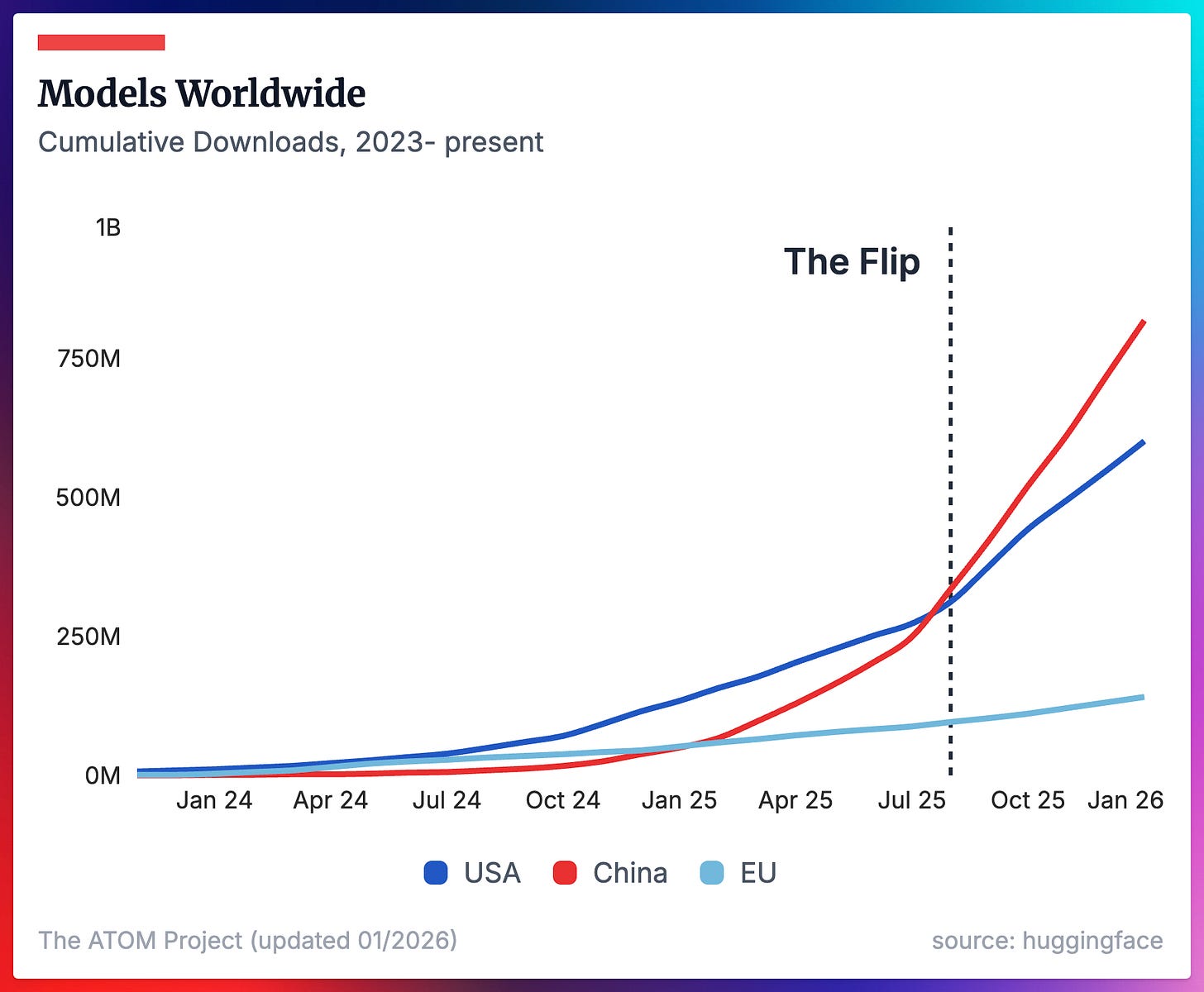
Globally, the AI-driven economic divide is crystallizing along national and regional lines, with the US and China emerging as dominant players in foundational model development and infrastructure, while Europe lags due to regulatory and investment constraints. Chinese companies like DeepSeek and Qwen are setting adoption records, and China's 'AI dumping' strategy—offering open models at a fraction of US prices—threatens to upend global market dynamics. Meanwhile, Europe’s regulatory burden has left it largely sidelined in foundational AI, though niche application startups offer glimmers of hope. This geopolitical realignment is deepening divides between winners and laggards not just within sectors, but across entire economies.
While AI is delivering measurable productivity gains—Cognizant estimates a $4.5 trillion boost to US labor productivity and Anthropic reports 12x speedups in college-level tasks—these benefits remain unevenly distributed. Only a minority of organizations are using AI to deeply transform their business models, and most enterprises are still in early deployment phases. The transition from pilot projects to production, as well as the development of mature governance frameworks, remains a bottleneck, reinforcing the divide between forward-thinking leaders and those struggling to scale or responsibly integrate AI. As Deloitte’s survey notes, just 34% of companies are leveraging AI for deep transformation, and only 21% have mature agent governance models, underscoring the persistent gap between ambition and activation.



Education’s Broken Promise
Degrees and traditional training are losing value as AI wipes out entry-level jobs, leaving both graduates and employers scrambling to bridge a widening skills and experience gap.
The AI revolution is exposing the limitations of traditional education and reskilling pathways, as college degrees lose their luster and entry-level jobs evaporate under the weight of automation. By early 2026, skepticism toward the value of a college diploma—echoed by figures like Sam Altman and Peter Thiel—has grown, with many questioning whether vocational training can keep pace with a job market where AI handles routine work and even computer science graduates struggle to find relevant roles. As AI-assisted cheating further erodes the integrity of educational assessments, universities and society are being forced to rethink not just what is taught, but how learning and motivation are fostered in an era where knowledge alone is no longer a ticket to employment.
The automation of junior and entry-level roles by AI is creating a dangerous bottleneck in human capital formation, threatening the long-term health of talent pipelines and organizational leadership. Studies from Wharton and field experiments by Stanford economists reveal that while AI tools initially boost junior productivity, they ultimately lead to reduced hiring and a 'missing training ladder,' as the messy, low-stakes experiences that build judgment are stripped away. This efficiency-driven culling of junior positions delivers immediate cost savings—$297,600 in one modeled case—but accrues an invisible debt, resulting in shallow leadership benches and a growing skills gap that cannot be bridged by AI alone.
As AI accelerates the obsolescence of technical skills—Draup reports tech skill half-lives now under two years—continuous reskilling and the cultivation of soft skills have become paramount for both workers and employers. While employees are racing to upskill in AI and technical domains, employers increasingly prize creativity, communication, and critical thinking, with firms like Karbon and Pearson emphasizing that structured upskilling and embedding AI into workflows are essential for unlocking productivity gains and economic growth. However, the mismatch between rapid skill evolution and slow-moving traditional education, coupled with a lack of investment in training—fewer than half of accounting firms invest in AI training—risks leaving vast swathes of the workforce behind.
The divide between AI elites and the broader workforce is widening, both within and between countries, fueling social tensions and the risk of invisible unemployment. Top-tier AI talent is aggressively courted by companies like Anthropic and OpenAI, while the majority of graduates face shrinking job prospects and a cultural reluctance to embrace the demanding, intellectually intensive work that AI-era roles require. Globally, uneven AI adoption and skill integration—highlighted by OpenAI's finding that some lower-income countries outpace wealthier nations in AI usage—underscore the urgent need for integrated AI education and teacher training to prevent a deepening global skills chasm.



Policy in the Age of AI
AI’s rapid takeover of professional tasks is outpacing regulatory frameworks, demanding urgent action to prevent deepening inequality and societal disruption.
As AI systems rapidly approach and sometimes rival human expert performance across a vast array of occupations, public policy and governance face mounting pressure to adapt. OpenAI's GDPval benchmark, which evaluates AI on 1,230 tasks spanning 9 industries and 44 professions, reveals that frontier models like Claude Opus 4.1 now win or tie against human experts nearly half the time, and do so at a fraction of the cost and speed. This accelerating capability underscores the urgent need for adaptive regulatory frameworks and societal strategies to mitigate risks and ensure equity as AI becomes a ubiquitous force across the economic landscape.
The integration of AI into professional and economic activities is no longer a theoretical concern but a practical reality, as evidenced by the increasing realism and complexity of benchmarks like GDPval. These benchmarks demand that AI systems produce deliverables ranging from documents and spreadsheets to multimedia, mirroring the diverse outputs expected of human professionals. This evolution calls for regulatory and workplace governance models that are not only adaptive but also capable of addressing the nuanced challenges posed by AI’s deepening role in supporting—and sometimes supplanting—human expertise.
The broad encroachment of AI into sectors such as healthcare, finance, manufacturing, and government highlights the necessity for comprehensive societal adaptation strategies. With AI now capable of performing tasks traditionally reserved for registered nurses, financial analysts, software developers, and even police supervisors, policymakers must proactively address the risks of displacement and inequality. This means crafting policies that not only cushion the blow for affected workers but also ensure that the benefits of AI are distributed equitably across all segments of society.