AI memory arms race heats up: samsung, SK hynix, and micron battle bottlenecks and billion-dollar bets
The gist
Samsung, SK Hynix, and Micron are pouring billions into high-bandwidth memory as AI demand triggers a supply squeeze and reshapes the global chip power balance.
What to know
- Samsung just broke $1 billion in HBM4 revenue, joining SK Hynix in controlling 80% of a market critical to Nvidia's AI chips.
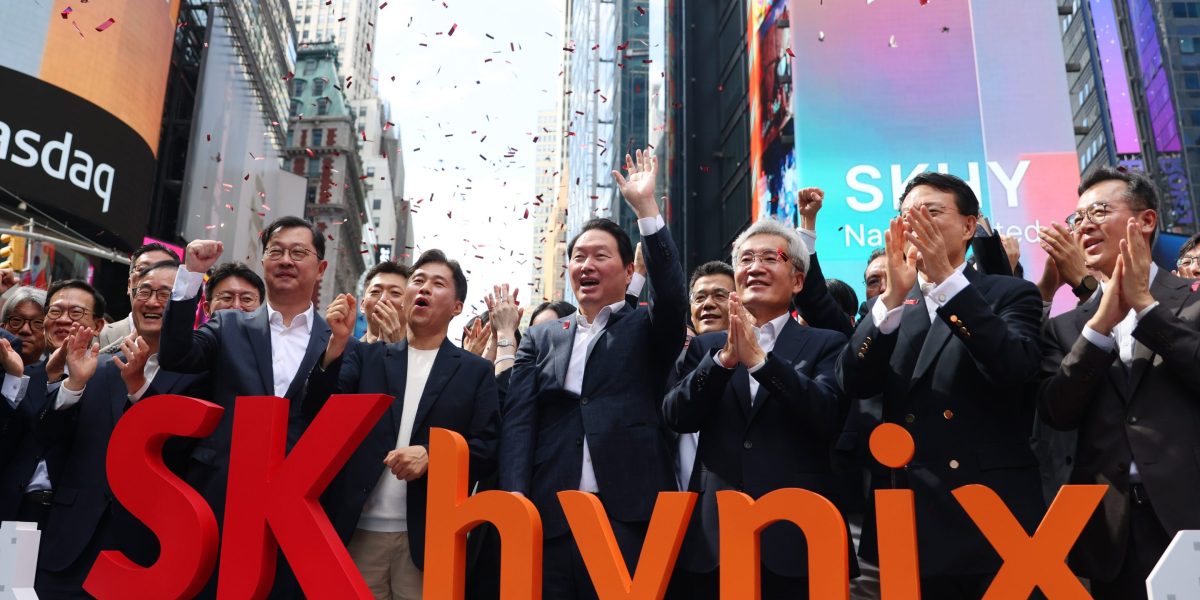
- SK Hynix leads with up to 62% HBM share, doubling capacity with a $713 billion investment while riding a U.S. customer wave—including a $26.5 billion Nasdaq IPO.
- Micron is spending $20 billion on HBM4 and HBM3E expansion, locking in $22 billion in Nvidia contracts as the triopoly races to overcome bottlenecks before 2028.
Korean Duopoly Tightens Grip
Samsung and SK Hynix’s near-monopoly on HBM4 production cements Korea as the nerve center of AI memory, with technological barriers locking out global rivals and shifting power to suppliers.
Samsung has marked a significant milestone by surpassing $1 billion in revenue from its HBM4 products, a testament to its successful mass production and strategic foothold in the AI-driven high-bandwidth memory market. As one of only two global companies capable of manufacturing HBM4—the latest generation integral to Nvidia's AI chips—Samsung's role is pivotal in the AI memory supply chain, underscoring its critical importance alongside SK Hynix.
Together, Samsung and SK Hynix dominate approximately 80% of the global HBM market, with SK Hynix holding around 60% alone, illustrating a near-duopoly that exerts substantial control over this niche yet vital segment. This Korean dominance is reinforced by the complex, capital-intensive nature of HBM4 fabrication, which requires years to develop and is currently not replicable outside Korea, securing Samsung's strategic advantage in a market that has shifted from buyer-driven to supplier-controlled dynamics due to limited production capacity and escalating AI demand.
Samsung's leadership in HBM4 production distinctly positions it ahead of competitors like Micron, which, despite being one of the few HBM producers, has yet to achieve HBM4 capability. This technological edge not only consolidates Samsung's market role but also amplifies its leverage in a supply-constrained environment where advanced memory solutions are critical bottlenecks for AI hardware development.

SK Hynix’s U.S. Power Play
SK Hynix leverages deep U.S. partnerships and a record Nasdaq IPO to bankroll massive capacity expansion, betting big that even doubling supply won’t keep pace with AI’s insatiable demand.
SK Hynix has solidified its dominance in the global high-bandwidth memory (HBM) market, commanding approximately 58-62% market share as of early 2026, significantly outpacing competitors like Samsung and Micron, each holding around 21%. This leadership is underpinned by its pioneering development of HBM technology since 2013 and a strategic, multi-year partnership with Nvidia, which relies on SK Hynix for 50-70% of its HBM4 requirements, positioning SK Hynix as a critical supplier in the AI accelerator ecosystem.
The company’s strategic dependence on the U.S. market is profound, with about 65% of its revenue derived from U.S. customers in Q1 2026, including a substantial contribution from Nvidia, which alone accounted for roughly 15% of SK Hynix’s revenue. This U.S. revenue weighting is further emphasized by SK Hynix’s record-breaking $26.5 billion Nasdaq IPO, the largest foreign listing in Nasdaq history, which not only broadened its investor base but also provided critical capital to fuel aggressive capacity expansion and advanced packaging investments in both South Korea and the United States.
SK Hynix is aggressively scaling its production capabilities to meet the surging AI-driven demand, with plans to roughly double memory capacity over five years through a ₩1,100 trillion (~$713 billion) investment plan that includes new fabs in Yongin and advanced packaging facilities like the P&T7 in Cheongju. Despite this massive expansion, the company acknowledges that even doubling supply may not satisfy customer demand, highlighting the structural supply bottlenecks in HBM production, where advanced packaging throughput has become the primary constraint rather than wafer availability.
While SK Hynix leads the HBM segment, it is strategically balancing growth with profitability by moderating its HBM4 ramp to capitalize on the highly lucrative DDR5 DRAM market, which is experiencing acute shortages and soaring prices with operating margins projected near 90%. This shift underscores the company's nuanced approach to navigating the capital-intensive and complex HBM manufacturing process—characterized by vertical stacking and advanced packaging—that locks customers into its supply chain, thereby reinforcing its pricing power and market dominance amid a multi-year memory shortage driven by AI demand.


Micron’s $20B Capacity Gambit
Micron is racing to catch up with rivals through global mega-fabs, rapid HBM4 production ramps, and $22 billion in ironclad Nvidia contracts to secure a seat in the AI memory triopoly.
Micron Technology has aggressively advanced its HBM4 and HBM3E technologies through substantial capital investments, including a $7 billion HBM assembly facility in Singapore and mega-fabs in Idaho, reflecting a global strategy to expand capacity amid severe supply constraints. This capital-intensive push, with 2026 expenditures raised to $20 billion, underscores Micron’s commitment to overcoming bottlenecks in the oligopolistic high-bandwidth memory market and securing a stronger foothold despite the long lead times and complexity of new fab construction.
By strategically partnering with NVIDIA and bypassing the HBM3 generation in favor of a power-efficient HBM3E solution tailored for the H 200 GPU, Micron has positioned itself as a technologically competitive player, achieving over $1 billion in HBM4 revenue with a production ramp twice as fast as its HBM3E counterpart. This focused approach, combined with advancements targeting volume production of HBM4E in 2027 and next-gen DRAM/NAND nodes, highlights Micron’s ability to deliver cutting-edge memory solutions that meet escalating AI workload demands.
Micron’s adoption of long-term, take-or-pay Strategic Customer Agreements totaling more than $22 billion, including commitments from NVIDIA, exemplifies its tactical navigation of the volatile HBM market by securing stable revenue streams and hedging against price erosion from competitors’ capacity expansions. These multi-year contracts align semiconductor manufacturing capacity directly with AI data center expansion plans, providing Micron with financial visibility and a defensive moat amid ongoing supply-demand imbalances projected to persist beyond 2027.
Despite a remarkable 346% year-over-year revenue surge to $41.46 billion driven by strong AI demand and pricing power, Micron acknowledges that margin expansion is nearing its limit and that supply bottlenecks—exacerbated by fully booked TSMC CoWoS packaging lines and wafer capacity constraints—will continue to restrict shipment growth. CEO Sanjay Mehrotra’s candid admission that Micron currently fulfills only half to two-thirds of customer demand underscores the persistent capital intensity and supply challenges shaping the company’s cautious outlook amid a booming but capacity-limited HBM market.



Supply Crunch Reshapes Industry
AI-driven HBM shortages have flipped the memory market, forcing hyperscalers into multi-year supplier alliances and driving up costs across consumer and automotive tech as bottlenecks persist into 2028.
The AI-driven surge in demand for high-bandwidth memory (HBM) has precipitated a structural supply crisis, with leading producers like SK Hynix, Samsung, and Micron contractually sold out through 2026 and beyond. This scarcity has shifted pricing power decisively to suppliers, reversing traditional hardware industry dynamics where buyers dictated terms. As a result, wafer capacity is heavily diverted to HBM production, creating artificial shortages in commodity DRAM markets and driving up prices for consumer electronics and automotive sectors, exemplified by Apple executives reportedly scrambling to secure memory supply amid soaring component costs.
Massive multi-billion-dollar capital investments characterize the HBM market, with SK Hynix committing over $30 billion and Micron raising its 2026 capital expenditure to $20 billion to expand fabrication and advanced packaging capacity. However, the capital intensity and technological complexity—highlighted by reliance on cutting-edge equipment from ASML and TSMC and intricate stacking and packaging processes—mean new capacity will not meaningfully alleviate supply constraints until 2026–2028. This extended lead time, coupled with the continuous reset of manufacturing learning curves as new logic chip generations emerge, perpetuates bottlenecks and reinforces Korea’s dominant position in the market.
The HBM market is effectively a triopoly dominated by SK Hynix, Samsung, and Micron, controlling approximately 95% of global supply and locking in multi-year strategic contracts with hyperscalers and AI accelerator designers. Nvidia’s CEO Jensen Huang’s early multi-year supply agreements with Samsung and SK Hynix exemplify the strategic partnerships critical to securing capacity amid tight market conditions. These alliances transform GPU vendors and hyperscalers from mere buyers into co-architects of supply timing, enhancing revenue visibility for memory suppliers and enabling the sizable capital expenditures necessary to sustain technological leadership and market control.
Despite the current supercycle driving exceptionally high HBM margins—estimated between 70–85%—the market remains vulnerable to cyclical risks inherent in capital-intensive memory manufacturing. Historical patterns suggest that aggressive fab expansions by the triopoly, including SK Hynix’s unprecedented ₩1,100 trillion (~$713 billion) AI expansion plan and Samsung and Micron’s capacity ramp-ups, risk overshooting demand if AI data center build-outs slow or prove less profitable. Industry leaders warn that 2027 may be the most challenging year from a supply perspective, with bottlenecks shifting from wafer availability to packaging throughput, and that supply-demand imbalances could persist beyond 2030, underscoring the delicate balance between strategic investment and market volatility.