AI-native enterprise shake-up: agentic workflows rewrite product, pricing, and team playbooks
The gist
AI-native enterprise software is rewriting the rules of product development, pricing, and team structure—forcing both startups and giants to throw out the old SaaS playbook.
What to know
- Model-first, agentic workflows—championed by companies like Webflow and Automation Anywhere—are cutting prototyping cycles from weeks to minutes and slashing wasted effort.
- SaaS leaders like Salesforce and HubSpot are ditching seat-based pricing for usage-driven and value-based models, while sales teams powered by chained AI agents are doubling productivity.
- Legacy organizations are shedding staff but boosting output, as new AI-native roles and cross-functional fluency become must-haves—yet scaling from pilot to production remains a major roadblock.
Model-First Mindset Revolution
AI-native teams are flipping the product development playbook by prioritizing robust model outputs and agentic workflows before building features, slashing wasted cycles and redefining the product manager’s job.
AI-native product development has undergone a paradigm shift, moving from traditional, UI-first approaches to frameworks that prioritize model quality and agentic workflows from the outset. Companies like Webflow and Kuse champion the 'Minimal Viable Output' (MVO) philosophy, insisting that teams achieve stable, correct AI model outputs before layering on product features—reversing the classic MVP order and dramatically reducing wasted effort when models fall short. This model-first mindset is reinforced by the adoption of agentic architectures, as seen in Automation Anywhere's integration with OpenAI and Raycast's multi-model orchestration, where autonomous agents reason, act, and adapt within enterprise workflows, abstracting complexity for users while enabling advanced configurability and seamless integration of domain expertise.
Rapid prototyping and iterative experimentation have become the lifeblood of AI-native product teams, with the time to build and validate prototypes plummeting from weeks to mere minutes. This acceleration, once the exclusive domain of tech giants like Apple and LinkedIn, is now democratized across the industry—thanks to platforms like Sage, Contextual AI's Agent Composer, and Coder's agent-ready workspaces, which enable production-ready prototypes and robust governance at enterprise scale. However, this newfound velocity introduces a 'three-speed problem,' as described by Oji Udezue, where engineering outpaces product and go-to-market teams, making it imperative for organizations to rethink roadmaps, allocate budgets for AI experimentation, and adopt frameworks like the 'shipyard model' to keep pace with relentless innovation.
The rise of agentic workflows and multi-model systems is fundamentally reshaping the product manager’s role, shifting the focus from managing outputs to orchestrating complex, AI-driven systems and continuous evaluation. PMs are now expected to master the AI workflow stack—input handling, context management, reasoning, action execution, and ongoing evaluation—while making nuanced product judgments about autonomy, safety, and acceptable failure. As AI systems become less deterministic and more context-dependent, robust monitoring, systematic evaluation frameworks, and domain-specific customization become critical, with companies like AWS, Amplitude, and Anthropic emphasizing the integration of domain expertise, guardrails, and progressive disclosure to ensure reliability, trust, and user-centric innovation.
Ultimately, the success of AI-native product development hinges less on technical wizardry and more on product thinking, taste, and strategic alignment with user needs and market trends. As Ravi Mehta and others note, when AI democratizes prototyping and design, the differentiator becomes knowing what to build, not just how to build it—a shift that elevates the importance of customer discovery, domain expertise, and continuous learning. This ethos is echoed in best-in-class practices at Descript, Amplitude, and MCP-driven teams, where product decisions—ranging from cost architecture to feature packaging and evaluation rubrics—are tightly coupled with operational realities and user adoption, ensuring that AI’s speed and scale translate into meaningful, sustainable innovation.






AI Supercharges Sales & Pricing
Chained AI agents are doubling sales productivity and driving a shift to usage-based, value-driven pricing, as SaaS leaders automate research, personalize engagement, and compress ramp times for new hires.
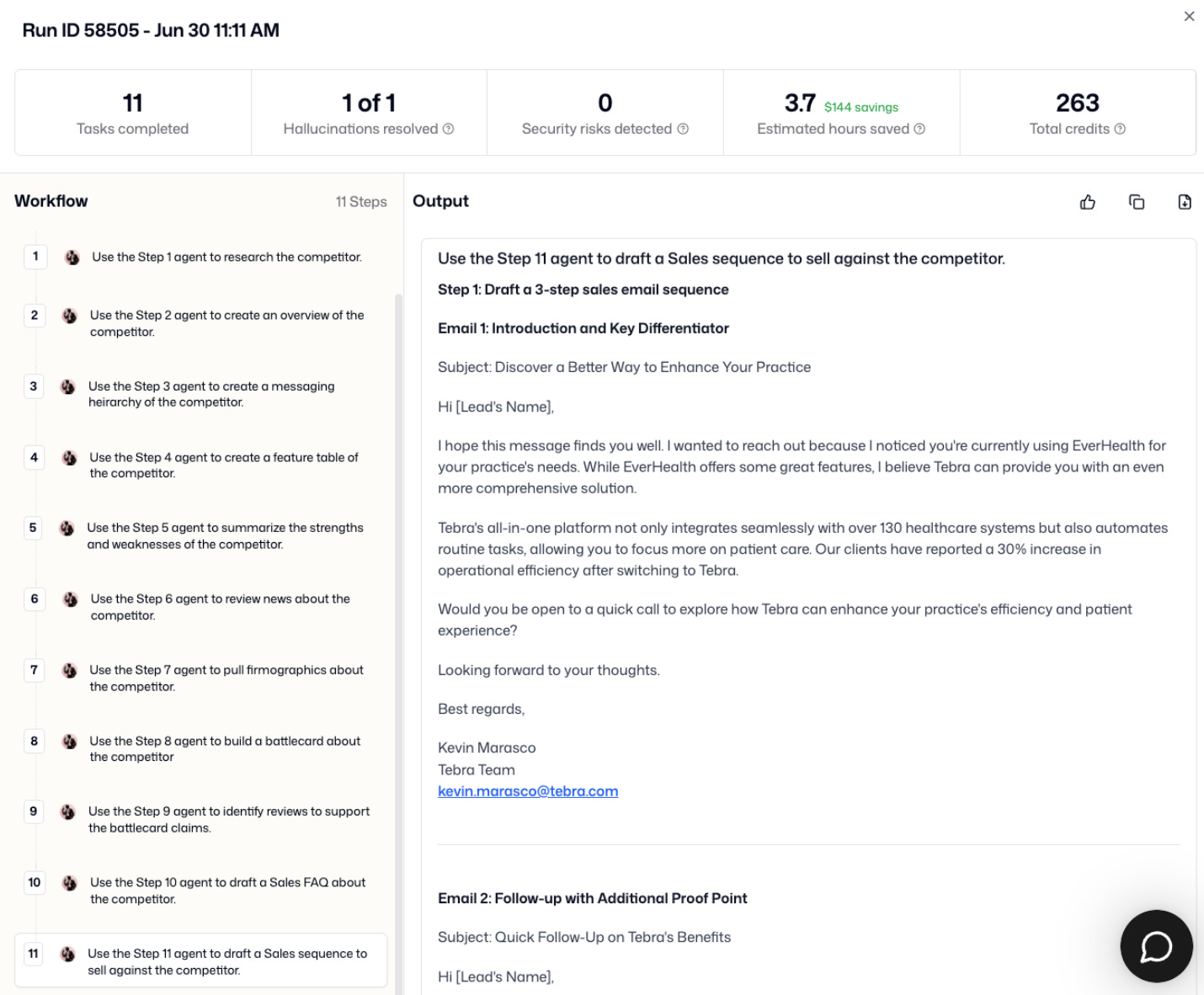
AI-native go-to-market strategies are fundamentally redefining sales productivity, pricing, and customer engagement by automating manual workflows and enabling hyper-personalized, value-based interactions. Companies like Tebra, Vercel, and HubSpot have demonstrated that chaining specialized AI agents—often integrated directly into platforms like Slack or Salesforce—not only slashes research and content creation time from days to minutes, but also empowers sales teams with real-time, actionable insights that reveal hidden deal blockers and optimize objection handling. This automation, coupled with dynamic intent scoring and closed-loop learning, has doubled pipeline generation per FTE at Personio and driven 1.5x productivity per head at AO Automation, while also enabling new sellers to reach full productivity in as little as two months, a dramatic improvement over traditional ramp times.
The rise of AI-powered automation is catalyzing a seismic shift in SaaS pricing models, moving away from legacy seat-based approaches toward usage-driven and value-based frameworks that align more closely with customer outcomes. Industry leaders like Salesforce have rapidly iterated through per-conversation, flex credit, and now flat-rate enterprise license agreements, aiming to simplify purchasing decisions and reflect the increased productivity unlocked by AI—where one rep can now target $3–5 million in revenue, up from $300K–$500K just a few years ago. However, this evolution brings new challenges: customers demand transparency and predictability in consumption-based pricing, as seen with Sazabi’s focus on instrumentation and clear cost metrics, while the ultimate goal is to tie pricing directly to realized business value, not just software usage.
AI-native SaaS has upended traditional customer engagement strategies, requiring a blend of automation and human touch to drive adoption and trust in an era where most buyers feel overwhelmed by the black-box nature of AI products. As Intercom’s CPO notes, 'Customers do not know how to buy AI... You need to really invest in education,' prompting companies to invest heavily in customer advocacy, differentiated infrastructure messaging, and multi-threaded marketing approaches like those at You.com, which drove a 10x increase in MQLs and 86% ACV growth. The buyer journey now involves multiple stakeholders—C-level execs, service leaders, and AI specialists—necessitating tailored GTM tactics, robust training, and seamless integration of AI tools into existing workflows to overcome adoption barriers and maximize ROI.
The competitive landscape is intensifying as AI-native platforms like Day AI and CloseMate challenge incumbents by automating complex sales and marketing tasks, consolidating fragmented tool stacks, and delivering outcome-based 'Service as Software' models. These platforms act as AI 'chiefs of staff,' guiding users through business data and workflows, and promise to double revenue velocity or save over 14 hours per employee each week. As Day AI’s Christopher O’Donnell predicts, 'Salesforce as we think of it today is not going to exist in two or three years,' underscoring the urgency for legacy players to rapidly evolve their go-to-market strategies or risk obsolescence in a market where AI-driven execution and hybrid human-AI support are quickly becoming table stakes.





Lean Teams, New Roles Rise
AI-native transformation is shrinking headcount but massively boosting output, as cross-functional fluency and emerging roles like AI engineers become essential while traditional functions like SDRs vanish.
The AI-native transformation of enterprise software is fundamentally reshaping operational and organizational structures, driving a shift toward leaner, more empowered teams that can deliver outsized productivity gains. Companies like Pigment and Block have restructured to foster cross-departmental collaboration and AI adoption, with Pigment automating 80% of RFP responses and Block reporting 20-25% manual hours saved company-wide. This evolution is not just about cutting headcount—though 76% of SaaS firms over $50M ARR have reduced staff—but about amplifying output per employee, as seen at Shopify, which now boasts double the revenue with 30% fewer employees compared to 2022.
Realizing AI’s value requires a deep commitment to building AI fluency and fostering cross-functional collaboration at every level of the organization. Snowflake centralized its data teams under a Chief Data Officer to break down silos and ensure sales, marketing, and finance work from a shared data foundation, while Affirm’s finance and legal teams—not just engineering—are now among the heaviest AI users. This democratization of AI access, as seen at Pigment with open AI chat for all employees, empowers non-technical teams to build their own tools and accelerates workflows, but also demands robust governance and continuous upskilling—underscored by the 14x increase in B2B GTM jobs requiring AI skills in just two years.
The rise of AI agents and automation is forcing organizations to rethink team structures and operational governance, with new roles like AI engineers and strategists emerging and traditional functions such as SDRs and BDRs facing rapid extinction. Jason Lemkin’s experiment replacing his sales team with 20 AI agents managed by just over one human exemplifies this shift, while ElevenLabs has eliminated PM roles in favor of engineers owning the entire product lifecycle. This transition demands practical frameworks for integrating AI into core workflows, transparent performance tracking, and a culture of continuous adaptation, as AI’s value increasingly moves from content creation to orchestrating complex business processes.
As AI adoption matures, organizations are moving away from indiscriminate experimentation toward aligning AI initiatives with core business goals and measurable KPIs. The RAMP AI index shows adoption plateauing at 45%, with companies like Bank of America and XPO Logistics focusing on AI’s direct impact on revenue, margin, and operational efficiency—Erica, BofA’s virtual assistant, handled the equivalent of 11,000 FTEs and drove a 19% revenue lift. This pragmatic approach is reinforced by a growing emphasis on robust governance, iterative learning, and the strategic use of proprietary data assets to maintain competitive moats and ensure sustained ROI.





Legacy Tech Faces AI Reality
Autonomous agents are finally breaking the modernization deadlock in legacy enterprises, but scaling pilots to production demands robust data foundations, secure integration, and operational discipline.
The modernization of legacy enterprise systems has long been a stumbling block for AI adoption, with decades-old codebases in languages like COBOL and Fortran acting as anchors on innovation. However, by late 2025, autonomous AI agents began to dramatically reduce both the cost and complexity of these upgrades, automating much of the integration and refactoring work that previously required multi-year, multimillion-dollar consulting engagements. This shift has made it far easier for enterprises—especially those in countries with newer IT infrastructure—to leapfrog into AI-native architectures, highlighting how technical debt and system age remain key determinants of AI scalability worldwide.
Despite the promise of AI agents, enterprises quickly discovered that scaling from pilot projects to production-ready, ROI-generating solutions is far from plug-and-play. High costs from reliance on multiple LLM APIs, cybersecurity risks from shadow agents, and the need for robust data readiness and workflow redesign have all emerged as major hurdles. As one analyst put it, 'the state of their data needs to be at a level that agents or any other intelligence systems can use,' underscoring that successful adoption hinges on foundational capabilities like semantic layers for structured data and advanced search for unstructured information, rather than just the latest AI model.
By early 2026, the narrative around AI adoption had matured, with industry leaders and vendors acknowledging that operational robustness and commercial infrastructure—not hardware innovation—were the real differentiators in global scaling. Companies like IBM, with its Enterprise Advantage service, and Dynatrace, with its Intelligence platform, began to address these challenges head-on by offering secure, governed integration with existing systems, reusable AI assets, and reliable observability across cloud platforms. Early adopters such as Pearson and Advantest reported significant productivity gains and efficiency improvements, signaling that the transition from pilot to production is possible when platforms harmonize data, orchestrate end-to-end processes, and embed AI into the fabric of enterprise operations.
Yet, the journey to widespread AI-native transformation is still fraught with orchestration and integration challenges that go far beyond desktop LLM interactions. As recent analyses have argued, the so-called 'activation energy'—the ability to harmonize data, redesign workflows, and embed AI into core business processes—remains the missing link for many enterprises. While the oft-cited 95% AI pilot failure rate may be exaggerated, the real barriers are nuanced, rooted in the complexities of connecting disparate systems and creating agentic contexts that enable reliable, scalable automation. Successful startups like Sierra and platforms such as Contextual AI’s Agent Composer are showing what’s possible, but true diffusion across the economy still depends on solving these deep integration puzzles.


Moats Shift as Agentic AI Scales
Agentic platforms are upending enterprise software moats and business models, forcing incumbents to defend with governance and trust while startups push efficiency but struggle with margins and data access.
The competitive dynamics of enterprise software are undergoing a seismic shift as AI-native platforms and agentic workflows redefine what constitutes a sustainable moat. Incumbents like Salesforce have leveraged sophisticated governance, security, and trust layers in platforms such as Agentforce, adding 6,000 enterprise customers in a single quarter and demonstrating that enterprise AI adoption hinges on more than just raw model performance. As agentic AI matures—projected to reach scale in 2026—both startups and established players are racing to build internal expertise and robust orchestration capabilities, knowing that the winners will be those who can integrate AI deeply into enterprise workflows while maintaining the trust and control demanded by large organizations.
Agentic AI platforms are not merely automating existing processes; they are transforming the very structure of enterprise software markets and business models. Companies like Box and Salesforce are moving beyond traditional per-seat SaaS pricing, experimenting with hybrid and outcome-based models where customers pay based on task completion or lease digital co-workers. This shift is eroding the predictability of legacy SaaS revenue streams and forcing incumbents to rethink their value proposition, as agentic platforms enable enterprises to build highly customized solutions internally and challenge the build-versus-buy paradigm that once favored off-the-shelf SaaS.
While AI-native startups are scaling with unprecedented efficiency—some reaching ARR per employee multiples several times above traditional software companies—they face structural disadvantages such as lower gross margins (often 10–40% versus SaaS’s 60–80%) and challenges accessing incumbent data. However, rapidly declining inference costs and strategic growth investments, as seen with Kore.ai and Sierra, are enabling these firms to close the margin gap and expand globally, especially when bolstered by partnerships with cloud giants like Microsoft and AWS. Meanwhile, incumbents are leveraging their data control, higher margins, and the ability to rapidly incorporate emerging AI-driven features to defend their moats, even as they face pricing pressure and commoditization from agentic overlays.
The rise of agentic platforms is also reshaping M&A and investment strategies across the sector. Tech giants are aggressively acquiring AI capabilities and consolidating verticals to maintain their competitive edge, while private equity firms focus on operational improvements and margin expansion within mature legacy portfolios. Investor conviction is increasingly concentrated in security and identity platforms—such as CrowdStrike and Palo Alto Networks—that are critical to an agent-driven future, even as skepticism persists about the long-term value creation of AI-driven enterprise software. Ultimately, sustainable growth is proving to depend less on chasing every AI trend and more on vertical specialization, operational discipline, and solving real customer problems, as evidenced by the selective but strong growth among both AI-native and traditional SaaS companies.