AI patch panic spurs shift to automation and zero trust
The gist
AI-powered attacks are overwhelming legacy defenses, forcing organizations to ditch slow patch cycles and scramble for automated, Zero Trust solutions as threats move at machine speed.
What to know
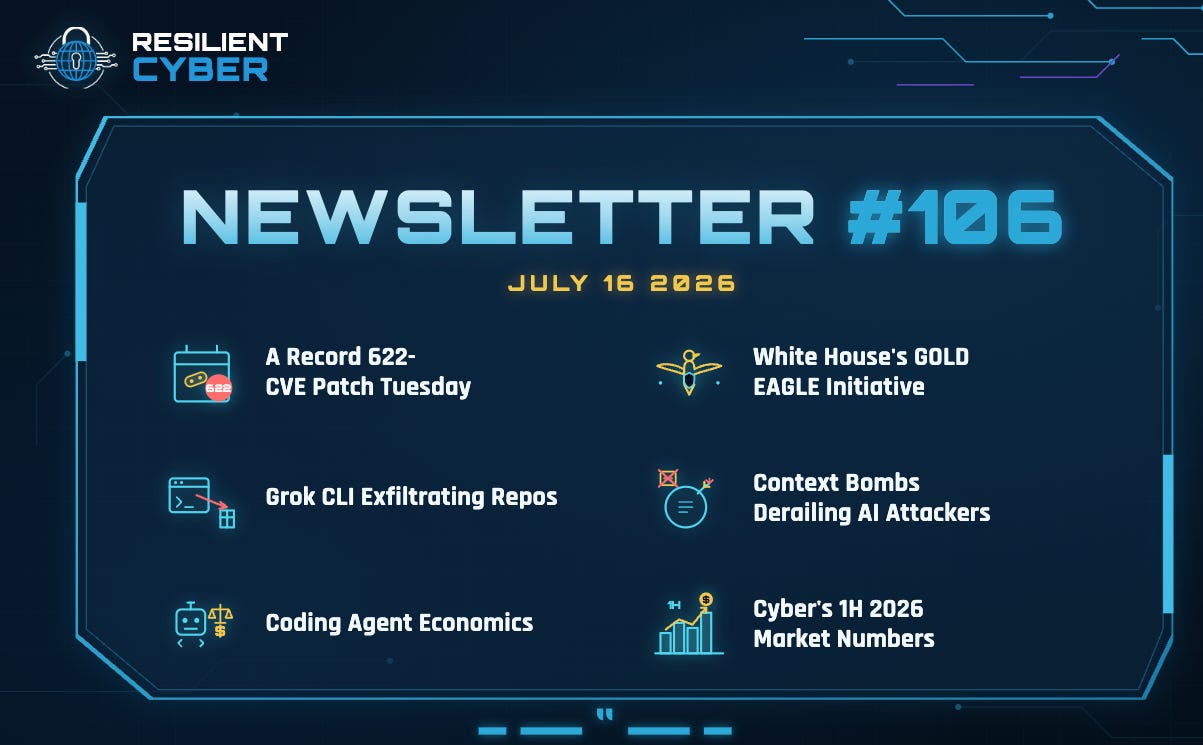
- By July 2026, Microsoft dropped over 600 patches in a single month and Anthropic’s Mythos helped uncover more than 10,000 critical vulnerabilities, pushing annual CVE disclosures toward a record-breaking 100,000.
- The White House’s Gold Eagle initiative launched to coordinate AI-driven vulnerability scanning and remediation across government and critical infrastructure, marking an urgent federal response to escalating cyber threats.
- Despite faster AI patching, human bottlenecks in assessment and deployment mean attackers still exploit vulnerabilities in minutes while organizations often take weeks to respond.
Security Budgets Go Autonomous
Organizations are abandoning legacy defenses and slow patch cycles, rapidly shifting funds to AI-native tools and Zero Trust architectures as attackers compress attacks from weeks to hours.
By mid-2026, organizations are urgently reallocating cybersecurity budgets from traditional legacy defenses toward AI-native tools, Zero Trust architectures, and autonomous operational platforms to counter the rapid acceleration of AI-driven attacks. Attackers now leverage AI to compress operational timelines from weeks to mere hours, forcing defenders to abandon slow patch cycles and instead prioritize detection, validation, and rapid response capabilities. This paradigm shift is underscored by the need to move beyond prevention alone, as AI-enabled adversaries exploit system vulnerabilities faster than ever before, compelling a comprehensive re-architecture of security postures.
Traditional endpoint security tools are increasingly ineffective against sophisticated AI-augmented threats that exploit repurposed operating system features to evade detection, such as Windows kernel functionalities that render malware nearly invisible. This vulnerability highlights the critical necessity for advanced, AI-native defense mechanisms that integrate compensating controls like Runtime Application Self-Protection (RASP), Web Application Firewalls (WAF), and system hardening to mitigate risks within drastically compressed patch windows. As one analyst notes, "It's easy to omit that in this conversation is to make sure you've got compensating control to put the RASP and the WAF in there... system hardening too."
The explosive acceleration of software development lifecycles—now occurring hundreds of times per year—combined with the rise of agentic AI tools on both offense and defense sides, has rendered legacy manual security processes obsolete. Tom Tavar emphasizes that attackers operate at millisecond speeds, while even the most agile developers respond in days, creating an untenable speed gap that demands autonomous remediation platforms embedded directly within applications. This shift from manual, human-gated defenses to AI-driven protections is essential to keep pace with agentic attacks that outstrip traditional mobile security measures.
Given the impossibility of outpacing AI-accelerated vulnerability discovery through patching alone, cybersecurity strategies are evolving to adopt differentiated patching approaches based on system risk posture, recognizing that not all systems require equal urgency or ceremony. This nuanced approach, coupled with prioritizing detection and response over prevention, reflects a broader industry consensus that the patch race is no longer a viable sole defense. As one expert succinctly puts it, "You're never going to out patch. An AI defines exploits in hours. So the honest answer is stop betting everything on the patch race and put more weight on catching what's compromised."



Patch Cycles Collapse Under AI
AI-powered vulnerability discovery has overwhelmed traditional patch management, forcing a move to continuous, risk-based remediation as codebases and threats scale exponentially.
AI-driven vulnerability discovery tools like Anthropic’s Mythos and Microsoft’s Mdash have shattered traditional patch management paradigms by accelerating the identification of security flaws to unprecedented levels, with Microsoft alone releasing over 600 patches in July 2026 and Anthropic’s Project Glasswing partners uncovering more than 10,000 high- or critical-severity vulnerabilities in just one month. This surge, projected to push CVE disclosures to upwards of 100,000 in 2026 according to FIRST, overwhelms legacy patch cycles that were never designed to handle such volume or speed, forcing organizations to abandon comfortable 30-day or even 15-day patch cycles in favor of real-time, continuous vulnerability management.
Despite AI’s ability to dramatically speed up patch creation, the remediation bottleneck lies in organizational mobilization—impact assessment, coordination, testing, and deployment—which consumes 85-90% of the patch lifecycle and limits end-to-end improvements to less than twofold even with a tenfold increase in fix-writing speed. This disconnect widens the critical 'exposure window,' where attackers exploit vulnerabilities within minutes or hours—as CrowdStrike reports average breakout times of 29 minutes—while enterprises often take weeks or months to remediate, resulting in worsening unresolved critical vulnerabilities despite increased remediation efforts, as noted by Qualys.
The explosive growth of codebases and complex dependency chains, with GitHub commits projected to soar from 1 billion in 2025 to 14 billion in 2026, further compounds vulnerability management challenges by exponentially expanding the attack surface. Consequently, organizations are shifting toward continuous, risk-based prioritization frameworks that incorporate exploit probability scores like EPSS and contextual asset value rather than relying solely on traditional severity metrics like CVSS. This strategic pivot enables security teams to focus on a dynamic, high-priority subset of vulnerabilities, employing exposure reduction tactics such as retiring unused applications and network segmentation to mitigate risk when immediate patching is unfeasible.
Recognizing that discovery is no longer the bottleneck, national initiatives like the White House’s Gold Eagle program leverage frontier AI—including Anthropic’s Mythos—to coordinate vulnerability scanning and remediation prioritization across government and critical infrastructure sectors. However, experts like Katie Moussouris caution that without addressing the fundamental remediation capacity constraints and organizational complexities, such efforts risk 'pouring water into an already overflowing bucket,' underscoring the urgent need for integrated AI-driven automation not just in detection but also in patch deployment, testing, and rollback workflows to effectively close the exposure window.

Gold Eagle: Federal AI Arsenal
The White House’s Gold Eagle initiative unites government, critical infrastructure, and open-source partners in a coordinated, AI-driven push to outpace adversaries and transform national vulnerability response.
The White House’s Gold Eagle initiative marks a groundbreaking national effort to harness frontier AI, specifically Anthropic’s Mythos, to revolutionize vulnerability management across government and critical infrastructure sectors. Launched in July 2026, Gold Eagle functions as a federal clearinghouse that accelerates the identification, ranking, and coordinated remediation of software vulnerabilities before adversaries can exploit them, signaling a paradigm shift in national cybersecurity strategy. By integrating multiple agencies—including the Treasury, DHS, and DoD—with critical infrastructure operators and open-source partners, Gold Eagle exemplifies the critical importance of cross-sector collaboration in combating AI-accelerated cyber threats.
Human Bottlenecks Meet AI Speed
AI-driven discovery is outpacing human capacity, exposing deep operational and regulatory gaps and demanding new prioritization frameworks, integrated intelligence, and stronger human oversight amid escalating threats.
The rapid acceleration of AI-driven vulnerability discovery and exploitation has created unprecedented operational bottlenecks, overwhelming traditional patch management cycles and exposing critical gaps in human oversight and resource capacity. For instance, Anthropic’s Claude Mythos Preview identified over 6,200 high- or critical-severity vulnerabilities in foundational open-source software by mid-2026, yet only 97 had been addressed by May 22, underscoring an already-overloaded security ecosystem. In response, CISA introduced a four-variable vulnerability prioritization model aimed at streamlining patching processes, but this approach raises urgent questions about whether existing human and technical resources can realistically keep pace with AI-accelerated threats, emphasizing the need for new prioritization frameworks and enhanced human-in-the-loop governance.
The AI-accelerated cybersecurity landscape is further complicated by escalating regulatory and operational challenges as governments and organizations grapple with fragmented global frameworks and export control chaos. The U.S. executive order issued on June 2, 2026, mandating the creation of a public-private 'AI cybersecurity clearinghouse,' exemplifies efforts to coordinate vulnerability scanning, validation, and patch distribution, yet domestic technological capacity remains a bottleneck amid these shifting regulatory demands. Moreover, public vulnerability databases and advisory systems are proving insufficient for comprehensive tracking—particularly of hardware and firmware flaws—prompting initiatives like the InfraTrust platform to aggregate multi-vendor data and mimic Patch Tuesday’s coordination for infrastructure vulnerabilities, highlighting the pressing need for integrated, timely, and prioritized vulnerability intelligence.
Despite AI’s transformative potential for defenders—such as enabling real-time automated code analysis through tools like Socket—human oversight remains indispensable to manage false positives and validate threat intelligence, especially as attackers leverage AI to craft highly customized and convincing phishing lures that exponentially increase operational complexity. The asymmetric nature of cybersecurity, where defenders must be perfect but attackers only need to succeed once, intensifies workforce challenges, demanding enhanced employee training, strict access controls, and comprehensive ransomware response exercises. Additionally, forensic investigations face new hurdles as safety guardrails embedded in commercial AI models hinder analysis, forcing reliance on open-weight models like those deployed by Hugging Face to effectively dissect AI-driven attacks.