AI phishing goes incognito: hyper-personalized attacks outsmart MFA, hijack trusted platforms
The gist
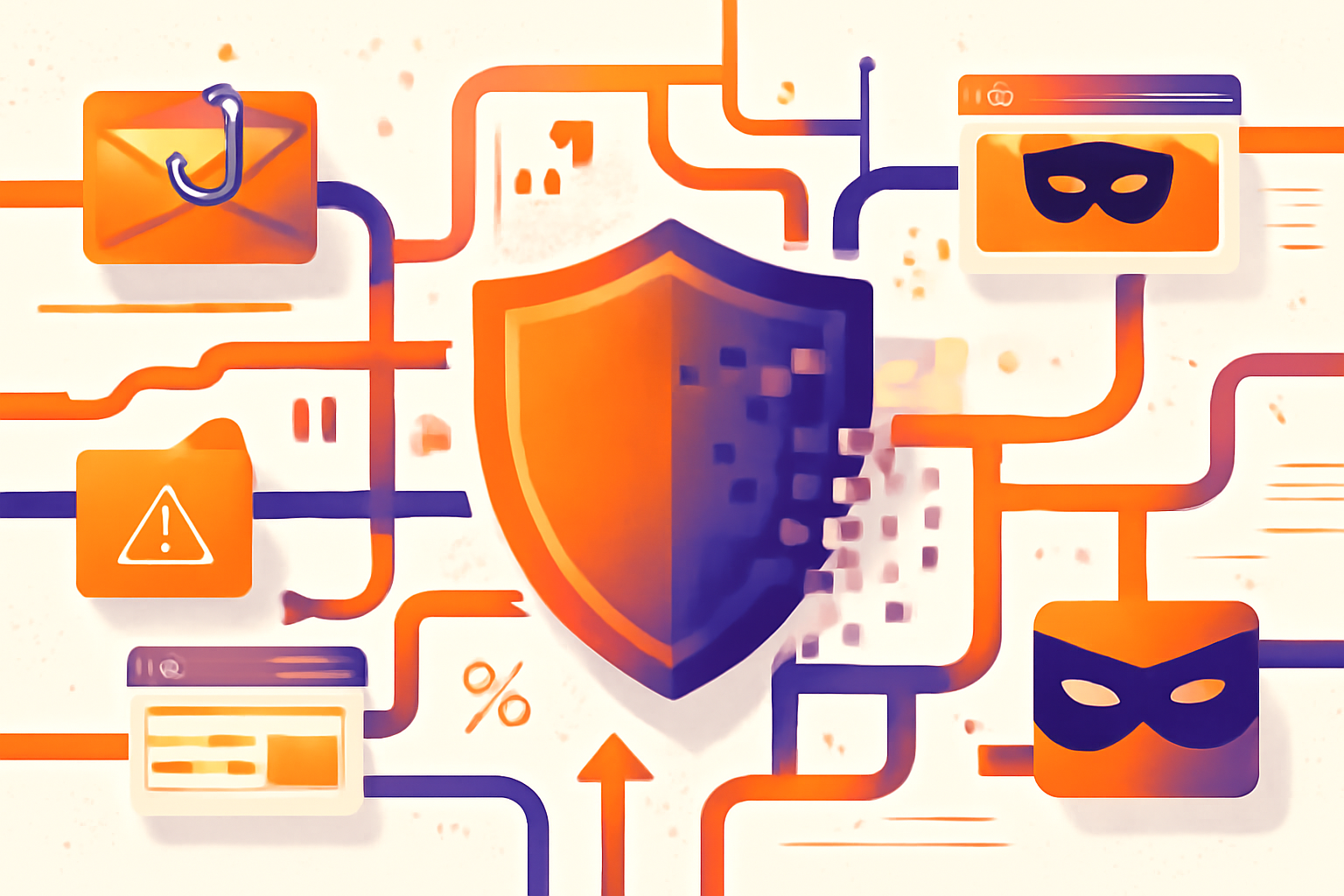
AI-powered phishers are hijacking trusted business tools and outsmarting traditional defenses—making even multi-factor authentication look obsolete.
What to know
- Generative AI is driving a 90% user interaction rate on hyper-personalized phishing emails that expertly mimic company messages.
- Attackers are exploiting Microsoft 365, Teams, and over 160 RMM tools, with a 67% spike in abuse, using tactics like device registration and inbox forwarding to blend seamlessly into workflows.
- Even multi-factor authentication is being bypassed as AI-driven social engineering manipulates users, forcing organizations to adopt layered, adaptive security strategies.
AI Phishing Gets Personal
AI-generated lures now mimic internal projects, voices, and company slang so convincingly that even experts struggle to tell them apart from real colleagues.
Generative AI has turbocharged phishing attacks, enabling the creation of thousands of hyper-personalized, context-aware lures that mimic company branding, reference real projects, and drive up user interaction rates—90% when company names are used, per KnowBe4. The result: phishing emails that sound like your colleagues and are nearly impossible to spot.
AI-powered phishing has evolved beyond email, leveraging deepfake voices, video impersonations, and real-time chatbots to launch multi-modal, multi-channel attacks across platforms like Slack, Teams, and even phone calls. These layered tactics bypass traditional defenses and exploit high-trust environments for maximum impact.
Attackers now use automation and iterative refinement—adversarial loops with large language models—to create spear-phishing campaigns that are constantly improved to evade detection. The old red flags, like bad grammar and generic content, are vanishing as AI masters organizational lingo and adapts in real time.



Trusted Tools, Hidden Threats
Attackers weaponize everyday business apps and infrastructure, transforming familiar platforms into powerful vectors that slip past both users and security teams.
Attackers are increasingly abusing legitimate business platforms—like Microsoft 365, Teams, and over 160 RMM tools—to evade detection, maintain persistence, and enhance credibility, with KnowBe4 reporting a 67% surge in such abuse. By mimicking corporate branding, exploiting device registration to bypass MFA, and leveraging inbox forwarding, attackers blend seamlessly into business workflows, making traditional defenses and user vigilance less effective.
The widespread abuse of trusted tools and platforms complicates detection and response, as attackers use legitimate infrastructure (e.g., compromised WordPress domains, signed binaries, Google Ads) and familiar communication formats (like meeting invites) to deliver phishing payloads and exfiltrate data via encrypted channels—often undetected by security teams lacking continuous threat hunting resources.


MFA Bypassed, Users Tricked
AI-powered social engineering manipulates employees into granting access, making once-reliable authentication methods dangerously insufficient.
Traditional authentication methods, including MFA, are increasingly bypassed by AI-powered phishing and social engineering attacks—such as smishing and 'ChatOps Phishing'—that manipulate users into approving malicious actions. As one attacker put it, 'Hi, this is Mark from IT. I’ve sent the final approval to your phone so I can close the ticket,' turning a denial into a compliant tap.
Attackers exploit legitimate identity features in cloud environments—like device registration and inbox forwarding—to sidestep MFA and maintain persistent access, even after password resets. This exposes the inadequacy of relying solely on authentication controls to detect compromise.
AI lowers the barrier for less-skilled attackers, enabling them to automate tailored phishing at scale and evade detection, while defenders struggle to assess these evolving threats. As Shridhar noted, '10% of a billion people is plenty,' underscoring the scale of the risk.


Defense Must Outsmart AI
Only agile, layered security—mixing real-time human awareness with adaptive technology—can keep pace with relentless, ever-evolving AI attacks.
Layered defense is now non-negotiable: static signature-based detection can't keep up with AI-generated phishing. Combining people, process, and tech—like mandatory out-of-band verification and one-click phishing reporting—turns every employee into a frontline sensor.
Adaptive security demands more than annual training—frequent, AI-generated micro-drills with instant feedback build a resilient human firewall. Empowering staff to spot and report threats in real time is critical as attackers exploit social engineering at scale.
Technological defenses must evolve: enforce strict email authentication (SPF/DKIM/DMARC), adopt phish-resistant MFA like FIDO2/passkeys, restrict risky OAuth app approvals, and shift to behavioral anomaly detection to outpace AI-powered attacks.