AI power play: open source shakeup, 'AI factories,' and a $250m talent war redraw the US-China tech map
The gist
A seismic AI power shift is underway as open-source disruption, 'AI factories,' and a global $250M talent war redraw the US-China tech rivalry—and rewrite the rules of the industry.
What to know
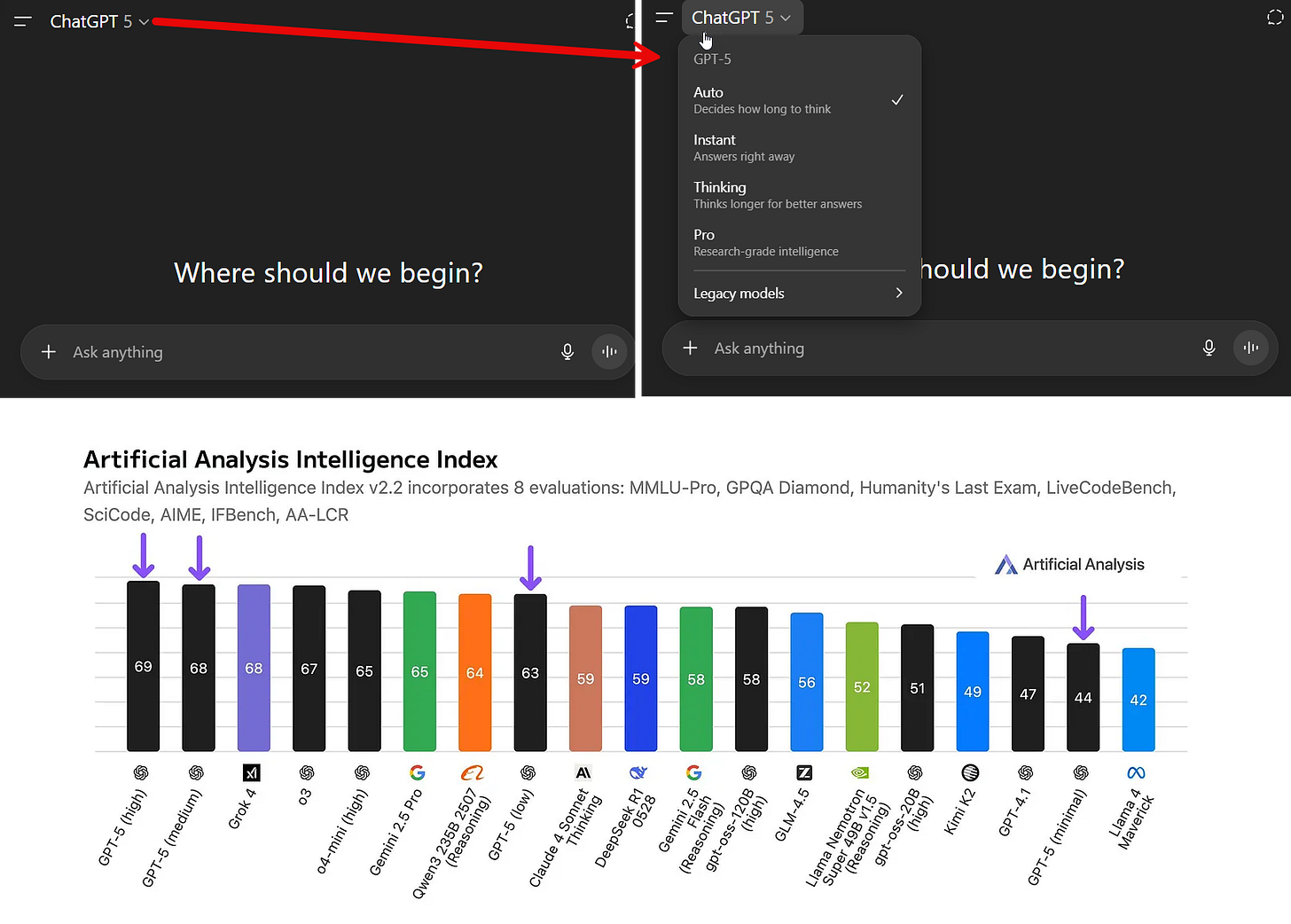
- AI's global arms race has moved from ever-bigger models to lean, specialized systems—like GPT-5 and DeepMind’s Gemma 3—prioritizing efficiency and real-world integration over brute scale.
- Chinese open-source labs (DeepSeek, Qwen, Moonshot AI) have slashed AI costs by up to 90% and fueled a worldwide adoption surge, even as US firms double down on hardware and enterprise muscle.
- Sky-high salaries ($100–250M) and a scramble for elite teams have turned the AI talent war into an all-out global competition, forcing companies to rethink how—and who—they hire.
Efficiency Over Size
AI breakthroughs now hinge on model specialization, context mastery, and agentic autonomy—not just bigger parameters.
The AI industry has decisively shifted from the brute-force scaling of model size to a focus on architectural efficiency and specialized capabilities, as seen in the evolution of models like GPT-5 and DeepMind’s Gemma 3. Rather than chasing ever-larger parameter counts, leading labs are now releasing multipart systems and compact models optimized for specific tasks, with GPT-5 operating as a multipart system that routes between fast and reasoning models in real time, and Gemma 3 demonstrating that a 270-million-parameter model can outperform larger peers through task-specific fine-tuning. This transition underscores a new paradigm where efficiency, not just scale, determines practical impact and model advancement.
Diminishing returns from scaling have forced the industry to confront the limits of size, prompting a surge in context engineering and integration with external data sources to unlock real-world utility. As Nir Diamant observes, models like GPT-5 show less dramatic performance gains than their predecessors, making it essential to connect AIs to databases, the internet, and problem decomposition tools. Meanwhile, innovations such as Claude Sonnet 4’s million-token context window and frameworks for systematic context management are enabling models to process entire codebases or research corpora in a single request, shifting the focus from prompt engineering to the more complex challenge of context engineering.
Agentic AI systems capable of continuous adaptation and autonomous improvement are rapidly becoming the new standard, marking a departure from static, monolithic models. Industry leaders like Andrew Ng and recent surveys highlight the rise of self-evolving agents that learn from environmental feedback, while product launches such as OpenAI’s GPT-5.2 and Google’s Interactions API are normalizing long-running, tool-using agents as workflow operators. This agentic turn is reinforced by the proliferation of open-weight models like Mistral 3 and Moonshot AI’s Kimi K2 Thinking, which support multi-agent collaboration, tool integration, and extended autonomous tasks, signaling a future where AI is defined by its ability to act, adapt, and orchestrate complex digital processes.
Technical breakthroughs in architectural specialization, quantization, and inference-time optimization have dramatically reduced the cost and broadened the accessibility of high-performance AI. The cost to process a million tokens has plummeted from $50 with GPT-4 to just 14 cents with GPT-5 Nano, while models like Samsung’s TRM and Microsoft’s Fara-7B demonstrate that tiny, efficient architectures can outperform much larger counterparts on challenging benchmarks. Innovations such as Mixture-of-Experts (MoE) architectures, quantization-aware training, and hardware-aware deployment (e.g., NVIDIA’s DGX Spark, OWhisper, and Embedder) are enabling AI to run locally, support privacy-first workflows, and democratize access beyond the cloud, fundamentally reshaping deployment economics and the competitive landscape.






AI Factories Reshape Compute
Purpose-built data centers and modular, automated AI pipelines are redefining infrastructure, fueling a new arms race for industrial-scale intelligence.
The transformation of AI infrastructure is being driven by a fundamental reimagining of the data center, with the rise of 'AI factories' marking a shift from general-purpose, CPU-centric architectures to GPU-accelerated, purpose-built systems optimized for massive-scale AI workloads. Companies like OpenAI are investing billions—such as the $30B Oracle Data Center deal—to achieve full-stack control and reduce reliance on hyperscalers, while simultaneously hiring top chip designers to push toward vertical integration. This strategic move is not just about technical performance; in wealthy economies, large-scale data center buildouts are justified as strategic assets and market signals, bolstering investor confidence, whereas in developing regions, the lack of reliable infrastructure makes such investments risky and potentially wasteful, underscoring the global disparity in AI infrastructure readiness.
AI factories represent a new paradigm in which end-to-end automation—spanning data pipelines, model training, inference, deployment, and continuous improvement—enables organizations to produce versatile AI outputs at industrial scale. This evolution is fueled by exponential growth in data tokens and the transition from single-shot LLMs to multimodal, multi-agent systems, as highlighted by Michael Dell, who described the demand for compute as 'maybe insatiable.' The maturation of modular inference engines, neocloud GPU providers like CoreWeave and Lambda, and open-source optimization layers such as vLLM and TensorRT, has democratized access to high-performance AI infrastructure, making closed-loop, specialized AI production lines a practical reality for enterprises and even smaller labs.
A decisive shift is underway from cloud-centric AI compute to diversified deployment models, including automated on-premises, edge, and neocloud infrastructure. The emergence of compact AI supercomputers like NVIDIA's DGX Spark and the growing trend of cloud repatriation reflect a desire for greater control, security, and cost efficiency—84% of organizations now plan to run generative AI workloads on-premises. This hybridization is further accelerated by strategic partnerships (e.g., Anthropic's multi-billion-dollar deal with Google Cloud for TPU access) and the rise of neocloud GPU rental companies, which now handle a quarter of Backblaze's data flows, signaling a new era of specialized, sovereign, and highly efficient AI stacks.
The global race for AI infrastructure is evolving from a contest of raw GPU scale to one of strategic integration, efficiency, and sovereignty. As compute scarcity becomes a structural constraint—2025 saw companies optimizing business strategies around compute availability—AI hardware is diverging into two tracks: superchips and clusters for frontier labs, and efficient, heterogeneous edge solutions for enterprises and nations. This bifurcation is mirrored in geopolitical strategies, with the US and China pursuing different paths: the US focuses on capital-intensive AGI infrastructure and chip restrictions, while China innovates in architectural scaling and rapid monetization, as seen in the IPOs of Zhipu AI and MiniMax. The next wave of AI infrastructure will be defined by the ability to orchestrate diverse compute resources, ultra-low-latency networking, and the integration of sovereign AI stacks tailored to local needs.




China’s Open-Source Surge
Chinese labs are outpacing US rivals by slashing AI costs and exporting models at scale, turning open source into a tool of global influence.
The global AI landscape is undergoing a profound transformation as open-source innovation fragments traditional power structures and democratizes access to cutting-edge models. In 2025 and 2026, Chinese labs such as DeepSeek, Qwen, and Moonshot AI surged to technical parity with US giants, leveraging government support and a pragmatic, constraint-driven approach to achieve high performance at a fraction of the cost. This open-source orientation—fueled by strategic state investment, rapid iteration, and a willingness to share not just model weights but entire training pipelines—has enabled Chinese models to dominate global adoption metrics, power Silicon Valley startups, and challenge the dominance of proprietary platforms like OpenAI and Anthropic, even as the US retains advantages in compute and chip efficiency.
Cost wars have become a defining feature of the open-source AI era, with Chinese models such as DeepSeek and Kimmy K2 slashing inference and training expenses by up to 90% compared to US proprietary offerings—DeepSeek, for example, charges just 28 cents per million inputs versus Anthropic’s $3.15. This relentless drive for efficiency is not merely a function of state subsidies or alleged IP theft, but the result of genuine innovation under resource constraints, as Chinese teams optimize architectures like Mixture-of-Experts and quantization-aware training to deliver high performance on limited hardware. The resulting collapse in the 'cost of intelligence' is fueling a global shift, with even 80% of Andreessen Horowitz-backed US startups reportedly relying on Chinese open-source models to power their applications.
The open-source surge is also a geopolitical gambit, as China leverages inclusive licensing, low-cost exports, and a global developer community to expand its commercial and strategic influence, particularly across the Global South. This strategy—described as 'encircling the cities from the countryside'—contrasts sharply with the US’s closed-source dominance and speculative pursuit of superintelligence, instead prioritizing specialized, application-oriented systems that deliver immediate, tangible value. As Chinese open models become the backbone of AI infrastructure outside the US, questions mount over whether the world’s digital future will be built atop American or Chinese technology, with the open-source ecosystem serving as both a tool of democratization and a lever of soft power.
Yet, this fragmentation of AI power is not without its complications. While Chinese open-source models lead in global adoption and technical benchmarks, the US still holds critical advantages in compute access, chip design, and enterprise business culture, which continue to drive innovation and commercialization in mature markets. Moreover, not all open-source claims are created equal—cases like DeepSeek’s alleged use of proprietary model weights highlight ongoing debates over authenticity and transparency. As the ecosystem matures, with millions of models proliferating and new players from both China and the US entering the fray, the AI landscape is stabilizing into distinct layers of model providers, application builders, and infrastructure companies, signaling a new era where power is distributed, but leadership remains fiercely contested.



The $250M Talent Arms Race
AI hiring has erupted into a global bidding war, with elite researchers wielding unprecedented leverage and startups forced to reinvent team structures to compete.
The global AI talent war has reached fever pitch, with elite researchers commanding offers as high as $250 million from giants like Meta and $100 million becoming the new normal by late 2025. This compensation arms race has forced startups to get creative—OpenAI, for example, ended vesting cliffs to lure talent, even as leaders worry this could foster a mercenary, transient culture. As the hardest-to-hire AI researchers in San Francisco increasingly reject offers, companies are expanding global hiring and doubling down on workplace perks, while pitching mission-driven work and unique cultural identities to offset their inability to match the deep pockets of tech behemoths.
The nature of AI teams and the definition of 'talent' are rapidly evolving, with organizations rethinking recruitment and workflows from first principles. Small, agile, cross-functional teams—where even non-engineers are expected to code—are now prized for their adaptability and speed, as highlighted by Andrew Ng and echoed in the collaborative cultures of leading Chinese labs like Z.ai. Meanwhile, the rise of AI-assisted coding and project management tools has lowered the barrier to entry for developers, complicating vetting processes and making genuine expertise harder to discern, prompting a shift toward evaluating candidates on research output, coding contributions, and hands-on skills.
Talent concentration is intensifying, with top AI minds clustering in a handful of elite institutions and companies, fueling a 'winner takes most' dynamic. Stanford, Berkeley, and MIT anchor the global pipeline feeding organizations like OpenAI, while the Bay Area continues to dominate geographically. By early 2026, the market is so fluid that top researchers cycle between a shrinking pool of dominant firms—OpenAI famously rehired Barrett Zoff and other key figures from Thinking Machines within hours—leading some to predict that, in a decade, just a few companies and a couple hundred people will control the field.
China's AI talent ecosystem has undergone a dramatic transformation since 2023, driven less by government edict and more by private capital and engineering ambition. With nearly half of the world's top AI talent now hailing from China and domestic giants like DeepSeek and Alibaba ramping up research output, the U.S. faces a strategic risk as its ability to attract new Chinese researchers wanes. The protected Chinese market, created by early bans on Western AI models, has enabled a decentralized surge of labs and startups, fostering a unique environment where ongoing PhD students and industry veterans collaborate seamlessly on globally competitive models.
The definition of critical AI talent is expanding beyond technical roles, with companies now vying for elite performers in every function—from sales to product vision—recognizing that organizational success hinges on assembling a championship-caliber team across the board. As one analyst put it, 'We need elite at every position on the field,' and with the costs of building AI platforms skyrocketing, there is little room for mediocrity. This has led to unprecedented incentives, from extravagant sign-on bonuses to aggressive vertical integration strategies, as companies race to build organization-wide AI fluency and adaptability before today's tools become tomorrow's legacy.





Rival Stacks, Shifting Power
Dueling US and Chinese strategies—hardware sovereignty, open models, and export controls—are fracturing the global AI ecosystem and redrawing the tech map.
The US-China AI rivalry has evolved into a high-stakes contest defined by diverging strategies in hardware sovereignty, open-source innovation, and global market influence. While the US leverages its dominance in advanced AI chips, massive capital expenditure—exemplified by Google’s $93 billion capex and Amazon’s data center buildouts—and integrated hardware-software ecosystems to maintain technological leadership, China is aggressively pursuing domestic chip production and open-source model proliferation. This is evident in Beijing’s push for self-sufficiency through companies like Baidu, Huawei, and More Threads, as well as the emergence of open-source leaders such as DeepSeek and Qwen, which now dominate global adoption metrics and are increasingly used by US startups. The result is a bifurcating global AI stack, with China’s models and hardware gaining traction across the Global South and beyond, challenging the traditional US-centric paradigm.
Export controls and semiconductor restrictions have become central weapons in the rivalry, but their effectiveness is increasingly in question. US efforts to limit China’s access to Nvidia’s cutting-edge GPUs—such as the H200—have prompted Beijing to accelerate domestic chip development, with massive state subsidies and IPOs for firms like Kunlunxin and Moore Threads. Ironically, these restrictions may be catalyzing China’s innovation, as analysts note that 'forcing China to buy handicapped chips will be viewed as one of the stupidest things we've ever done.' Meanwhile, China’s ability to produce 7nm chips with existing equipment and its control over critical raw materials further erode the intended impact of US sanctions, suggesting that the hardware gap may narrow faster than Washington anticipates.
Open-source AI has emerged as both a battleground and a bridge in the US-China competition, with Chinese labs releasing a flood of high-performing, cost-efficient models that are reshaping global innovation dynamics. Models like DeepSeek, Qwen, and Kimmy are not only dominating benchmarks but also driving down costs—sometimes by factors of 10 to 35 compared to US alternatives—fueling a 'startup gold rush' worldwide. This open-source surge is backed by private capital, hedge funds like High-Flyer, and a new generation of domestically trained talent, enabling rapid iteration and global adoption. However, this democratization of AI also creates a paradox for the US: while open source counters Big Tech dominance, the leading models increasingly originate from China, complicating efforts to maintain technological supremacy.
Despite mutual distrust and fierce competition, the US-China AI relationship is best described as 'co-opetition,' marked by simultaneous rivalry, cooperation, and mutual co-opting of technologies. Academic collaboration remains robust, with 12% of AI research papers co-authored by US and Chinese researchers between 2022 and 2024, and both sides frequently leverage each other’s open models—Chinese startups built on Meta’s Llama, while US startups increasingly fine-tune Chinese open weights. Yet, both markets remain largely closed to each other, pushing the competition into third countries, especially in the Middle East and Southeast Asia, where local actors seek to balance sovereignty with access to the best AI technologies from both superpowers.


Platform Moats Collapse
AI’s defensible advantages are evaporating as application and infrastructure layers commoditize, forcing incumbents to scramble for new sources of lock-in and value.
The AI platform business model is undergoing a seismic shift as the traditional moats of model scale and distribution erode, giving way to a new era defined by vertical integration, architectural efficiency, and strategic application-layer innovation. In 2025, DeepSeek shattered the prevailing scaling thesis by demonstrating that architectural efficiency could rival brute-force compute, leading to a trillion-dollar market correction and forcing incumbents to reconsider their strategies. Meanwhile, Anthropic surged ahead in AI-assisted coding, capturing enterprise share from OpenAI and spawning breakout successes like Lovable ($200M ARR) and Replit ($150M ARR), as 25% of YC Winter 2025 startups reported codebases that were 95% AI-generated. This competitive landscape is further complicated by the proliferation of open-source models—particularly from China, which released nine competitive models in 2025—challenging US dominance and accelerating the commoditization of core AI capabilities.
As base models rapidly improve and commoditize, companies are forced to abandon thin wrappers and superficial fine-tuning in favor of defensible advantages rooted in proprietary data, deep operational integration, and regulatory insulation. The collapse of traditional moats is evident in the shrinking gap between specialized applications and foundation models like GPT-5.1 and Claude, with contract renewals and acquisition valuations suffering as differentiation becomes fleeting. This has driven a strategic pivot toward bundling general-purpose AI into existing platforms—exemplified by Microsoft’s integration of AI into its productivity suite—prompting CFOs to question the need for redundant vertical tools and signaling a new phase where strategic integration and global distribution, rather than standalone vertical apps, become the keys to sustainable monetization.
The interplay between infrastructure and application layers is now a central battleground, as tech giants like Google leverage massive capital expenditure and full-stack vertical integration—from custom TPUs to Gemini-powered applications—to create formidable platform moats and customer lock-in. However, the field is fragmenting: neoclouds such as Coreweave and Together, inference clouds like Fireworks and Baseten, and open-source engines like vLLM are lowering barriers to entry and enabling a modular, interoperable ecosystem. This shift is forcing incumbents to balance infrastructure investment with shareholder returns—Alphabet, for instance, authorized a $70 billion buyback while spending up to $93 billion on capex in 2025—and to differentiate on user experience, as seen in the rising stickiness and session depth of Gemini compared to ChatGPT.
Global AI business models are diverging sharply, with Western firms doubling down on capital-intensive infrastructure for AGI and enterprise integration, while Chinese companies prioritize rapid monetization through consumer applications, open-weight models, and public market liquidity. MiniMax’s $13 billion IPO and the proliferation of Chinese open-source models—often priced at a fraction of US alternatives—underscore this strategic split, as China’s focus on application-layer monetization and vertical integration in sectors like online shopping, insurance, and entertainment drives aggressive market expansion. This bifurcation is further amplified by geopolitical maneuvering over chip supply and export controls, which, rather than stifling Chinese innovation, have accelerated domestic infrastructure development and intensified global platform competition.