AI power surge exposes grid bottlenecks, China pulls ahead
The gist
America’s AI-fueled power surge is running headlong into a creaky grid, while China races ahead—threatening U.S. tech dominance and economic security.
What to know
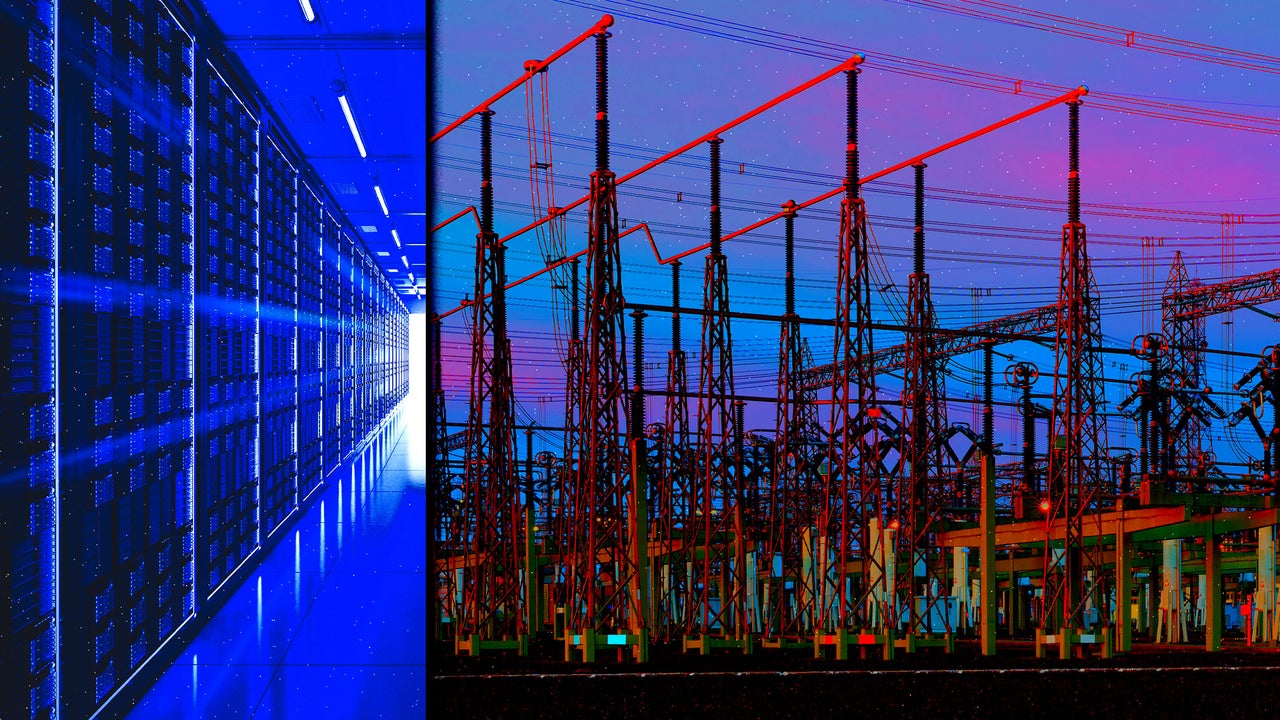
- AI and data centers could guzzle nearly 10% of U.S. electricity by 2029, with Texas’s ERCOT grid slammed by 230 GW of big-load requests (70% from data centers) for 2025.
- U.S. grid and transmission projects now face 5-15 year delays thanks to regulatory bottlenecks, equipment shortages, and NIMBY resistance, while China triples grid capacity and scales solar 50% annually.
- Natural gas and LNG exports are surging to meet demand, but supply chain snarls and slow permitting threaten price spikes and American competitiveness—spurring calls for permitting reform, mega-transmission lines, and new nuclear investments.
Gridlock Threatens U.S. Edge
Multi-year permitting delays and regulatory inertia are crippling U.S. energy infrastructure, leaving the nation vulnerable to China’s rapid grid expansion and threatening its AI and economic leadership.
The explosive growth in electricity demand driven by AI data centers and LNG exports is exerting unprecedented pressure on U.S. energy infrastructure, revealing systemic bottlenecks in project development. For instance, the Thacker Pass lithium mine took over 12 years from application to operation, exemplifying the compounded delays caused by federal NEPA reviews, state permits, species consultations, community meetings, and lawsuits that collectively stretch project timelines to 7-12 years. This entrenched procedural inertia not only undermines infrastructure resilience—as seen in the prolonged non-rebuilding of the Francis Scott Key Bridge—but also threatens national security and economic competitiveness amid a rapidly evolving energy landscape.
The intensifying geopolitical rivalry with China sharply accentuates the urgency of U.S. energy infrastructure modernization. While China can ramp up critical mineral and energy projects in as little as 18 months, the U.S. faces multi-year delays, leaving it vulnerable to supply cutoffs and strategic disadvantage. China’s aggressive expansion—tripling its grid capacity since 2010 to now three times that of the U.S., generating 40% more electricity than the U.S. and EU combined, and rapidly scaling solar capacity by nearly 50% annually—contrasts starkly with America’s flat power generation and regulatory hesitancy. This energy gap directly impacts AI leadership, as OpenAI warns that “electrons are the new oil” and calls for the U.S. to build 100 gigawatts of new energy capacity annually to maintain technological dominance.
By late 2025 and into 2026, the U.S. is confronting a fundamental shift in electricity demand forecasts, with AI data centers poised to consume nearly 10% of national load by 2029 and potentially the entire grid by 2030 if current trends persist. Texas’s ERCOT grid exemplifies this surge, receiving over 230 gigawatts of large-load interconnection requests in 2025—more than triple the previous year—with data centers accounting for over 70% of this demand. Despite the Department of Energy’s urgent calls for accelerated interconnection processes and NERC’s elevation of large loads to a reliability concern, local opposition over water use, land, and rising power bills is stalling tens of billions in projects. Meanwhile, the depletion of stranded power sources and a four-to-five-year queue for critical equipment like gas turbines compound the challenge of rapidly scaling new capacity.
The U.S. energy sector is caught in a complex balancing act amid rising AI-driven demand, striving to deliver affordability, reliability, emissions reduction, energy security, and job creation while grappling with slow infrastructure development and policy shifts. Innovation is accelerating in batteries, geothermal, and advanced nuclear technologies, driven by capital flows linked to AI and data center growth. However, administrative restraints and rising electricity prices limit the ability to meet surging demand, contrasting with China’s expansive investments in coal and renewables that have secured abundant power supplies. This dynamic underscores the geopolitical stakes, as China’s strategic moves to develop independent chip manufacturing and robust energy infrastructure deepen the competitive divide, challenging the U.S. to overcome regulatory and supply chain constraints to sustain its AI and industrial ambitions.





Transmission: The Hidden Choke Point
Massive interconnection backlogs, equipment shortages, and societal resistance are stalling critical grid upgrades, forcing some AI data centers to consider off-grid solutions as a workaround.
The U.S. power grid is grappling with severe bottlenecks that hinder its ability to meet the surging electricity demand driven by AI data centers and other emerging loads. A critical constraint is the multi-year backlog in grid interconnection queues, with over 8,200 projects totaling more than 1,300 gigawatts waiting for approval, and median wait times exceeding five years. This delay is compounded by a shortage of essential equipment such as transformers and gas turbines, with lead times stretching from one to five years and manufacturers like GE Vernova sold out through 2030, causing project postponements and escalating costs.
Transmission infrastructure emerges as the primary rate limiter in scaling the grid, with expansion projects facing societal resistance, regulatory hurdles, and protracted permitting processes that can take 5 to 15 years. Despite ambitious initiatives like the Southwest Power Pool's $8.6 billion 765kV transmission backbone and similar plans across SPP, MISO, PJM, and ERCOT, these efforts struggle against NIMBYism and slow regulatory environments. As Andy Lubershane observes, no technological breakthrough has yet overcome the challenge of securing new transmission corridors, forcing some AI data centers to consider hybrid off-grid solutions combining solar, gas, and batteries to sustain growth beyond the near term.
The aging U.S. grid not only suffers from capacity constraints but also from inefficiencies such as approximately 30% electricity loss during transmission and a lack of integrated planning that connects generation, transmission, and consumption. This fragmented approach hampers modernization efforts and grid resilience, especially as variable renewables introduce new stability challenges exemplified by the 2025 blackout in Spain and Portugal. Addressing these issues requires a suite of engineering solutions including grid-enhancing technologies, smarter demand management, and enhanced forecasting to accommodate volatile AI-driven loads without compromising reliability.
Regional disparities intensify the bottlenecks, with six key regions—ERCOT, PJM, SPP, MISO, California ISO, and Georgia Power—accounting for over 80% of projected five-year growth in electricity demand, driven largely by AI data centers. For example, ERCOT anticipates a 53 GW surge through 2030 but faces transmission delays, equipment shortages, and slow permitting that threaten to stall development. These localized pressures have already led to electricity price spikes and capacity competition between AI data centers and traditional industrial users, underscoring the uneven impact of national grid constraints and the urgent need for transparent cost allocation and accelerated infrastructure investment.




Permitting Paralysis Stalls Progress
A tangled web of overlapping reviews, lawsuits, and NIMBY opposition has brought U.S. infrastructure development to a crawl, canceling hundreds of clean energy projects despite bipartisan calls for reform.
The U.S. energy infrastructure expansion is severely hampered by a labyrinth of regulatory and procedural hurdles that cause multi-year delays, as vividly illustrated by the Francis Scott Key Bridge collapse in 2024, which remains unrepaired a year later due to process bottlenecks rather than financial or engineering issues. This systemic paralysis stems from an aggregation of individually rational but collectively obstructive micro-decisions across federal, state, and local jurisdictions, compounded by entrenched NIMBYism and a service economy that prioritizes process management over tangible construction, effectively stalling critical projects essential for AI and economic growth.
Critical mineral projects like the Thacker Pass lithium mine exemplify the drawn-out timelines caused by overlapping federal and state reviews, community consultations, and litigation, stretching over a decade compared to competitor countries that complete similar projects in a fraction of the time. Meanwhile, federal attempts under the Trump administration to ease permitting for nuclear power and free up federal lands for data centers have yet to overcome entrenched state and local opposition, leaving natural gas as the near-term energy backbone despite supply chain constraints such as a two-to-three-year backlog for gas turbines and restrictive regulations preventing pragmatic solutions like load shedding to backup generators.
Despite bipartisan support for permitting reform measures like the Manchin Barrasso Energy Permitting Reform Act aimed at streamlining interregional transmission planning and federal permitting roles, actual legislative progress remains uncertain, reflecting the complexity of transitioning from a fragmented system of thousands of local utilities to an integrated grid. This slow evolution is exacerbated by conflicting federal policies that paradoxically fast-track power-hungry AI data centers while simultaneously erecting barriers to renewable energy projects, resulting in the cancellation of nearly 1,900 power projects totaling 266 GW in 2025—93% of which are clean energy initiatives—thereby threatening grid reliability, affordability, and economic revitalization, especially in rural areas.
By early 2026, the tension between rapid AI-driven energy demand and sluggish grid upgrade processes has become a critical bottleneck, with data centers requiring power within months while grid interconnection queues extend up to 14 years in key hubs like Northern Virginia. Regulatory inertia, local opposition, and high interconnection costs averaging up to $300/kW for solar projects continue to stall development, even as federal agencies like FERC and DOE push for reforms and modernization initiatives. However, political trade-offs, including NIMBYism, conflicting local versus national interests, and the unpopularity of AI and big tech, further complicate efforts to accelerate infrastructure deployment, underscoring the urgent need for coordinated policy action to avoid blackouts and sustain economic growth.



Natural Gas: The Reluctant Backbone
Surging AI and LNG demand is driving historic natural gas consumption and exports, but looming supply deficits and infrastructure bottlenecks risk destabilizing prices and energy security.
The surge in AI-driven electricity demand, particularly from data centers which accounted for 55% of U.S. demand growth through 2023, has dramatically increased natural gas consumption as the primary fuel for power generation. ERCOT in Texas exemplifies this trend, projecting 53 gigawatts of load growth by 2030 fueled by AI expansion, yet faces potential demand moderation if electricity prices rise, impacting price-sensitive sectors like bitcoin mining. This rapid growth underscores natural gas’s critical role as a flexible and scalable energy source that can be deployed faster than nuclear or renewables without storage, meeting the firm baseload needs of AI infrastructure.
The U.S. has emerged as the world’s largest LNG exporter, with exports expected to more than double to 36 billion cubic feet per day by 2031, making LNG the nation’s second largest net export industry. This expansion is projected to have minimal impact on domestic natural gas prices—only a 1.6% increase through 2031—while generating over $1 trillion in LNG supply chain investments and supporting more than half a million jobs annually. However, infrastructure constraints, especially in the Northeast, and power availability challenges threaten to destabilize regional markets and complicate the timely delivery of LNG projects amid fierce competition for electrical equipment and grid capacity from hyperscale data centers and advanced manufacturing.
Despite abundant natural gas reserves in major U.S. basins like Appalachia and the Permian, the country faces a looming historic supply deficit by 2028 driven by the combined pressures of expanding LNG exports and rising AI-related power demand. While production capacity can add about 20 billion cubic feet per day, planned LNG exports alone are set to consume up to 35 billion cubic feet daily by 2030, with AI compute adding an estimated 5 billion cubic feet per day. This imbalance is exacerbated by slow permitting, midstream infrastructure bottlenecks, and contractual complexities, risking severe price spikes and supply crises that could reverberate through electricity markets.
The U.S. energy landscape is at a crossroads where geopolitical strategy, economic growth, and energy security converge around natural gas and LNG. Leaders like Doug Burgum emphasize energy dominance as essential for national security, enabling the U.S. to supply allies and reduce reliance on adversaries. Meanwhile, the energy transition has repositioned natural gas as a longer-term bridge fuel, underpinning a structural demand floor well into the 2030s due to coal retirements and renewable intermittency. Yet, the stagnant grid capacity since 2010 contrasts sharply with China’s tripling of grid infrastructure, highlighting the urgent need for expanded and cost-effective power solutions, including nuclear and natural gas, to sustain AI-driven industrial growth and maintain global competitiveness.




Mega-Transmission Push Gains Steam
A new wave of high-voltage transmission projects and bipartisan permitting reform could finally break the gridlock, but progress hinges on overcoming entrenched regulatory delays and local resistance.
The U.S. is embarking on an ambitious grid modernization journey marked by the approval and planning of multiple 765kV high-voltage transmission projects across regions like the Southwest Power Pool, MISO, PJM, and ERCOT. These projects, including the $8.6 billion Southwest Power Pool backbone, represent the first such large-scale transmission expansions in decades and are critical to integrating clean energy and supporting surging loads from data centers and manufacturing hubs. Despite political setbacks such as the DOE's cancellation of the Greenbelt Express loan guarantee, the momentum for transmission buildout remains strong, with potential to reach thousands of miles annually, signaling a transformative shift in the nation’s energy infrastructure.
Permitting reform emerges as a linchpin for unlocking interregional grid expansion and accelerating transmission projects, addressing the fragmented and slow regulatory landscape that currently hampers progress. The bipartisan Manchin-Barrasso Energy Permitting Reform Act, with its focus on interregional planning and federal permitting roles, is poised to make significant strides, especially with anticipated swift House action on NEPA-related provisions. This legislative momentum aims to dismantle bottlenecks that have stretched interconnection timelines from 15 months two decades ago to nearly 45 months today, thereby catalyzing the grid expansion necessary to meet burgeoning AI and data center power demands.
Behind-the-meter and hybrid power solutions are rapidly evolving from temporary fixes into permanent pillars of the U.S. energy landscape, as hyperscale AI data centers and other large consumers confront multi-year grid connection backlogs and supply chain constraints, notably transformer shortages with waits exceeding a year. Companies like Lyten are advancing grid-forming power management systems paired with battery storage to deliver localized, flexible energy, while utilities are transitioning from sole suppliers to orchestrators within hybrid ecosystems. This shift not only mitigates grid delivery delays but also redefines power purchase agreements as tools for dedicated on-site generation, reflecting a strategic adaptation to the structural bottlenecks reshaping energy consumption and infrastructure planning.
Nuclear power is gaining renewed strategic importance as a cornerstone for meeting the U.S.'s escalating energy demands driven by AI, data centers, and reindustrialization efforts, offering the promise of abundant, low-cost electricity that could revive energy-intensive industries like aluminum and steel production. While fusion remains a decade away, initiatives such as Microsoft's recommissioning of the Three Mile Island plant underscore the near-term potential of nuclear, complemented by natural gas and fracking's proven role in emissions reduction. This 'all of the above' energy approach, integrating advanced nuclear, renewables, and fossil fuels, is critical to overcoming bottlenecks and sustaining U.S. competitiveness amid China's tripling of grid capacity since 2010.

Hybrid Power: The New Normal
Behind-the-meter and hybrid energy systems are becoming essential as hyperscale data centers and manufacturers bypass grid delays with localized, flexible power solutions.
Behind-the-meter and hybrid energy systems are becoming essential as hyperscale data centers and manufacturers bypass grid delays with localized, flexible power solutions.