AI-powered batteries and VPPs reshape clean energy landscape
The gist
AI-powered batteries and virtual power plants are shaking up the clean energy game, turning homes and businesses into grid-stabilizing powerhouses and accelerating the shift away from fossil fuels.
What to know
- US home battery installations hit a record 673 MW in Q1 2026, while VPP capacity soared 153% in 2025 with Tesla, Sunrun, and others aggregating over 16 GW of distributed energy.
- GoodWe, now a leader in AI-driven energy ecosystems, launched the ESA system and SEMS+ platform, earning top TÜV Rheinland ratings for battery accuracy and noise.
- Green Mountain Power’s 110 MW VPP saved Vermont customers $6 million during a 2026 heat wave, proving distributed storage can retire fossil peaker plants and deliver real savings.
GoodWe’s AI Energy Leap
GoodWe is redefining its business by building an AI-powered energy ecosystem that seamlessly links generation, storage, and smart management across all market segments.
By mid-2026, GoodWe marked a strategic evolution from a solar inverter manufacturer to a pioneer of AI-driven smart energy ecosystems, unveiling at SNEC 2026 its ESA three-phase 'all in one' energy storage system and the SEMS+ platform. This integrated approach combines generation, storage, and intelligent management within a seamless ecosystem designed to optimize renewable energy use and dynamic tariff adaptation, reflecting GoodWe’s ambition to lead across residential, commercial, industrial, and municipal sectors.
GoodWe’s ecosystem strategy centers on storage as the physical and commercial anchor, with overseas business now predominantly driven by storage inverters and batteries. The ESA residential platform exemplifies this by integrating inverter, battery, and backup functions into a single, low-noise, easy-to-install system built around the '4S' principles—Silent, Secure, Smart, and Simple—while its software layer connects the storage to a broader household energy ecosystem.
At the heart of GoodWe’s intelligent ecosystem is the SEMS+ AI-supported platform, which orchestrates energy flows across inverters, batteries, EV chargers, and heat pumps. This automation is essential for managing complex, dynamic energy markets, especially in Europe where consumers face fluctuating tariffs; as Vice President Wang Yinge explains, the system must autonomously decide when to charge, discharge, or draw power from solar or the grid to ensure optimal performance without manual intervention.
VPPs Turn Homes Into Power
A massive surge in home battery adoption, fueled by innovative VPP programs and incentives, is transforming residential batteries into a flexible, grid-stabilizing force that can even pay homeowners.
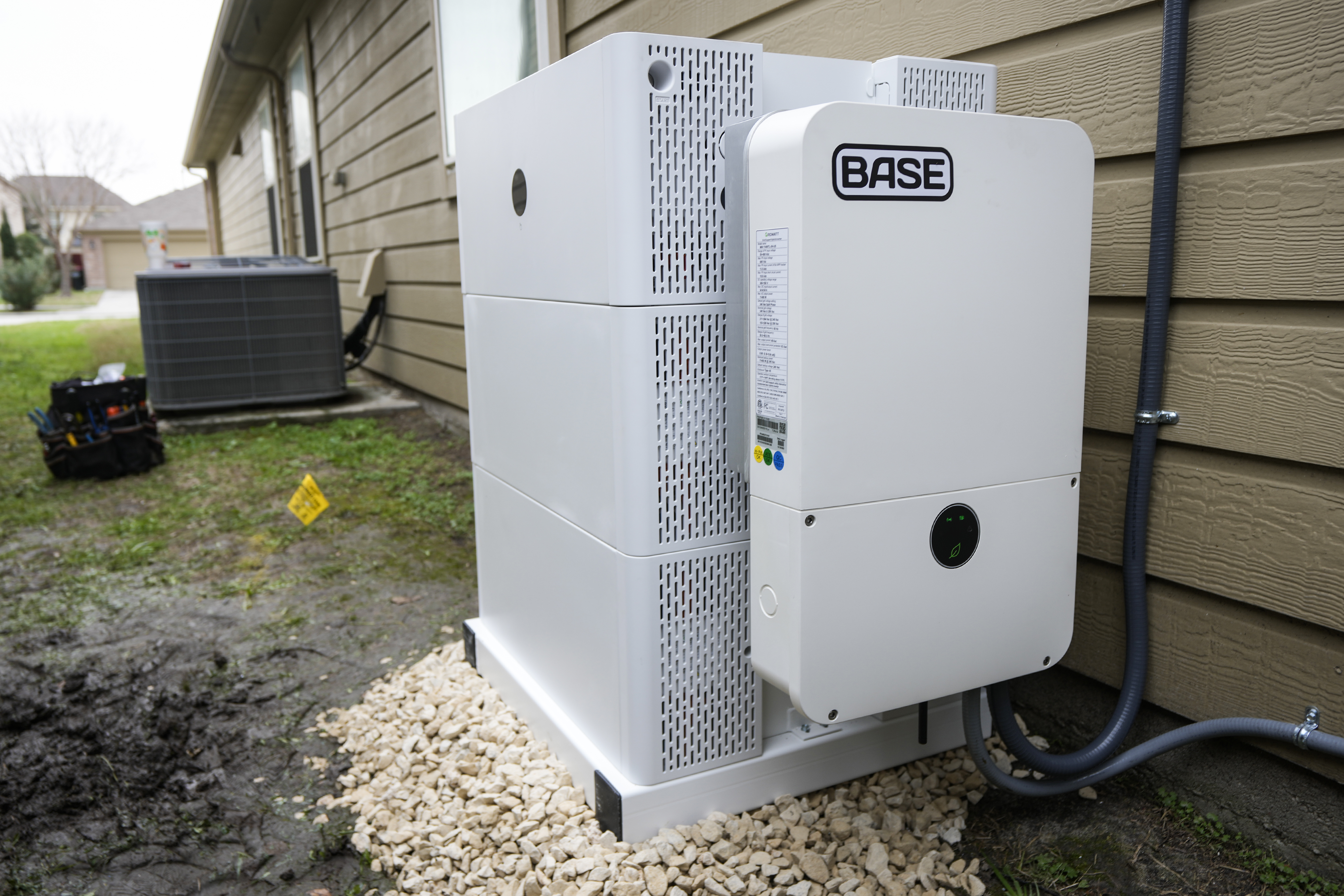
By early 2026, US home battery installations surged to a record 673 megawatts in Q1 alone, propelled by state incentives and rising electricity costs. This rapid adoption is further accelerated by innovative utility and private sector programs, such as Austin-based Base Power’s model offering discounted batteries and electricity rates in exchange for managing them as virtual power plants (VPPs), effectively aggregating distributed storage to optimize grid performance and customer savings.
The integration of home batteries into virtual power plants has exploded, with capacity incorporated by VPPs growing 153% in 2025 and the US VPP market projected to reach 37.5 GW by that year. Major industry players like Sunrun, Renew Home, and Tesla are spearheading this movement, announcing in June 2026 a combined fleet of hundreds of thousands of home batteries forming the largest distributed power plant in the country, capable of delivering over 16 gigawatts of power to stabilize the grid during peak demand and extreme weather events.
Home batteries have evolved beyond residential backup power to become a flexible resource supporting AI data centers and grid operators alike, especially during extreme weather conditions. Utilities are increasingly incentivizing battery aggregation through programs like California’s $6,000 rebate and Tesla’s collaboration with PG&E to launch the first official VPP via the Tesla app, enabling thousands of homeowners to collectively shave thousands of megawatts off peak demand while earning financial returns—Tesla alone paid out $9.9 million to Powerwall customers in 2024 through VPP participation.
Eversource Energy’s ConnectedSolutions Battery Program exemplifies the maturation of VPPs by enrolling thousands of residential batteries across New England to provide grid stability and peak load reduction. Customers receive up to $1,000 annually for allowing utility-controlled discharge during high-demand events, benefiting from automated dispatch and transparent communication that shortens battery payback periods. Supported by regulatory incentives aligned with clean energy goals, this program helps defer costly infrastructure upgrades and replaces fossil fuel peaker plants, showcasing how aggregated home batteries are becoming a cornerstone of smarter, more resilient energy ecosystems.

Vermont’s VPP Revolution
Green Mountain Power’s battery-backed VPP model is not only saving millions for customers but also enabling the permanent closure of fossil peaker plants, signaling a new era in distributed grid management.
By mid-2026, Green Mountain Power’s virtual power plant (VPP) had emerged as Vermont’s largest single energy resource, boasting a 110 MW capacity that significantly cut peak electricity costs—saving customers $6 million during a July heat wave and $11 million the previous year. This success is largely driven by GMP’s innovative home battery lease program, which allows customers to lease Powerwall batteries affordably while granting the utility access to stored energy during peak demand. This model not only empowers over 5,000 households contributing more than half of the VPP’s capacity but also provides backup power to participants, illustrating a symbiotic relationship between consumers and grid operators.
The maturation of GMP’s VPP has enabled the utility to retire carbon-intensive peaker plants permanently, such as those in Vergennes and Rutland, signaling a transformative shift in grid management where distributed energy resources replace traditional fossil fuel assets. This transition underscores the commercial viability of large-scale VPPs and distributed storage as foundational elements in decarbonizing the grid while maintaining reliability.
Across the Atlantic, the UK is witnessing a parallel evolution as VPPs move from niche pilots to mainstream solutions amid rising grid strain, plummeting battery costs, and record solar generation in 2026. Energy providers are increasingly incentivizing households to store and share power by offering payments in various forms—ranging from cash and account credits to loyalty points—though the latter often lack straightforward monetary value, reflecting an ongoing experimentation with consumer engagement models.
Innovative business models like Hugo Energy’s forthcoming Hugo Flex VPP exemplify the sector’s commercialization by pledging to return 100% of the value generated directly to households as real money, not vouchers or credits. This approach signals a critical maturation point for distributed energy resources, promising greater transparency and tangible financial benefits that could accelerate consumer participation and reshape energy markets.
Next-Gen Batteries Set Standards
AI-driven storage systems like GoodWe’s ESA and Sigenergy’s SigenMate are raising the bar for battery accuracy, noise, and seamless integration, setting new industry benchmarks for reliability and user experience.
By late August 2026, GoodWe's ESA residential energy storage system set a new benchmark in battery management precision by achieving TÜV Rheinland's highest Level 3 SOC performance rating, with a maximum deviation of just 1.23% in state of charge estimation. This milestone reflects the system's sophisticated capabilities, including automatic recalibration of SOC estimates to correct initial errors and effective balancing of battery clusters starting at varying charge levels, which collectively enhance reliability during charging, discharging, and backup operations. Complementing these technical achievements, GoodWe also secured a Grade A rating from TÜV Rheinland for low-noise operation, underscoring the company's holistic commitment to both performance and user experience.
Shortly after, Sigenergy introduced the AI-powered SigenMate 2700 Ultra home energy system, which leverages its proprietary SigenAgent AI to autonomously optimize energy management by analyzing real-time weather data, electricity prices, and grid conditions. Designed for seamless integration with Virtual Power Plants and featuring dual Time-of-Use modes, the system supports expandable storage up to 56.4 kWh and boasts a 0ms backup switchover, ensuring uninterrupted power supply. Its robust safety features, IP66 durability rating, dual-band Wi-Fi 6 connectivity, and modular plug-and-play architecture not only enhance reliability but also simplify installation and user interaction, with pre-orders launching at €999 in Germany.
C&I Storage Goes Dynamic
Commercial and industrial energy storage is evolving from simple cost-cutting to a sophisticated grid asset, as platforms like Jinko ESS and WeaveGrid orchestrate complex, revenue-generating market participation.
Jinko ESS’s large-scale deployment of 90 SunGiga 261kWh energy storage systems in Binzhou, China, marks a strategic evolution in commercial and industrial energy storage from basic cost-saving arbitrage to a sophisticated asset enabling diversified market participation. By integrating on-site solar PV, EV charging, and electricity loads under a centralized EMS connected to a Virtual Power Plant, the project exemplifies the increasing complexity and coordination required to manage multiple storage units flexibly and reliably. As Damon Duan, GM of Jinko ESS China, highlights, this approach transforms C&I storage into a dynamic resource that links customer-side assets with electricity markets, unlocking new value streams beyond traditional peak-valley optimization.
WeaveGrid’s DISCO platform is rapidly expanding its ecosystem through strategic partnerships with battery OEMs like Enphase Energy and HVAC leaders such as Trane and American Standard, effectively broadening its reach into residential energy management. By integrating smart thermostats alongside EVs and residential batteries, WeaveGrid enhances utility demand response capabilities, enabling more granular control over flexible loads to support grid reliability amid growing electricity demand. This low-friction enrollment model, exemplified by Trane’s opt-out participation via existing apps, not only boosts consumer engagement but also positions WeaveGrid for scalable software revenue growth and deeper involvement in state-level grid modernization efforts.
GoodWe’s Global Power Play
GoodWe’s transformation into a Tier 1 cleantech giant is driven by its shift from inverter manufacturing to delivering integrated energy ecosystems that span storage, EV charging, and smart grid solutions worldwide.
By early 2026, GoodWe had firmly established itself as a Tier 1 cleantech company for the second consecutive year, a recognition from S&P Global Energy that underscores its robust market presence, financial stability, and commitment to sustainability. This accolade reflects not only GoodWe’s strong credit risk profile but also its expansive global footprint, boasting over 100 GW of installed capacity worldwide since 2010. Supported by 12 subsidiaries, 30 service centers, and a dedicated R&D team of 1,000 professionals, GoodWe’s scale and operational depth position it as a formidable leader in the renewable energy sector.
GoodWe’s evolution from a primary focus on photovoltaic inverter manufacturing to a comprehensive provider of integrated energy ecosystems marks a strategic leap that differentiates it in a competitive landscape. By expanding its portfolio to include energy storage systems, EV chargers, and heat pumps, the company has transitioned into delivering holistic hardware and software solutions that cater to diverse applications and scales. This shift not only broadens GoodWe’s market reach but also aligns with emerging trends in smart energy management and virtual power plant integration, reinforcing its leadership in shaping the future energy market.