AI-powered fleets and camera-only trucks redefine autonomy
The gist
Wayve just raised a game-changing $2.8 billion to redefine autonomous vehicles with AI—ditching detailed maps in favor of camera-first, sensor-driven fleets poised to shake up trucking, logistics, and urban mobility.
What to know
- Wayve’s $2.8B funding fuels its sensor-first, map-free AI autonomy and deepens alliances with Nissan, Mercedes, and Stellantis.
- AI-powered fleet safety tools like Motive and Samsara’s dashcams are slashing accidents by up to 75% with real-time, edge-based driver monitoring.
- Autonomous trucking is pivoting to affordable, camera-only systems—cutting sensor costs from $229,000 to $6,500 per vehicle—while Mars Auto aims to bring map-free Level 4 trucks to city streets by 2026.
Wayve’s Sensor-First Revolution
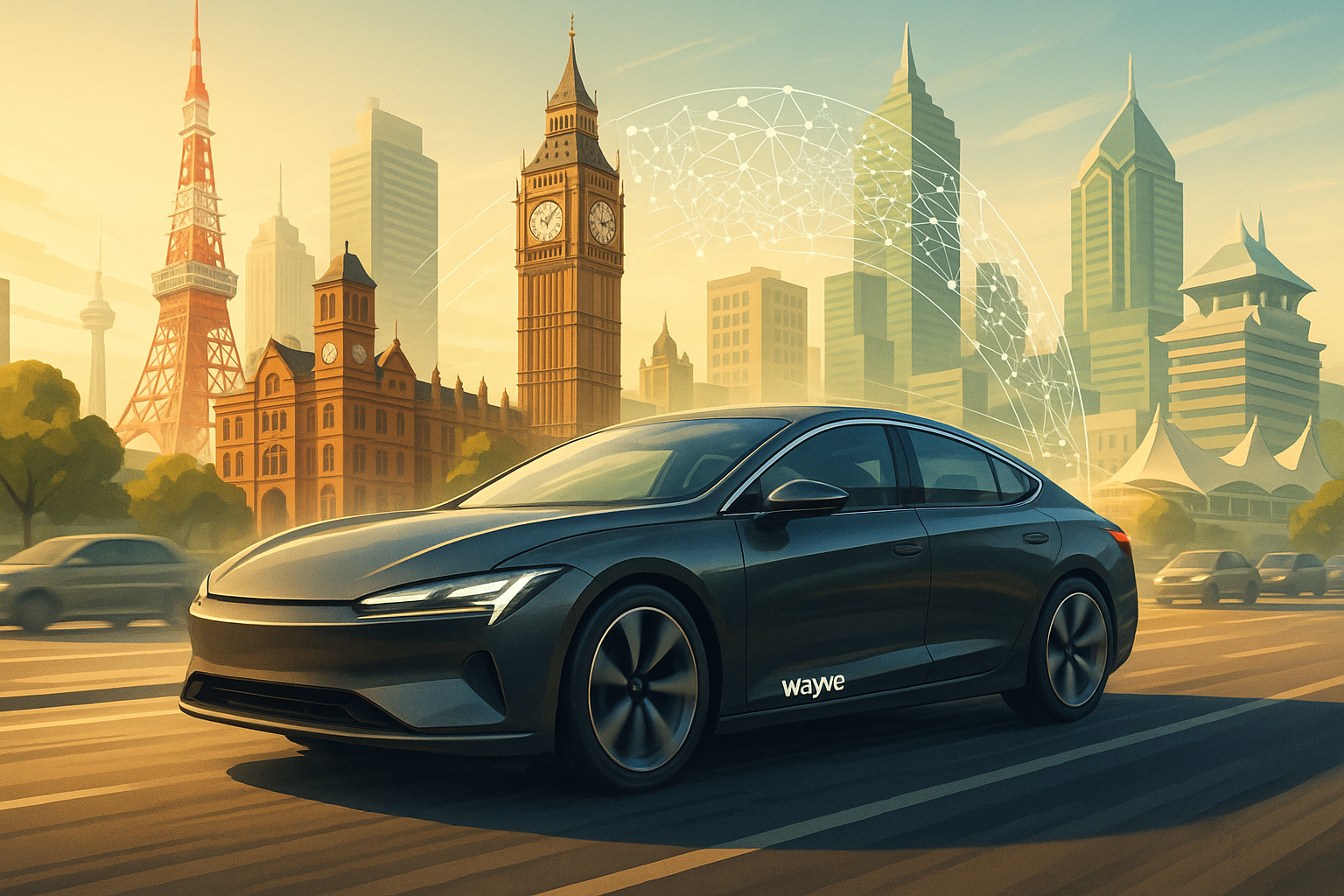
Wayve’s unique approach—turning raw sensor data directly into driving decisions without maps—positions it as an industry disruptor, with $2.8B in fresh funding and deep automaker alliances fueling rapid expansion.
Wayve's recent $2.8 billion funding round marks a pivotal moment in scaling its AI-driven end-to-end autonomous driving technology, enabling the company to accelerate deployment through strategic partnerships and licensing agreements. By collaborating with automotive giants such as Nissan, Mercedes, and Stellantis, Wayve is positioning itself at the forefront of the industry’s shift toward AI-centric self-driving solutions. This substantial capital infusion not only fuels expansion but also underscores confidence in Wayve’s innovative approach to autonomy.
Central to Wayve’s technological edge is its unique strategy of converting raw sensor data directly into driving decisions, bypassing the traditional reliance on detailed maps. This approach allows for greater adaptability and real-time responsiveness in diverse driving environments, setting Wayve apart from competitors who depend heavily on pre-mapped routes. By early 2026, this sensor-first methodology has become a cornerstone of Wayve’s AI-driven system, promising enhanced scalability and robustness in autonomous vehicle operations.

AI Transforms Fleet Safety
Edge-based AI dashcams and real-time coaching are not only slashing accident rates but also automating fleet management, shifting the industry from manual oversight to instant, data-driven decision-making.
AI-powered fleet safety and video telematics technologies are revolutionizing operational safety and efficiency by delivering real-time, actionable insights that extend beyond traditional monitoring. Companies like Motive deploy edge AI dash cams running over 30 AI models locally, enabling millisecond-level detection and alerts for unsafe behaviors, which has helped prevent over 170,000 accidents since 2023. Similarly, Samsara’s AI-driven Driving Coach leverages data from millions of professional drivers to reduce crash rates by nearly 75%, providing instant feedback that transforms driver coaching from delayed reviews to immediate, context-aware interventions.
The integration of AI in fleet management is not only enhancing safety but also boosting operational efficiency by automating complex tasks and providing comprehensive oversight. AI systems act as an 'easy button' for fleet managers, automating functions that traditionally demanded 12 to 14-hour workdays, while also identifying inefficient driving behaviors such as unnecessary idling to improve fuel economy and reduce costs. This technological shift is critical as fleets face increasing regulatory pressures and competitive demands, making outdated tools and spreadsheets a liability for economic and operational performance.
Balancing advanced AI-powered video telematics with driver privacy and human-centric management remains a key challenge and priority. Innovations like 360-degree in-cab cameras activate only during driving to respect privacy, while AI systems emphasize recognizing positive driving behaviors alongside risks, fostering constructive dialogue rather than punitive oversight. Industry leaders stress that AI serves as a decision-support tool rather than a replacement for human judgment, acknowledging current limitations in AI’s ability to fully grasp human dynamics and the importance of maintaining driver quality of life.
Advanced AI video telematics are expanding safety capabilities beyond driver behavior to include pedestrian and environmental hazard detection, significantly reducing accidents involving vulnerable road users. AI models create detection zones in front of vehicles to identify pedestrians and cyclists, dramatically lowering injury and fatality rates in urban settings. Furthermore, aggregated and anonymized video data from millions of vehicles enable AI to pinpoint dangerous intersections, adverse weather, and construction zones, allowing fleets to proactively reroute drivers and enhance overall operational safety.




AI Agents Reshape Logistics
Autonomous AI systems are now orchestrating complex supply chains, driving a shift toward agentic ecosystems while raising the stakes for cybersecurity and transparent decision governance.
AI is rapidly becoming the backbone of autonomous and adaptive supply chains, with Gartner's Christian Titze emphasizing its foundational role in enhancing resilience and operational value. This evolution is propelled by collaborative multiagent AI systems that automate complex workflows, enabling scalability and dynamic decision-making. However, as AI adoption scales—already at 44% among companies per Boston Consulting Group—robust decision governance frameworks are essential to ensure transparency, accountability, and compliance in AI-driven supply chain decisions.
The freight and logistics sector is undergoing a profound transformation driven by AI-to-AI interactions, where autonomous agents handle booking, negotiation, and management of interconnected vehicle nodes without human interfaces. Despite the industry's historical lag in innovation, the $1.4 trillion U.S. market is attracting significant AI investment, accelerating this shift toward fully agentic ecosystems that promise to reduce human involvement drastically and enhance operational efficiency.
AI-powered computer vision and agentic models are revolutionizing supply chain logistics by enhancing operational management capabilities amid a surge in cargo theft, which simultaneously raises cybersecurity stakes. This dual challenge underscores the critical need for integrating AI with strong cybersecurity measures and decision governance to safeguard increasingly complex and interconnected supply chains.
While AI integration into supply chain management software is improving demand forecasting, inventory balancing, and capacity planning, foundational challenges such as data quality and workforce readiness limit broader transformation. Gartner’s survey reveals only 17% of organizations are redesigning workflows to fully leverage AI, but as Nathanael Powrie notes, agentic AI is poised to revolutionize decision governance for those prepared to implement robust frameworks, enabling AI to automate routine tasks and free human managers to focus on complex exceptions.
Camera-Only Trucks Take Lead
Rapid advances in vision models are enabling affordable, scalable camera-only autonomous trucks, but the industry is balancing this leap with sensor fusion for safety as it transitions away from costly, map-dependent systems.
By early 2026, a clear industry pivot toward camera-only vision systems is reshaping autonomous trucking, with companies like Humble Robotics and Mars Auto leading the charge. Humble Robotics, while currently employing a sensor fusion approach combining lidar, radar, and cameras for maximum safety, is increasingly bullish on camera-only models due to their rapid advancements and cost-effectiveness, noting that vision models can now perform complex perception tasks previously requiring multiple sensors. This trend is echoed by Mars Auto, which has developed a single neural network processing raw video to handle perception, judgment, and control without relying on costly lidar or HD maps, slashing sensor costs from rivals’ $229,000 to around $6,500 per vehicle and demonstrating impressive real-world milestones such as a 3,379 km autonomous freight haul in the U.S.
The strategic emphasis on camera-based autonomy is bolstered by breakthroughs in pre-trained vision models that dramatically accelerate scenario recognition, enabling systems to instantly identify complex traffic elements like cones, lights, and even officers holding stop signs—tasks that previously demanded months of engineering effort. Humble Robotics highlights this leap as a game-changer, effectively getting these capabilities 'for free,' which not only reduces development time but also enhances adaptability and scalability of autonomous trucking solutions. This shift away from heavy reliance on static HD maps toward sensor-led real-time perception aligns with broader industry insights emphasizing continuous learning and system refinement through data generated on every trip.
While camera-only systems are gaining momentum, the current transitional phase in autonomous trucking still values sensor fusion for comprehensive situational awareness and safety. Hybrid approaches integrating cameras, radar, and lidar with map data provide robust 360-degree perception, improving reliability and resilience against sensor failure. This pragmatic balance reflects the industry's cautious yet optimistic trajectory, where the ultimate goal is to emulate human-like vision with minimal sensors, but without compromising safety during this evolution.
Mars Auto’s focus on the highway-dominant nature of trucking routes—where 98% of travel occurs on highways—allows it to simplify deployment of camera-only autonomy compared to urban robotaxis, capitalizing on the more uniform and predictable environment. Their upcoming MarsNet 3 Level 4 system aims to extend this camera-only approach beyond highways into urban roads without HD maps by the end of 2026, mirroring Tesla’s Full Self-Driving evolution and signaling a broader ambition to scale adaptable, cost-effective autonomous trucking across diverse road conditions.