AI powers a manufacturing makeover—but only for those willing to collaborate
The gist
AI is transforming Detroit’s manufacturing scene—not by taking jobs, but by demanding workers level up and collaborate with intelligent machines or risk being left behind.
What to know
- By early 2026, resistance to AI—rather than automation itself—is driving job turnover, making 'AI intuition' a must-have skill for manufacturing workers.
- Companies like Peak International Group are using AI-powered knowledge capture and remote diagnostics to plug expertise gaps as veteran engineers retire in droves.
- Human-robot teamwork, inclusive remote operations, and intuitive AI platforms are reshaping factory workflows, but fragmented systems mean digital transformation is still a work in progress.
AI Intuition Redefines Job Security
Manufacturing workers are being replaced not by machines, but by their own reluctance to master AI collaboration and judgment, making 'AI intuition' the new must-have skill for job survival.
By early 2026, AI is reshaping far more manufacturing and technical jobs than it outright replaces, fundamentally augmenting human roles rather than eliminating them. An analysis of 1,500 job types found that few roles can be fully automated end to end, meaning workers must increasingly collaborate with AI tools. However, resistance to adopting AI—rather than role obsolescence—is driving some workforce turnover, as leaders replace employees unwilling to 'get with the program' to boost productivity. This dynamic underscores the critical need for workers to embrace AI as a key driver of job security in evolving technical fields.
The construction sector exemplifies acute labor shortages exacerbated by demographic shifts, with a baseline deficit of 500,000 workers worsening as half the workforce retires within seven years, according to Boris Sofman of autonomous machinery pioneer Bedrock. To address this crisis and improve safety in hazardous roles, Bedrock is deploying fully autonomous heavy equipment operated digitally, transforming the workforce from manual operators to software and digital system managers. This shift not only mitigates labor scarcity but also redefines job functions in traditionally labor-intensive industries.
Upskilling and reskilling in manufacturing now demand more than basic AI tool proficiency; workers must develop sophisticated judgment to interpret, challenge, and responsibly apply AI outputs. Experts emphasize cultivating an 'AI intuition'—the ability to sense when AI-generated results are flawed before articulating why—a skill honed through deliberate exposure to failure cases. This nuanced human-AI collaboration requires complex training to empower workers to discern when to trust AI and when to intervene, making the transition to AI-augmented roles a challenging yet essential endeavor.
Contrary to fears of widespread displacement, AI adoption is fueling net job growth in the U.S., with job openings surging by(https://podcasts.apple.com/podcast/id1138869817) in April 2026 alone. Aaron Levy, CEO of Box, highlights that AI’s disruption of engineering roles paradoxically increases demand, as companies leverage AI to do more with fewer resources, expanding the scope and scale of engineering and software product teams. This trend illustrates how AI acts as a productivity multiplier, driving labor market expansion rather than contraction in skilled technical domains.




Capturing Expertise Before It Vanishes
Manufacturers are racing to digitize and transfer the tacit knowledge of retiring engineers, using AI-powered diagnostics and frontline-focused systems to prevent a catastrophic skill drain.
By early 2026, the American industrial equipment service sector faces an urgent operational performance crisis as retiring engineers depart with decades of institutional knowledge, leaving incoming technicians struggling to bridge the expertise gap quickly enough. Mike Hughes of Peak International Group highlights that this skilled labor shortage is not a looming issue but a present-day challenge eroding service quality and efficiency.
To combat this knowledge drain, service leaders are deploying smarter knowledge capture strategies combined with targeted AI applications and a frontline-first modernization approach. Hughes emphasizes prioritizing remote diagnostics and improving first-time fix rates as critical use cases, enabling organizations to effectively capture tacit expertise and transfer it in real time despite imperfect data environments.

Robotics Empower Diverse Talent
Human-robot partnerships are transforming factories into more inclusive workplaces, where people with disabilities and reskilled workers drive productivity alongside smart machines.
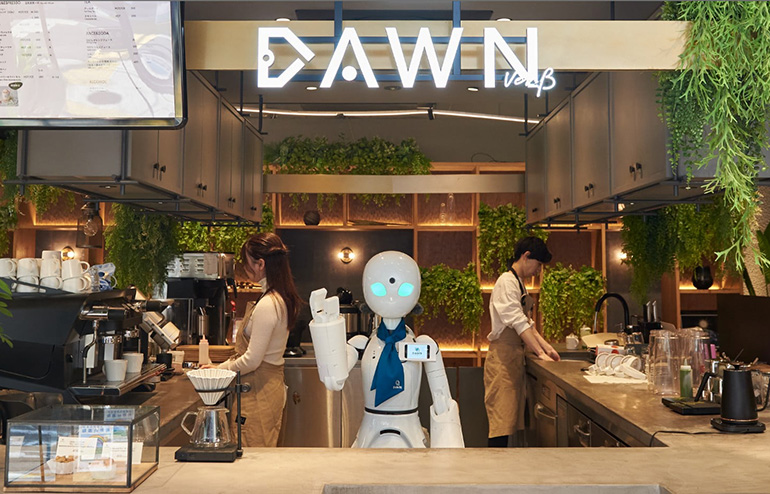
In an evolving manufacturing landscape, robotics are increasingly positioned not as replacements but as enablers of a more inclusive workforce, exemplified by initiatives like Japan's robot cafes remotely operated by people with disabilities. This model highlights a paradigm shift where human-robot collaboration amplifies human potential and broadens participation, fostering workplaces where diverse abilities are integrated rather than sidelined.
Successfully integrating robots alongside human workers demands a fundamental redesign of workflows and operational models, prioritizing augmentation over automation. Manufacturers are investing heavily in reskilling and training programs to equip employees with the expertise necessary to oversee and collaborate with AI-driven systems, ensuring that human judgment and dexterity remain central to complex assembly tasks and nuanced operational decisions.

AI-Driven Factories, Real-Time Decisions
Next-gen ERP and autonomous robotics are fusing real-time intelligence with physical action, but fragmented systems still hold back the promise of seamless, global manufacturing transformation.
By mid-2026, AI-enabled ERP systems have transcended traditional static reporting to become dynamic platforms delivering real-time, role-based intelligence tailored to manufacturing floor workflows. Debbie Baldwin of Acumatica highlights this evolution, noting that modern ERP adapts to user context and behavior, providing the right insights at the right time without requiring extensive training—workers interact with these systems as intuitively as they do with smartphones. This seamless user experience is critical for adoption, ensuring data input is effortless and operational intelligence is accessible across roles.
GFT Technologies, under Brandon Speweik’s guidance, exemplifies the cutting edge of AI moving from mere defect detection to autonomous intervention on live assembly lines. Their integrated system synchronizes machine vision, robotics, cloud infrastructure, and AI-driven root-cause analysis to not only identify but also reposition or remove defective parts in real time. This orchestration addresses complex challenges such as lighting variability, mechanical tolerances, and network latency by leveraging edge computing alongside cloud support, enabling rapid, reliable physical actions without disrupting production flow.
The transformation of supply chains and physical operations through AI and robotics is reshaping manufacturing margins and throughput by enabling human-robot collaboration with unprecedented autonomy and dexterity. Advances in large language models empower robots to perform human-like movements—whether manipulating five fingers or two—allowing them to undertake complex warehouse tasks alongside human workers. Yet, despite these strides, many operations remain fragmented and manual, underscoring a persistent need for comprehensive digital transformation to fully realize AI-enabled real-time operational intelligence on a global scale.
ERP platforms are increasingly functioning as digital twins of manufacturing environments, capturing comprehensive machine and operational data to fuel AI-driven analysis and autonomous decision-making. However, as Debbie Baldwin cautions, integrating machine data requires careful filtering to avoid overwhelming systems with noise, ensuring that AI insights remain meaningful and actionable. This shift towards real-time, autonomous correction and root-cause prevention, championed by GFT Technologies, promises enhanced supply chain reliability and production quality, though widespread adoption hinges on gradually building trust through demonstrable, high-value results.