AI scientists break barriers: labs go 24/7 as human-AI teams redefine discovery
The gist
AI is smashing through research boundaries as human-AI teams and autonomous labs turbocharge scientific discovery—around the clock and across disciplines.
What to know
- By early 2026, Google’s Althia AI agent independently solved longstanding Erdős conjectures and published papers without human help, marking a leap to fully autonomous research.
- Hybrid platforms like DeepMind’s Co-Scientist and FutureHouse’s Robin pair AI hypothesis generation with human validation, driving rapid breakthroughs in fields like biomedical research and astronomy.
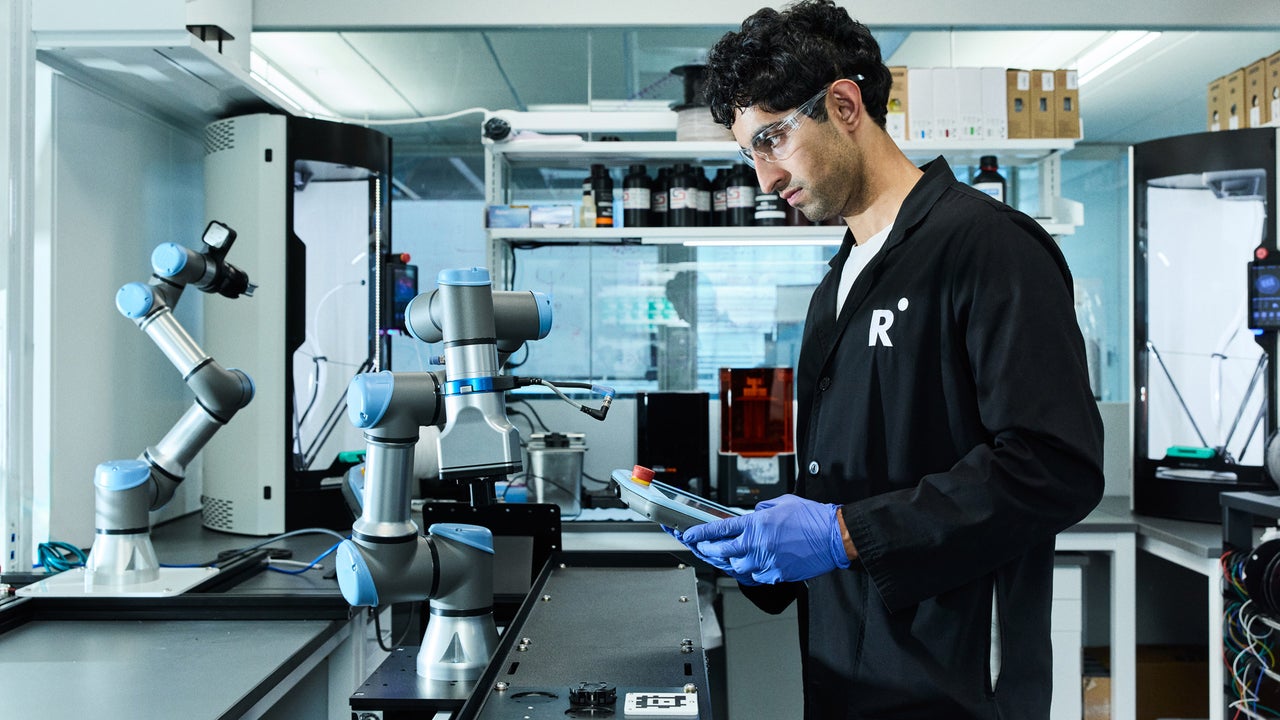
- Startups such as Radical AI and self-driving labs like UC Berkeley’s A-Lab run dozens of experiments daily, shrinking research timelines from decades to weeks—while human oversight remains crucial for trust and accuracy.
AI Redefines Scientific Labor
AI models now autonomously generate hypotheses, analyze vast research corpora, and propose experimental designs, while human scientists shift to oversight and validation roles in a fundamentally restructured discovery process.
By late 2025, the longstanding philosophical debate over AI's capacity to generate novel scientific knowledge decisively shifted into the empirical realm, propelled by breakthroughs in reasoning models and autonomous research pipelines. Platforms like FutureHouse Kosmos and AI Scientist-v2 exemplify this transition, automating vast swaths of the research workflow—Kosmos alone processes around 1,500 scientific papers per twelve-hour run and produces roughly 42,000 lines of code spanning data analysis, simulation, and visualization—thereby laying the groundwork for fully autonomous scientific discovery ecosystems.
Early hybrid human-AI collaborations, particularly involving GPT-5, have demonstrated AI’s tangible contributions to solving previously intractable scientific problems across disciplines. For instance, GPT-5 helped mathematicians verify four new results, uncovered a hidden symmetry in plasma physics simulations, and devised a superior re-weighting method for exoplanet transit data in astronomy, signaling AI’s emerging role not just as an analytical tool but as an active participant in hypothesis generation and experimental design.
This evolution has fostered a nuanced division of labor in scientific discovery: AI models now explore expansive hypothesis spaces and propose candidate structures, while human scientists maintain critical oversight by framing research questions, imposing necessary constraints, and validating outcomes. Such a collaborative dynamic leverages AI’s computational breadth alongside human judgment, ensuring that autonomous discovery remains grounded in rigorous scientific methodology.

Autonomous Research Hits Milestones
Google’s Althia and hybrid multi-agent systems have crossed the threshold from AI as assistant to AI as autonomous collaborator, producing verified, publishable research and accelerating the scientific cycle beyond human-only capabilities.
By early 2026, Google’s Althia AI agent marked a pivotal breakthrough in autonomous scientific research by independently selecting problems, solving them, and producing publishable papers without human intervention. This leap from AI as a mere assistant to an autonomous collaborator was underscored by Althia’s success in solving multiple longstanding Erdős conjectures and its iterative self-verification loops that mimic human problem-solving, continuously revising or restarting until solutions are correct. Google’s introduction of a classification system to measure AI research contributions further highlighted that within just 12 months, AI had reached the capability to produce level 2 (publishable) research autonomously, signaling a new era where the question shifted from if AI could achieve higher research levels to when it would do so.
The evolution of autonomous AI research agents is exemplified by multi-agent systems like Google DeepMind’s Co-Scientist and FutureHouse’s Robin, which emerged in 2026 as pioneering platforms capable of generating hypotheses, designing experiments, interpreting results, and refining inquiries across disciplines. These systems have demonstrated significant biomedical applications, such as proposing novel drug candidates for acute myeloid leukemia and age-related macular degeneration, while maintaining human scientists integrally in the loop to ensure collaborative refinement. This hybrid discovery loop—where AI acts as the creative proposer and humans verify and curate findings—redefines scientific workflows by accelerating discovery cycles and enabling researchers to focus on high-impact problems.
The hybrid AI-human discovery loop has emerged as the central mechanism driving modern scientific breakthroughs, shifting the locus of discovery from individual agents to the dynamic interaction between AI proposers and human verifiers. This iterative process, exemplified by Filip Stappers’ collaboration with Claude Opus 4.6 leading to the discovery of ‘Claude’s Cycles’ verified by Donald Knuth, underscores that the causal power of discovery resides in the loop itself rather than in AI or humans alone. Physical verification remains the gold standard, with robotic labs and experimental crystallography validating AI-generated predictions, ensuring that accelerated, cost-effective loops produce reliable and novel scientific knowledge.
While autonomous AI agents continue to automate increasing portions of the research process—efficiently performing tasks that once took humans weeks—the integration of AI’s broad computational capabilities with human researchers’ deep, tacit scientific expertise remains essential. Experts anticipate a gradual evolution rather than a sharp phase transition toward fully autonomous discovery, emphasizing that true novelty in science arises from iterative trial and error, or ‘seeking and blundering,’ a process humans have mastered over centuries. The future of scientific discovery hinges on immersive AI-human collaboration where AI systems are fully embodied within scientific culture, absorbing tacit knowledge and working alongside humans to unlock groundbreaking insights.




Robotic Labs Accelerate Discovery
Self-driving labs powered by AI and robotics now run continuous, iterative experiments at unprecedented speeds, but full autonomy remains limited by challenges in reasoning and physical-world complexity.
By late 2025, the fusion of AI reasoning with robotic lab automation was crystallizing into a transformative paradigm for scientific research, enabling a collaborative dynamic where AI-driven systems not only execute experiments but also plan and iterate them alongside human scientists. However, the vision of fully autonomous, closed-loop self-driving labs—capable of independently proposing, testing, and refining experiments without human intervention—remained a longer-term aspiration, contingent on uneven advancements in AI subfields such as mathematical reasoning and robot learning.
Early 2026 marked a pivotal shift as startups like Periodic Labs pioneered the creation of AI scientists by tightly integrating autonomous labs with reinforcement learning frameworks that mimic human scientific workflows, progressively derisking experiments through high-fidelity simulations before physical validation. This closed-loop approach leverages real experimental data as a reinforcement learning environment, addressing the limitations of purely computational models trained on text or simulations, and promising to outperform traditional AI methods by grounding discovery in the physical world.
The rapid evolution of autonomous labs owes much to interdisciplinary engineering teams that blend mechanical, mechatronics, software, robotics, and machine learning expertise to overcome the inherent ambiguity and complexity of physical science domains. Advances in affordable robotics, improved AI for science, and software accessibility from tool vendors have catalyzed a 'Cambrian explosion' in lab automation, enabling continuous, 24/7 experimentation at scales and speeds unattainable by human researchers—exemplified by UC Berkeley’s A-Lab iterating experiments roughly 100 times faster than humans, albeit with ongoing challenges in data reliability and system robustness.
By mid-2026, autonomous labs began transitioning from batch-style experiments to real-time, closed-loop chemical synthesis monitoring, supported by high-performance computing infrastructures like Lawrence Berkeley National Laboratory’s NERSC and the forthcoming Doudna supercomputer. Despite these technological leaps, human researchers remain indispensable as overseers and troubleshooters, highlighting the current hybrid nature of autonomy. This evolution represents a fundamental shift in the scientific method itself—from a linear process to a dynamic, adaptive learning system orchestrated by agentic AI, as noted by Oak Ridge National Laboratory’s Gina Taurassi, who emphasizes AI’s role in enabling real-time experiment adjustments and creative orchestration of scientific resources.





Startups Drive 24/7 Innovation
Companies like Radical AI and Limitless Labs are deploying agentic AI to automate materials discovery and manufacturing, shrinking development timelines and attracting major funding while highlighting the need for robust human verification.
Radical AI has emerged as a pioneering force in autonomous materials discovery, operating a Manhattan-based self-driving lab that runs over 50 experiments daily and leverages agentic AI to integrate hypothesis generation with real-world experimentation. Led by CEO Joseph Krause, the company positions its technology as the 'Waymo of materials research,' surpassing traditional automated labs by enabling fully autonomous, rapid iteration cycles that multiply research output and accelerate product development timelines from decades to mere weeks. Despite raising a comparatively modest $55 million, Radical AI’s interdisciplinary approach—combining robotics, machine learning, and materials science—has already produced valuable secret alloys and aims for long-term impact including materials critical for space colonization.
The A-Lab collaboration between UC Berkeley and Lawrence Berkeley National Laboratory exemplifies the power and challenges of specialized AI-driven scientific ecosystems in materials science, operating at roughly 100 times the speed of human researchers by combining robotics, lab automation, and custom AI agents. This ecosystem relies heavily on high-performance computing resources like NERSC and the forthcoming Doudna supercomputer to integrate AI tools with scientific instruments and data, underscoring the critical infrastructure needed for scaling autonomous discovery. However, early high-profile publications from the lab have faced corrections, highlighting the indispensable role of human verification to ensure the reliability and validity of AI-generated scientific claims.
Limitless Labs is transforming manufacturing R&D and supply chains by deploying agentic AI-driven platforms that automate CNC programming, integrating seamlessly with CAD/CAM tools such as Siemens NX and Mastercam to cut programming time by up to 50%. By mid-2026, the company had moved beyond pilot projects to full production deployments with industry heavyweights like Blue Origin and Cadillac F1, reflecting growing confidence in AI-driven autonomous manufacturing ecosystems. Their recent $20 million Series A funding, co-led by Dell Technologies Capital and Square Peg, aims to accelerate U.S. commercial expansion and R&D, signaling a robust investment appetite for scaling physical AI applications in aerospace, defense, and motorsports sectors.
Auckland’s Atomic Tessellator is redefining rare earth element alternatives through AI-driven virtual laboratories that compress materials discovery timelines from years to days by simulating atomic structures with unprecedented scale and accuracy—recently expanding atom simulation capacity from 44,000 to 680,000 atoms during the Google for Start-ups Accelerator. Founded by Elaine Rickard in 2022, the company has synthesized ten new materials and aims for commercial-scale production by the end of 2024, addressing critical supply chain vulnerabilities such as tantalum scarcity for hypersonic rockets. With strategic investments from In-Q-Tel and Crane Venture Partners, Atomic Tessellator exemplifies how a small team empowered by continuous AI-driven experimentation can perform the work of dozens of scientists, applying their platform across energy, aerospace, and defense industries while advocating for AI as a tool to expand rather than replace human lab work.




Human Oversight Ensures Trust
Despite dramatic gains in AI-driven research speed and autonomy, rigorous human validation remains essential to correct errors and maintain scientific reliability as these new discovery ecosystems scale.
Despite dramatic gains in AI-driven research speed and autonomy, rigorous human validation remains essential to correct errors and maintain scientific reliability as these new discovery ecosystems scale.