AI search crowns third-party authority: why your brand’s fate now rests on external validation
The gist
By 2026, AI search has flipped the script—third-party validation, not your own website, now determines if your brand gets seen or skipped in AI-generated answers.
What to know
- 95% of AI search citations now come from third-party sources like blogs, Wikipedia, and Healthline—meaning earned media, not just SEO, is critical for visibility.
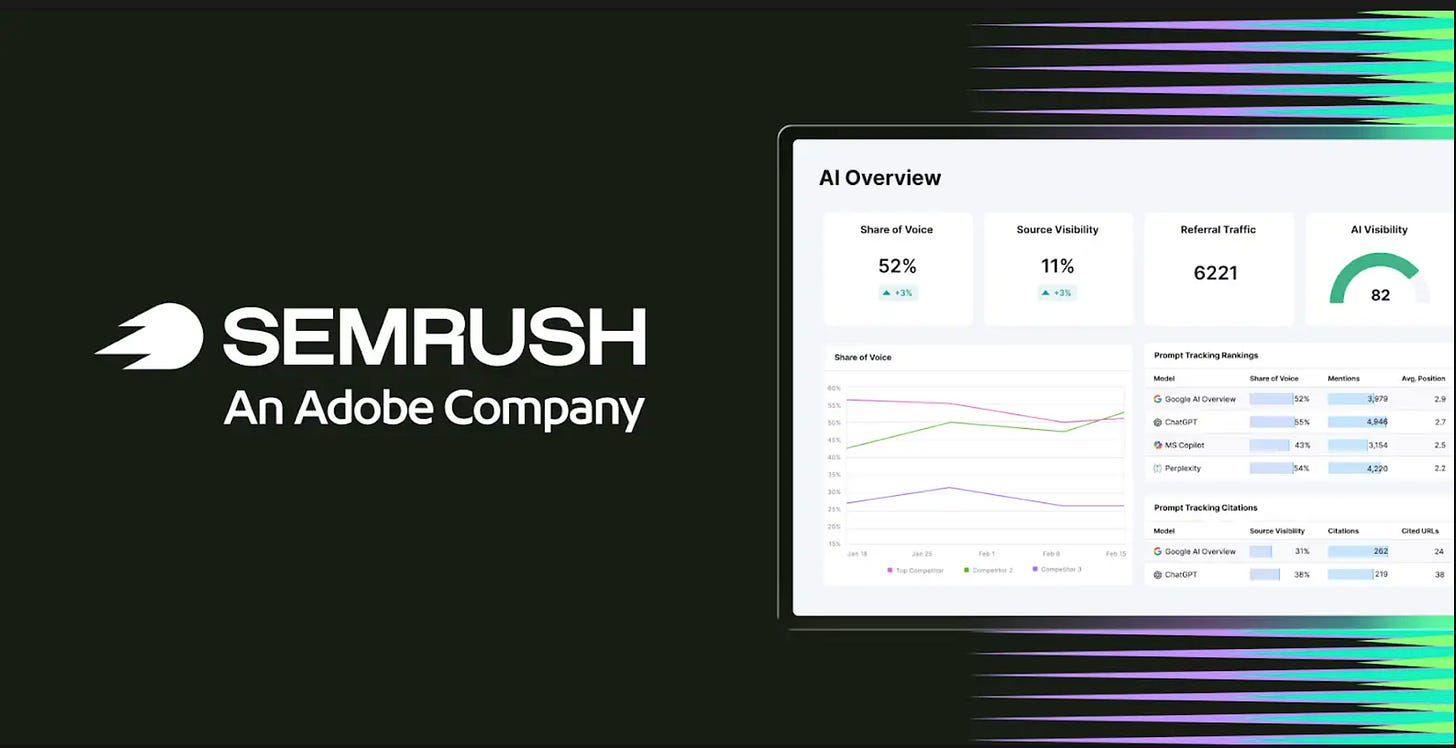
- Tools like Semrush’s AI visibility toolkit show that citation share, not rankings, is the new metric; brands like Patagonia, Chase, and Thorne win by building authority across channels.
- AI acts as a gatekeeper, curating answers from a handful of trusted sources—if your brand isn’t cited and verifiable, you risk invisibility in high-stakes sectors like finance and B2B.
Authority Surpasses SEO
AI search now favors brands with multi-channel authority and trust, rendering traditional SEO tweaks obsolete and making sustained reputation the new ranking currency.
By late 2025, AI search platforms began prioritizing brand authority as the decisive factor that elevates content from merely discovered to actively recommended, surpassing traditional SEO metrics. This shift reflects AI’s evolution from simple retrieval tools to sophisticated decision-making partners that mirror human preferences for trusted sources, creating both new opportunities for established brands and challenges for content creators striving to build authority in an environment where trust and reputation are paramount.
Research from Semrush in late 2025 and early 2026 underscores that AI search visibility diverges significantly from traditional SEO, with only 53% overlap in top domains cited by AI compared to Google’s top results. This divergence emphasizes that brand authority, trust, and product quality—embodied in frameworks like E-E-A-T—have become critical ranking signals that cannot be compensated for by last-minute SEO tweaks or content spamming, necessitating SEO integration from product inception rather than as an afterthought.
Data from Contentsquare and expert voices like Alex Dees highlight that AI-driven discovery favors brands with strong influence and familiarity, yielding better conversion rates and lower bounce rates than paid search traffic. Dees emphasizes that winning AI search is a zero-sum game hinging on six pillars—clarity, consistency, authority, proof, freshness, and specificity—while AI compresses the buyer journey into a single chatbot interaction, making sustained brand authority throughout this condensed funnel critical.
By mid-2026, analyses and interviews with industry leaders such as Michael Hastings and Zareen Fidlon reveal that AI platforms demand brands demonstrate consistent, credible, and transparent narratives across owned and third-party channels, including media, review sites, and social platforms. Trust signals now outweigh sheer content volume, with brands like Patagonia and NerdWallet winning visibility through diversified citation infrastructures and specialized focus. As Rachel Thornton of Adobe notes, minimizing brand drift and ensuring coherent messaging across all digital touchpoints has become the foundation for AI search visibility, transforming brand authority into a measurable, multi-dimensional asset that AI systems rely on to recommend and prioritize brands.



The AI Citation Economy
Nearly all AI search citations now come from third-party sources, forcing brands to win influence in external editorial ecosystems or risk vanishing from AI-generated answers.
By early 2026, research from OtterlyAI and Stacker firmly established that AI search engines like ChatGPT, Perplexity, and Google AI Overviews rely on third-party editorial sources for approximately 95% of their citations, signaling a profound shift away from traditional SEO that prioritized brand-owned content. This new 'AI Citation Economy' emphasizes authority-building within influential third-party domains, where earned media distribution can triple AI search visibility and deliver a median 239% lift in brand citations, underscoring the critical importance of brands actively engaging with and influencing these external ecosystems through targeted editorial placements.
Blogs and listicles have emerged as dominant citation sources, accounting for 62% of AI citations, marking a strategic pivot where the goal of content is less about direct traffic and more about influencing AI answer engines through citation and brand visibility. This shift compels brands to manage their external presence meticulously across key platforms favored by AI, as being absent from these can severely limit AI recommendations. Consequently, brands must adopt a combined 'GEO' strategy—integrating owned and earned media—to sustain long-term prominence across evolving AI search landscapes.
Citation analysis reveals that peer and third-party editorial content overwhelmingly dominate AI-driven brand visibility, with 55% of citations coming from peers and a mere 4% from owned content, highlighting the necessity for marketers to strategically map and invest in external channels that AI trusts. This external validation, reflected in citation signals from platforms like Wikipedia, Healthline, and IMDb, directly influences AI recommendations and brand trust, making consistent, clear messaging across multiple authoritative third-party sources essential. Brands such as Patagonia, Shopify, Cleveland Clinic, and NerdWallet exemplify success by maintaining strong citation infrastructures that provide coherent signals to AI systems.
The banking and financial sectors vividly illustrate the dominance of third-party editorial sources in AI citations, with Wikipedia, Bankrate, and Investopedia supplying 68% of AI citations while bank-owned websites account for less than 7%. Chase’s strategic decade-long investment in structured content, syndicated third-party placements, and active Wikipedia maintenance has yielded a commanding 28.4% AI Citation Share—more than its market share—demonstrating that earned media and citation signals, rather than technical SEO, drive AI visibility. Conversely, many large banks remain virtually invisible in AI-driven research due to insufficient presence in key third-party publishers, underscoring the urgent need for brands to diversify and manage their external brand presence across influential platforms to avoid being overshadowed by competitors.


Proprietary Data Wins Citations
Brands that publish unique, benchmarked first-party data dominate AI visibility, as AI models prioritize original evidence over generic or aggregated content.
By early 2026, it became clear that proprietary, first-party data offering deep specificity and unique narratives is indispensable for creating defensible AI content that cannot be replicated by generative models alone. For example, detailed original evidence like Jake’s Brooks Ghost 15s running metrics—down to a 4 mm lateral foam compression difference—provides a level of authenticity and uniqueness that AI content generators like ChatGPT cannot mimic. As emphasized, publishing original numbers directly derived from a business’s own operations remains the most reliable lever for originality and citation-worthiness, distinguishing such content from assembled or aggregated data.
However, owning proprietary data is only the first step; AI systems prioritize content that is structured for easy data extraction and comes from trusted, authoritative sources. Simply having unique numbers does not guarantee citation; the content must be designed to facilitate AI’s referencing, with trusted-source presence playing a critical role. Fortunately, the barrier to leveraging original data is lower than expected, as most modern products inherently generate valuable data without the need for dedicated research teams, making defensible AI citations more accessible than previously assumed.
AI visibility disproportionately rewards proprietary data when it is transformed into clear, defensible benchmarks answering the question 'which is best.' While raw original data citations are valuable, benchmarks dominate AI citations, with first-party research pages earning 3.3 times more citations than non-primary research pages. Notably, 75 of 90 primary research citations in a study came from a single cluster of cloud data warehouse benchmarks, underscoring the power of focused, high-value original research topics. This reveals that owning data alone is insufficient; the true asset lies in crafting benchmarks that AI systems prefer to cite.
In the competitive landscape of AI citations, brands with unique clinical credibility and peer-reviewed data outperform those with higher revenue or larger ad budgets. For instance, in the supplement sector, science-led brands like Thorne captured nearly half of citation share across thousands of prompts, driven by trust signals such as NSF certifications, peer-reviewed citations, and accessible batch-specific Certificates of Analysis. Moreover, sustained presence on science-focused podcasts like Huberman Lab amplifies citation frequency by approximately 3.4 times, while simpler single-SKU product lines generate clearer AI citations than extensive catalogs, which tend to dilute semantic associations.



Citation Share Is the New Metric
Marketers must shift from tracking search rankings to measuring brand citation rates across AI platforms, as platform-specific citation behaviors now dictate discoverability.
By early 2026, the measurement of brand presence in AI search had evolved from traditional SEO rankings to tracking citation share within generative AI systems, reflecting a fundamental shift from click-based to citation-based optimization. This transition underscores the compounding relationship between paid and earned intent, where paid advertising fuels engagement that trains AI models, thereby increasing organic inclusion and citation likelihood in AI-generated answers. As noted in the January 2026 insights, marketers no longer track position but focus on whether and how often AI models reference their brand relative to competitors, marking a new frontier in visibility measurement.
Emerging diagnostic tools and metrics have become essential for benchmarking brand presence across diverse AI platforms, each exhibiting distinct citation behaviors that complicate measurement. Platforms like ChatGPT cite an average of 15 sources per response, often from community-driven sites like Reddit and Wikipedia, while Gemini cites fewer sources from a smaller pool, leading to significant variation in brand mention and citation overlap—sometimes as low as 30%. Tools such as Scrunch and Semrush’s AI visibility toolkit provide automated dashboards that track mention rates, share of voice, and positioning, enabling marketers to identify competitive gaps and optimize AI search visibility with platform-specific strategies.
The urgency for robust measurement and diagnostic frameworks is underscored by the stark reality that 95 to 97% of corporations remain invisible in AI-generated answers, despite 60% of buyers initiating their journeys with AI assistants. Scott Hebner highlights that while many companies can measure visibility outcomes, few understand the root causes behind them, making advanced diagnostics like AEO (Answer Engine Optimization) critical for avoiding invisibility in AI-driven buyer journeys. Moreover, AI assistants’ personalization and evolving knowledge graphs compound advantages over time, meaning delayed adaptation risks permanent exclusion from AI conversations.
Optimizing AI search visibility today demands a multi-layered approach combining new content strategies, data governance, and brand authority signal tracking to maintain accuracy and consistency across digital touchpoints. Adobe Enterprise’s CMO Rachel Thornton emphasizes minimizing brand drift as foundational to securing AI visibility, while the identification of 12 brand authority signals—including emerging AI-era signals—provides a structured framework for diagnostics and optimization. Additionally, knowledge graph enrichment emerges as a pivotal tactic to increase AI citations, as highlighted by Paul Rowe of NeuralabX, whose research builds on the Princeton GEO study to inform cutting-edge generative engine optimization strategies.



Human Insight Completes the Loop
AI-generated content sets the baseline, but only human-driven clarity, consistency, and emotional resonance turn brand mentions into trusted, conversion-ready recommendations.
By early 2026, experts like Alex Dees emphasized that brands must cultivate clarity, consistency, and authority in their messaging to succeed in AI-driven buyer journeys, where AI condenses the entire decision process into a single chatbot interaction. However, AI-generated content alone achieves roughly 80% of the needed quality; the crucial remaining 20% requires human creativity and judgment to polish messaging and build genuine trust, underscoring the irreplaceable role of human insight in crafting coherent and authoritative brand narratives.
Strategic brand building for AI visibility demands a holistic approach that extends beyond owned websites to a diversified digital footprint including Google Business Profiles, reviews, directories, and media mentions. As detailed in analyses from mid-2026, AI systems cross-reference multiple credible sources, favoring brands like Patagonia and Shopify that maintain consistent, clear descriptions across paid, owned, and earned media. This multi-channel coherence, supported by structured data markup and coordinated cross-team efforts, ensures brands become machine-readable and trustworthy, enabling AI to confidently recommend them over competitors.
The evolving AI search landscape shifts brand success metrics from mere visibility to genuine trust and engagement, as highlighted by PAN’s Zareen Fidlon who found that joy sentiment growth outperforms reach or mention volume as a predictor of revenue. Brands must sequence unpolished, humanized content that earns attention and trust before deploying polished, conversion-driven messaging, thereby guiding AI-driven buyer journeys with authentic signals rather than superficial reach. This nuanced understanding warns marketers against chasing vanity metrics, emphasizing instead the cultivation of meaningful, positive sentiment to build lasting buyer belief.
Cross-team coordination emerges as a critical enabler of coherent brand storytelling in AI-driven buyer journeys, with industry leaders like Sumit Singh and Rahul Pandey underscoring that every company action constitutes a brand statement. Aligning narratives, data, and external footprints across departments ensures a unified reputation that is simultaneously experientially strong for humans and evidentially clear for AI systems. This integrated approach rejects the notion of separate reputations for consumers and AI, instead advocating for a single, consistent brand identity that AI assistants can reliably interpret and recommend.


AI Becomes Marketing’s Gatekeeper
AI chatbots now control brand discovery in high-stakes sectors, rewarding only those brands with verifiable, consistent narratives and sidelining those lacking external authority.
By 2026, AI has transcended its role as a mere productivity tool to become the definitive gatekeeper in marketing and brand discovery, fundamentally reshaping how brands are evaluated and found. John Seroka emphasizes that AI no longer offers a marketplace of options but delivers curated, direct answers synthesized from a limited number of sources, meaning brands must present clear, consistent, and verifiable messaging to be included in these AI-generated responses. Without provable claims and coherent brand narratives, companies risk complete exclusion from AI-driven conversations, underscoring a seismic shift from traditional SEO to authoritative digital presence.
This evolving AI gatekeeper role is especially critical in high-stakes sectors like finance and B2B, where initial buyer and investor research increasingly begins with AI chatbots rather than traditional search engines. A 2026 G2 survey revealed that 51% of B2B software buyers start their research with AI chatbots, up from 29% the previous year, highlighting AI's dominance in shaping first impressions. However, companies going public, such as Klarna and Figma, often suffer from 'high recognition, low source control,' where AI narratives rely heavily on press coverage, sometimes perpetuating negative post-IPO perceptions during quiet periods when companies cannot correct misinformation, thus risking their credibility at critical moments.
To thrive in this AI-mediated landscape, brands must pivot from short-term SEO tactics to building long-term digital authority through dense, proprietary content and demonstrable expertise. Companies like CoreWeave, Circle, and Anthropic have secured confident AI explanations by publishing detailed technical materials, enabling AI to accurately represent their narratives in their own words. As Ronn Torossian notes, 'The audience is now the machine,' making proactive AI communications strategies essential to maintain control and credibility in investor and buyer discovery processes.
The case of Noble Public Adjusting Group exemplifies how AI gatekeepers assess brand credibility by synthesizing measurable results, industry recognition, and nuanced reputational factors beyond mere keyword rankings. Despite Noble’s A+ BBB rating signaling strong trust, customer complaints about communication and fees illustrate the complexity of sustaining AI-recognized authority. Furthermore, leveraging proprietary AI and automation technologies internally, as Noble has done with advanced systems for claims processing, aligns with industry trends and is becoming indispensable for brands aiming to meet AI-driven expectations and scale operations effectively.