AI shifts gears: automotive manufacturing races toward data-first, smarter supply chains amid workforce and cybersecurity crunch
The gist
Automotive manufacturing is speeding toward a data-first, AI-powered future—redefining supply chains, labor, and security in a race where China remains the indispensable engine.
What to know
- By mid-2026, pioneers like MOTORMIA and Shanghai Electric are mapping millions of parts and connecting 460,000+ devices to supercharge forecasting, inventory, and efficiency with AI-driven architectures.
- Western automakers are doubling down on Chinese production and digital twins, even as geopolitical risks and tariffs loom, with GM’s China-made exports surging 65% to over 312,000 units in 2024.
- Cyberattacks and a severe skilled labor crunch are forcing manufacturers to embed expert judgment into software and adopt strict frameworks like UNECE R155 and ISO/SAE 21434 to secure sprawling, AI-integrated supply chains.
Data Layers Redefine Auto Ops
AI-powered, adaptive data architectures are transforming fragmented vehicle records into dynamic intelligence layers, unlocking real-time forecasting, hyper-precise inventory, and compatibility at unprecedented scale.
By mid-2026, the automotive industry is undergoing a fundamental shift from a legacy of physical innovation to a data-first architecture, where data acts as the foundational layer driving growth and operational efficiency. Traditional fragmented standards like ACES and PIES no longer suffice to manage the exponential complexity of modern vehicles, prompting companies like MOTORMIA to pioneer AI-driven, dynamic data systems that continuously evolve through real-world feedback, mapping millions of parts to tens of thousands of vehicle configurations and generating tens of millions of fitment relationships. This transition transforms data from passive records into active intelligence layers that underpin precise forecasting, optimized inventory management, and accurate compatibility matching across the automotive ecosystem.
In regions with fragmented markets such as the UK and Europe, the challenge of diverse regulatory environments heightens the necessity for robust data interoperability to accelerate electrification and sustainability efforts throughout the vehicle lifecycle. This emerging data layer is increasingly recognized as a new form of infrastructure, where the ability to build and maintain comprehensive, adaptive data systems will define competitive advantage in the coming decade, as echoed by the industry consensus that 90% of manufacturers now deem digital transformation essential, with over one-third of operations augmented by AI-driven smart manufacturing technologies.
Leading automotive manufacturers are operationalizing these data-driven foundations through advanced technologies like digital twins and integrated AI architectures. For example, Voyah’s Huangjin Plant employs digital twin technology for real-time production monitoring, enabling a vehicle output every 40 seconds, while their Dreamer model integrates AI-powered interfaces and intelligent driving features developed in collaboration with partners such as iFlytek and Bosch. Simultaneously, the supply chain is evolving into a data-integrated ecosystem exemplified by ventures like Dongfeng and CRRC’s Intelligent Power Semiconductor Co. Ltd., which produces 700,000 automotive-grade power semiconductors annually, reducing import reliance and supporting innovation.
Collaborations among industry leaders such as Dassault Systèmes, Quanta Cloud Technology, and Nvidia further illustrate the shift toward data-first automotive manufacturing by advancing digital twin technologies that enable AI-driven simulation and operational optimization. These partnerships are transforming factory operations and generative AI system deployment, underscoring how data-centric infrastructures are becoming critical to scaling efficiency and innovation in automotive production environments.
Agentic Factories Hit the Floor
AI-driven agentic systems and edge computing are moving beyond pilots, dynamically optimizing production and maintenance while demanding new approaches to data quality, process redesign, and workforce buy-in.
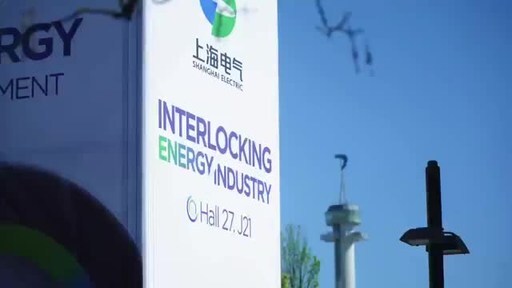
By early 2026, Shanghai Electric had set a high bar for AI integration in manufacturing with its StarCloud AI suite, which incorporates nearly 40 AI models and intelligent agents across R&D, production, and maintenance, showcasing a comprehensive approach that leverages edge computing to connect over 460,000 devices across 13 industries. Their innovative 'Mobile Factory'—a containerized, AI-driven modular system deployed internationally—exemplifies the practical application of agentic factory systems enabling flexible, on-site maintenance, while the introduction of the bipedal humanoid robot 'Suyuan' highlights advanced robotics enhancing operational efficiency and quality control.
Avanade's demonstration of an agentic factory system further illustrates how AI at the edge can dynamically optimize manufacturing workflows, achieving a 20% reduction in inventory and recovering $35 million in fees by adjusting line speeds and deploying AI agents for diagnostics and maintenance. However, as Avanade emphasizes, successful AI adoption hinges not only on technology but also on clean data, process redesign, and change management to ensure operator buy-in and scalable, reproducible results beyond pilot phases.
The rapid acceleration of AI adoption in US manufacturing, with exploration rates jumping from 75% to 92%, signals a shift from isolated pilots to enterprise-scale transformations featuring agentic AI systems autonomously managing production and maintenance. Despite this momentum, manufacturers grapple with fragmented legacy data, talent shortages, and integration challenges, yet they are increasingly deploying AI for predictive maintenance, advanced quality control, and waste reduction to boost operational efficiency amid rising labor costs and supply chain volatility.
South Korea’s LG Energy Solution exemplifies AI-driven manufacturing excellence by leveraging digital twin simulations and autonomous systems to boost production speed by over 50% and enable flexible multi-format battery production, a model now being scaled nationally through the M.AX Alliance aiming to deploy AI across 500 factories by 2030. This government-backed initiative, supported by $481 million in funding, underscores AI’s strategic role in sustaining industrial competitiveness and addressing workforce aging, with Industry Minister Kim Jung-kwan calling AI transformation 'an essential task for survival.'
Advantech and NVIDIA’s AI Factory Brain demonstrates the power of multi-agent AI systems to enhance manufacturing productivity by 12% and reduce energy consumption by 10% through improved anomaly detection and coordinated factory responses. Meanwhile, GFT Technologies is pioneering the evolution from AI defect detection to autonomous physical intervention on assembly lines, integrating machine vision, robotics, and cloud infrastructure to orchestrate real-time actions. Yet, as Brandon Speweik notes, building trust in autonomous AI systems remains a critical barrier, requiring gradual adoption through measurable successes in high-value applications amid the complexities of live production environments.
Collaborations like Dassault Systèmes, Quanta Cloud Technology, and Nvidia’s push to develop industrial digital twins further illustrate the growing emphasis on AI-powered factory simulations to enhance operational efficiency and streamline AI inference, reinforcing the broader trend of integrating advanced AI technologies to transform manufacturing ecosystems at scale.

China’s Supply Chain Gravity
Despite rising tariffs and de-risking rhetoric, Western automakers and tech giants are doubling down on China’s unmatched supplier networks, making decoupling nearly impossible for cost, quality, and scale.
By mid-2026, China’s manufacturing ecosystem remains the linchpin of global automotive and tech supply chains, with giants like Apple and Tesla deeply entrenched despite geopolitical headwinds. Apple’s CEO Tim Cook acknowledged that 151 of its top 200 suppliers operate in China, underscoring the difficulty of decoupling from this manufacturing powerhouse. This dominance is bolstered by China’s vast trade surplus—$1.2 trillion in 2025, the largest ever recorded—and competitive advantages such as scale, automation, and low industrial energy costs, which European firms also recognize, with 68% choosing to maintain or expand operations there despite EU de-risking initiatives. As Jens Eskelund from the EU Chamber of Commerce put it, competing on price and quality today often means integrating into Chinese supply chains rather than opting out.
Western automakers increasingly embrace China not just as a manufacturing base but as a strategic export hub, accepting joint ventures and profit-sharing to leverage its unparalleled supplier network and cost efficiencies. For example, GM’s exports of Chinese-made vehicles surged 65% over two years to 312,000 units in 2024, while Ford, BMW, Hyundai, and Renault also ramped up volumes significantly by mid-2025. This shift reflects a pragmatic acknowledgment that China’s integrated supplier ecosystems, exemplified by companies like Lens Technology and specialized component producers near Hangzhou, provide high-quality inputs that are difficult to source elsewhere, reinforcing dependency despite geopolitical risks.
The looming expiration of the US-China tariff agreement in November 2026 injects fresh uncertainty into already complex automotive supply chains, which now manage tens of thousands of parts across multiple tiers and configurations. Heavy reliance on Chinese critical minerals and Taiwanese semiconductors heightens vulnerability to supply disruptions and price volatility, prompting leading automotive firms to proactively enhance supply chain agility and resilience. However, the intricate nature of just-in-time manufacturing means even minor geopolitical or regulatory shocks could trigger costly production halts, underscoring the imperative for robust risk management strategies.
To navigate this complexity, companies like General Motors and Delta Electronics are pioneering digital twin technologies combined with AI to gain real-time supply chain visibility and optimize operations, though challenges around data quality and legal contract risks remain. Meanwhile, domestic joint ventures such as Intelligent Power Semiconductor Co. Ltd., formed by Dongfeng Motor and China Railway Rolling Stock Corp., are bolstering supply chain resilience by localizing critical component production, producing hundreds of thousands of automotive-grade power semiconductors annually. These innovations reflect a broader industry trend toward integrating advanced digital tools and localized partnerships to mitigate geopolitical risks and sustain manufacturing excellence.



Cybersecurity: The New Bottleneck
Legacy machinery, sprawling supplier webs, and new regulations are forcing automakers to overhaul cybersecurity, with frameworks like UNECE R155 and ISO/SAE 21434 now critical to avoid catastrophic supply chain breaches.
Automotive manufacturing faces acute cybersecurity challenges rooted in its reliance on heterogeneous, legacy machinery often running proprietary or decades-old software that resists updates without costly downtime. Bodo Philipp, CEO of MHP Consulting UK, stresses the necessity of a structured vulnerability management approach that balances gradual modernization with compensating controls to maintain production continuity amid increasing integration of production networks with cloud services and supplier systems, which exponentially expand the attack surface.
The complexity of supplier ecosystems significantly amplifies cybersecurity risks, especially as OEMs bear legal responsibility under UNECE R155 for the cybersecurity of the entire vehicle, including all supplier components and production environments. Philipp highlights ISO/SAE 21434:2021 as the essential governance framework to communicate, validate, and monitor cybersecurity requirements across the automotive value chain, a necessity underscored by the devastating Jaguar Land Rover cyberattack that disrupted 5,000 tier suppliers and delayed sector recovery until early 2026.
As digital transformation accelerates, with 90% of manufacturers deeming it essential and AI augmenting one-third of operations, cybersecurity emerges as a foundational pillar requiring secure IT/OT integration and comprehensive governance frameworks. However, according to AVEVA’s Industrial Intelligence Report with IMD Business School, only 27% of industrial leaders extensively share data within ecosystems due to legacy systems and governance hurdles, underscoring the urgent need to overcome these barriers to ensure operational resilience and secure collaboration in connected industrial ecosystems.
The automotive sector’s shift to electric vehicles and autonomous technologies introduces heightened cyber risks from increased interconnectivity and software complexity. Dennis Froneberg of AIG highlights that EVs’ reliance on digital systems and the challenges of network separations during spinoffs create vulnerabilities that demand collaborative governance and specialized cyber insurance solutions. Moreover, the rise of autonomous driving escalates product liability risks, necessitating advanced risk engineering to detect software vulnerabilities and protect drivers and others on the road.
Expertise Crisis Drives AI Uptake
Manufacturers are racing to embed expert judgment into AI systems as labor shortages and skill gaps threaten productivity, shifting workforce strategy from headcount to knowledge capture and augmentation.
By early 2026, the manufacturing sector’s most pressing bottleneck was not machinery but the critical expert knowledge residing in skilled workers, often siloed and difficult to scale. Companies like CloudNC demonstrated how AI tailored to manufacturing can capture this tacit expertise, embedding machinist judgment into software to accelerate CNC programming and reduce reliance on tribal knowledge. This AI-driven knowledge retention not only improves operational consistency and uptime but also shortens lead times and lowers costs, proving essential for reshoring efforts and enhancing productivity beyond what tariffs or subsidies alone can achieve.
The skilled labor shortage in manufacturing has escalated into a present-day crisis, with 79% of industry leaders citing it as a major challenge and projections of up to two million unfilled roles by the early 2030s. In response, AI adoption has surged from 75% to 92% among manufacturers exploring these technologies, shifting from experimental pilots to strategic workforce augmentation tools. However, barriers such as fragmented legacy data, a shortage of data science skills, and cultural resistance complicate this transformation, underscoring the need for structured AI roadmaps that align use cases with organizational goals to effectively capture expert knowledge and reshape workforce capabilities.
Automotive giants like Mercedes-Benz and General Motors illustrate the workforce transformation underway as AI reshapes talent demands and operational priorities. Mercedes-Benz integrates AI cautiously in safety-critical areas to augment capabilities without compromising standards, while GM and others have restructured their workforce by laying off traditional IT staff in favor of AI-native talent skilled in system design and model training. This shift reflects a broader industry trend where AI not only displaces legacy roles but also enables innovative applications—such as Samsara’s AI-powered pothole detection—that generate new revenue streams and support digital transformation.
In industrial equipment service, the skilled labor crisis is immediate and acute, as retiring engineers take decades of institutional knowledge with them faster than new technicians can be trained. Leaders like Mike Hughes of Peak International Group emphasize that AI and smarter knowledge capture are vital to closing this expertise gap, enabling frontline modernization and improving key metrics like first-time fix rates. Prioritizing AI use cases such as remote diagnostics and targeted knowledge management is critical before pursuing broader digital transformation, especially given the challenges of working with imperfect data in service environments.






AI Meets Clean Energy Imperative
Industrial leaders are fusing AI-driven manufacturing with renewable energy and advanced power management, but surging AI compute demands now test the limits of energy infrastructure and sustainability commitments.
By early 2026, Shanghai Electric exemplified the fusion of AI and clean energy within industrial innovation through its StarCloud AI suite, which integrates nearly 40 AI models across R&D, production, and maintenance, while simultaneously advancing green fuel adoption with the EU ISCC-certified Taonan green methanol project bunkered on CMA CGM’s vessel 'OSMIUM'. This dual approach highlights how AI-driven manufacturing processes and renewable energy initiatives are converging to accelerate sustainable transformation in automotive and manufacturing ecosystems.
Shanghai Electric's deployment of AI-powered modular equipment, notably the containerized 'Mobile Factory', alongside its industrial internet platform connecting over 460,000 devices across 13 industries, underscores the critical role of AI in enabling energy-efficient factory operations. This infrastructure not only supports sustainability goals but also illustrates the practical synergy between AI innovation and the global energy transition, as these interconnected systems optimize resource use and reduce emissions in real-world industrial settings.
Despite AI’s transformative potential, scaling its energy demands presents a formidable challenge that must be carefully balanced with sustainability objectives. Industry leaders like Delta Electronics and Liteon are responding by developing advanced power management and load stability solutions to support the exponential growth in AI computing power, highlighting that stable and resilient energy infrastructure is essential to sustain AI-driven innovation without compromising clean energy commitments.
Compounding the challenge of AI’s rising energy consumption, evolving semiconductor market dynamics and component shortages further complicate efforts to build resilient, energy-efficient AI factory operations. These supply chain pressures emphasize the need for robust infrastructure and strategic innovation to maintain alignment with clean energy initiatives, ensuring that the rapid AI boom does not outpace the sustainability frameworks critical to the future of manufacturing and automotive industries.