AI slop pushes creators toward authenticity
The gist
A tidal wave of AI-generated content is forcing creators, brands, and platforms into an all-out authenticity arms race just to stay visible—and valuable—in a rapidly shifting digital landscape.
What to know
- AI slop is flooding YouTube, Netflix, and Sora, making human style, voice, and transparency the new currency as generic content becomes easy to copy and forget.
- Follower counts and old-school metrics are losing power as algorithmic, AI-curated feeds dominate—so creators are scrambling to build direct audience relationships and diversify where they show up.
- With ad and search revenue plummeting, publishers and brands are pivoting hard: L’Oréal now spends up to 50% of budgets on creators, while subscriptions, events, and partnerships become survival essentials.
Human Creativity as Moat
As AI churns out endless generic content, creators who master unique style and strategic storytelling are building the only defenses algorithms can't breach.
As generative AI floods content channels, creators and brands face an existential challenge: how to stand out in a sea of algorithmically generated sameness. By late 2025, analysts warned that the more marketers rely on AI, the more generic and easily copied their content becomes, making distinctiveness a critical competitive advantage. To counter this, successful creators are doubling down on nuanced style—voice, tone, sentence structure, and rhetorical mechanics—cultivating a unique creative fingerprint that AI can't easily mimic or reverse-engineer, as highlighted in industry analyses and echoed by leading agencies.
The rise of AI avatars and platforms like Sora and YouTube’s AI creator tools is rapidly shifting the content landscape from human-driven storytelling to automated, personalized feeds—sometimes eliminating the need for creators to appear at all. This transition, described as 'the end of the creator,' threatens both the economic power and creative agency of individuals, as infinite AI-generated supply drives down brand deal rates and intensifies burnout. Yet, some creators are adapting by monetizing their name and likeness or by focusing on sticky, habit-forming audience relationships that algorithms can’t easily replicate.
Despite the efficiency and scale offered by AI, the enduring value of human creators lies in their ability to exercise judgment, taste, and originality—qualities that remain rare and defensible as automation accelerates. By early 2026, industry leaders like BBDO and Ritual Ads emphasized that while AI can generate ideas and speed up production, it is the human touch—selecting, refining, and imbuing content with authentic perspective—that differentiates work in a crowded marketplace. As one creative director put it, 'You can’t out-produce AI; you can out-think it,' underscoring that creativity, curation, and strategic storytelling are the new economic moats.
A growing backlash against 'AI slop'—the flood of low-quality, generic machine-made content—is fueling renewed demand for authenticity and imperfection in marketing and media. Campaigns like Equinox’s 2026 ad, which ironically leaned into AI-generated content to critique its own blandness, capture a cultural moment where consumers crave emotional connection and trust, pushing brands to invest in human creators and live experiences. As the Omnicom Media study and recent analyses suggest, authenticity is emerging as both a growth tactic and a differentiator, with transparency about AI involvement and the embrace of human flaws becoming essential to building lasting audience relationships.






Algorithmic Feeds Rewrite Reach
With AI-curated feeds replacing social graphs, creators must adapt to a world where follower counts are obsolete and platform power is defined by data-driven discovery.
AI is ushering in a third phase of social media and content distribution, where platforms like Sora, YouTube, and Netflix are shifting from human-created posts and traditional social graphs to algorithmically curated, AI-generated feeds tailored to individual users. This evolution diminishes the importance of follower counts and explicit social connections, as content is now programmed based on user behavior and preferences. Features such as AI-generated 'cameos'—where a creator's likeness or personality is injected into dynamic content—are emerging as new forms of distribution and monetization, fundamentally altering platform power dynamics and redefining how audience reach is achieved.
By early 2026, the dominance of algorithmic feeds and AI-driven content creation has led platforms like YouTube and Netflix to overhaul their distribution strategies, embracing TikTok-style vertical video feeds and clip-based discovery to maximize engagement. Netflix, for example, is revamping its mobile UI to feature vertical video and algorithmic clip feeds, while YouTube is integrating AI-generated shorts using creators' likenesses, signaling a move beyond traditional content formats and human presence. This relentless pursuit of attention often comes at the expense of quality, authenticity, and creator well-being, as platforms prioritize engagement metrics and scale over the values that once defined creator-audience relationships.
As algorithmic distribution takes center stage, the traditional metrics of social media success—such as follower counts and social graphs—have become increasingly irrelevant, replaced by data-driven optimization and cross-platform presence. Creators now find that organic reach on any single platform is insufficient, prompting aggressive expansion across Instagram, TikTok, LinkedIn, YouTube, and Substack, where discoverability and adaptive engagement tactics are crucial. This shift is reflected in the rise of performance marketing strategies, the adoption of diverse content formats like microdramas and long-form storytelling, and the growing importance of direct audience relationships and trust, as evidenced by a 21% year-over-year increase in consumer trust in creators despite the proliferation of AI-generated content.
The surge of AI-generated content is flooding platforms with an infinite supply of media, intensifying competition for audience attention and driving down the value of brand deals for creators. YouTube, rather than restricting AI content, is embracing it to boost engagement, even as this threatens to displace authentic human creators and erode the distinctiveness that once fueled the creator economy. As one analysis notes, 'Every second you watch that AI slop is a second you're not watching a real person,' underscoring the zero-sum nature of attention and the existential challenge facing creators in an era where platform priorities have shifted decisively toward algorithmic volume and engagement.



Monetization Models Upended
As AI erodes ad and search revenue, publishers and creators are scrambling to forge direct audience connections and negotiate new deals to protect their intellectual property.
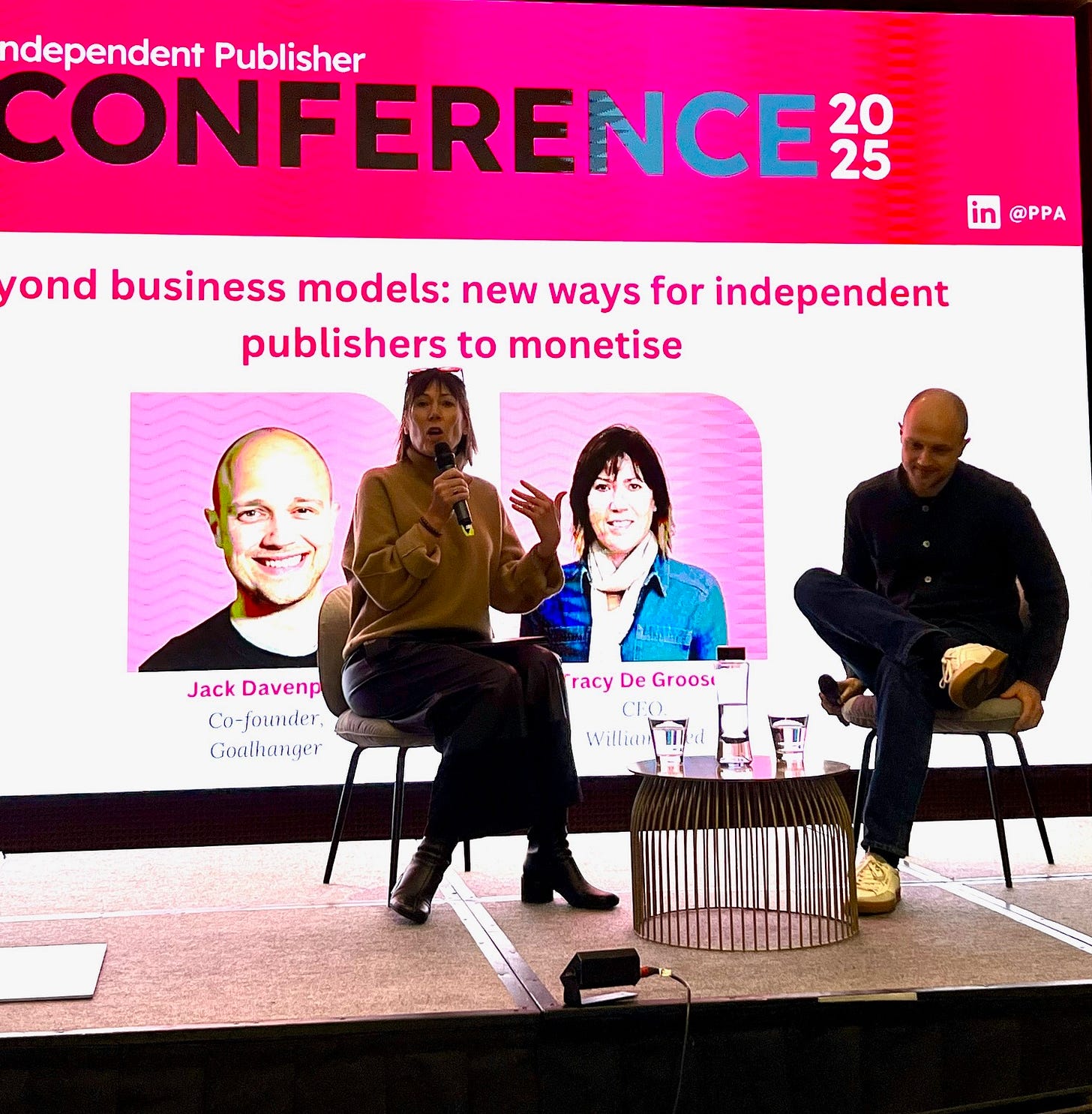
The rapid rise of AI-driven platforms like ChatGPT and Claude has triggered a seismic shift in monetization for publishers, creators, and brands, eroding traditional ad and search-based revenue streams and forcing a pivot toward diversified, AI-resilient business models. Publishers such as Goalhanger, which lost up to 30% of its audience to AI tools, have responded by expanding into podcasts, subscriptions, events, and direct partnerships, while creators on platforms like Substack are blending multimedia, community-building, and cross-platform strategies to maintain engagement and revenue. This fragmentation of the attention economy, coupled with the rise of creator-centric businesses and the migration of ad budgets—L’Oréal and Unilever now allocate 50% to creators—underscores the need for adaptive, multi-channel monetization strategies that emphasize direct audience relationships and authentic brand equity.
As AI platforms increasingly use publisher content without compensation, the industry is rallying around collective licensing and direct negotiation to protect intellectual property and secure fair revenue. Figures like Lucio Mesquita urge publishers to treat AI companies as they once did Google, demanding compensation, brand credit, and attribution as non-negotiables, while The Atlantic’s recent licensing deal with OpenAI exemplifies a pragmatic shift from legal resistance to strategic partnership. However, these deals often create a two-tier system—large publishers receive modest revenue and visibility, while smaller outlets risk being scraped without recompense—highlighting the urgency for transparent, pro-rata revenue sharing models and regulatory intervention, as seen in the UK CMA’s push for granular content controls.
The economics of content are being fundamentally reshaped as AI-generated, platform-controlled content diminishes the traditional power of individual creators and scale-based publishing. Platforms like Sora and TikTok are moving toward on-the-fly content generation to maximize user attention, reducing the value of follower counts and shifting monetization leverage to the platforms themselves. In this environment, sustainable business models depend on owning direct audience relationships, building community, and offering differentiated, personality-driven content—while creativity and reputation emerge as the few remaining durable moats in a landscape where execution barriers are rapidly eroded by automation.
Subscription models are evolving in response to consumer fatigue and rising costs, with bundling and diversified offerings gaining traction among mid-tier creators, while top-tier talent retains autonomy by eschewing collective deals. Platforms like Substack are expanding beyond subscriptions to include events, native ads, and brand partnerships, but successful monetization increasingly relies on system-based strategies—such as time-bound offers, membership experiences, and cross-platform promotion—rather than viral hacks or content volume alone. As one creator noted, 'good content alone isn’t enough to build a loyal base of paying readers,' underscoring the importance of trust, engagement, and adaptive business systems in the AI era.



Authenticity Becomes Survival
The flood of AI-generated content is forcing brands and creators to double down on authenticity and curation, as audiences pay premiums for content that feels genuinely human.
As AI-generated content saturates every channel, the battle for quality and differentiation has become existential for creators, publishers, and platforms alike. Brands and influencers now face the daunting task of cultivating unique, hard-to-imitate styles—mastering elements like voice, tone, and rhetorical mechanics—to avoid being drowned out by generic, easily replicated AI outputs. The more quantifiable a creator's style, the more vulnerable it is to duplication, making deep understanding of content mechanics and intentional curation not just a creative advantage, but a necessity for survival in the AI era.
Publishers and creators are responding to the AI deluge by doubling down on authenticity, intentional curation, and community engagement, shifting away from algorithm-chasing tactics. Outlets like Goalhanger and Condé Nast have found success by focusing on high-quality storytelling and direct audience relationships—Condé Nast, for instance, reports newsletter readers are 4.5 times more likely to subscribe, with newsletters driving up to 50% more revenue over subscriber lifecycles than other channels. This pivot is reinforced by a measurable rise in trust: LTK’s 2025 study found trust in creators increased 21% year-over-year, as audiences seek out real human experiences and are willing to pay for curated, valuable content amid the AI noise.
The proliferation of low-quality, generic 'AI slop' has triggered a backlash from both consumers and platforms, sparking a premium on authenticity and human imperfection as marketing differentiators. High-end agencies, like those behind Equinox's 2026 campaign, are leveraging cultural fatigue with AI to stand out, while platforms such as YouTube are scrambling to deploy stricter moderation and algorithmic filters to stem the tide of repetitive, low-value AI content. This arms race has also spawned tools like the Humanizer plugin, which attempts to make AI text sound more human, further complicating detection and raising the stakes for maintaining trust and quality in digital spaces.
Ultimately, sustainable success in the AI era hinges on keeping humans—both creators and audiences—at the center, using AI to enhance rather than replace imagination and value. Platforms like Reddit and Substack, which prioritize human curation and user-centric value over ad optimization, are outperforming AI-driven models, while legacy businesses that rely solely on AI without innovation risk decline. As John Jantsch and Peter Benet Benei argue, marketers must own strategy, judgment, and quality as core differentiators, ensuring that intentional curation and a clear point of view remain the foundation for scalable, high-quality content.


Platforms Race to Reinvent
Netflix, YouTube, and Substack are overhauling products and business models to harness AI, betting that personalized experiences and diversified formats will keep users loyal in an attention-scarce world.
By early 2026, major platforms like Netflix, YouTube, and Substack are fundamentally reengineering their strategies to harness AI and capitalize on shifting audience behaviors. Netflix, for instance, has moved beyond traditional streaming by expanding into gaming and social features, aggressively experimenting with vertical video feeds and podcasts, and overhauling its mobile app to mimic TikTok’s addictive clip-based experience. This relentless push to diversify engagement formats and keep users within proprietary ecosystems reflects a broader industry trend: platforms are racing to integrate AI not just as a tool for discrete projects, but as a foundational element that powers content discovery, personalization, and retention across entire product suites.
While platforms innovate on the product front, they are also recalibrating their business models and competitive tactics to sustain growth and outmaneuver rivals. Netflix exemplifies this with its strategic capital allocation—prioritizing reinvestment in exclusive content and share buybacks over traditional expenditures—and its aggressive pursuit of acquisitions like Warner Brothers to boost content libraries. At the same time, YouTube is transforming itself into a hybrid media empire, blending TV-style programming with creator-driven content and pushing Shorts to rival TikTok, even as it grapples with the challenge of balancing short-form virality with long-term creator sustainability and monetization.
The competitive landscape is further shaped by a growing recognition that distribution and discoverability now trump sheer content volume, prompting media companies and brands to diversify their investments beyond the dominant Alphabet, Amazon, and Meta triopoly. This strategic shift is accompanied by a cautious embrace of AI for operational efficiencies—speeding up product development and distribution—while maintaining human oversight to safeguard editorial integrity and trust. As AI-generated content proliferates, some brands are pushing back against low-quality outputs, underscoring a renewed emphasis on authenticity and quality in an era where attention is the ultimate currency.
Ultimately, industry leaders are converging on two core strategies to secure competitive advantage in 2026: outspending rivals on marquee content and moving faster to capture cultural moments, often leveraging AI and platform momentum to outpace traditional talent- or product-centric approaches. As the $65 billion linear TV ad market rapidly migrates to streaming, Netflix and Amazon are poised to capture significant ad dollars by evolving their advertising models—shifting from TV-style spots to storytelling-driven, binge-friendly ad experiences—while OpenAI and Google DeepMind experiment with new monetization tactics for AI products. In this high-stakes race, timing, adaptability, and ecosystem control are proving more decisive than ever.