AI upends SaaS: seat-based pricing crumbles as lean teams and agentic platforms take over
The gist
AI is smashing the old SaaS playbook, killing seat-based pricing and forcing vendors to race toward usage- and outcome-driven models as lean, AI-powered teams leave legacy rivals in the dust.
What to know
- IDC predicts 70% of SaaS vendors will abandon seat-based pricing for usage- or outcome-based models by 2028, with Salesforce, Box, and Decagon already leading the charge.
- AI agents are letting companies like Shopify and Linktree boost ARR per employee and slash headcount—Shopify tripled ARR per employee with 30% fewer staff, while Linktree froze hiring but scaled output by 80%.
- Startups are using agentic platforms to undercut incumbents on price and automation, shaking up talent needs and forcing investors to rethink SaaS valuations as traditional models lose their edge.
AI Shatters SaaS Pricing
Usage- and outcome-based models are unleashing new value capture and pricing complexity, with power users paying up to 10x more while hybrid architectures emerge to balance predictability and elasticity.
AI-native business models are fundamentally disrupting SaaS pricing, driving a rapid shift away from traditional seat-based subscriptions toward usage- and outcome-based models that better reflect the productivity unleashed by AI agents. By early 2026, leading platforms like Salesforce and Box were experimenting with usage-based pricing, while companies like Sazabi and Legora explored inference cost and outcomes-based pricing to align fees with the tangible business impact delivered. This transition, while unlocking new value capture opportunities—such as power users paying 10x more than legacy SaaS rates—also introduces challenges around pricing predictability, customer trust, and the complexity of measuring outcomes, prompting a rise in hybrid pricing architectures that blend predictability with elasticity.
AI-driven automation is catalyzing radical efficiency gains across SaaS and startups, with ARR per employee soaring and headcounts shrinking as AI agents and internal tools augment or replace traditional roles. Companies like Shopify tripled ARR per employee to $1.3M with 30% fewer staff, while startups such as Gamma, Replit, and Cursor operate with under 100 employees and minimal sales or marketing spend, achieving dramatic inbound demand. This irreversible trend, accelerated by the proliferation of AI agents that automate workflows and extract structured data, is redefining operational benchmarks and forcing incumbents to reevaluate both their workforce composition and their value proposition.
The economic logic of AI-native SaaS is reshaping value capture and margin dynamics, as companies increasingly compete against labor budgets rather than just software budgets. Pricing strategies now reference the fully loaded cost of labor displacement, enabling AI-native tools—like Legora in legal tech—to command pricing power by replacing expensive human tasks rather than merely undercutting other SaaS products. However, this comes with new margin pressures: high inference costs can compress gross margins in the short term, but are often justified by rapid growth, durable revenue from power users, and the strategic imperative to win market share in a deflationary, highly competitive landscape.
Incumbent SaaS vendors face existential threats as AI commoditizes the application layer and pushes value toward data infrastructure and outcome-oriented solutions, undermining the seat-based revenue model that once underpinned the industry. IDC predicts that by 2028, 70% of SaaS vendors will have refactored their pricing away from seats, while companies like Publicis Sapient and Klarna are already slashing SaaS licenses in favor of AI tools. This market upheaval is creating openings for startups to counterposition with innovative business models—such as Decagon’s per-conversation pricing in customer support—while forcing legacy players to choose between cannibalizing their own revenue streams or risking obsolescence.






Agentic Teams, Hyper Efficiency
AI agents like Linktree’s 'Devin' are scaling output, slashing costs, and redefining product launch velocity—enabling lean teams to outperform traditional orgs without growing headcount.
AI agents are fundamentally transforming go-to-market and operational playbooks in SaaS and startups by enabling leaner teams to achieve more with less. At Linktree, for example, the deployment of their AI agent 'Devin' allowed the company to freeze hiring at around 190 employees while scaling output, with Devin contributing roughly two pull requests per engineer per week on tasks like dependency upgrades and bug fixes. This strategic use of AI has enabled Linktree to launch more products without increasing headcount, achieve 25x cheaper moderation, and scale customer support by 80%, setting new industry benchmarks for efficiency and speed in go-to-market execution.

Commoditization and Data Wars
Agentic platforms and flexible data infrastructure are overtaking basic SaaS as AI-native apps automate routine work, shifting competitive advantage to those who can orchestrate complex, integrated workflows.
AI-native technologies are fundamentally reshaping the competitive landscape across SaaS, startups, and professional services by commoditizing traditional offerings and shifting value to agentic platforms and data infrastructure. Simple, low-moat SaaS products—like basic workflow wrappers and customer service tools—are rapidly losing pricing power as AI agents automate routine tasks and enable more complex, coordinated workflows. This transition benefits platforms that serve as operational hubs, such as MongoDB, which is increasingly critical as AI-native apps generate new types of data—embeddings, vectors, and logs—that require flexible, developer-friendly databases to support the next generation of agentic systems.
The rise of agentic AI platforms is transforming SaaS business models and workflows, with companies like Salesforce racing to become the orchestration layer for AI agents managing customer data and enterprise processes. Rather than replacing systems of record, AI agents amplify their value by multiplying the number of 'users'—now including both humans and autonomous agents—while increasing workflow complexity and integration demands. This evolution is prompting SaaS vendors to experiment with hybrid and outcome-based pricing models, as seen with Box and Salesforce, and is forcing a reckoning with security, access controls, and data governance as the stakes of data leakage and incorrect outputs rise dramatically.
AI-native disruption is hitting professional services with particular force, rapidly eroding the pricing power of routine legal and consulting work and enabling new entrants to undercut incumbents. Tools like Legora and Harvey are consolidating fragmented legal tasks into single agentic platforms, allowing professionals to scale their expertise and deliver services at a fraction of the traditional cost. However, the shift to consumption-based and outcome-driven pricing is complicated by the variability of legal work and client readiness, especially in conservative sectors, and integration challenges persist as firms struggle to standardize workflows and build trust in AI-driven automation.
The competitive dynamics of SaaS and professional services are being further upended as AI agents lower switching costs, accelerate platform rationalization, and trigger cascading effects across the enterprise software stack. Incumbents like SAP, Atlassian, and ServiceNow are leveraging their scale, infrastructure, and operational expertise to maintain moats in maintenance-heavy environments, while AI-native startups funded by capital markets aggressively undercut on price and automation. As market valuations tumble and the battle shifts from winner-take-all dominance to context-driven agentic platforms, the winners will be those who can orchestrate specialized models, embed deeply within customer workflows, and adapt to new pricing and value delivery paradigms.



Talent, Teams, and the AI Gap
AI fluency and adaptability are now essential as companies prize high-agency generalists, create new roles like 'agent orchestrators,' and build smaller, denser teams that dramatically outpace larger rivals.
AI-native disruption is fundamentally reshaping the structure and composition of teams across SaaS, startups, and professional services. By early 2026, companies like Shopify and Gamma have demonstrated that AI can enable dramatic headcount reductions—Shopify, for example, cut its workforce by 30% compared to 2022 while tripling ARR per employee to $1.3M. This shift is not merely about doing more with less; it's about building smaller, talent-dense teams where top performers, amplified by AI, can achieve 40x the productivity of an average employee, as one founder put it. The result is a new breed of organizations that out-execute larger incumbents through agility, close communication, and relentless focus on leveraging AI at every level.
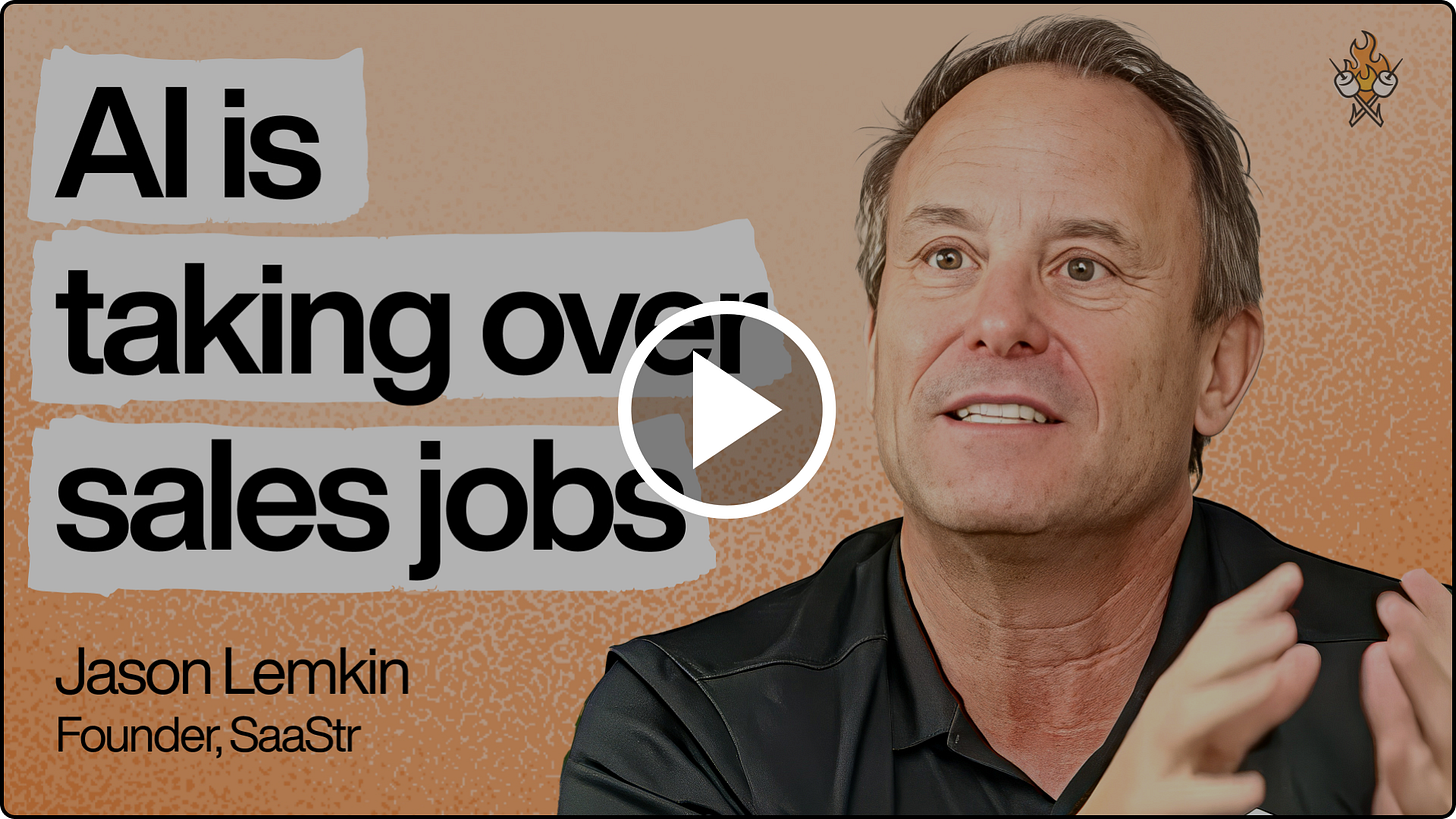
The rise of AI agents and autonomous workflows is spawning entirely new roles and talent requirements, with 'agent orchestrators' now as critical as traditional engineers or product managers. Companies like Anthropic and Meta are investing billions to embed agentic capabilities into their products, while startups are hiring for AI engineers, strategists, and consultants—roles that barely existed two years ago. As Jason Lemkin of SaaStr notes, sales teams once composed of 10 SDRs and AEs are now replaced by 20 AI agents managed by just over one human, signaling the extinction of traditional roles and the emergence of new skill sets centered on managing, integrating, and optimizing AI-driven workflows.
AI fluency and technical adaptability have become non-negotiable for both founders and team members, with hiring and retention strategies now prioritizing generalists who can rapidly learn and leverage AI tools across functions. The number of B2B software go-to-market jobs requiring AI skills has grown 14x in just two years, and even non-engineers at companies like SuperMe are expected to be 'engineering first' in their problem-solving. This preference for high-agency, bias-to-action talent extends to junior hires, who, when onboarded with AI-native mindsets, can outperform more experienced peers, challenging the post-AI trend of avoiding junior talent.
The founder profile itself is evolving, with both young, unconstrained operators and seasoned domain experts thriving in the AI-native era. Teen founders like Zach Yadegari are building $50M ARR companies while juggling college schedules, while venture data shows a parallel rise in older, deeply networked founders for complex B2B and AI ventures. Regardless of age, successful founders now treat AI as a strategic co-founder—using it for decision-making, vision-setting, and even encoding their own domain expertise—gaining a compounding structural advantage over those who see AI as just another tool.






Survival Playbooks: Adapt or Fade
Incumbents and startups are racing to restructure, slash headcount, and pivot to AI-native models as investors punish legacy SaaS multiples and reward those who embed AI at the core of their business.
Incumbents and startups are responding to the AI-native shift with a mix of bold adaptation, strategic consolidation, and operational reinvention, as evidenced by both headline-grabbing layoffs and aggressive acquisitions. Companies like Klarna and Linktree have slashed headcount by over 50% while maintaining or even accelerating output, thanks to AI agents that automate repetitive tasks and enable leaner, more productive teams. Meanwhile, giants like Meta and Nvidia are acquiring AI agent startups (e.g., Manus, Groq) to embed autonomous workflows and neutralize emerging threats, while private equity firms such as TPG and Vista are pivoting from traditional cost-cutting to orchestrating unified, agentic solutions across their portfolios, betting that AI-driven operational leverage will turn the old 'rule of 40' into the 'rule of 60.'
The AI-native disruption is fundamentally reshaping SaaS business models and investor expectations, with seat-based licensing rapidly losing ground to usage- and outcome-based pricing. IDC predicts that by 2028, 70% of vendors will have refactored their models, and companies like Decagon are already counterpositioning against incumbents like Zendesk by charging per conversation or resolution rather than per agent seat. This shift is not just about pricing: investors are recalibrating valuations downward for traditional SaaS (multiples dropping from 20-30x to 5-10x), demanding clear ROI, and favoring startups that can deliver integrated, context-aware agentic solutions over incremental point tools—forcing incumbents to either adapt or risk obsolescence.
For both incumbents and startups, the path forward hinges on speed, talent density, and the ability to integrate AI as a core team member rather than a bolt-on. Startups are leveraging AI-native GTM playbooks and partnerships with OpenAI to ship and iterate products at unprecedented velocity, often with lean teams or even solo founders wielding AI copilots that rival traditional staff. At the same time, incumbents like Atlassian and Salesforce are repositioning themselves as essential platforms for orchestrating AI-driven workflows, while enterprise buyers increasingly demand measurable outcomes and seamless agent interoperability—raising the bar for product effectiveness and accelerating the migration of value away from commoditized horizontal SaaS toward deeply embedded, customer-facing applications and robust data infrastructure.
However, the AI-native transition is not without its hurdles: incumbents face cultural and technical challenges in cleaning up technical debt and overcoming data silos, while enterprise adoption cycles and regulatory constraints slow the pace of change. Structured, phased AI adoption—featuring pilot programs, cross-departmental champions, and continuous learning—is emerging as best practice for large organizations, but startups retain an edge in flexibility, short-term planning, and willingness to skirt legacy constraints. As the cost and complexity of switching SaaS providers plummets, and as AI agents become trusted intermediaries in B2B purchasing (with Gartner forecasting 90% of purchases via AI agents by 2029), the winners will be those who adapt boldly, build for the next generation of AI models, and deliver genuine, differentiated value at scale.