AI2, x square fuel china’s robot price war
The gist
China’s robotics giants are turbocharging the humanoid revolution with billion-dollar bets, AI breakthroughs, and cost-slashing supply chain dominance—leaving Western rivals scrambling to keep up.
What to know
- AI2 Robotics just bagged $735 million in funding, propelling Chinese robotics startups to eye-popping $2.8 billion valuations.
- X Square Robot’s WALL-B model and QUANXTA Zero Series are supercharging robot training with zero-shot generalization and double the data efficiency.
- China controls 90% of the humanoid robot supply chain, letting firms like Unitree price bots as low as $17,600 and outpace Western competition on cost and speed.
China’s Funding Frenzy
Aggressive capital inflows and sky-high valuations are fueling an all-out arms race among Chinese robotics startups, driving relentless innovation and intensifying market competition.
AI2 Robotics has demonstrated remarkable financial momentum by securing a substantial $735 million funding round, underscoring its strong positioning in the fiercely competitive Chinese robotics market. This influx of capital not only fuels AI2's growth ambitions but also highlights the broader investor confidence in the sector, as several Chinese robotics startups, including AI2's rivals, have reached impressive valuations up to $2.8 billion. Such milestones reflect an intense race where technological innovation is matched by aggressive financial backing, signaling a vibrant and rapidly evolving robotics landscape in China.
Embodied AI Breaks Barriers
X Square Robot’s integrated AI and data pipeline is redefining robot learning, enabling machines to master complex tasks faster and with unprecedented data efficiency.
X Square Robot has pioneered a full-stack embodied AI platform that seamlessly integrates perception, language, action, and physical prediction within a unified network, exemplified by their WALL-B foundation model built on the World Unified Model architecture. This approach enhances multimodal understanding, spatial reasoning, and zero-shot generalization, enabling robots to adeptly navigate and perform complex tasks in unfamiliar environments. Founder Wang Qian emphasized their commitment to in-house foundation model development and a closed-loop data pipeline, stating, 'Since day one, X Square Robot has focused on in-house development of foundation models...our investments in embodied AI models, scalable, model-driven high-quality data pipeline system and real-world deployment are beginning to deliver clear results.'
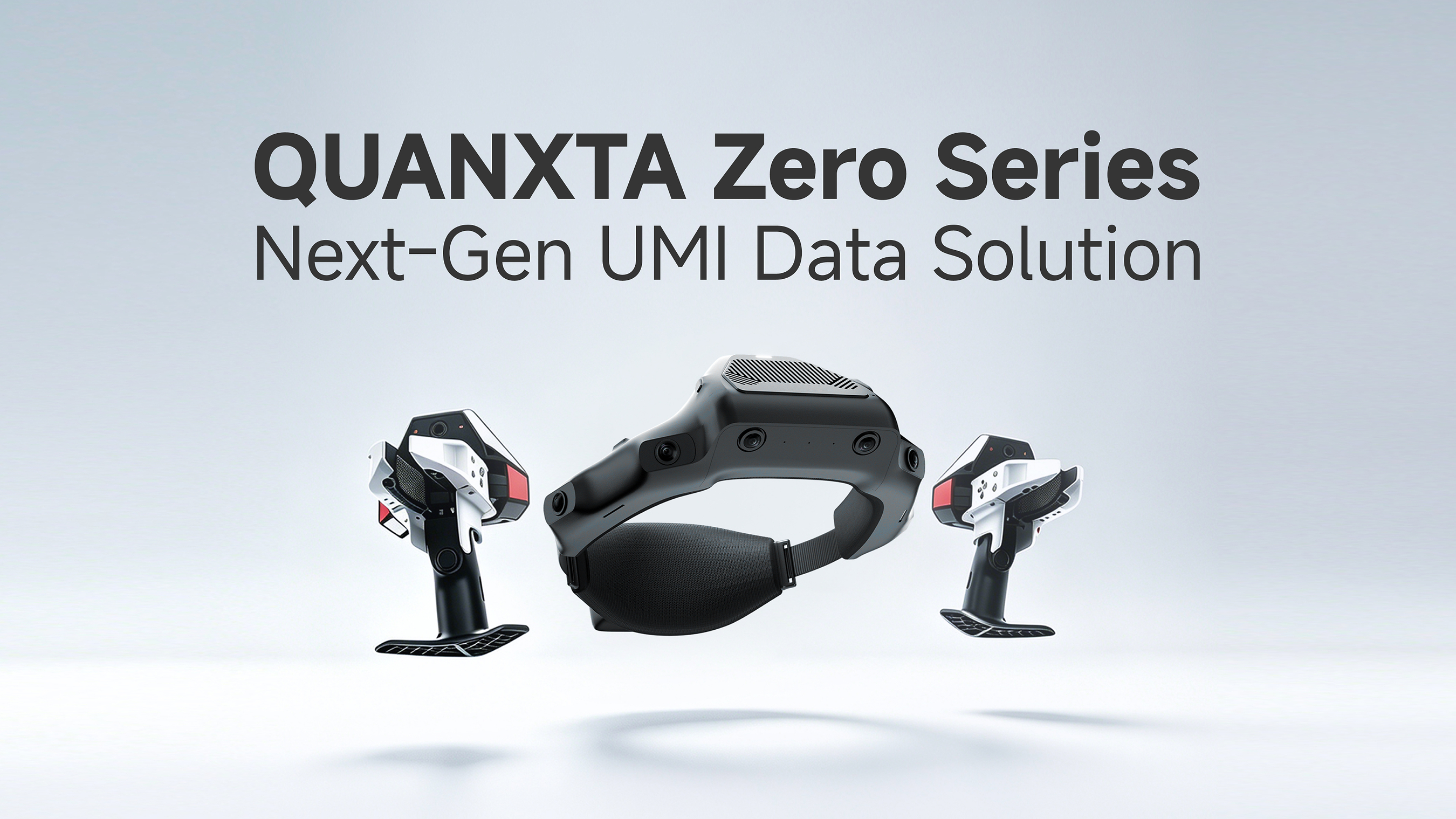
Addressing the critical data bottleneck in robotics, X Square Robot launched the QUANXTA Zero Series, a groundbreaking hardware-software integrated platform designed for high-fidelity, efficient embodied data production. The flagship QUANXTA Zero-G1 device achieves millisecond-level sensor synchronization and nearly 100 demonstrations per hour—more than double the efficiency of traditional teleoperation—through a combination of multi-view sensors, synchronized data capture, and automated annotation. This platform’s closed-loop workflow encompasses data collection, cleaning, intelligent annotation, model training, and evaluation, with AI-driven quality control boosting data yield to up to 85%, thereby accelerating the training and refinement of embodied AI models.


Supply Chain Supremacy
China’s vertically integrated control over robot hardware slashes costs and accelerates product cycles, leaving Western firms struggling to keep pace with rapid, hardware-driven innovation.
China’s commanding control over approximately 90% of the humanoid robot supply chain—especially in critical components like actuators and motors—creates a formidable competitive moat that Western manufacturers struggle to breach. This dominance is not incidental but the result of a strategic, vertically integrated approach mirroring China’s successful electric vehicle industry playbook, enabling rapid scaling and market leadership in robotics technology that promises to reshape manufacturing and labor globally.
Vertical integration empowers Chinese robotics companies like Unitree and X Square Robot to internalize actuator production, which constitutes 50 to 70% of a robot’s bill of materials, drastically reducing costs and accelerating iteration cycles. By controlling rare-earth material processing and manufacturing in-house, these companies avoid external supplier markups and shipping costs, allowing Unitree to price humanoid robots as low as $17,600—nearly a third of what it would cost if actuators were sourced outside China—while continuously improving performance through rapid design feedback loops.
The complexity and scale of China’s supply chain, including rare-earth magnet processing and actuator winding, create a near-impenetrable barrier for Western competitors who rely on fragmented, external suppliers. This ecosystem not only supports cost-effective manufacturing but also enables faster innovation cycles, as seen with Unitree’s evolution from using initially underperforming actuators to delivering superior, cooled designs. Such integration underscores the futility of relying solely on AI software advancements without robust hardware and production capabilities.
China’s willingness to operate at low margins during the early stages of robotics startups like Unitree allows these companies to aggressively price their products while maintaining profitability, a strategy less common in Western markets. This financial approach, combined with vertical integration and supply chain control, positions Chinese firms to outpace Western competitors both in cost and innovation speed, challenging the notion that AI alone can drive the robotics race without foundational manufacturing ecosystems.