AI’s power play: data center boom pushes U.S. grid to breaking point, sparks bipartisan reform drive
The gist
America’s AI data center boom is pushing the U.S. power grid to its breaking point, triggering a high-stakes scramble to modernize energy infrastructure before the lights—and the lead in the AI race—go out.
What to know
- AI data centers are projected to devour nearly 12% of U.S. electricity by 2030, with regions like ERCOT bracing for unprecedented demand spikes.
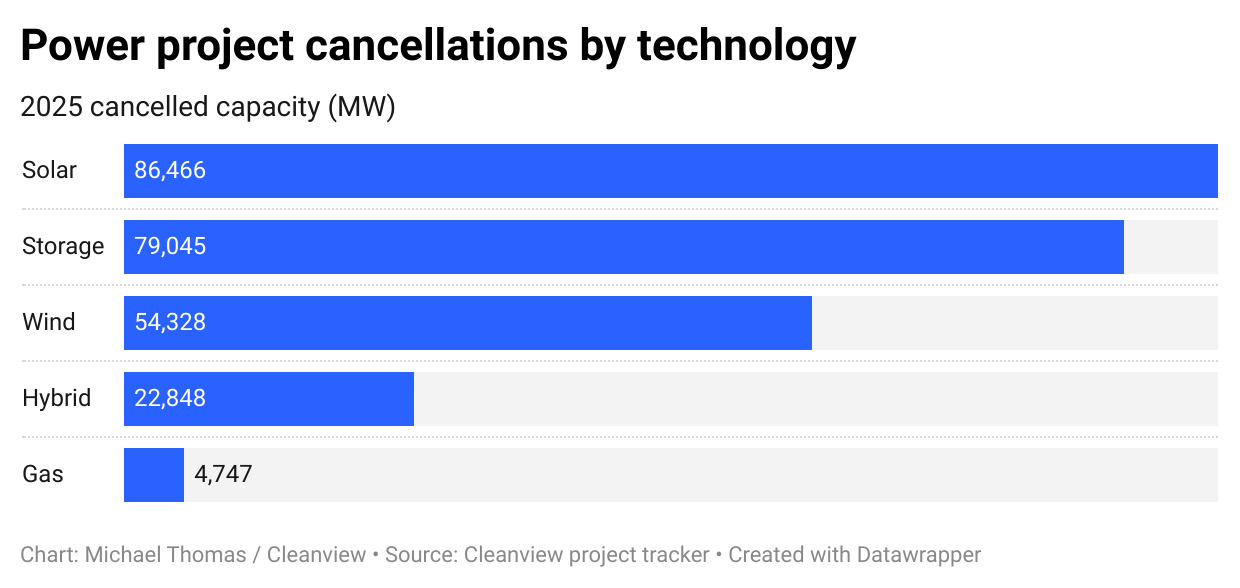
- Regulatory and permitting delays averaging 7–12 years have stalled or canceled nearly 1,900 power projects—most of them clean energy—highlighting critical infrastructure bottlenecks.
- Bipartisan reforms and big tech’s new alliances with the energy sector signal a shift toward pragmatic solutions, but entrenched opposition and global rivals like China keep the pressure high.
AI’s Grid Crunch: Demand vs. Delay
AI data centers are fueling explosive power demand that far outpaces U.S. grid growth, while regulatory and supply chain snarls threaten to stall America’s digital ambitions.
By late 2025, the U.S. was grappling with an unprecedented surge in electricity demand from AI data centers, which already consumed over 4% of the nation’s power and were projected to reach nearly 12% by 2030, according to McKinsey. This rapid growth—data center demand expanding at 15–20% annually compared to a 2% overall grid capacity increase—exposed a stark mismatch between AI infrastructure deployment and the sluggish pace of energy project development. The five-year utility forecast leapt from 24 gigawatts in 2022 to 166 gigawatts in 2025, with data centers driving 55% of that growth, particularly concentrated in regions like ERCOT, which alone anticipates 53 gigawatts of demand increase through 2030.
Despite this soaring demand, the expansion of energy infrastructure faced crippling bottlenecks rooted not in technical or financial constraints but in a labyrinth of regulatory, permitting, and supply chain challenges. Projects routinely endure 7 to 12 years of delays due to overlapping federal NEPA reviews, state permits, species consultations, community meetings, and protracted lawsuits, creating a systemic paralysis where every stakeholder wields veto power. This procedural quagmire is exemplified by the unresolved collapse of Baltimore’s Francis Scott Key Bridge since March 2024, underscoring the real-world consequences of infrastructure stagnation.
Compounding regulatory delays, supply chain chokepoints further hinder infrastructure growth critical for AI competitiveness. The U.S. mines rare earth minerals domestically, such as at California’s Mountain Pass mine, yet relies on China for processing due to shutdowns of domestic facilities since the 1990s. Additionally, the scarcity of natural gas turbines—manufactured by only a handful of companies with a two-to-three-year backlog—creates immediate constraints on power generation capacity, forcing short-term measures like shedding 40 hours of peak load annually to backup generators to free up 80 gigawatts for AI data centers.
Compared internationally, the U.S. lags dramatically in project timelines, with critical energy developments like the Thacker Pass lithium mine taking over a decade from application to operation, whereas Australia and Canada complete similar projects within 2–3 years. This disparity is aggravated by regional political dynamics where states hosting large data center markets, such as Virginia and Ohio, actively block or restrict renewable energy projects, leading to massive cancellations—1,891 power projects totaling 266 GW in 2025 alone, predominantly clean energy. Transmission infrastructure expansion has also plummeted, with annual high-voltage line construction falling from 4,000 miles in 2013 to just 322 miles in 2024, deepening the bottleneck in meeting AI-driven energy demands.





Regulatory Gridlock Stalls Progress
America’s infrastructure renewal is crippled by entrenched local opposition and bureaucratic red tape, letting global rivals outpace U.S. energy development.
The U.S. energy infrastructure development is severely hampered by a labyrinthine regulatory and political environment that transforms individually rational decisions into systemic paralysis. The Francis Scott Key Bridge collapse exemplifies this, remaining unrepaired a year after the incident due to layers of environmental reviews, stakeholder vetoes, and permitting delays. This bureaucratic gridlock is fueled by entrenched Boomer NIMBYism protecting property values and a sprawling service economy focused more on managing processes than building, creating a chokehold that stifles timely infrastructure renewal despite clear national needs.
Critical energy projects, such as the Thacker Pass lithium mine in Nevada, illustrate the stark contrast between U.S. regulatory timelines and those of global competitors. Taking over 12 years from application to operation, Thacker Pass lags far behind Australia, Canada, and China, which complete similar projects in a fraction of the time. This protracted permitting process, compounded by political opposition and legal challenges, undermines U.S. energy independence and cedes strategic advantage to China, which rapidly expands capacity while the U.S. remains gridlocked by its own regulatory morass.
Despite federal attempts under the Trump administration to ease permitting—such as executive orders facilitating nuclear power and freeing federal lands for data centers—state and local regulatory hurdles persist as formidable barriers. These challenges manifest in long lead times for nuclear projects, a two-to-three-year backlog in gas turbine manufacturing, and restrictive rules preventing effective load shedding that could free up to 80 gigawatts of power. Energy Secretary Chris Wright’s efforts to unravel these regulatory knots underscore the ongoing struggle to reconcile federal ambitions with entrenched local resistance.
Bipartisan momentum is building around permitting reform to break the regulatory logjam, exemplified by the Manchin-Barrasso Energy Permitting Reform Act and the recently passed Speed Act in the House. These legislative efforts aim to streamline interregional transmission planning and overhaul zoning and environmental review processes. However, the transition from a fragmented system of 3,000 local utilities to an integrated regional grid remains a multi-decade endeavor, requiring a stronger federal role akin to the highway system. Industry leaders like former Williams CEO turned Senator Alan Armstrong prioritize these reforms, recognizing that overcoming historical delays is essential to meet surging AI-driven energy demands and avoid further project cancellations.
Political contradictions and local opposition continue to undermine clean energy development even as AI data centers rapidly increase power demand. The Trump administration’s simultaneous fast-tracking of energy-intensive data centers and imposition of tariffs, funding cancellations, and tax credit phase-outs have led to nearly 1,900 power project cancellations in 2025, 93% of which are clean energy. State-level resistance in key hubs like Virginia, Ohio, and Indiana exacerbates bottlenecks, while high interconnection costs—sometimes exceeding $900,000 per megawatt—further deter new projects. This tension between national energy security priorities and local environmental or political concerns highlights the complex tradeoffs slowing infrastructure progress.
By early 2026, a notable political realignment has emerged as big tech companies, driven by AI data center power demands, actively engage in energy infrastructure development, including nuclear projects. This pragmatic shift contrasts with earlier antagonism and reflects an acknowledgment that previous net zero promises were unrealistic given fossil fuel reliance. Leaders from tech and industrial sectors are increasingly influential in energy policy discussions, potentially more effective than traditional oil and utility executives in driving constructive change. Yet, local NIMBY opposition and political tradeoffs continue to impede infrastructure expansion, underscoring the need for federal leadership and ambitious frameworks to meet post-2028 electrification goals.



Transmission Grid: Stuck in the Past
Despite a recent surge in high-voltage line completions, fragmented utilities and persistent permitting bottlenecks keep the U.S. grid decades behind what AI demands.
The U.S. transmission grid has seen a notable but uneven uptick in high-voltage line completions, jumping from 55 miles in 2023 to approximately 880 miles in 2024, largely reflecting the culmination of projects initiated a decade or more ago. This slow pace underscores the enduring challenges in modernizing grid planning despite bipartisan policies like FERC Order 1000, which mandates long-term regional transmission planning. However, uncertainty looms with potential shifts in regulatory leadership that could impact the continuity of these modernization efforts.
Ambitious transmission projects signal a transformative push toward a cleaner, more interconnected grid capable of supporting surging AI and data center energy demands. The Southwest Power Pool’s approved $8.6 billion 765kV transmission backbone exemplifies this trend, alongside similar high-voltage plans from MISO, PJM, and ERCOT, marking the first deployment of such high-voltage AC lines in decades. Yet, despite federal backing, as seen in the DOE’s involvement with projects like Greenbelt Express, political interventions and local opposition continue to complicate progress, highlighting the delicate balance between infrastructure ambition and regulatory realities.
Permitting reform emerges as the linchpin for unlocking interregional transmission expansion, addressing the fragmented legacy of 3,000 local utilities operating in isolation. The Manchin-Barrasso Energy Permitting Reform Act (EPRA), with its strong bipartisan support and focus on interregional planning and federal permitting authority, represents a critical legislative milestone. Yet, as experts note, evolving from localized fiefdoms to a cohesive, multi-decade regional and interregional grid strategy remains a work in progress, with permitting bottlenecks and political hurdles still impeding the pace of necessary grid expansion.
By early 2026, the grid’s modernization bottlenecks are stark: transmission infrastructure projects can take 5 to 15 years to complete—far longer than renewable plants or data centers—resulting in a backlog exceeding 2,500 GW of stalled projects, including 1,700 GW of renewables and 150 GW of data centers awaiting grid connections. Innovative regulatory approaches like 'non-firm' connection agreements and grid-enhancing technologies offer promising avenues to unlock up to 1,800 GW of capacity without new lines, but addressing transformer shortages, transmission losses of about 30%, and the slow pace of large-scale infrastructure construction remain critical challenges. This complex landscape underscores the urgent need for increased investment—estimated at a 50% rise by 2030—and a robust federal role akin to the highway system to drive mega-scale planning and execution.


Big Tech and Energy’s New Pact
Tech giants are abandoning net-zero posturing to forge pragmatic alliances with energy companies, driving rapid, innovative solutions that bypass grid bottlenecks and reshape industry power dynamics.
By early 2026, the escalating power demands of AI data centers have catalyzed a pragmatic political and industry realignment between big tech and traditional energy sectors, shifting from antagonism to collaboration. Leaders from technology giants and industrial companies are now driving a more constructive energy dialogue, with initiatives such as big tech's interest in restarting nuclear facilities and their active engagement in energy infrastructure challenges, moving beyond earlier net-zero promises that failed to match their actual consumption. This evolution suggests that tech leaders may influence energy sector transformation more effectively than conventional energy CEOs, fostering innovation and pragmatic solutions to power AI workloads.
Innovations to overcome energy bottlenecks have taken multiple forms, including technological advances like German companies deploying robots to coat power lines and reduce transmission losses, while addressing critical supply chain constraints such as transformer shortages that currently impose year-long waits despite mature manufacturing processes. However, the lack of integrated approaches connecting generation, transmission, and usage remains a significant challenge, underscoring the need for holistic solutions that align energy production with the rapid growth of AI data centers.
Williams Companies exemplifies a pioneering industry response by investing over $5 billion in natural gas infrastructure projects that directly connect to hyperscale AI data centers, effectively bypassing traditional grid constraints that typically require six to eight years for expansion. Their strategy focuses on behind-the-meter natural gas power generation sited at customer locations, enabling rapid deployment within two years—an unprecedented timeline compared to the usual five to eight years for grid interconnection. Leveraging their extensive 33,000-mile pipeline network, Williams delivers economical and cleaner energy solutions at costs comparable to $0.25 per gallon of gasoline, while managing complex logistics from gas nominations to pipeline construction, thus accelerating AI infrastructure growth without burdening retail consumers.
The broader natural gas industry is experiencing a renaissance driven by AI data center demand, with over 150 pipeline projects underway nationwide, including Williams’ first new pipeline construction in New York in over a decade and Energy Transfer’s expansions across 13 to 14 states. Companies like Enbridge are innovating by integrating traditional pipeline operations with renewables and behind-the-meter power solutions tailored for hyperscalers, exemplified by massive solar farm projects for Meta and others. Meanwhile, industry advocates such as former Williams CEO turned U.S. senator Alan Armstrong are pushing for permitting reforms to expedite infrastructure development, recognizing that overcoming regulatory bottlenecks is critical to fully leveraging U.S. natural gas production capacity and sustaining the AI-driven energy boom.



AI Power Race Goes Global
China’s aggressive energy buildout and U.S. policy contradictions are turning AI infrastructure into a high-stakes geopolitical contest—one with dire climate consequences.
The escalating AI arms race between the U.S. and China has thrust energy infrastructure into the geopolitical spotlight, with OpenAI urging the U.S. to build 100GW of new energy capacity annually to maintain AI leadership. China’s rapid expansion of energy infrastructure—including coal, renewables, nuclear, and battery storage—has created significant spare capacity that contrasts sharply with the U.S.'s strained power markets and underinvestment, as the U.S. grapples with balancing AI-driven electricity demand and national security priorities. Meanwhile, Saudi Arabia’s strategic investments in data centers and partnerships with both U.S. and Chinese tech giants further complicate this energy competition, embedding AI infrastructure within a broader geopolitical tussle.
Despite the U.S. holding a dominant position as the world’s largest oil producer and LNG exporter, its energy strategy has shifted from decarbonization toward securing supply amid surging AI electricity demand. This pivot is underscored by the Trump administration’s contradictory policies that fast-track power-hungry AI data centers while simultaneously erecting barriers to renewable energy projects, leading to the cancellation of nearly 1,900 power projects in 2025—93% of which were clean energy. These cancellations, driven by tariffs, regulatory hurdles, and regional restrictions, not only threaten environmental goals but also jeopardize grid reliability, affordability, and the U.S.'s competitiveness in the global AI race.
The environmental toll of powering AI data centers with fossil fuels is stark: eleven gas-powered AI data centers in the U.S. alone could emit more greenhouse gases than entire countries, with Project Matador in Texas potentially releasing over 40 million tons of CO2 annually—surpassing nations like Jordan. This surge from 4 GW to nearly 100 GW of gas power capacity in just three years highlights the tension between rapid AI growth and climate commitments, emphasizing the urgent need to reconcile environmental impacts with the geopolitical imperative to maintain AI leadership.
Companies like Enbridge exemplify the intersection of environmental and geopolitical dynamics by expanding infrastructure across fossil fuels and renewables to support AI data centers powering hyperscalers such as Google, Amazon, and Meta. The ongoing Middle East conflict has heightened the strategic importance of secure North American energy supplies, reducing risk premiums and benefiting infrastructure players who move significant portions of oil and natural gas while also investing in offshore wind. This dual role positions Enbridge at the heart of U.S. energy priorities amid the complex demands of AI growth and global geopolitical tensions.



AI’s Energy Future: Private Muscle
Hyperscalers are bankrolling grid upgrades and energy generation, making private capital—not public utilities—the engine powering America’s AI leadership.
By early 2026, the scaling of U.S. AI infrastructure has become inextricably linked to a parallel expansion of energy generation and data center capabilities, with industry leaders like Rob Thumbel emphasizing that increased data storage, advanced cooling systems, and electrification infrastructure must grow hand-in-hand to sustain AI’s rapid development. This evolution underscores that winning in AI is not just about computing power but also about securing reliable, consistent electricity supply in strategic locations, making energy infrastructure a critical battleground for maintaining U.S. leadership.
Innovative financing models are reshaping how the U.S. energy grid adapts to AI’s soaring demands, as hyperscalers—major cloud and AI service providers—are increasingly shouldering the capital costs for grid modernization and new electricity generation to shield retail consumers from inflationary pressures. Rob Thumbel highlights this shift as a pragmatic solution that aligns economic incentives with sustainable infrastructure growth, signaling a new era where private sector investment drives the energy backbone essential for AI competitiveness.
There is a palpable sense of urgency and optimism within the industry that coordinated, large-scale action can bridge the gap between AI’s insatiable energy needs and the current limitations of U.S. infrastructure. As Rob Thumbel asserts, the technology to meet these demands exists; the challenge lies in deploying it efficiently and consistently to power AI’s transformative impact across all sectors over the coming decades, reinforcing the imperative for policy reforms and strategic investments to keep the nation at the forefront of AI innovation.