AI’s power surge: data centers race the grid as energy bottlenecks bite
The gist
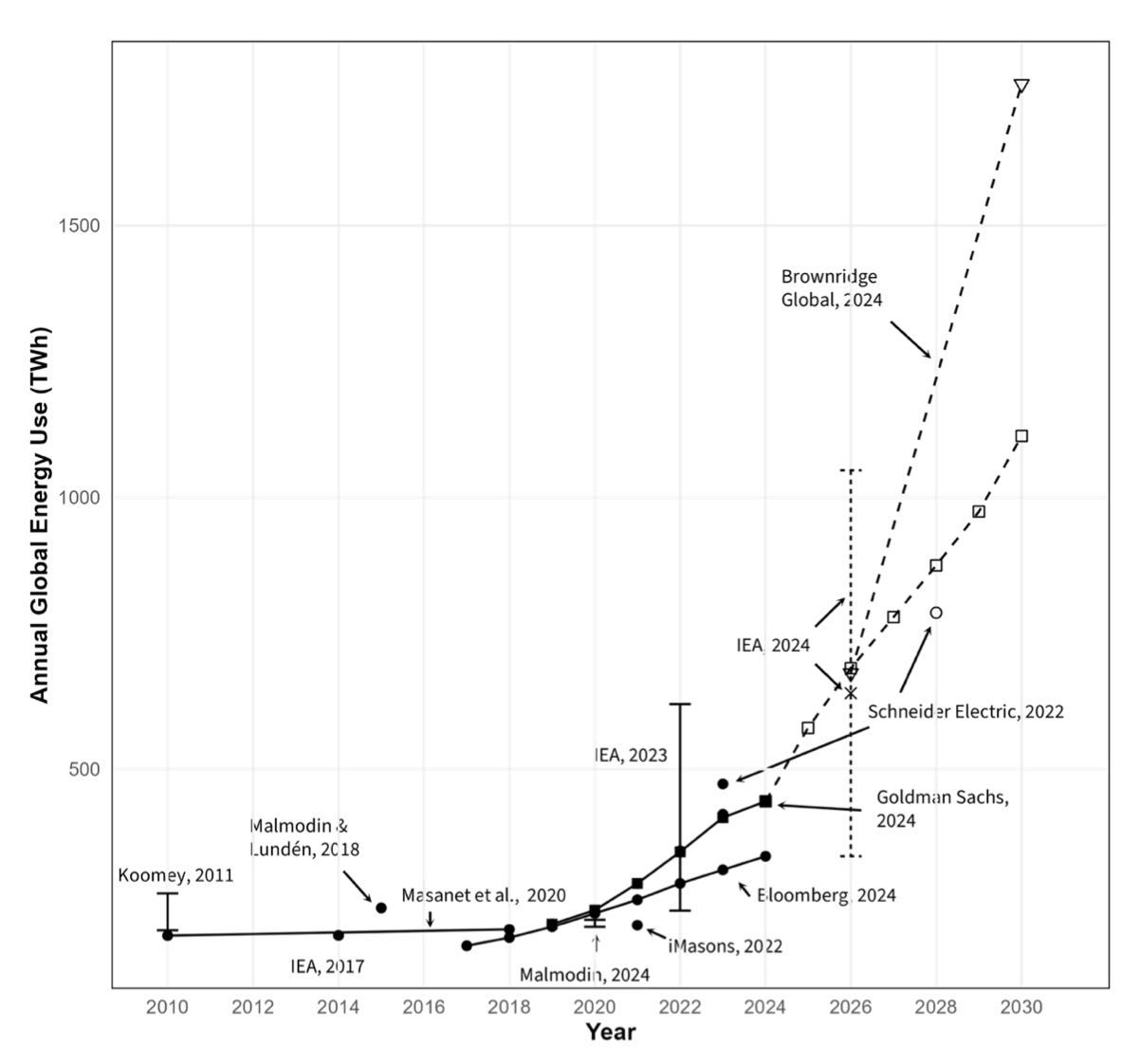
AI’s appetite for power is outpacing the electric grid, turning energy—not chips—into the new bottleneck for data center growth worldwide.
What to know
- Nvidia’s data center revenue could soar to $50 billion in 2025, while global AI data center electricity use may triple U.S. consumption by 2030, spiking local energy prices 267%.
- Nearly 29% of AI data centers plan to deploy on-site, behind-the-meter power by late 2025, leaning heavily on Bloom Energy’s fuel cells and modular gas turbines despite environmental concerns.
- China’s aggressive 3.89 TW grid expansion leaves U.S. and Western efforts lagging, as nuclear startups and even space-based data centers scramble to solve AI’s looming energy crunch.
AI’s Power Hunger Exposed
Soaring AI workloads are overwhelming power grids and supply chains, forcing a scramble for rapid, diversified energy solutions and revealing a fundamental misalignment between chip innovation cycles and decades-old infrastructure timelines.
The explosive growth of AI workloads, epitomized by Nvidia’s data center segment soaring toward $50 billion in 2025 and projections reaching $200-$300 billion within a few years, has driven unprecedented power demand in data centers. This surge has exposed critical infrastructure challenges, as existing grids and supply chains strain under the weight of scaling compute capacity. Companies like Bloom Energy and nuclear ventures such as Gvenova are gaining attention for their potential to address 'time to power' issues, highlighting the rising importance of diversified and rapid energy solutions to keep pace with AI’s relentless expansion.
Since the launch of ChatGPT and GPT-4, the AI boom has intensified power supply constraints, with hyperscalers like Microsoft acknowledging near-impossible capacity buildouts to meet demand through 2026. Most cloud data centers, originally designed for 50-120 kW per rack, now face obsolescence as next-generation AI racks demand up to 600 kW by 2027, with some projections reaching 900 kW. This dramatic increase has driven electricity prices near major US data centers up by 267% over five years, fueling community backlash and underscoring grid bottlenecks as a critical scaling constraint.
The mismatch between rapid AI chip production cycles—typically 18 to 24 months—and the decades-long planning required for power infrastructure has created a fundamental bottleneck. Grid connection delays, such as seven-year waits in northern Virginia and moratoriums in Ireland after data centers consumed 22% of national electricity, exemplify the severity of these constraints. Meanwhile, natural gas remains the favored bridge fuel due to shorter lead times despite environmental concerns, as solar and nuclear face challenges in capacity factors, land use, and cost overruns, complicating efforts to rapidly scale AI data center power.
By early 2026, energy had unequivocally become the primary bottleneck in the AI race, surpassing chips and capital as hyperscalers compete fiercely for grid capacity, substation access, and entire power plants. This shift is reflected in soaring investments—over $800 billion planned in 2026 alone—and the rise of hyperscalers as quasi-utilities, with Microsoft underwriting nuclear restarts and Amazon developing SMRs. The critical role of energy is further underscored by the dramatic increase in AI data center power consumption, which could triple US data center electricity use by 2030, potentially consuming up to 17% of total US electricity generation and driving electricity prices and supply chain pressures to new heights.






Off-Grid Revolution Begins
Nearly a third of AI data centers are shifting to on-site, behind-the-meter power—fuel cells, modular turbines, and microgrids—driven by grid delays and urgent compute needs, signaling a permanent break from traditional utility dependence.
By late 2025, the AI data center industry underwent a dramatic shift toward on-site, behind-the-meter power generation as a strategic response to multi-year grid interconnection delays and urgent compute demands. Survey data reveals a leap from just 1% planning to use off-grid power 18 months prior to nearly 29% by late 2025, underscoring a widespread loss of confidence in traditional grid timelines. KR Sridhar of Bloom Energy encapsulates this transition, emphasizing that while the grid remains vital, it must be complemented by rapid-deploy solutions like fuel cells and modular turbines to keep pace with AI’s explosive growth.
Fuel cells, particularly Bloom Energy’s solid oxide variants, have emerged as a cornerstone of clean, efficient on-site power tailored for AI data centers, offering a streamlined one-step energy conversion process that contrasts sharply with traditional combustion methods. These solid-state devices not only meet stringent zero-emission requirements essential for urban data center locations but also integrate seamlessly with future zero-carbon fuels like hydrogen. This clean technology is gaining traction alongside modular natural gas turbines and solar microgrids, with nearly one-third of onsite-powered sites expected to incorporate carbon capture by 2030 to address environmental concerns amid rapid capacity expansion.
To circumvent the prohibitive lead times of traditional large-scale gas turbines, AI data center operators are increasingly deploying modular, rapid-install gas generation units, including 16MW truck-transportable turbines from Solar Turbines and aero derivative jet engine turbines mounted on trailers. While these solutions prioritize speed and flexibility over peak efficiency—jet engines, for example, serve mainly as stop-gap or redundancy power—they enable data centers like Meta’s Ohio campus to meet urgent power demands by opportunistically deploying diverse turbine types. This modular approach is exemplified by large-scale projects such as Circe Energy’s 2 GW natural gas microgrid in West Texas, which leverages behind-the-meter generation to operate independently of constrained local utilities.
Despite the rapid adoption of natural gas-fired behind-the-meter power plants—now comprising over 70% of planned on-site capacity and exemplified by massive projects like Softbank’s 9.2 GW plant and Pennsylvania’s 4.5 GW Homer City Energy Campus—this trend raises significant environmental and regulatory concerns. The industry’s prioritization of immediate power availability, as noted by insiders who say 'power availability comes first, at almost any cost,' risks long-term carbon lock-in, with these facilities expected to operate for decades amid mounting clean energy commitments. Nonetheless, the fragmented and nascent market for on-site power generation continues to evolve rapidly, with companies like Cummins expanding their power systems offerings to support this multi-gigawatt AI infrastructure buildout.

Industrialized AI Campuses Rise
A new breed of gigawatt-scale, vertically integrated data center campuses—combining on-site generation, photonics, and modular cooling—are redefining infrastructure to meet the relentless power and density demands of next-gen AI.
The rapid expansion of AI data centers has driven a transformative evolution in power infrastructure, marked by a shift toward industrial-scale, vertically integrated power-compute campuses. Companies like Carlyle and Core Scientific are pioneering gigawatt-scale facilities with on-site substations and diverse generation sources—including gas turbines, renewables, and emerging nuclear technologies such as SMRs—to overcome grid limitations and ensure reliable, continuous power for AI workloads. As Nancy Tanglaffer emphasized, the challenge is less about demand and more about securing adequate supply, with investments like MATTER’s $1.5 billion Texas campus and Oracle’s $38 billion debt financing underscoring the scale of capital flowing into these durable, utility-like assets that outlast GPU hardware and expand electric grid capacity tailored for AI (insights [3], [4], [11], [13], [15], [24], [25], [31]).
Photonics technology is emerging as a critical innovation to reduce power consumption and latency in AI data centers, with industry leaders such as NVIDIA, Broadcom, and Marvell investing billions to transition from traditional copper interconnects to integrated photonics architectures like Co-Packaged Optics (CPO). Despite challenges including higher failure rates, manufacturing complexity, and thermal management issues when coupled with high-power GPUs, photonics promises to scale data rates from 100G up to 6.4T per connection while cutting power use by 25-30%. This technological leap, although still in its early commercialization phase and potentially a decade away from full maturity, is accelerating rapidly and attracting both major players and innovative startups aiming to carve out market share (insights [1], [19], [20], [21], [22], [23]).
Cooling technologies and modular design are advancing in tandem to meet the soaring power densities of AI workloads, with liquid, immersion, and hybrid cooling systems becoming essential as rack power scales from 40 kW to over 1 MW. NVIDIA exemplifies this integration by pre-engineering entire AI data center racks—including GPUs, Vera CPUs, networking, and precise liquid cooling—supported by digital thermal simulations to optimize deployment. Meanwhile, prefabricated, modular compute halls with integrated power and cooling systems are replacing traditional bespoke builds, enabling rapid, scalable deployment that aligns with the industrialized production of off-grid data centers. These innovations reflect a holistic approach where power source choices cascade into cooling methods, rack density, and overall facility design (insights [9], [10], [16], [28]).
Sustainability and grid resilience are central to investment strategies in AI data center power and cooling, driving a shift toward autonomous, zero-pollution microgrids that blend renewables, fuel cells, gas turbines, and advanced energy storage technologies like batteries, flywheels, and supercapacitors. Hyperscalers are increasingly acting as utilities, underwriting projects such as Microsoft’s 20-year PPA for Three Mile Island and Amazon’s development of small modular reactors with X-Energy. Concurrently, the U.S. sustainable data center market is projected to nearly double its investment to $116.43 billion by 2031, reflecting widespread adoption of intelligent PDUs for real-time power monitoring, replacement of VRLA batteries with lithium-ion and other advanced chemistries, and a transition from diesel to hydrotreated vegetable oil for backup power. This comprehensive approach addresses environmental constraints—especially air pollution near population centers—and ensures AI data centers can operate as reliable, dispatchable grid assets capable of rapid demand response (insights [5], [6], [7], [8], [14], [17], [25], [27], [29], [30]).
China’s Grid Leaves West Behind
China’s top-down, rapid-fire grid expansion is outpacing the West’s regulatory gridlock, giving it a decisive edge in AI infrastructure as U.S. and European efforts stall amid local opposition and financial risks.
China's state-backed, top-down approach to AI energy infrastructure is rapidly outpacing the United States, enabling it to build a physical runway for AI dominance between 2027 and 2030. With a sprawling 3.89 Terawatt grid—nearly triple the US's 1.37 Terawatts—and the addition of 500 Gigawatts in 2025 alone, China bypasses bureaucratic delays that plague Western projects, mandating grid expansions without local consent. This contrasts sharply with the US, where regulatory gridlock and local opposition have stalled projects like the Cape Wind offshore wind farm for over a decade, forcing tech giants such as Microsoft to resort to buying entire nuclear plants to secure power, signaling a looming energy crisis amid surging AI data center demands projected to consume up to 12% of US electricity by 2030.
Western AI infrastructure development is increasingly reliant on complex financial engineering and shadow banking to overcome regulatory and grid constraints, with companies like NVIDIA investing $2 billion into Nebius targeting 5 gigawatts by 2030, and OpenAI securing $122 billion in funding. This cross-collateralization strategy attempts to brute-force energy contracts and build capacity, yet it exposes the West to heightened financial risk if AI enterprise ROI timelines extend beyond expectations. Meanwhile, China’s state-mandated 4-Terawatt grid provides a more stable foundation to absorb explosive AI agent growth, fundamentally shifting competitive dynamics and infrastructure deployment timelines.
Regional strategies diverge sharply in North America and Europe, reflecting geopolitical priorities that shape AI infrastructure outcomes. North America is pioneering integrated projects like Alberta’s $10 billion data center paired with a dedicated 1.4-gigawatt gas-fired power plant, sidestepping traditional grid bottlenecks by bundling generation and compute capacity. Conversely, Europe’s investments, exemplified by Mistral AI’s 200-megawatt Paris facility, prioritize sovereign AI alignment over transparent energy sourcing, leaving power architecture less defined and potentially slowing deployment. This asymmetry underscores how geopolitical intent and energy design interplay to influence competitive positioning across regions.
China’s national strategy, embodied by the 'Eastern Data, Western Computing' initiative, tightly integrates AI data center deployment with energy planning by channeling data processing demand from eastern economic hubs to power-rich western regions. This contrasts with the US and South Korea, where permitting delays and local resistance hinder transmission infrastructure expansion critical for AI growth. Meanwhile, countries like France leverage their nuclear power base to attract AI investments, and Japan and South Korea focus on nuclear restarts and grid stability as foundational pillars for semiconductor and AI industries, highlighting how regional energy portfolios and policies directly shape AI infrastructure competitiveness.


Community Backlash Intensifies
Skyrocketing electricity prices, water use, and emissions from AI data centers are fueling local resistance, prompting moratoriums and legislative battles that threaten to slow or reshape data center growth.
The rapid expansion of AI data centers has sparked intense local backlash due to soaring electricity prices—up 267% in some U.S. regions over five years—and heightened concerns over water usage, emissions, and infrastructure strain. Communities are increasingly vocal, with moratoriums and legislative proposals emerging as municipalities grapple with the social costs of subsidizing corporate power demands, as seen in Northern Virginia's seven-year grid delays and Ireland's moratorium after data centers consumed 22% of national electricity. This growing tension underscores the urgent need for sustainable practices and regulatory reforms that balance AI growth with community welfare.
In response to these challenges, there is a mounting push for data centers to become better grid citizens through measures like providing grid services, co-funding residential energy efficiency upgrades, and integrating on-site power generation. However, the practical reality is complex: regulatory bodies are enforcing collateralized revenue streams to protect legacy customers, while utilities face financial risks in expanding capacity, with some refusing new investments and others cautiously building out generation. Meanwhile, hyperscalers increasingly turn to off-grid natural gas power due to interconnection delays of five to seven years, prioritizing immediate reliability over environmental concerns, raising alarms about long-term carbon lock-in.
The strained supply chain for critical electrical infrastructure, with some equipment unavailable until 2030, compounds the challenge of meeting AI data center power demands, which are volatile and not tied to general economic growth. This scarcity fuels innovative but sometimes suboptimal solutions, such as underground or suspended solar-powered data centers envisioned by Lenovo and others, and the redistribution of excess heat to local amenities exemplified by Equinix’s Paris project. Yet, these futuristic concepts face significant regulatory, cost, and engineering hurdles, with feasibility often projected decades ahead, reflecting the broader struggle to reconcile rapid AI infrastructure growth with environmental sustainability and community acceptance.
Legislative efforts, including bills introduced by figures like Senator Josh Hawley, aim to mandate off-grid power solutions for data centers to alleviate grid stress, but skepticism remains about the viability of fully off-grid operations due to the inherent advantages of grid connectivity. Meanwhile, the slow pace of grid expansion—exemplified by Texas’s massive 400-gigawatt connection queue versus its limited annual buildout—combined with permitting delays and local resistance to transmission and nuclear projects, highlights systemic social and political dysfunction. This complex landscape demands regulatory reforms and sustainable power sourcing, such as Google’s commitment to nuclear energy with Kairos Power, to ensure AI’s energy-intensive growth can proceed without exacerbating community and environmental impacts.


Energy Bottleneck Threatens AI
With AI data center power demand set to eclipse national grids, the industry faces a looming energy shortfall—outpacing chip supply as the primary constraint and putting future AI advances at risk without breakthrough solutions.
By 2030, AI data center power demand is projected to more than double, potentially reaching around 290 gigawatts globally, a scale that could surpass the entire electricity consumption of countries like Japan. This surge shifts the primary bottleneck in AI infrastructure from chip supply to energy availability, with AI servers alone expected to consume more power than conventional servers by 2027. As a Gartner report warns, without significant upgrades and innovations in power capacity, this escalating demand risks halting AI advances and data center expansion within the next few years.
The energy infrastructure supporting AI data centers faces critical challenges including grid capacity limits, permitting delays, and resource constraints such as cooling water availability. Despite growing adoption of on-site and bridge power solutions, fully off-grid large-scale data centers remain unlikely in the near term. Political and social hurdles impede rapid grid expansion, forcing the industry to explore unconventional power solutions, while regional disparities emerge—U.S. data centers benefit from more flexible regulations and land availability compared to Europe’s constrained grids and stricter policies, as noted by S&P Global’s Perkins Liu.
Nuclear power is reemerging as a pivotal energy source to meet AI’s voracious appetite, with startups like Kairos Power breaking ground on test reactors and tech giants such as Google committing to purchase up to half a gigawatt of clean nuclear energy. However, the timeline for nuclear to meaningfully impact AI data center power supply extends beyond 2035, leaving near-term infrastructure bottlenecks unresolved. Meanwhile, geopolitical risks—exemplified by attacks on data centers in the Gulf region—may accelerate shifts in data center siting back to the U.S., further intensifying domestic energy infrastructure demands.
Space-based data centers represent a visionary frontier in overcoming terrestrial power and cooling constraints by harnessing constant solar energy and near-absolute zero cooling in orbit. Companies like Google with its Suncatcher project, Alibaba’s Three-Body Computing Constellation, and Nvidia’s Starcloud are actively exploring this technology, which also promises ultra-low latency through inter-satellite laser networks and direct satellite-to-phone communication as demonstrated by Starlink. However, the economic viability of these orbital data centers depends heavily on scalable, cost-effective launch capabilities, particularly the availability of SpaceX’s Starship, while the convergence of Tesla, SpaceX, and XAI hints at a strategic ecosystem integrating space-based compute with robotics and AI.