Alliances upended: as old orders crumble, new power blocs and resource wars redraw the global map
The gist
The old global order is splintering fast, as alliances crumble, resource wars heat up, and new power blocs redraw the map in real time.
What to know
- Traditional alliances like NATO and the G7 are losing sway, with proposals for new clubs like the 'C5' and Europe stuck between a bullish Russia, a transactional U.S., and an assertive China.
- Resource competition is at fever pitch—think U.S. and China squaring off over Venezuela's oil and Greenland's minerals—while middle powers scramble to forge pragmatic, self-preserving coalitions.
- Economic chaos and public mistrust are surging as aggressive interventions, collapsing economies like Venezuela’s, and a deepening K-shaped recovery widen global inequality.
Alliances Shattered, Spheres Collide
As trust evaporates and gunboat diplomacy resurges, new great-power clubs and resource grabs are rewriting the rules of global influence.
The fracturing of the post-Cold War global order is fundamentally driven by the rise of multipolarity and the resurgence of competing spheres of influence, as traditional alliances give way to new power configurations. The emergence of a 'Concert of Great Powers' and proposals to replace the G7 with a 'C5'—with Emmanuel Macron inviting Xi Jinping to the table—signal a world in which Europe fears becoming a pawn between Russia and the U.S., while Asia orbits around the gravitational pull of China. This realignment reflects a broader retreat from the alliance-based stability that once defined the international system, leaving regions and middle powers scrambling to avoid being 'on the menu' rather than at the table.
U.S. unilateralism and a sovereignty-first approach have become hallmarks of the new era, with the Trump administration's aggressive tactics—ranging from doubling airstrikes in Somalia to attempts at acquiring Greenland—undermining the trust and rational reciprocity that sustained alliances like NATO. The Pope’s criticism of America’s bid to 'break apart' the transatlantic alliance, combined with European leaders’ hardening rhetoric and deployment of troops to Greenland, underscores the deepening rift. As one analysis put it, 'a demand to give up Greenland or face steeper tariffs does not meet [the] test' of alliance trust, and such coercive moves are seen as 'gunboat imperialism' that permanently damages prospects for future cooperation.
Resource competition—no longer just about oil, but increasingly about critical minerals essential for 21st-century industries—has intensified geopolitical rivalries and accelerated the breakdown of global cooperation. The scramble for control over supply chains, from Venezuelan oil to Greenland’s mineral riches, has prompted both the U.S. and China to flex their muscles, with Washington’s attempts to 'take charge' of Venezuela’s resources and Beijing’s dominance over critical minerals. This shift is further complicated by regional actors, like Cambodia and Thailand, resisting external pressure, and by the rise of resource nationalism, which FGS Global’s 2026 Radar Report identifies as a key force behind the 'Death of Globalism.'
The erosion of multilateral institutions and the rise of transactional, interest-driven diplomacy have further destabilized the global order, as both the U.S. and revisionist powers like Russia and China undermine the legitimacy of frameworks like the WTO and the UN. With Moscow and Beijing pursuing 'unlimited aims'—Putin unsatisfied with occupying just 20% of Ukraine, Xi Jinping eyeing Taiwan—the world has shifted from liberal internationalism to a landscape dominated by 'honor, fear, and interest.' As Mark Carney observed, the world is experiencing a 'rupture, not a transition,' with middle powers seeking new partnerships as traditional alliances become unreliable and dialogue gives way to escalation.






Europe Hedges, China Courts
With the U.S. abandoning values-based partnerships, Europe and Asia are forging pragmatic ties and economic defenses amid a scramble for strategic autonomy.
The turbulence of a multipolar world has driven both major and middle powers to recalibrate their alliances and strategies, as traditional frameworks like the G7 lose relevance and new groupings such as the proposed 'C5' emerge. Europe, wary of becoming a battleground between Russia and the U.S., is increasingly hedging its bets, while Asia’s focus has shifted toward its own regional heavyweights like China. This realignment is not just about shifting allegiances but about resisting the gravitational pull of old spheres of influence and seeking new mechanisms for collective security and influence.
The U.S. retreat from values-based partnerships in favor of a more isolationist, transactional approach—epitomized by the Trump administration’s focus on Western Hemisphere hegemony and coercive tactics over Greenland—has fractured traditional alliances and forced allies to reconsider their strategic commitments. European leaders, once confident in transatlantic unity, now openly discuss economic countermeasures, defense autonomy, and diversified partnerships, with Ursula von der Leyen declaring Greenland's sovereignty 'non negotiable' and the European Parliament weighing trade freezes. This shift is echoed in the Middle East and Asia, where regional blocs and middle powers increasingly assert their interests independently, often leveraging economic tools and direct engagement with new partners.
China, for its part, is capitalizing on global instability and U.S. unpredictability by promoting a decentralized model of global governance and courting traditional U.S. allies with trade incentives and diplomatic overtures. Beijing’s confidence is evident in its push for a 'mutually assured disruption' equilibrium with Washington, its neighborhood diplomacy in Asia, and bold moves like the planned mega embassy in London. However, China’s rise is complicated by local resentment in Belt and Road countries and the challenge of forging genuine alliances, as many partners remain wary of overdependence on Beijing’s economic and political influence.
Middle powers and regional blocs, recognizing the unreliability of great power patrons, are forging new coalitions and frameworks to maintain influence and stability. The EU’s landmark free trade deal with Mercosur, Canada’s tariff cuts on Chinese EVs, and the GCC’s emphasis on sovereignty and international law all reflect a broader trend toward strategic autonomy and diversified partnerships. As Prime Minister Mark Carney put it, 'middle powers must act together because if you're not at the table you are on the menu,' underscoring the imperative for collective action in a fractured global order.



Multilateralism Gives Way to Deals
Interest-driven blocs and rapid-fire negotiations are sidelining legacy institutions, forcing leaders to improvise alliances in a fragmented diplomatic arena.
By early 2026, the global diplomatic landscape had shifted decisively from values-based multilateralism to a pragmatic, transactional model, driven by the waning dominance of Western powers and the rise of multipolar governance. Initiatives like China’s Global Governance Initiative and the emergence of alternative forums such as the Board of Peace underscore this decentralization, as countries like China seek to anchor cooperation in a more pluralistic balance that prioritizes the sovereignty and economic rights of developing nations. As Jia Qingguo observes, this 'rare opening to rebuild governance on more inclusive and equitable foundations' is fundamentally disrupting established multilateral rules and heightening great power confrontation, setting the stage for a new era of interest-driven diplomacy.
This transition is vividly illustrated in the candid, security-focused exchanges between leaders, such as President Stubb’s remarks on US-Europe tensions over Greenland, where direct dialogue and operational pragmatism have supplanted the slower, consensus-driven processes of traditional multilateralism. Stubb’s emphasis on 'frank diplomacy' and the need to 'bring down the temperature' through security dialogue, rather than ideological consensus, reflects a broader trend: alliances are increasingly managed through rapid, transactional negotiations that bundle economic coercion with military cooperation, as seen in NATO’s Arctic Endurance exercises and the high-stakes bargaining at Davos 2026. The result is a compressed diplomatic environment where leaders must juggle multiple crises—Venezuela, Iran, Greenland, Gaza—simultaneously, challenging the capacity and relevance of legacy institutions.
The rise of alternative governance structures like the Board of Peace further exemplifies the fragmentation of global institutional authority and the redefinition of legitimacy in international problem-solving. While the Board has garnered support from six Middle Eastern governments eager for economic dividends and stability, it has been met with skepticism by Western leaders and lacks endorsement from major European economies, highlighting deepening rifts in global consensus. Critics, such as former Vice President Pence, argue that including authoritarian regimes like Russia undermines the Board’s credibility and signals a departure from the values-based cooperation that once underpinned multilateralism, with Pence lamenting, 'the way to peace is not through boards... The way to peace is through strength.'
Amid this fragmentation, Europe and other middle powers are recalibrating their strategies, pursuing pragmatic economic agreements—such as the EU’s landmark free trade deal with Mercosur and negotiations with India—to maintain global relevance and autonomy. The weakening of US-led alliances and the US’s shift to conditional, interest-driven partnerships under Trump have left Europe scrambling for cohesion, especially in the wake of Brexit and internal economic and immigration challenges. As analyst Wendy Schiller notes, 'Europe seems to be scrambling... each individual country trying to get their own footing,' while the erosion of bipartisan US support for international engagement further accelerates the decline of the liberal world order, compelling states to seek new coalitions and frameworks to navigate an era defined by power, leverage, and transactional diplomacy.



Flashpoints: Ukraine, Venezuela, Greenland
Regional crises now serve as battlegrounds for transactional power plays, as territorial disputes and resource wars expose the fragility of old security guarantees.
The Ukraine conflict remains the crucible of multipolar tension, where territorial disputes and security guarantees have proven nearly intractable under the new global order. Negotiations are mired in questions over the future of the Donbas and the extent of Ukrainian concessions to Russia, with President Putin unmoved by the security guarantees sought by President Zelensky. This impasse highlights how regional flashpoints now resist resolution through traditional means, as shifting alliances and transactional diplomacy—exemplified by the U.S.'s selective engagement, such as military strikes against ISIS in Nigeria—underscore the challenges of managing crises in a world where power is more diffuse and consensus elusive.
The U.S. approach to Venezuela under the Trump administration epitomizes the fusion of regime change ambitions, resource competition, and coercive diplomacy that now defines Western Hemisphere geopolitics. With Venezuela’s economy having contracted over 70% from 2013 to 2023 and oil production plummeting below one million barrels per day, Washington’s strategy has pivoted to reviving the oil sector as a lever for regional stability, even as it works with elements of Maduro’s inner circle to avoid the chaos seen in post-Saddam Iraq. Yet, skepticism persists about the loyalty of interim leaders like Deli Rodriguez, and the broader U.S. campaign—ranging from military raids to economic blockades—raises questions about whether the objective is genuine transition, resource control, or simply wielding Venezuela as a geopolitical cudgel against rivals like Cuba and China.
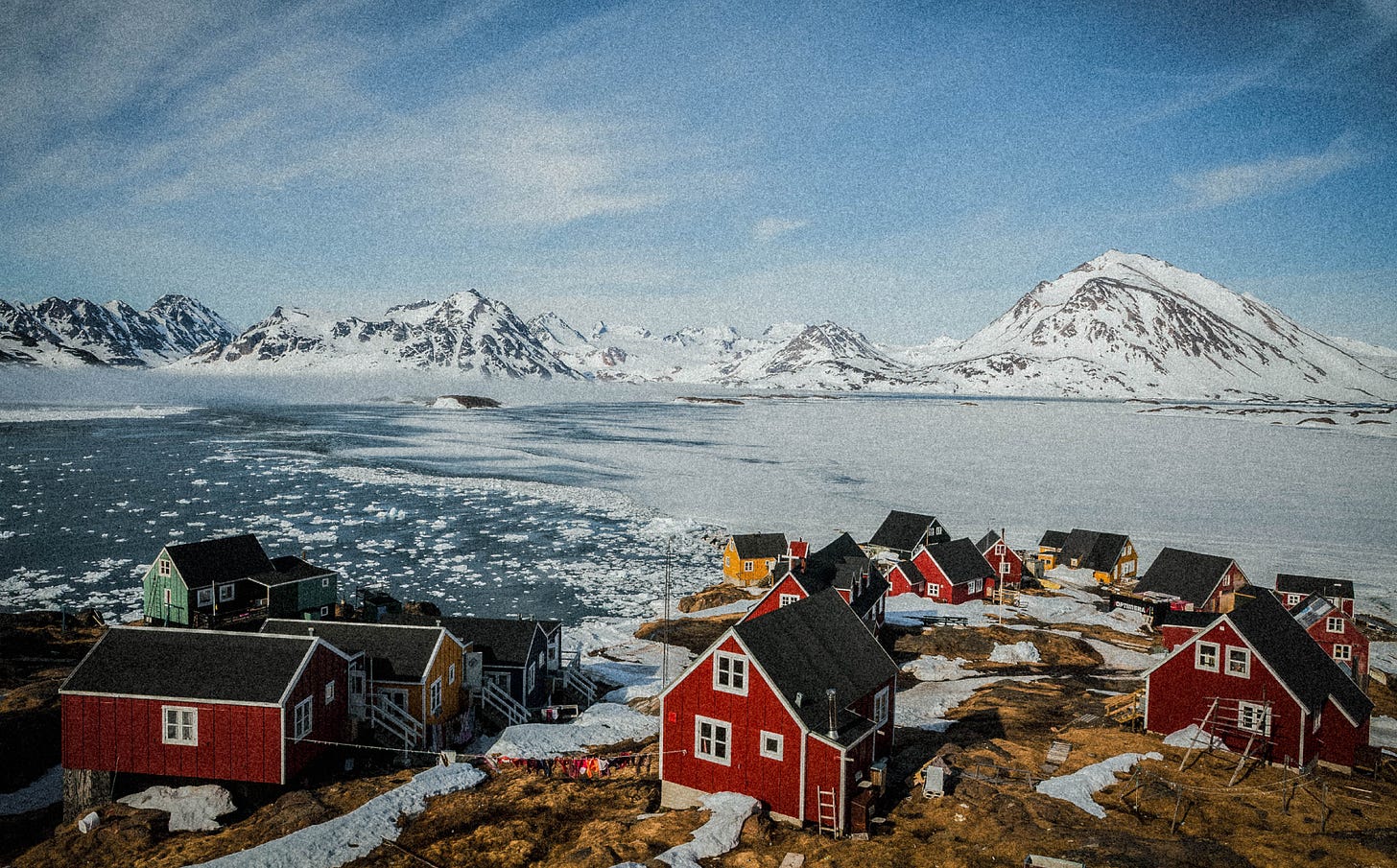
Greenland has emerged as an unlikely but pivotal flashpoint in the multipolar era, where U.S. ambitions for Arctic basing and resource access have collided with European sovereignty and alliance commitments. The Trump administration’s assertive moves—ranging from legal claims to tariff threats—have forced Denmark and NATO allies into defensive postures, with European leaders warning that an attack on Greenland could spell 'the end of NATO.' The episode, especially as it played out during Davos 2026, illustrates how economic coercion is now woven into security bargaining, compressing diplomatic timelines and exposing the fragility of alliance frameworks as markets and ministries scramble to respond to high-stakes, low-certainty negotiations.
Across Asia, the interplay of regional disputes and great power rivalry is increasingly shaped by local dynamics and nuanced strategic calculations. The Dalai Lama succession crisis, China’s tightening grip on Tibet, and Beijing’s export controls on rare earth metals all reflect how cultural, economic, and security issues are intertwined in the region’s flashpoints. Meanwhile, U.S.-China relations oscillate between competition and cautious cooperation, with countries like South Korea hedging their bets—deepening military ties with Washington while warming to Beijing. These developments, from Myanmar’s contested elections to the Thai-Cambodian border dispute, underscore how multipolarity has complicated crisis management, requiring new forms of diplomacy and alliance-building to address both old grievances and emerging threats.


Inequality and Instability Surge
Military adventurism and economic mismanagement are fueling mass displacement, eroding trust in institutions, and deepening the global divide between winners and losers.
The fracturing global order has intensified economic instability and societal hardship, as aggressive US military interventions and covert operations—such as the 127 airstrikes in 2025 and the kidnapping of Venezuela’s president—have undermined international cooperation and fueled public discontent. These actions, described as 'pointless, costly, destructive,' not only destabilize targeted regions but also complicate prospects for stable global governance, as the US increasingly leverages economic resources and power plays to assert influence rather than foster multilateral solutions.
Economic mismanagement and state control, exemplified by Venezuela’s collapse—where oil production plummeted from 3 million to under 1 million barrels per day and inflation soared to ten million percent—have triggered mass emigration and deepened poverty, with 8 million refugees fleeing the country. The resulting loss of human and technological capital, particularly after the purge of 18,000 petroleum professionals, has not only crippled Venezuela’s recovery prospects but also exposed the fragility of global economic resilience when key resource nations falter.
The global economic landscape is increasingly defined by polarization and mistrust, as the so-called 'K-shaped' recovery benefits tech elites and high-income earners while leaving the majority anxious about financial instability and stagnant growth. Public sentiment has soured, with trust shifting away from mainstream institutions toward AI engines, and there is mounting demand for stricter regulation and taxation of emerging technologies—reflecting both optimism about AI’s potential and fears of widening inequality, cybercrime, and misinformation.
As global alliances fracture and resource nationalism rises, middle powers like the EU are forging new economic agreements—such as the record-setting EU-Mercosur deal—to hedge against the unpredictability of US-China rivalry and the retreat of globalism. Meanwhile, the US’s shift from values-based multilateralism to transactional, interest-driven diplomacy has complicated international cooperation, prompting regions to prioritize economic self-reliance, critical mineral security, and pragmatic partnerships over ideological alignment.