Allies fast-track rare earth push to break China
The gist
Allied nations are racing to break China’s rare earth monopoly, pouring billions into supply chain independence, military-led processing, and radical innovations to secure the future of tech, defense, and energy.
What to know
- China commands 70% of rare earth mining and a staggering 90% of global processing, weaponizing export restrictions to disrupt allied manufacturing.
- The U.S. is mobilizing bipartisan public-private alliances—including Michael Dell and Jeff Bezos—to achieve domestic control over 25 critical minerals by 2035, with military facilities fast-tracking rare earth processing.
- Major investments from the U.S., Canada, and Europe, plus new bans on Chinese materials in weapons by 2027, are building an allied minerals network aiming to cut China’s refining dominance to 70% within a decade.
China’s Chokehold Unpacked
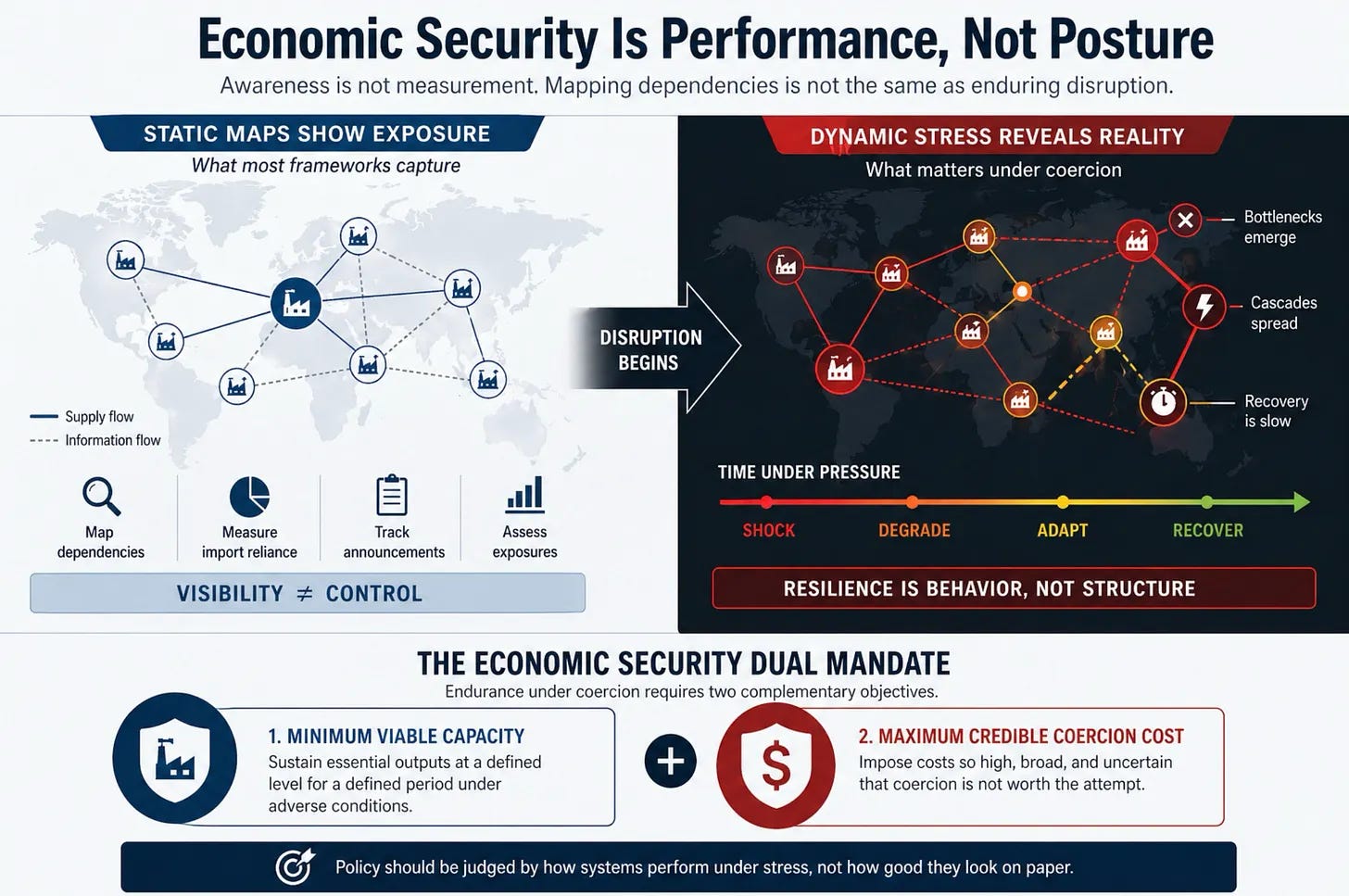
Beijing’s near-total control of rare earths and strategic export curbs have weaponized supply chains, forcing Western industries into costly shutdowns and exposing systemic vulnerabilities in allied economies.
China’s dominance over critical minerals extends far beyond mere mining, encompassing approximately 70% of rare earth mining, 90% of processing and refining, and 93% of magnet manufacturing globally, creating structural chokepoints that severely constrain U.S. and allied industrial bases. This comprehensive control allows Beijing to weaponize export restrictions strategically, as seen in the 24 export curbs imposed between 2020 and 2025, which have disrupted manufacturing sectors worldwide, including forcing temporary shutdowns like Ford’s Chicago plant. The strategic leverage China gains from controlling upstream inputs such as rare earths, tungsten, lithium, and graphite contrasts sharply with Western economic approaches focused on profitability, underscoring a systemic vulnerability in global supply chains that threatens national sovereignty and economic security. (Insights,,,,,,)
The geopolitical tensions fueling the U.S.-China rivalry have transformed critical minerals into a new frontline, with rare earths, gallium, and other materials central to defense, AI, and clean energy technologies. This has driven the U.S., EU, Japan, and allies to adopt urgent techno-nationalist strategies aimed at securing strategic autonomy through coordinated industrial policies, supply chain diversification, and the formation of a ‘buyers’ club’ including mineral-rich partners like Malaysia and the DRC. However, these efforts face significant hurdles such as higher production costs, environmental opposition, and skilled labor shortages, requiring deeper transatlantic cooperation and comprehensive whole-of-supply-chain approaches to effectively counter China’s market overcapacity and export control tactics. (Insights,,,,,,,)
China’s export controls have evolved into a sophisticated geopolitical tool that toggles supply availability based on political calculations, exemplified by the 2025 rare earth export restrictions that caused global price spikes—gallium prices in Europe surged 365%, germanium 400%, and antimony 437%—and production halts in automotive and tech industries worldwide. This policy-induced scarcity, rather than natural resource depletion, has heightened the urgency for allied nations to reduce dependency and build resilient supply chains, as seen in India’s strategic moves through the Quad Critical Minerals Initiative and domestic incentives. Yet, the global market remains vulnerable due to the prohibitive costs and environmental challenges of developing refining capacity outside China, reinforcing Beijing’s chokehold on critical mineral supply chains. (Insights,,,,,,,,,)
The intensifying demand for critical minerals driven by AI data centers, renewable energy, and defense technologies exacerbates the geopolitical risks posed by China’s supply chain dominance, as exemplified by the massive quantities of silver and copper embedded in AI infrastructure and the bottlenecks in energy equipment like Siemens transformers reliant on Chinese rare earths. Despite a temporary resumption of exports following a US-China truce in late 2025, allied countries including Japan continue to grapple with shortages, underscoring the fragility of global supply chains and the imperative for strategic autonomy. As Jacob Helberg, U.S. undersecretary of state for economic affairs, emphasizes, only a comprehensive, whole-of-supply-chain strategy can effectively break China’s grip on rare earths and AI-related technologies amid this tense technological and geopolitical rivalry. (Insights,,,,,,,)




Allied Industrial Pushback
Bipartisan U.S. alliances and direct military investments are accelerating domestic rare earth production, with public-private partnerships and new manufacturing hubs racing to break China’s grip on critical minerals.
The United States is aggressively pursuing a comprehensive industrial strategy to achieve full supply chain independence from China for 25 critical minerals within the next decade, reshaping trade and technological supply lines amid mounting geopolitical tensions and resource constraints. This effort is bolstered by bipartisan public-private partnerships that bring together government agencies, industry leaders like Michael Dell and Jeff Bezos, and innovative firms such as Perpetua and MP Materials to drive domestic manufacturing innovation and cost reductions in critical materials and pharmaceuticals.
Public-private partnerships are central to scaling rare earth production and processing capabilities domestically, with the U.S. military playing a pioneering role by establishing rare earth processing facilities on army bases and leveraging military assets to fast-track environmentally friendly mining infrastructure using green metallurgy. These collaborations underscore strategic investments aimed at meeting urgent defense and AI technology demands, as every advanced weapon system and GPU relies heavily on rare earth elements like dysprosium.
Direct government investments exemplify the strategic pivot to domestic critical mineral supply chains, highlighted by the Department of War’s $25 million funding to ReElement Technologies in Indiana to expand commercial-scale processing of gallium, germanium, and recycled rare earths. This shift from conditional loans to direct equity stakes reflects a more assertive approach to securing supply chain resilience, with senior defense officials emphasizing that without such domestic production, scaling advanced weapons manufacturing remains a 'pipe dream.'
Beyond the U.S., allied nations are actively diversifying critical mineral supply chains through coordinated public-private efforts, with American companies acquiring assets across Brazil, the UK, France, Madagascar, Australia, Korea, and Germany to build integrated value chains. Government-to-government cooperation, such as Japan’s subsidized investment in a French rare earth refinery, alongside emerging partners like Canada, India, and Saudi Arabia, illustrates a strategic ecosystem approach supported by targeted financial instruments and a $12 billion U.S. Strategic Critical Minerals Reserve to mitigate investment risks and accelerate scaling.


Innovation Versus Extraction
Breakthroughs in recycling, material engineering, and Malaysia’s chemical expertise are reshaping rare earth supply chains, proving that sustainability and technology—not just mining—are vital to allied resilience.
Reclassifying lithium-ion battery black mass from waste to a valuable product represents a transformative step toward unlocking critical mineral supply chains and advancing circular economy growth, a move aligned with U.S. efforts to diminish China’s dominance. Coupled with innovations in materials engineering, such as the development of rare-earth-free or reduced rare-earth magnets, these technological breakthroughs offer promising pathways to circumvent China’s processing choke points rather than merely replicating them, thereby accelerating supply chain resilience and sustainability.
Sustainability and ethical leadership have emerged as pivotal battlegrounds in the global race for critical minerals, demanding innovative operational strategies and rigorous supply chain due diligence to challenge China’s grip and fuel next-generation technologies. This multifaceted approach, which includes substitution, recovery, recycling, and allied cooperation, underscores that the U.S. cannot simply out-mine or outspend China but must leverage innovation and sustainability to build resilient and responsible supply chains.
Malaysia is rising as a strategic hub in the rare earth supply chain, leveraging its mature chemical industry, skilled workforce, and industrial experience—particularly from the Lynas processing facility—to complement mining operations in Australia and beyond. Given that the rare earth value chain is driven more by sophisticated chemical processing and metallurgy than raw mineral ownership, Malaysia’s expertise in solvent extraction, impurity control, and alloy production positions it as Asia’s preferred commercial processing center outside China, even as China internationalizes its industrial footprint by restricting intellectual property exports and encouraging overseas investments.
Rather than pursuing full vertical integration, successful rare earth supply chains are evolving through specialization, suggesting that innovation and sustainability efforts should focus on strengthening specific processing and recycling segments where competitive advantages exist. This strategic focus aligns with U.S. investments in R&D through national labs and universities, which are commercializing technologies that could trigger a 'fracking moment' in critical minerals, fundamentally shifting supply chain dynamics away from China while promoting faster, more sustainable routes to securing essential materials.


Allied Capital Mobilizes
Massive investments, cross-border acquisitions, and specialized ETFs are forging a global network of allied mineral producers, aiming to slash China’s refining dominance and secure critical supply chains for the next decade.
The United States and allied nations are making unprecedented financial commitments to dismantle China's stranglehold on critical minerals, exemplified by the U.S. $50 billion economic security investment framework aimed at bolstering industrial resilience and fostering multilateral cooperation. This strategic push is complemented by Canada's coordinated public-private approach, investing up to $850 million in Teck Resources’ Trail Operations to expand domestic refining capacity, supported by the Canada Critical Minerals Accelerator and provincial prioritization, signaling a comprehensive North American effort to build a resilient mine-to-market supply chain. Meanwhile, Europe’s Hades Mining secured a €15 million seed round to drive critical mineral sovereignty, underscoring a broader allied trend toward diversifying supply chains away from China amid escalating geopolitical tensions.
Strategic investments are also reshaping the global rare earth landscape through targeted acquisitions and partnerships that position nearshore allies as pivotal players. The U.S. acquisition of Brazil’s Pela Ema mine via USAR marks the first large-scale rare earth production outside China, backed by a 15-year supply agreement with the U.S. government, while companies like Sunrise Energy Metals and USAR attract significant capital as core portfolio plays in the rare earth thesis. This emerging network of allied producers and processors—from Australia and Malaysia to Saudi Arabia—reflects a coordinated global effort to develop alternative refining capacity and reduce dependency on China’s dominant 90% global refining share, which is projected to decline to 70% by 2035 if planned projects proceed.
Market-driven mechanisms are accelerating the reshoring of critical minerals supply chains, with specialized ETFs such as VanEck Rare Earth and Strategic Metals (REMX), Global X Lithium & Battery Tech (LIT), and Sprott Critical Materials (SETM) channeling substantial capital into diversified portfolios that span upstream mining to battery production. The U.S. government’s designation of rare earths as a national security priority has catalyzed a 146% surge in REMX since April 2025, illustrating how policy and investment flows intertwine to counter China’s $120 billion overseas investments in critical mineral projects. These funds’ broad sector coverage—including copper, uranium, nickel, and lithium—reflects a multilateral strategy to underpin defense, grid, and electronics manufacturing through global allied coordination.
Regulatory reforms are crucial levers driving the rapid expansion of alternative rare earth processing outside China, with the U.S. imposing a January 2027 ban on Chinese-origin rare earth materials in American weapons systems, compelling defense contractors to certify supply chain independence. This regulatory pressure, combined with billions in U.S. financing, price floors, and guaranteed government offtake agreements, fuels partnerships with allies including Australia, Japan, Malaysia, and Saudi Arabia to rebuild processing capacity. Given China’s entrenched 90% global refining dominance, these coordinated investments and policy measures are vital to securing defense readiness and operational autonomy amid looming risks of a $6.5 trillion supply shock across industries reliant on rare earths.